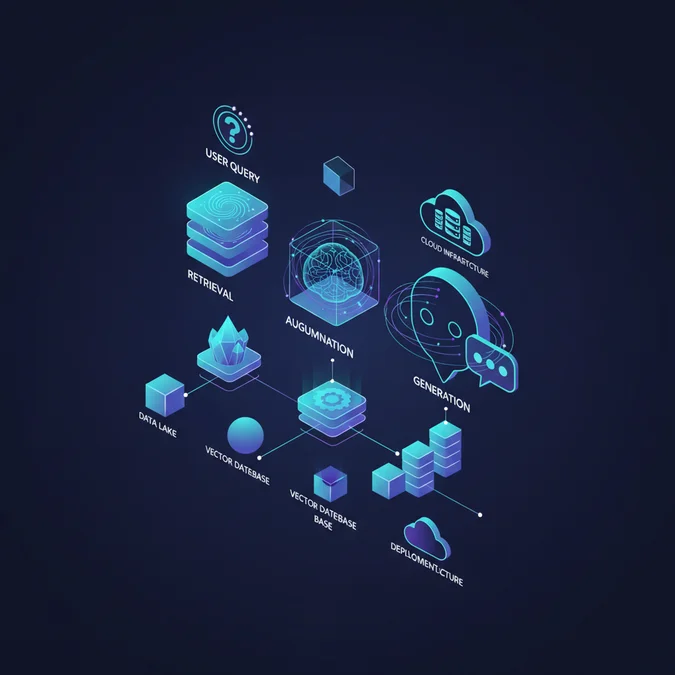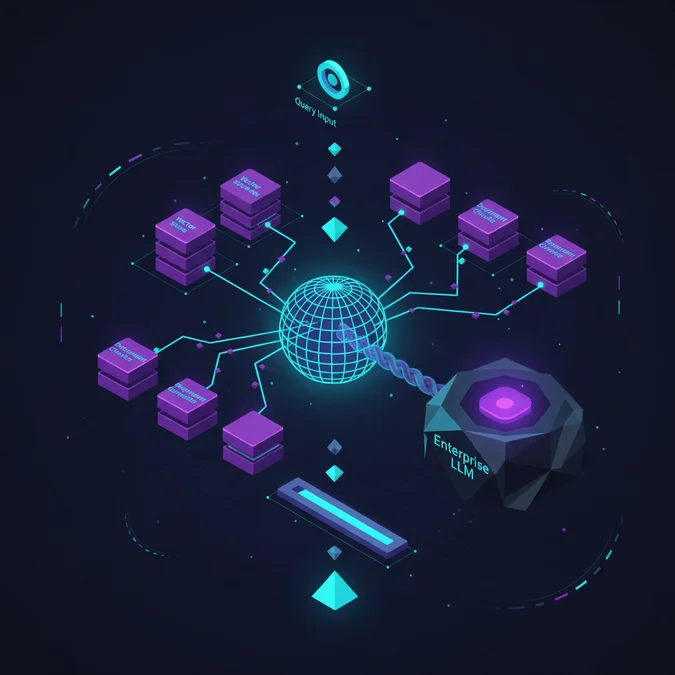

In 2026, the proliferation of large language models has moved from simple chat interfaces to complex, data-heavy backend pipelines. Retrieval Augmented Generation (RAG) serves as the primary bridge between static foundation models and dynamic, private organizational datasets. However, the architectural implementation of RAG is not monolithic.
Engineers must navigate a sophisticated spectrum of retrieval patterns to balance query latency, context window utilization, and factual accuracy. This guide provides a definitive taxonomy of RAG architectures, moving beyond basic tutorials to address the specific performance trade-offs required for enterprise-grade deployments.
Disambiguation: Engineering Context for Types of Rags
In the context of software engineering and machine learning, the term RAG refers exclusively to Retrieval Augmented Generation. Given the linguistic overlap, search engines often surface irrelevant results regarding physical cleaning materials. To establish technical precision, practitioners must treat RAG as a structured information retrieval pipeline.
Note: When researching types of rags in technical documentation, ensure your filters explicitly exclude textile-related content by scoping queries to ‘LLM RAG’ or ‘Vector Search Architecture’ to maintain professional focus.
Distinguishing between the architectural framework of RAG and common nouns is essential for maintaining clean documentation and effective knowledge management within engineering teams.
The Evolution of RAG Architectures: Naive to Agentic
RAG architectures have evolved to address the failure modes of early implementations. The classification of these systems is based on the sophistication of the retrieval loop.
- Naive RAG: The baseline approach involving simple document indexing, chunking, and vector similarity search.
- Advanced RAG: Introduces modular components such as query rewriting, hybrid search (keyword + vector), and re-ranking to refine context.
- Agentic RAG: Employs autonomous agents that perform iterative tool use, plan their own retrieval steps, and verify information through multi-hop reasoning.
When evaluating different types of rag techniques, teams should consider the following maturity checklist:
- [ ] Does the system require multi-step reasoning? If yes, move to Agentic.
- [ ] Is the data highly domain-specific? If yes, implement hybrid search.
- [ ] Is latency the primary bottleneck? If yes, optimize for Naive or Advanced patterns.
Comparative Matrix of RAG Implementations
| Architecture | Latency | Cost | Accuracy | Complexity |
|---|---|---|---|---|
| Naive | Low | Low | Moderate | Low |
| Advanced | Medium | Moderate | High | Medium |
| Agentic | High | High | Highest | High |
This table highlights the trade-offs inherent in different implementation choices. As complexity increases, the overhead of re-ranking and multi-agent orchestration directly impacts the total cost per query.
Code Implementation: Modular Retrieval Patterns
Implementing different types of rag techniques requires a modular codebase. Below is a Python pattern for a basic Advanced RAG router using a re-ranking step.
class AdvancedRetriever: def __init__(self, vector_store, reranker): self.vs = vector_store; self.rr = reranker def retrieve(self, query): docs = self.vs.search(query, k=10) # Hybrid retrieval logic return self.rr.rerank(docs, query) # Re-ranking for precisionThis structure allows developers to swap components like the embedding model or the reranker without refactoring the entire orchestration logic.
Production Readiness and System Evaluation
Moving RAG to production requires rigorous observability. You must monitor retrieval precision, recall, and hallucination rates. A production-ready system should include:
- Automated evaluation pipelines using RAGAS or TruLens.
- Fallback mechanisms for low-confidence retrieval scores.
- Caching layers for frequent queries to reduce latency and API costs.
Warning: Never deploy an Agentic RAG system without strict guardrails on tool execution and depth limits to prevent infinite loops and runaway costs.
Frequently Asked Questions
What are the primary types of RAGs used in modern enterprise AI?
Modern enterprise RAG architectures are classified into three core tiers: Naive RAG, which uses simple vector similarity; Advanced RAG, incorporating pre-retrieval and post-retrieval processing; and Agentic RAG, which utilizes autonomous decision-making loops to perform iterative retrieval and synthesis based on complex user queries.
How do different types of RAG techniques impact query latency?
Latency scales with architectural complexity. Naive RAG offers the lowest latency by performing single-pass retrieval. Conversely, Agentic and Self-RAG techniques introduce higher latency due to multiple reasoning steps, iterative document verification, and complex re-ranking processes required to improve response accuracy in high-stakes environments.
Selecting the appropriate RAG architecture is a balance of business requirements and technical constraints. While Naive RAG suffices for simple internal Q&A, enterprise-grade applications typically demand the precision of Advanced or Agentic patterns.
By standardizing your retrieval stack and implementing robust evaluation, you ensure that your RAG implementation remains reliable and scalable as your data volume grows in 2026.