
The main differences between REST and GraphQL fundamentally reshape API development, impacting data fetching efficiency, architectural flexibility, and client-server interaction. REST relies on multiple, resource-centric endpoints, often leading to over/underfetching, while GraphQL uses a single endpoint with precise data queries, optimizing network payloads and client control. Understanding these distinctions is critical for architects and developers to select the optimal API paradigm for their specific project needs.
In today’s dynamic software landscape, efficient data exchange is paramount. RESTful APIs have long been the industry standard, offering a robust and widely understood approach to building web services. However, as applications grow more complex and client requirements become more nuanced, new paradigms like GraphQL have emerged to address some of REST’s inherent challenges. This article provides a practitioner-level comparison, dissecting the architectural nuances, performance implications, security considerations, and strategic trade-offs of both.
We will explore their core mechanics, compare their strengths and weaknesses in real-world scenarios, and offer actionable insights to guide your decision-making process. From data fetching strategies to scalability and security, we aim to equip you with the knowledge to confidently choose or integrate the right API solution for your enterprise.
Introduction: Understanding the API Landscape
The evolution of web services has presented developers with a spectrum of choices for API design, each with its own philosophy and operational characteristics. At the forefront of this discussion are Representational State Transfer (REST) and GraphQL, two dominant paradigms that define how clients interact with server-side data. While both facilitate communication, their underlying architectures and capabilities diverge significantly, influencing everything from development velocity to application performance.
REST, introduced by Roy Fielding in 2000, leverages standard HTTP methods and a resource-centric approach, making it intuitive for many web developers. Its stateless nature and cacheability have contributed to its widespread adoption. However, the fixed data structures returned by REST endpoints can lead to inefficiencies, particularly for clients with varying data needs.
GraphQL, developed by Facebook in 2012 and open-sourced in 2015, offers a query language for APIs and a runtime for fulfilling those queries with existing data. Its primary appeal lies in giving clients the power to request exactly what they need, nothing more and nothing less. This client-driven data fetching model addresses many of the challenges posed by REST in complex, data-intensive applications. Our goal is to provide a comprehensive comparison, enabling informed decision-making based on technical merits and project requirements.
REST API: Principles, Architecture, and Core Mechanics
REST, or Representational State Transfer, is an architectural style for networked applications. It’s not a protocol or standard, but a set of constraints that, when applied, yield a system with specific desirable properties such as scalability, simplicity, and reliability. The core of REST revolves around resources, which are identified by URIs and manipulated using a uniform interface.
Key Principles of RESTful Architecture:
- Client-Server: Separation of concerns between the client and the server. Clients handle the user interface and user state, while servers manage data and business logic. This separation allows for independent evolution.
- Statelessness: Each request from client to server must contain all the information necessary to understand the request. The server must not store any client context between requests. This improves scalability and reliability.
- Cacheable: Responses from the server can be explicitly or implicitly defined as cacheable, preventing clients from requesting the same data multiple times and improving network efficiency.
- Uniform Interface: This is a fundamental constraint that simplifies the overall system architecture. It includes:
- Resource Identification in Requests: Resources are identified by URIs.
- Resource Manipulation through Representations: Clients modify resources by sending representations (e.g., JSON, XML) in the request body.
- Self-Descriptive Messages: Each message includes enough information to describe how to process the message.
- Hypermedia as the Engine of Application State (HATEOAS): Clients interact with the application solely through hypermedia provided dynamically by server-side resources. This constraint is often the least implemented in practice.
- Layered System: A client cannot ordinarily tell whether it is connected directly to the end server or to an intermediary. Intermediary servers can improve system scalability by enabling load balancing and shared caches.
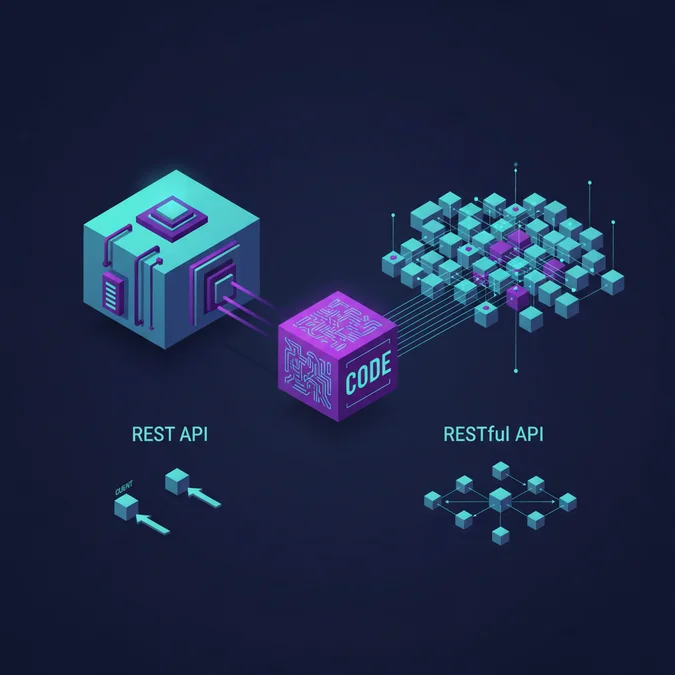
REST APIs typically expose multiple endpoints, each corresponding to a specific resource or collection of resources. For instance, /users might return a list of users, and /users/{id} would return a single user. Clients interact with these resources using standard HTTP methods:
GET: Retrieve a resource.POST: Create a new resource.PUT: Update an existing resource (full replacement).PATCH: Partially update an existing resource.DELETE: Remove a resource.
This resource-centric, verb-based approach makes REST intuitive and widely compatible with existing web infrastructure.
GraphQL API: Principles, Architecture, and Core Mechanics
GraphQL is a query language for APIs and a server-side runtime for executing queries using a type system defined for your data. It is not tied to any specific database or storage engine and is backed by your existing code and data. Unlike REST, which is resource-centric, GraphQL is data-centric, empowering clients to describe their data requirements precisely.
Key Principles of GraphQL:
- Declarative Data Fetching: Clients specify the exact data structure they need, and the server responds with precisely that data. This eliminates overfetching (receiving more data than needed) and underfetching (needing to make multiple requests to get all required data).
- Strongly Typed Schema: GraphQL APIs are organized around a schema, defined using the GraphQL Schema Definition Language (SDL). This schema describes all possible data types, fields, and relationships available through the API. This strong typing provides clarity, enables powerful tooling, and validates queries before execution.
- Single Endpoint: A GraphQL API typically exposes a single HTTP endpoint (e.g.,
/graphql). All client requests, whether for fetching data (queries), modifying data (mutations), or subscribing to real-time updates (subscriptions), are sent to this single endpoint, usually via aPOSTrequest. - Client-Driven: The client dictates the shape of the response. This empowers frontend developers to rapidly iterate on UI features without waiting for backend changes.
- Introspection: The GraphQL schema is introspectable, meaning clients can query the API about its own schema. This is invaluable for development tools, auto-completion, and documentation generation.
A GraphQL operation consists of three types:
- Queries: Used for reading or fetching data. Clients define the fields they want from specific types. For example:
query GetUserData {
  user(id: "101") {
    name
    email
    posts {
      title
      publishedDate
    }
  }
} - Mutations: Used for writing, creating, updating, or deleting data. Mutations are structured similarly to queries but explicitly declare their intent to modify data. They typically return the updated state of the data. For example:
mutation UpdateUserName {
  updateUser(id: "101", newName: "Jane Doe") {
    id
    name
  }
} - Subscriptions: Used for real-time data updates, enabling clients to receive instant notifications when specific data changes on the server.
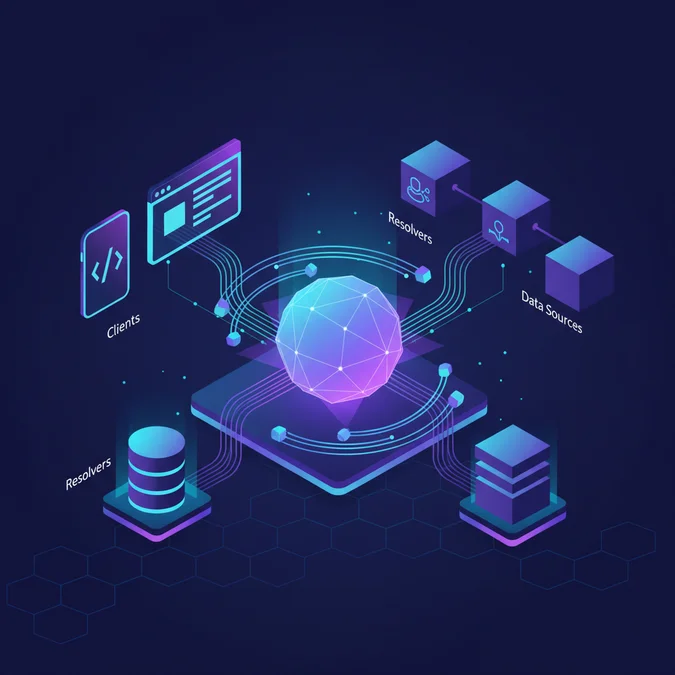
The resolver functions on the server-side are responsible for fetching the data for each field in the query from the appropriate data sources (databases, microservices, etc.) and composing the final response based on the client’s requested shape.
GraphQL vs REST API: Key Architectural Differences
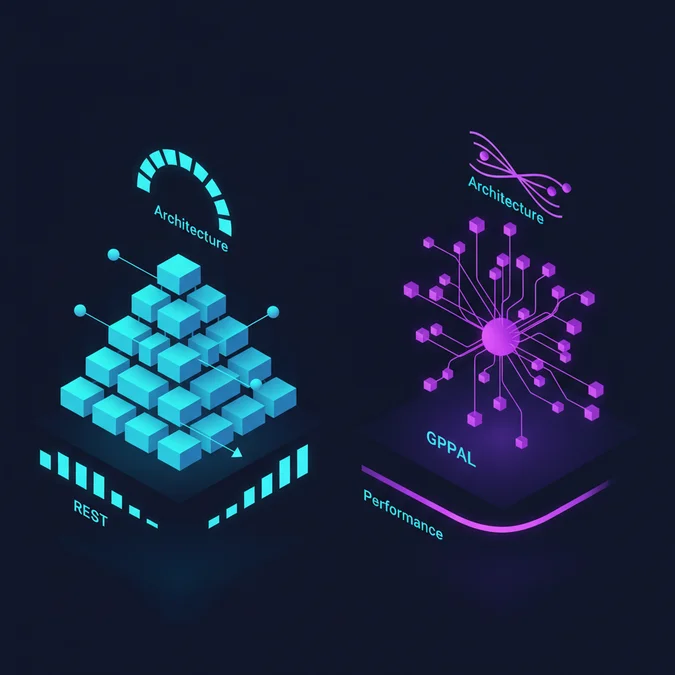
When comparing graphql vs rest api, the fundamental architectural divergences become immediately apparent, influencing how data is requested, delivered, and managed. These differences are critical for understanding the strengths and weaknesses of each paradigm in various application contexts. The rest vs graphql key differences are most prominent in their data fetching mechanisms and endpoint structures.
Data Fetching and Endpoints:
- REST: Multiple Endpoints, Fixed Data: REST APIs typically expose distinct endpoints for each resource or collection. A client needing user details and their associated posts would likely make two separate requests: one to
/users/{id}and another to/users/{id}/posts. Each endpoint returns a fixed data structure, often leading to either overfetching (receiving more data than needed) or underfetching (requiring multiple round trips to gather all necessary data). - GraphQL: Single Endpoint, Client-Driven Queries: GraphQL consolidates all data access through a single endpoint. Clients send a single query that explicitly specifies all required fields across multiple related resources. The server then processes this query and returns a JSON response that precisely matches the requested structure, eliminating both overfetching and underfetching.
Request and Response Patterns:
- REST: HTTP Methods and Status Codes: REST leverages standard HTTP methods (GET, POST, PUT, DELETE) and HTTP status codes (200 OK, 201 Created, 404 Not Found, 500 Internal Server Error) to convey operation intent and outcome. Errors are typically communicated via HTTP status codes and a JSON error body.
- GraphQL: HTTP POST and Data-Centric Errors: GraphQL operations are almost always sent via HTTP POST requests, even for data fetching (queries). The HTTP status code is often
200 OK, regardless of whether the operation succeeded or contained errors. Errors are instead included within the JSON response body alongside any partial data, making error handling a different concern.
Schema vs. Resource Structure:
- REST: Loosely Defined Resources: While REST APIs can be documented, their structure is often implicit and relies on conventions. There’s no standardized, machine-readable schema to define the available resources and their relationships.
- GraphQL: Strongly Typed Schema: GraphQL is built around a comprehensive, strongly typed schema that defines every possible data type and field. This schema acts as a contract between client and server, enabling powerful tooling, validation, and auto-completion.
Architectural Insight: The shift from resource-oriented, multiple-endpoint communication in REST to a single-endpoint, client-driven query model in GraphQL fundamentally alters how client-server data negotiation occurs. This has profound implications for frontend development agility and backend complexity.
Consider the following comparison:
| Feature | REST API | GraphQL API |
|---|---|---|
| Endpoints | Multiple, resource-specific (e.g., /users, /products/{id}) |
Typically a single endpoint (e.g., /graphql) |
| Data Fetching | Fixed data structure per endpoint, prone to over/underfetching | Client requests precise data, eliminates over/underfetching |
| HTTP Methods | Utilizes GET, POST, PUT, DELETE for CRUD operations | Primarily POST for all operations (queries, mutations, subscriptions) |
| Error Handling | HTTP status codes (4xx, 5xx) and error bodies | HTTP 200 OK, errors embedded in JSON response body |
| Schema Definition | Often relies on documentation; no inherent schema language | Strongly typed schema using GraphQL SDL, introspectable |
| Versioning | Commonly done via URI (/v1/users) or HTTP headers |
Schema evolution through deprecation; less reliance on explicit versioning |
| Caching | Leverages HTTP caching mechanisms (client and proxy) | Client-side caching (e.g., Apollo Client) or custom server-side logic |
Here’s a simple code example illustrating the difference in data fetching:
// REST API example: Fetching user and their posts (two requests)
// GET /api/users/123
{
  "id": "123",
  "name": "John Doe",
  "email": "john@example.com",
  "address": "123 Main St" // Overfetched data if only name/email needed
}

// GET /api/users/123/posts
[
  { "id": "post1", "title": "First Post" },
  { "id": "post2", "title": "Second Post" }
]

// GraphQL API example: Fetching user name, email, and post titles (one request)
// POST /graphql
// Request body:
// {
//   "query": "{ user(id: \"123\") { name email posts { title } } }"
// }
// Response:
{
  "data": {
    "user": {
      "name": "John Doe",
      "email": "john@example.com",
      "posts": [
        { "title": "First Post" },
        { "title": "Second Post" }
      ]
    }
  }
}
Performance, Scalability, and Security: A Critical REST and GraphQL Comparison
Beyond architectural patterns, a critical rest and graphql comparison must delve into non-functional requirements such as performance, scalability, and security. These aspects significantly impact the long-term viability and operational cost of any API strategy.
Performance and Data Efficiency:
- Overfetching and Underfetching: REST’s fixed payloads often lead to clients receiving more data than required (overfetching) or needing to make multiple requests to get all necessary data (underfetching). Both scenarios increase network latency and bandwidth consumption. GraphQL inherently solves this by allowing clients to specify precise data requirements, leading to optimized network usage, especially beneficial for mobile clients or limited bandwidth environments.
- Batching and N+1 Problem: GraphQL’s ability to fetch multiple resources in a single request can mitigate the N+1 query problem, where a client makes N+1 database queries to retrieve a list of items and their associated details. REST typically requires client-side batching or custom endpoints to address this.
- Caching: REST benefits significantly from HTTP-level caching (e.g., ETags, Last-Modified headers, CDN caching) due to its resource-centric nature and the use of standard HTTP methods. GraphQL, with its single endpoint and dynamic queries, makes HTTP caching less effective. Caching in GraphQL typically requires more sophisticated client-side solutions (e.g., normalized caches like Apollo Client) or custom server-side strategies, which adds complexity.
Scalability:
- REST: Horizontal Scaling: RESTful services are often easier to scale horizontally due to their stateless nature. Each request can be handled by any server instance, and load balancers can distribute traffic efficiently.
- GraphQL: Resolver Complexity: While GraphQL itself can scale, the complexity often shifts to the server-side resolvers. Each field in a query might require a separate data source call, which can lead to performance bottlenecks if not optimized (e.g., using data loaders for batching). This requires careful design and monitoring to ensure efficient resource utilization.
Security Considerations:
- Authentication and Authorization: Both REST and GraphQL can implement standard authentication (e.g., OAuth, JWT) and authorization mechanisms. However, the granularity of authorization can differ. In REST, permissions are often tied to resource endpoints. In GraphQL, authorization needs to be implemented at the field level within resolvers, ensuring that a user can only access the specific data fields they are permitted to see, even within a complex query.
- Denial of Service (DoS) Attacks: GraphQL’s flexible queries can be a double-edged sword. Maliciously crafted deep or complex queries can strain server resources, leading to DoS attacks. Implementing query depth limiting, complexity analysis, and timeout mechanisms is crucial for GraphQL APIs. REST APIs are less susceptible to this specific type of attack due to their fixed resource structure, though general rate limiting remains essential for both.
- Data Exposure: REST, by returning fixed payloads, might inadvertently expose more data than a client needs. GraphQL’s precise querying reduces this risk, as clients only get what they explicitly ask for. However, the introspection feature of GraphQL, while useful for development, can also expose schema details that might be exploited if not properly secured or disabled in production.
Security Best Practice: For GraphQL, always implement query complexity analysis, depth limiting, and rate limiting. Consider disabling introspection in production environments or restricting it to authenticated users. For both REST and GraphQL, robust input validation and output sanitization are non-negotiable.
| Aspect | REST API | GraphQL API |
|---|---|---|
| Over/Underfetching | Common, due to fixed resource payloads | Eliminated, clients request precise data |
| Caching Strategy | Strong HTTP caching support (client, proxy, CDN) | Requires client-side (normalized cache) or custom server-side caching |
| N+1 Problem | Can occur, often requires multiple requests or custom endpoints | Mitigated by design; DataLoaders can optimize resolver calls |
| DoS Vulnerability | Less prone to query-depth attacks; general rate limiting still needed | Vulnerable to complex/deep queries; requires query analysis, depth/complexity limiting |
| Authorization | Typically endpoint-based | Granular, field-level authorization within resolvers |
| Schema Exposure | Implicit, via documentation or discovery | Explicitly exposed via introspection; can be a security risk if not controlled |
Strategic Choices: When to Use REST, When to Use GraphQL, and Hybrid Approaches
Deciding between REST and GraphQL is a strategic choice influenced by project requirements, team expertise, and long-term goals. There are distinct scenarios where one approach clearly excels, and often, a hybrid model offers the most pragmatic solution. This detailed rest and graphql comparison will guide your decision.
When to Choose REST:
- Simplicity for Resource-Centric APIs: For APIs that expose well-defined, hierarchical resources with straightforward CRUD (Create, Read, Update, Delete) operations, REST is often simpler to implement and maintain. Examples include basic blog APIs, static content services, or managing a single type of entity like user accounts.
- Leveraging HTTP Caching: If your data changes infrequently and benefits significantly from aggressive caching at the HTTP layer (proxies, CDNs, browser caches), REST’s native support for HTTP caching mechanisms provides a clear advantage.
- Existing Ecosystem and Tooling: For teams already deeply familiar with REST and with a mature ecosystem of tools, monitoring, and infrastructure built around it, sticking with REST might offer faster development cycles and lower onboarding costs.
- Public APIs: For public-facing APIs where flexibility for diverse client needs is less critical than broad compatibility and ease of consumption by a wide range of developers, REST’s familiarity can be beneficial.
When to Choose GraphQL:
- Complex Data Requirements and Multiple Data Sources: For applications with highly interconnected data graphs that aggregate information from various backend services or databases, GraphQL excels. It allows clients to fetch all necessary data in a single request, simplifying client-side logic.
- Mobile Applications: Where network bandwidth is a concern, and minimizing payload size is crucial, GraphQL’s ability to fetch only the required data dramatically reduces data transfer, improving performance and user experience.
- Rapid Frontend Development: When frontend teams need significant autonomy and fast iteration cycles without constant backend modifications, GraphQL’s client-driven query model empowers them to adapt data fetching to UI changes quickly.
- Microservices Architectures: GraphQL can serve as an API Gateway or ‘BFF’ (Backend For Frontend) layer, aggregating data from multiple microservices and presenting a unified, flexible API to clients.
Engineering Trade-offs:
- Learning Curve: REST has a lower learning curve for developers already familiar with HTTP. GraphQL introduces new concepts (SDL, resolvers, queries, mutations) that require initial investment.
- Caching Complexity: REST’s caching is simpler due to HTTP. GraphQL requires more bespoke caching solutions.
- Monitoring and Logging: REST’s distinct endpoints make request tracing and logging straightforward. GraphQL’s single endpoint requires more sophisticated logging to differentiate operations.
- Tooling: Both have robust tooling, but GraphQL’s introspection capabilities enable powerful developer tools like GraphiQL out-of-the-box.
Hybrid Approaches:
Many organizations find value in a hybrid approach, leveraging the strengths of both:
- Use REST for simple, resource-based interactions and public-facing APIs.
- Implement GraphQL as a ‘Backend For Frontend’ (BFF) layer for complex client applications, aggregating data from internal REST services or other microservices.
- Gradually migrate existing REST endpoints to GraphQL as needs evolve, or wrap existing REST services with a GraphQL layer.
Agency Vetting Checklist for API Development:
When evaluating partners for API development, consider these points:
- Technical Expertise: Does the agency demonstrate deep knowledge in both REST and GraphQL, not just superficial understanding?
- Architectural Vision: Can they articulate clear justifications for choosing one over the other, or proposing a hybrid model, based on your specific use case?
- Performance Optimization: What are their strategies for optimizing API performance, including caching, query optimization, and handling large datasets?
- Security Practices: Do they have robust security protocols for API design, including authentication, authorization (field-level for GraphQL), input validation, and DoS prevention?
- Scalability Planning: How do they plan for future growth and scalability, considering infrastructure, database design, and API evolution?
- Documentation and Tooling: Do they prioritize comprehensive API documentation, and are they proficient with development tools that enhance developer experience (e.g., Swagger/OpenAPI for REST, GraphiQL for GraphQL)?
- Error Handling Strategy: Can they define a clear and consistent error handling strategy across their API implementations?
- Testing Methodologies: What are their approaches to API testing, including unit, integration, and performance testing?
Future Trends and Making Your Decision
The API landscape is continuously evolving, with new paradigms and specifications emerging to address the ever-increasing demands of modern applications. While REST and GraphQL currently dominate, understanding future trends can help future-proof your architectural decisions.
Emerging alternatives and complementary technologies include gRPC, a high-performance, open-source universal RPC framework developed by Google. gRPC uses Protocol Buffers for defining service interfaces and message structures, offering significant performance advantages for internal microservice communication due to its binary serialization and HTTP/2 foundation. Another area of innovation is event-driven architectures and streaming APIs, often built using technologies like Apache Kafka or WebSockets, which are critical for real-time data flow and reactive systems.
However, for most client-server web interactions, REST and GraphQL remain the primary contenders due to their maturity, community support, and robust ecosystems. The decision between them, or opting for a hybrid model, should be a deliberate process based on a clear understanding of your project’s unique requirements.
Framework for Decision Making:
- Analyze Client Needs: Do clients require precise data fetching (mobile, complex UIs) or are fixed resource payloads acceptable?
- Data Complexity: Is your data highly interconnected, or are resources mostly independent?
- Team Expertise: What is your team’s familiarity with each technology? Consider the learning curve.
- Performance Goals: What are your latency and bandwidth constraints? Evaluate caching strategies.
- Scalability Requirements: How do you anticipate your API traffic and data volume will grow?
- Security Posture: How will you implement granular access control and protect against abuse for each architecture?
- Integration with Existing Systems: How well does each paradigm integrate with your current backend services and databases?
- Long-term Maintainability: Which approach offers better long-term maintainability, documentation, and tooling support for your team?
Ultimately, there is no one-size-fits-all answer. The optimal choice is the one that best aligns with your project’s technical requirements, business goals, and operational capabilities, while also considering the evolving nature of API design.
Factors That Affect Development Cost
- Project complexity and data model intricacy
- Team’s existing expertise and learning curve for new technologies
- Need for custom resolver logic and data aggregation
- Implementation of advanced caching strategies
- Required security measures like query depth limiting and field-level authorization
- Tooling and ecosystem integration for monitoring and development
- Ongoing maintenance and evolution of the API schema
The cost for implementing either REST or GraphQL varies significantly based on project scope, team size, and the specific features required.
Frequently Asked Questions
What are the main differences between REST and GraphQL in data fetching?
The main differences lie in data fetching: REST typically uses multiple endpoints, leading to overfetching or underfetching data. GraphQL, conversely, uses a single endpoint, allowing clients to request precisely the data they need, thus optimizing network usage and reducing unnecessary data transfer.
How does GraphQL solve overfetching and underfetching compared to REST?
GraphQL solves overfetching and underfetching by allowing clients to specify exactly what data they require in a single request. Unlike REST, where fixed data structures are returned from endpoints, GraphQL’s flexible query language ensures only the necessary data is sent, improving efficiency.
What are the key differences in caching strategies for REST and GraphQL?
Key differences in caching involve REST leveraging HTTP caching mechanisms (like ETag, Last-Modified) due to its resource-based nature. GraphQL, with its single endpoint and dynamic queries, requires client-side caching solutions (e.g., Apollo Client’s normalized cache) or custom server-side implementations, making caching more complex.
Can REST and GraphQL be used together in a single project?
Yes, REST and GraphQL can coexist in a single project. Many organizations adopt a hybrid approach, using REST for simpler, resource-centric operations and GraphQL for complex data aggregation or specific client needs. This allows leveraging the strengths of both architectures where most appropriate.
The main differences between REST and GraphQL are profound, extending from their core architectural philosophies to their impact on performance, scalability, and security. REST, with its resource-centric, multiple-endpoint approach, remains a robust choice for simpler APIs benefiting from HTTP caching. GraphQL, with its client-driven, single-endpoint query model, excels in complex, data-intensive applications requiring precise data fetching and rapid frontend iteration.
As a Principal Software Engineer, the recommendation is not to exclusively champion one over the other, but to understand their respective strengths and weaknesses. Many modern enterprises successfully deploy hybrid architectures, leveraging REST for foundational services and GraphQL as a flexible facade for client applications. By carefully evaluating your specific use cases, team expertise, and long-term strategic objectives, you can make an informed decision that drives efficiency, performance, and maintainability in your API ecosystem.
NR Studio builds custom web apps, mobile apps, SaaS platforms, and internal tools for growing businesses. If you’re working through a technical decision, feel free to reach out — no commitment required.