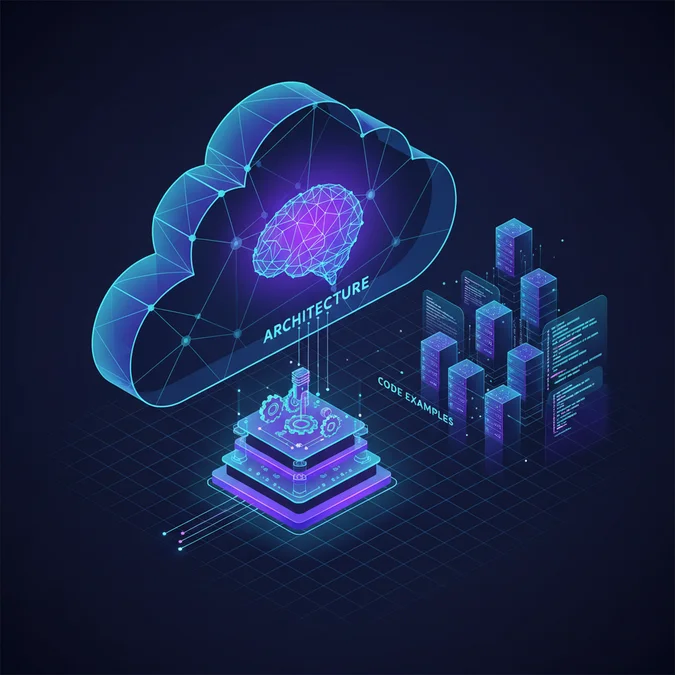

Cloud application development involves building, deploying, and running software applications on cloud computing platforms rather than on-premise infrastructure. This approach leverages the cloud’s scalable, elastic, and managed services to accelerate development cycles, reduce operational overhead, and enhance application resilience and global reach. It fundamentally shifts the focus from managing physical hardware to architecting distributed, service-oriented systems.
This article provides a practitioner’s guide to modern cloud application development, exploring core concepts, architectural patterns, the complete development lifecycle, and essential technologies. We will delve into optimization strategies, security considerations, and the critical role of DevOps and CI/CD in achieving robust, scalable cloud-native solutions.
What is Cloud Application Development? Core Concepts and Benefits
Cloud application development is the process of designing, creating, deploying, and operating software applications that fully leverage the capabilities of cloud computing platforms. Instead of traditional on-premise servers, these applications run on virtualized, on-demand infrastructure managed by cloud providers like AWS, Azure, or Google Cloud. This paradigm shift enables developers to build highly scalable, resilient, and cost-effective systems with unprecedented agility.
At its core, application development in cloud computing embraces principles such as elasticity, pay-as-you-go pricing, and managed services. This means applications can automatically scale resources up or down based on demand, organizations only pay for what they consume, and developers can offload infrastructure management tasks to the cloud provider. The benefits are profound:
Benefits of Cloud Application Development:
- Scalability and Elasticity: Automatically adjust resources to meet fluctuating demand without manual intervention.
- Cost Efficiency: Reduce capital expenditure on hardware and pay only for consumed resources.
- Increased Agility: Accelerate development and deployment cycles with readily available services and automation.
- Global Reach: Easily deploy applications across multiple geographical regions for lower latency and disaster recovery.
- Enhanced Reliability: Leverage cloud provider’s built-in redundancy, backup, and recovery mechanisms.
- Focus on Innovation: Developers can concentrate on core business logic rather than infrastructure management.
- Access to Advanced Services: Utilize a vast ecosystem of managed services for databases, AI/ML, IoT, and more.
Understanding these fundamental concepts is crucial for any team embarking on cloud application development, as they dictate architectural choices and operational strategies.
Architectural Patterns for Cloud Applications: Microservices, Serverless, and Containers
Modern cloud application development is heavily influenced by specific architectural patterns designed to maximize the benefits of cloud platforms. Microservices, Serverless, and Containers are the most prominent, each offering distinct advantages and trade-offs for cloud app development.
Microservices Architecture
Microservices decompose an application into a collection of small, independently deployable services, each running in its own process and communicating via lightweight mechanisms, often APIs. This allows teams to develop, deploy, and scale services independently.
// Example: A simple API Gateway routing to microservices

AWSTemplateFormatVersion: '2010-09-09'

Resources:

  ApiGateway:

    Type: 'AWS::ApiGateway::RestApi'

    Properties:

      Name: MyMicroserviceAPI

  UserLambdaIntegration:

    Type: 'AWS::ApiGateway::Method'

    Properties:

      RestApiId: !Ref ApiGateway

      ResourceId: !GetAtt ApiGateway.RootResourceId

      HttpMethod: GET

      Integration:

        IntegrationHttpMethod: POST

        Type: AWS_PROXY

        Uri: !Sub 'arn:aws:apigateway:${AWS::Region}:lambda:path/2015-03-31/functions/${UserLambda.Arn}/invocations'

  UserLambda:

    Type: 'AWS::Serverless::Function'

    Properties:

      Handler: user.handler

      Runtime: nodejs18.x

      CodeUri: s3://my-bucket/user-service.zip

      Events:

        GetUsers: { Type: Api, Properties: { Path: '/users', Method: GET } }
Serverless Architecture
Serverless computing abstracts away server management entirely. Developers write code (functions) that are executed in response to events, and the cloud provider dynamically manages the underlying infrastructure. This model is ideal for event-driven workloads and offers extreme cost efficiency for intermittent tasks.
Containerization (e.g., Docker, Kubernetes)
Containers package an application and all its dependencies into a single, isolated unit. Docker is a popular containerization platform, and Kubernetes is an open-source system for automating deployment, scaling, and management of containerized applications. Containers provide consistency across environments and improve portability.
The choice among these patterns for cloud application development depends on factors like application complexity, scaling requirements, team expertise, and operational overhead tolerance.
| Feature | Microservices | Serverless | Containers (Kubernetes) |
|---|---|---|---|
| Granularity | Service-level | Function-level | Application/Service-level |
| Scaling | Independent service scaling | Automatic, event-driven | Pod-level, configurable |
| Resource Mgmt. | Managed by developer/platform | Fully managed by provider | Managed by Kubernetes |
| Cost Model | Resource-based (VMs/containers) | Execution-based (per invocation) | Resource-based (VMs/nodes) |
| Startup Time | Varies (seconds to minutes) | Cold starts possible (ms to seconds) | Fast (seconds) |
| Use Cases | Complex, evolving systems | Event-driven, sporadic tasks | Portable, consistent environments |
The Cloud Application Development Lifecycle: From Design to Deployment
Developing applications in the cloud follows a structured lifecycle, albeit with cloud-specific considerations that optimize for agility, scalability, and operational efficiency. The cloud based application development lifecycle typically encompasses several distinct phases:
- Planning and Requirements Gathering:
- Define business objectives and technical requirements.
- Identify target cloud platform(s) and services.
- Assess security, compliance, and data governance needs.
- Estimate initial cost and performance metrics.
- Architectural Design:
- Choose appropriate cloud architectural patterns (e.g., microservices, serverless).
- Design data models, API contracts, and integration points.
- Plan for scalability, resilience, and disaster recovery using cloud-native services.
- Define Infrastructure as Code (IaC) strategy (e.g., Terraform, CloudFormation).
- Development and Implementation:
- Write application code using preferred languages and frameworks.
- Integrate with chosen cloud services (databases, messaging, authentication).
- Implement logging, monitoring, and tracing mechanisms.
- Develop automated tests (unit, integration, end-to-end).
- Testing and Quality Assurance:
- Conduct comprehensive testing in cloud-like environments.
- Perform performance and load testing to validate scalability.
- Execute security vulnerability scans and penetration tests.
- Ensure compliance with regulatory standards.
- Deployment and Operations:
- Automate deployment via CI/CD pipelines.
- Monitor application performance, health, and resource utilization.
- Implement autoscaling and self-healing mechanisms.
- Manage updates, patches, and version control for services.
- Continuously optimize costs and resource allocation.
Throughout this lifecycle, an iterative approach, often facilitated by Agile and DevOps methodologies, is critical for successful cloud based application development. Early and continuous feedback loops ensure that the application evolves in line with business needs and cloud best practices.
Key Technologies and Tools for Modern Cloud App Development
Effective cloud app development relies on a robust ecosystem of technologies and tools. Developers must select the right combination for computing, data storage, networking, and auxiliary services, often comparing offerings across major providers to optimize for specific needs. The landscape for application development in cloud computing is dynamic, but core components remain essential.
Compute Services
These are the backbone for running your application code.
| Provider | Virtual Machines | Containers | Serverless Functions |
|---|---|---|---|
| AWS | EC2 | ECS, EKS | Lambda |
| Azure | Virtual Machines | Azure Kubernetes Service (AKS), Container Apps | Azure Functions |
| Google Cloud | Compute Engine | Google Kubernetes Engine (GKE), Cloud Run | Cloud Functions |
Database Services
Cloud providers offer managed databases, reducing operational burden.
| Category | AWS Example | Azure Example | Google Cloud Example |
|---|---|---|---|
| Relational | RDS (PostgreSQL, MySQL), Aurora | Azure SQL Database, Azure Database for PostgreSQL/MySQL | Cloud SQL, AlloyDB |
| NoSQL | DynamoDB | Cosmos DB | Firestore, Bigtable |
Integration and Messaging
Connecting services and handling asynchronous communication is vital.
- AWS: SQS (queue), SNS (pub/sub), EventBridge (event bus), API Gateway.
- Azure: Service Bus, Event Grid, API Management.
- Google Cloud: Pub/Sub, Cloud Tasks, API Gateway.
Infrastructure as Code (IaC)
IaC tools enable declarative management of cloud resources, ensuring consistency and repeatability.
- Terraform: Provider-agnostic, widely adopted.
- AWS CloudFormation: AWS-native, integrated.
- Azure Resource Manager (ARM) Templates: Azure-native.
- Google Cloud Deployment Manager: Google Cloud-native.
// Example: Terraform to provision an S3 bucket

resource "aws_s3_bucket" "example_bucket" {

  bucket = "my-unique-cloud-app-data-bucket"

  acl    = "private"
versioning {
enabled = true
}
tags = {
Environment = “Development”
Project = “CloudApp”
}
}
output “bucket_name” {
value = aws_s3_bucket.example_bucket.bucket
}
Choosing the right set of tools and services is critical for building efficient, scalable, and maintainable cloud applications.
Optimizing Cloud Applications: Performance, Security, and Cost Management
Optimizing cloud applications is a continuous process encompassing performance, security, and cost. Neglecting any of these aspects can lead to poor user experience, data breaches, or unsustainable operational expenses. Effective cloud application development demands a proactive approach to these areas.
Performance Optimization
Achieving optimal performance in the cloud involves architectural choices and operational tuning:
- Autoscaling: Implement dynamic scaling policies (horizontal and vertical) based on demand metrics (CPU, memory, requests per second).
- Caching: Utilize managed caching services (e.g., AWS ElastiCache, Azure Cache for Redis, Google Cloud Memorystore) to reduce database load and improve response times.
- Content Delivery Networks (CDNs): Distribute static and dynamic content globally via CDNs (e.g., CloudFront, Azure CDN, Cloud CDN) to minimize latency for end-users.
- Serverless Function Tuning: Optimize memory allocation and execution duration for serverless functions to reduce cold start times and execution costs.
Security Best Practices
Cloud security is a shared responsibility model. Developers must secure their code and configurations.
Cloud Security Essentials:
- Identity and Access Management (IAM): Implement the principle of least privilege, assigning only necessary permissions to users and services.
- Network Security: Use Virtual Private Clouds (VPCs), security groups, and network access control lists (NACLs) to isolate resources and control traffic.
- Data Encryption: Encrypt data at rest (storage) and in transit (network communication) using TLS/SSL and managed encryption keys.
- Vulnerability Management: Regularly scan applications and infrastructure for vulnerabilities, and patch systems promptly.
- Logging and Monitoring: Centralize logs and monitor security events to detect and respond to threats effectively.
Cost Management (FinOps)
FinOps, or Cloud Financial Management, integrates financial accountability with cloud development. It’s crucial for cloud application development to remain economically viable.
| Strategy | Description | Impact |
|---|---|---|
| Right-sizing Resources | Matching compute and storage resources to actual workload needs. | Reduces unnecessary expenditure on oversized instances. |
| Reserved Instances/Savings Plans | Committing to a certain level of usage for a 1-3 year period. | Significant discounts (up to 70%) on compute costs. |
| Serverless Adoption | Leveraging serverless for event-driven or intermittent workloads. | Pay-per-execution model often cheaper for variable loads. |
| Automated Shutdowns | Turning off non-production resources outside business hours. | Eliminates costs for idle development/staging environments. |
| Monitoring & Alerting | Tracking cloud spend with budgets and alerts. | Prevents cost overruns and identifies anomalies quickly. |
A holistic approach to these three pillars ensures that cloud applications are not only functional but also performant, secure, and cost-effective.
Integrating DevOps and CI/CD for Cloud-Native Development
DevOps methodologies and Continuous Integration/Continuous Delivery (CI/CD) pipelines are fundamental to successful cloud application development. They enable rapid, reliable, and automated delivery of software, aligning development and operations teams to achieve greater agility and stability.
DevOps Principles in Cloud Development
DevOps fosters a culture of collaboration, automation, and continuous improvement. For cloud-native applications, this means:
- Infrastructure as Code (IaC): Managing and provisioning infrastructure through code rather than manual processes (e.g., Terraform, CloudFormation).
- Version Control: All application code, configuration, and IaC scripts are stored in a version control system (e.g., Git).
- Automated Testing: Integrating various testing types (unit, integration, end-to-end, performance) into the pipeline to catch issues early.
- Monitoring and Logging: Implementing comprehensive observability to gain insights into application health and performance in production.
- Feedback Loops: Establishing mechanisms for continuous feedback from operations to development teams.
CI/CD Pipelines for Cloud Applications
A CI/CD pipeline automates the steps required to deliver new software versions. For cloud application development, this typically involves:
| Phase | Description | Cloud-Native Tool Examples |
|---|---|---|
| Continuous Integration (CI) | Developers integrate code into a shared repository frequently. Automated builds and tests run to detect integration errors early. | Jenkins, GitLab CI/CD, GitHub Actions, AWS CodeBuild, Azure Pipelines, Google Cloud Build |
| Continuous Delivery (CD) | Code changes are automatically built, tested, and prepared for release to a production environment. Manual approval may be required. | Spinnaker, Argo CD, AWS CodeDeploy, Azure DevOps, Google Cloud Deploy |
| Continuous Deployment (CD) | Code changes that pass all automated tests are automatically released to production without human intervention. | Same as Continuous Delivery, but with automated production deployment. |
Implementing a robust CI/CD pipeline is critical for accelerating release cycles, reducing human error, and ensuring consistent deployments in cloud environments. It’s an indispensable component of efficient cloud application development.
CI/CD Checklist for Cloud Applications:
- All code (application, infrastructure) is in version control.
- Automated builds trigger on every code commit.
- Comprehensive suite of automated tests (unit, integration, security).
- Artifacts (e.g., container images, serverless packages) are stored in a secure registry.
- Deployments to all environments (dev, staging, prod) are fully automated.
- Rollback mechanisms are defined and tested.
- Monitoring and alerting are integrated into the pipeline and production.
Frequently Asked Questions
What are the primary benefits of cloud application development?
Cloud application development offers significant benefits including enhanced scalability, cost efficiency through pay-as-you-go models, increased agility for faster deployment, and improved reliability with built-in redundancy. It also fosters innovation by providing access to a vast array of managed services and global infrastructure.
How does cloud based application development differ from traditional development?
Cloud-based application development fundamentally differs from traditional methods by leveraging virtualized, on-demand resources and managed services. This shifts focus from infrastructure management to application logic, enabling greater elasticity, global reach, and often, a microservices or serverless architectural approach, unlike fixed on-premise setups.
What are common challenges in application development in cloud computing?
Common challenges in application development in cloud computing include managing costs effectively, ensuring robust security across distributed systems, handling data governance and compliance, and dealing with vendor lock-in. Additionally, complexity in integrating diverse cloud services and monitoring performance across dynamic environments can be significant hurdles.
Which cloud platforms are best for cloud app development?
The “best” cloud platforms for cloud app development depend on specific project needs, existing expertise, and budget. AWS, Azure, and Google Cloud Platform (GCP) are market leaders, each offering comprehensive services for computing, databases, AI/ML, and more. The choice often comes down to feature sets, pricing models, and ecosystem preference.
Cloud application development represents a fundamental shift in how software is conceived, built, and operated, offering unparalleled opportunities for scalability, resilience, and rapid innovation. By understanding core concepts, embracing modern architectural patterns like microservices and serverless, and meticulously managing the development lifecycle, organizations can harness the full power of cloud platforms.
The strategic integration of key technologies, a proactive stance on optimization for performance, security, and cost, and a robust DevOps culture are not merely best practices but critical enablers for success. As cloud environments continue to evolve, staying abreast of these principles and continuously refining your approach will be paramount for delivering cutting-edge, future-proof cloud applications.
NR Studio builds custom web apps, mobile apps, SaaS platforms, and internal tools for growing businesses. If you’re working through a technical decision, feel free to reach out — no commitment required.