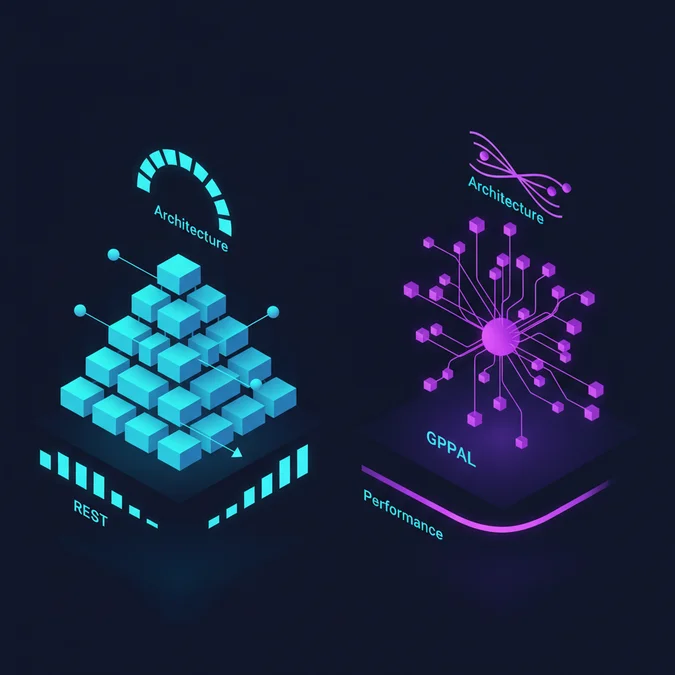

An API graphic primarily refers to a graph-based Application Programming Interface, such as GraphQL, which allows clients to request precisely the data they need in a single network call by navigating a data graph. This contrasts with traditional REST APIs, offering flexible data fetching and efficient communication. Understanding the nuances of this approach is crucial for modern application development.
This article provides a deep dive into the concept of an “API graphic,” focusing on GraphQL as the leading example of a graph-based API. We will clarify its definition, differentiate it from graphics rendering APIs, and explore its architectural principles. Furthermore, we will conduct a detailed comparison with REST APIs, offer practical implementation guidance, and discuss its ecosystem and real-world applications to equip you with the knowledge to make informed architectural decisions.
What is an API Graphic? Disambiguating Graph-Based vs. Rendering APIs
The term “API graphic” can lead to some confusion due to its dual interpretation within the technology landscape. Fundamentally, an API (Application Programming Interface) defines the methods and data formats that applications can use to communicate with each other. The “graphic” component, however, is where the distinction lies.
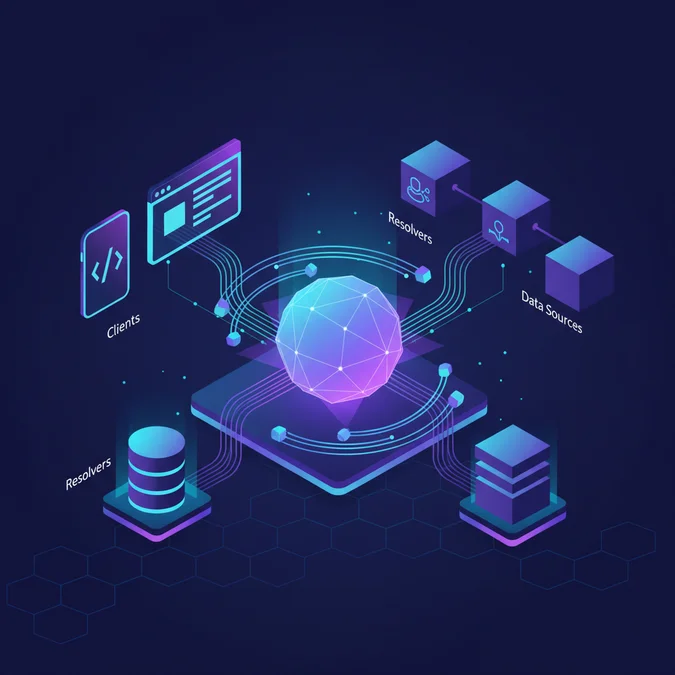
In the context of modern data fetching, an API graphic most commonly refers to a graph-based API. This paradigm, exemplified by GraphQL, treats data as a interconnected graph, allowing clients to query for exactly the data they need, traversing relationships between different data types in a single request. This approach provides significant flexibility and efficiency, particularly in complex data environments with diverse client requirements.
Conversely, “graphics APIs” or “graphics rendering APIs” refer to interfaces designed for rendering 2D and 3D computer graphics. Examples include OpenGL, DirectX, and Vulkan. These APIs provide functions for drawing shapes, managing textures, lighting, and camera perspectives, enabling developers to create visual representations on screens. While both are APIs, their purpose, underlying technology, and domain are entirely distinct.
Clarification: When discussing an “API graphic” in the context of data management and service communication, we are referring to graph-based APIs like GraphQL, not APIs for visual rendering. This article will focus exclusively on the graph-based API paradigm.
The rise of GraphQL has solidified the association of “API graphic” with data graphs. It represents a fundamental shift from traditional endpoint-centric API design to a data-centric model, where the client dictates the data structure. This flexibility is a cornerstone of its appeal, particularly for applications requiring tailored data payloads and efficient resource utilization across various platforms.
Understanding GraphQL: The Graph-Based API Protocol
GraphQL is an open-source query language for your API, and a server-side runtime for executing queries by using a type system you define for your data. It was developed by Facebook in 2012 and open-sourced in 2015, addressing the limitations of traditional REST APIs by providing a more efficient, powerful, and flexible approach to data fetching. At its core, GraphQL embraces the concept of an API graph, where data is seen as a connected network of entities.
The fundamental building blocks of a GraphQL API include:
- Schema: This is the heart of any GraphQL service. It defines the available data, its types, and the relationships between them. The schema dictates what queries clients can make and what data they can expect in return. It’s written using the GraphQL Schema Definition Language (SDL).
- Types: GraphQL is strongly typed. You define object types, scalar types (like
String,Int,Boolean,ID,Float), and custom types. This strong typing ensures data consistency and provides powerful validation capabilities. - Queries: Clients use queries to request specific data from the server. Unlike REST, where you hit different endpoints for different resources, a GraphQL query allows you to specify exactly which fields you need from multiple related resources in a single request.
- Mutations: These are used to modify data on the server, analogous to
POST,PUT,PATCH, andDELETEoperations in REST. Mutations are explicit, making it clear when data is being changed. - Subscriptions: For real-time data updates, GraphQL offers subscriptions. Clients can subscribe to specific events, and the server will push data to them whenever that event occurs, typically over WebSockets.
Consider a simple comparison of data fetching:
| Feature | REST API | GraphQL (API Graph) |
|---|---|---|
| Data Fetching | Multiple endpoints, fixed data structure per endpoint. | Single endpoint, client-defined data structure. |
| Over/Under-fetching | Common. | Eliminated. |
| Version Control | Often URI versioning (e.g., /v1/users). | Schema evolution, deprecating fields. |
| Real-time | Requires WebSockets or polling alongside REST. | Built-in Subscriptions. |
Here’s a basic GraphQL query example, demonstrating how a client requests specific fields from a user and their posts:
query GetUserWithPosts { user(id: "123") { id name email posts { id title createdAt } }}This query, sent to a single GraphQL endpoint, retrieves the user’s ID, name, email, and for each of their posts, its ID, title, and creation timestamp. The server responds with precisely this data, and nothing more. This capability makes GraphQL highly efficient for mobile applications and complex UIs that require tailored data payloads.
GraphQL vs. REST: Architectural Trade-offs and Decision Framework
Choosing between GraphQL and REST for your API graphic design is a critical architectural decision. Both paradigms have distinct strengths and weaknesses that make them suitable for different use cases. Understanding these trade-offs is essential for effective system design.
Architectural Differences:
- REST (Representational State Transfer): Follows a client-server architecture, statelessness, cacheability, and a uniform interface. Resources are identified by URLs, and standard HTTP methods (GET, POST, PUT, DELETE) are used for operations. Each resource typically has its own endpoint.
- GraphQL (Graph-Based API): Operates over a single endpoint (typically
/graphql) and uses a query language to request specific data. It’s centered around a schema that defines a graph of data, allowing clients to traverse relationships and fetch multiple resources in one request.
Comparison of Key Aspects:
| Aspect | GraphQL (API Graph) | REST API |
|---|---|---|
| Data Fetching | Precise, single request for multiple resources, eliminates over/under-fetching. | Endpoint-specific, fixed data structures, often requires multiple requests or over-fetching. |
| Client Flexibility | High, client defines data shape. Ideal for diverse clients. | Lower, server dictates data shape. Clients adapt to server endpoints. |
| Performance | Efficient network usage (fewer requests, smaller payloads). Potential for N+1 issues if not optimized. | Can be less efficient (more requests, larger payloads). Caching often simpler with HTTP methods. |
| Development Experience | Strong typing and introspection provide excellent tooling, auto-completion, and fewer bugs. Steeper learning curve for schema design. | Well-understood, simpler for basic CRUD. Less tooling for client-side data management. |
| Caching | More complex, as HTTP caching mechanisms are less effective with a single endpoint and dynamic queries. Requires client-side or custom caching. | Leverages standard HTTP caching (ETags, Last-Modified, Cache-Control), making it simpler to implement. |
| Error Handling | Returns 200 OK with errors in the response body. Requires client to parse response for errors. | Uses standard HTTP status codes (4xx for client, 5xx for server errors). |
| Security | Requires careful authorization at the field level. Query depth limiting is crucial to prevent denial-of-service attacks. | Standard authentication/authorization mechanisms (OAuth, JWT) often applied at the endpoint level. |
Decision Framework: When to Choose Which API Graphic Approach
Use this checklist to guide your decision:
- Do you have diverse client applications (web, mobile, IoT) with varying data requirements?
- ✅ GraphQL: Highly beneficial for tailoring data to each client, reducing over-fetching.
- ❌ REST: Might require multiple endpoints or significant client-side filtering.
- Is your data model complex and highly interconnected?
- ✅ GraphQL: Its graph-based nature excels at representing and querying relationships.
- ❌ REST: Can lead to many round trips (N+1 problems) to fetch related data.
- Are you building an API for a public, third-party audience?
- ✅ REST: Often preferred for public APIs due to its simplicity, HTTP caching, and widespread familiarity.
- ⚠️ GraphQL: Can be used, but requires careful documentation and client-side adoption.
- Do you need real-time data updates (e.g., live feeds, chat)?
- ✅ GraphQL: Built-in Subscriptions provide a robust solution.
- ❌ REST: Requires additional technologies like WebSockets or SSEs.
- Is efficient network usage and reduced payload size a top priority (e.g., for mobile)?
- ✅ GraphQL: Clients request only what they need, minimizing data transfer.
- ❌ REST: Often sends more data than necessary.
- Is your team already proficient with REST, and your data model is relatively flat?
- ✅ REST: Simpler to implement and maintain in these scenarios.
- ❌ GraphQL: May introduce unnecessary complexity.
Ultimately, the choice depends on your project’s specific needs, team expertise, and the complexity of your data. GraphQL shines in scenarios demanding flexibility and efficiency for complex, interconnected data, while REST remains a solid choice for simpler, resource-oriented APIs where standard HTTP semantics are advantageous.
Designing and Implementing Your GraphQL API: Best Practices and Code
Designing and implementing an effective API graph with GraphQL requires a structured approach, focusing on schema design, resolver logic, and client interaction. Adhering to best practices ensures a scalable, maintainable, and performant API.
1. Schema-First Development:
Start by defining your schema using GraphQL Schema Definition Language (SDL). This contract between client and server clearly outlines available data types, queries, and mutations. A well-designed schema is intuitive, extensible, and reflects your domain model.
type User { id: ID! name: String! email: String posts: [Post!]!}type Post { id: ID! title: String! content: String author: User!}type Query { user(id: ID!): User users: [User!]! post(id: ID!): Post posts: [Post!]!}type Mutation { createUser(name: String!, email: String): User! updatePostTitle(id: ID!, title: String!): Post!}2. Granular and Reusable Types:
Design types that are granular and can be reused across your schema. Avoid creating redundant types for similar data structures. For example, a User type should represent a user consistently throughout the API.
3. Efficient Resolver Implementation:
Resolvers are functions that fetch the data for a specific field in the schema. Optimize resolvers to prevent common issues like the N+1 problem, where fetching a list of items then fetching related data for each item results in N+1 database queries. Techniques like data loaders (e.g., dataloader in JavaScript) can batch and cache requests to backend services, significantly improving performance.
// Example using a hypothetical data source and DataLoaderconst DataLoader = require('dataloader');const users = [{ id: '1', name: 'Alice' }, { id: '2', name: 'Bob' }];const posts = [{ id: 'p1', title: 'Hello', authorId: '1' }];// DataLoader for usersconst userLoader = new DataLoader(async (ids) => { // In a real app, this would be a single batched database query return ids.map(id => users.find(user => user.id === id));});// DataLoader for posts by author IDconst postsByAuthorLoader = new DataLoader(async (authorIds) => { // Batched query to find all posts for the given author IDs return authorIds.map(authorId => posts.filter(post => post.authorId === authorId));});const resolvers = { Query: { user: (parent, { id }) => userLoader.load(id), users: () => userLoader.loadMany(['1', '2']) // Example of loading multiple users }, User: { posts: (parent) => postsByAuthorLoader.load(parent.id) // Efficiently load posts for a user }, Mutation: { createUser: (parent, { name, email }) => { const newUser = { id: String(users.length + 1), name, email }; users.push(newUser); return newUser; } }}4. Handle Errors Gracefully:
GraphQL returns a 200 OK status even if there are errors in the query. Errors are included in an errors array within the response body. Implement custom error types and ensure your resolvers catch and format errors consistently for client consumption.
5. Authentication and Authorization:
Implement authentication at the entry point of your GraphQL API (e.g., using JWTs). Authorization should be handled at the resolver level, checking user permissions before returning data or executing mutations. Field-level authorization is a powerful feature of GraphQL.
6. Pagination and Filtering:
For collections of data, implement pagination (e.g., cursor-based or offset-based) to manage large datasets and filtering to allow clients to refine their requests. The Relay connection specification offers a robust pattern for pagination.
7. Versioning through Schema Evolution:
Instead of URL versioning (like /v1/, /v2/ in REST), GraphQL APIs evolve by adding new fields and types to the schema. Existing fields can be marked as @deprecated, allowing clients to gradually migrate without breaking changes.
8. Monitoring and Logging:
Monitor query performance, resolver execution times, and error rates. Implement logging to track incoming queries and mutations for debugging and analytics.
By following these best practices, you can build a robust and efficient API graph that leverages the full power of GraphQL for flexible and scalable data interactions.
Real-World Use Cases and the GraphQL Ecosystem
The adoption of GraphQL as a leading API graphic solution has grown significantly, driven by its ability to solve complex data fetching challenges for a variety of applications. Its real-world impact is evident across diverse industries and company sizes.
Prominent Real-World Use Cases:
- Mobile Applications: GraphQL is a natural fit for mobile apps, which often require highly specific and optimized data payloads to conserve bandwidth and battery life. Facebook, the creator of GraphQL, famously uses it to power its mobile applications, fetching only the necessary data for dynamic UIs.
- Complex Frontends (SPAs, Dashboards): Single-Page Applications (SPAs) and intricate dashboards benefit from GraphQL’s ability to aggregate data from multiple backend services into a single, client-defined response. This reduces the number of network requests and simplifies client-side data management.
- Microservices Architectures: In a microservices environment, GraphQL can act as an API Gateway, federating data from various underlying services into a unified graph. This allows clients to interact with a single, consistent API endpoint without needing to know the intricacies of the backend microservices.
- Content Management Systems (CMS): Headless CMS platforms often expose their content via GraphQL, providing extreme flexibility for developers to consume content across different frontends (websites, mobile apps, smart devices).
- IoT and Edge Computing: Where network latency and bandwidth are critical constraints, GraphQL’s efficient data fetching minimizes data transfer, making it suitable for IoT devices and edge computing scenarios.
The GraphQL Ecosystem: Tools and Libraries
The vibrant GraphQL ecosystem provides a rich set of tools and libraries that facilitate development, testing, and deployment:
- Server Implementations:
- Apollo Server: A popular, production-ready GraphQL server for Node.js, offering features like caching, authentication, and error handling.
- GraphQL.js: The reference implementation of GraphQL in JavaScript, providing the core functionality for parsing, validating, and executing GraphQL queries.
- HotChocolate (C#): A comprehensive GraphQL server for .NET.
- Absinthe (Elixir): A robust and feature-rich GraphQL implementation.
- Client Libraries:
- Apollo Client: A powerful and flexible GraphQL client for JavaScript (React, Vue, Angular), offering features like caching, state management, and optimistic UI updates.
- Relay: Developed by Facebook, Relay is a highly performant GraphQL client designed for React applications, emphasizing data consistency and query optimization.
- urql: A lightweight and highly customizable GraphQL client for React, Preact, and Vue.
- Schema Tools:
- GraphQL Playground / GraphiQL: Interactive in-browser IDEs for exploring GraphQL schemas and testing queries, mutations, and subscriptions.
- GraphQL Code Generator: Generates types, components, and hooks from your GraphQL schema and operations, improving developer productivity and type safety.
- Database Integrations:
- Prisma: An open-source ORM that turns your database into a GraphQL API (or REST API), simplifying data access and management.
- Hasura: Instantly gives you a real-time GraphQL API over your PostgreSQL database, complete with authorization and caching.
Ecosystem Strength: The maturity and breadth of the GraphQL ecosystem, from server frameworks to client libraries and development tools, significantly lower the barrier to entry and enhance the developer experience for building robust API graphic solutions.
The continuous growth and innovation within the GraphQL community ensure that developers have access to powerful resources for building scalable, high-performance applications that leverage the full potential of a graph-based API approach.
Frequently Asked Questions
What is the primary difference between a graph-based API and a graphics rendering API?
A graph-based API, like GraphQL, focuses on data fetching and manipulation using a graph-like data model, allowing clients to request exactly what they need. A graphics rendering API, such as OpenGL or DirectX, provides tools for rendering 2D and 3D computer graphics.
How does GraphQL improve data fetching compared to traditional REST APIs?
GraphQL improves data fetching by allowing clients to specify the exact data structure they require, eliminating over-fetching and under-fetching. This contrasts with REST, where endpoints often return fixed data structures, potentially leading to multiple requests or unnecessary data transfer.
When should an organization consider using GraphQL for their API development?
Organizations should consider GraphQL when they have complex data requirements, need flexible data fetching for various client applications, or want to reduce the number of requests between client and server. It’s particularly beneficial for mobile apps and microservices architectures.
The concept of an “API graphic,” particularly when understood as a graph-based API like GraphQL, represents a significant evolution in how applications interact with data. By enabling clients to precisely define their data needs, GraphQL addresses critical challenges such as over-fetching, under-fetching, and inefficient data aggregation that are common in traditional REST architectures. This flexibility and efficiency make it an indispensable tool for modern, data-intensive applications.
While REST remains a powerful and widely used paradigm, GraphQL offers compelling advantages for complex data models, diverse client requirements, and real-time data needs. The decision to adopt an API graph approach should be based on a thorough understanding of your project’s specific context, weighing the architectural trade-offs, and leveraging the extensive and growing ecosystem of tools available. Mastering GraphQL empowers developers to build more responsive, scalable, and maintainable data-driven applications.
NR Studio builds custom web apps, mobile apps, SaaS platforms, and internal tools for growing businesses. If you’re working through a technical decision, feel free to reach out — no commitment required.