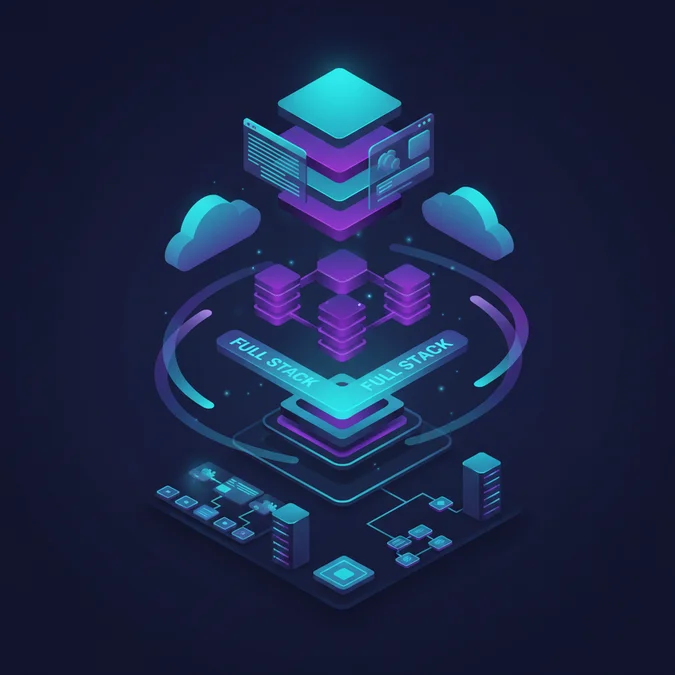

A full stack development company provides end-to-end software solutions, covering both front-end (user interface) and back-end (server, database, application logic) development. They handle the entire project lifecycle, from conceptualization and design to deployment, maintenance, and ongoing support, ensuring a cohesive and functional application.
In today’s dynamic digital landscape, businesses demand agile, scalable, and robust applications. Partnering with a specialized full stack development company offers a strategic advantage, consolidating diverse technical expertise into a single, cohesive unit. This approach minimizes communication overhead, accelerates development cycles, and ensures architectural consistency across all application layers.
This article delves into the core competencies, operational methodologies, and technological choices that define leading full stack development firms. We will explore the comprehensive services offered, detail the full project lifecycle, analyze key architectural trade-offs, and address common client concerns regarding cost, maintenance, and scalability. Our aim is to provide a practitioner-level understanding to guide your strategic technology decisions.
What is a Full Stack Development Company? Definition and Scope
At its core, a full stack development company is an organization equipped to handle every aspect of software product creation, from user interface design to server infrastructure management. Unlike specialized agencies focusing solely on front-end or back-end, a full stack firm provides a unified approach, ensuring seamless integration and optimal performance across the entire application stack.
A full stack development company delivers complete, self-contained software solutions by managing all layers of application development: client-side, server-side, database, and infrastructure.
This comprehensive scope means they possess expertise in a wide array of programming languages, frameworks, databases, and cloud platforms. Their teams typically comprise specialists in front-end development, back-end development, database administration, DevOps, quality assurance, and project management, all collaborating under a single strategic vision. This holistic capability is crucial for developing complex applications that require deep integration and consistent performance from data storage to user interaction.
Comprehensive Full Stack Development Services: From Concept to Deployment
The range of full stack development services offered by a proficient company extends far beyond mere coding. These services encompass the entire product journey, ensuring a cohesive and high-quality digital solution. A truly comprehensive offering covers strategic planning, design, development, deployment, and post-launch support.
Key service areas typically include:
- Discovery & Consultation: Initial project scoping, technical feasibility analysis, and strategic planning.
- UI/UX Design: Creating intuitive, engaging, and accessible user interfaces and experiences.
- Front-end Development: Building the client-side of applications using modern frameworks.
- Back-end Development: Crafting the server-side logic, APIs, and business rules.
- Database Management: Designing, implementing, and optimizing data storage solutions.
- API Development & Integration: Building robust APIs and integrating third-party services.
- Cloud Infrastructure & DevOps: Setting up scalable cloud environments and automating deployment pipelines.
- Quality Assurance & Testing: Ensuring application reliability, security, and performance.
- Maintenance & Support: Ongoing updates, bug fixes, and performance monitoring.
Here is a detailed breakdown of typical full stack development services:
| Service Category | Key Activities | Technologies Involved (Examples) |
|---|---|---|
| Front-End | User interface design, interactive elements, client-side logic | React, Angular, Vue.js, HTML5, CSS3, JavaScript |
| Back-End | Server-side logic, API development, business rule implementation | Node.js, Python (Django/Flask), Ruby on Rails, Java (Spring), PHP (Laravel) |
| Database | Schema design, data modeling, optimization, migration | PostgreSQL, MySQL, MongoDB, Redis, Cassandra |
| API Development | RESTful API design, GraphQL implementation, third-party integrations | Express.js, Django REST Framework, Ruby on Rails API |
| Cloud & DevOps | Infrastructure as Code, CI/CD, containerization, monitoring | AWS, Azure, Google Cloud, Docker, Kubernetes, Jenkins, GitLab CI |
| UI/UX Design | Wireframing, prototyping, user testing, graphic design | Figma, Sketch, Adobe XD |
| QA & Testing | Unit, integration, end-to-end, performance, security testing | Jest, Cypress, Selenium, JMeter |
The Full Stack Development Project Lifecycle: A Step-by-Step Guide
A structured project lifecycle is critical for delivering successful full stack applications. While methodologies vary, a typical engagement follows a series of well-defined phases, ensuring clarity, quality, and stakeholder alignment throughout the development process.
- Discovery & Planning: This initial phase involves in-depth discussions to understand business objectives, target audience, technical requirements, and project constraints. Deliverables include a detailed project scope, functional specifications, technology recommendations, and a high-level architectural plan. This stage lays the foundation for the entire full stack project, ensuring all parties are aligned on the vision and expected outcomes.
- UI/UX Design & Prototyping: Based on discovery, designers create wireframes, mockups, and interactive prototypes. User flows are mapped, and user experience (UX) principles are applied to ensure an intuitive and engaging interface. This iterative process often involves user testing to validate design choices before development begins.
- Architectural Design & Technology Selection: Engineers finalize the application architecture, selecting specific frameworks, languages, databases, and cloud services. Decisions are made regarding microservices versus monolithic structures, data storage strategies, and API design. This is a critical juncture for the long-term maintainability and scalability of the full stack solution.
- Development Sprints (Front-end, Back-end, Database): The core development work is executed in agile sprints. Front-end developers build the user interface, back-end developers implement server-side logic and APIs, and database specialists manage data storage and retrieval mechanisms. Regular integration ensures that different components work seamlessly together.
- Quality Assurance & Testing: Rigorous testing is performed throughout and after development. This includes unit tests, integration tests, system tests, user acceptance testing (UAT), performance testing, and security audits. The goal is to identify and rectify bugs, ensure functional correctness, and validate non-functional requirements.
- Deployment & Launch: Once testing is complete and the application meets all requirements, it is deployed to the chosen production environment. This often involves configuring cloud infrastructure, setting up continuous integration/continuous deployment (CI/CD) pipelines, and ensuring robust monitoring is in place.
- Post-Launch Support & Maintenance: After launch, ongoing activities include bug fixes, performance monitoring, security updates, feature enhancements, and scalability adjustments. A reliable full stack development company provides continuous support to ensure the application remains operational, secure, and performant as business needs evolve.
Choosing the Right Full Stack: Architectural Trade-offs and Technology Stacks
Selecting the appropriate technology stack is a pivotal decision in full stack development, directly impacting performance, scalability, development speed, and long-term maintenance costs. The choice often involves architectural trade-offs, balancing factors like ecosystem maturity, community support, specific project requirements, and team expertise.
Common full stack technology stacks represent different philosophies and strengths:
| Stack Name | Front-End | Back-End | Database | Key Characteristics |
|---|---|---|---|---|
| MEAN Stack | Angular | Express.js (Node.js) | MongoDB | JavaScript-centric, ideal for single-page applications, real-time apps. Strong for rapid development. |
| MERN Stack | React | Express.js (Node.js) | MongoDB | Similar to MEAN but uses React for UI, offering component-based architecture. Highly flexible and popular. |
| LAMP Stack | HTML, CSS, JavaScript | Apache, MySQL, PHP | MySQL | Mature, widely supported, cost-effective for traditional web applications and content management systems. |
| MEVN Stack | Vue.js | Express.js (Node.js) | MongoDB | Employs Vue.js, known for its progressive adoption and ease of integration. Good for performance-critical UIs. |
| Python/Django Stack | (Any JS Framework) | Django (Python) | PostgreSQL/MySQL | Robust, secure, ‘batteries-included’ framework, excellent for complex web applications and data science integrations. |
| Ruby on Rails Stack | (Any JS Framework) | Ruby on Rails | PostgreSQL/MySQL | Emphasizes convention over configuration, promoting rapid development and elegant code. Great for startups. |
Consider a simple Node.js (Express) backend interacting with a MongoDB database, a common pattern in MEAN/MERN/MEVN stacks. Here’s a basic example of an API endpoint:
// server.js (simplified Express example)
const express = require('express');
const mongoose = require('mongoose');
const app = express();

// Connect to MongoDB
mongoose.connect('mongodb://localhost:27017/mydatabase', {
  useNewUrlParser: true,
  useUnifiedTopology: true,
});

// Define a simple schema and model
const itemSchema = new mongoose.Schema({
  name: String,
  description: String,
});
const Item = mongoose.model('Item', itemSchema);

app.use(express.json()); // For parsing application/json

// GET all items
app.get('/api/items', async (req, res) => {
  try {
    const items = await Item.find();
    res.json(items);
  } catch (err) {
    res.status(500).send(err.message);
  }
});

// POST a new item
app.post('/api/items', async (req, res) => {
  try {
    const newItem = new Item(req.body);
    await newItem.save();
    res.status(201).json(newItem);
  } catch (err) {
    res.status(400).send(err.message);
  }
});

const PORT = process.env.PORT || 3000;
app.listen(PORT, () => {
  console.log(`Server running on port ${PORT}`);
});
This snippet demonstrates a unified JavaScript environment across backend and database interaction (with Mongoose). Architectural decisions, such as opting for microservices over a monolithic structure, further influence stack choice, often favoring Node.js for its non-blocking I/O and suitability for distributed systems.
Benefits of Partnering with a Full Stack Development Company
Engaging a full stack development company offers distinct strategic advantages that can significantly impact project success and business growth. These benefits stem from their integrated approach and broad technical capabilities.
Partnering with a full stack development company streamlines project execution, enhances communication, and delivers a consistent, high-quality product by consolidating all development expertise under one roof.
Key benefits include:
- Efficiency and Speed: A unified team reduces communication gaps and handoff delays between front-end, back-end, and database specialists. This accelerates development cycles and time-to-market.
- Cost-Effectiveness: Consolidating development efforts often proves more economical than hiring separate specialized teams or freelancers for each layer. Resource allocation is optimized, and overhead is reduced.
- Consistent Quality and Vision: A single team ensures a consistent architectural approach, coding standards, and user experience across the entire application. This leads to a more coherent and robust product.
- Simplified Project Management: Clients interact with a single point of contact or a unified project management team, simplifying communication, feedback loops, and progress tracking.
- Enhanced Scalability: Full stack teams are adept at designing scalable architectures from the outset, considering future growth and potential increases in user load or data volume.
- Easier Maintenance and Updates: With expertise across all layers, maintenance, bug fixes, and feature updates are more straightforward and less prone to integration issues.
- Broader Skill Set: Access to a diverse pool of talent ensures that the right technologies are selected and implemented for each specific project requirement, leading to more innovative solutions.
These advantages collectively contribute to a more predictable, high-quality, and strategically aligned software development outcome.
Addressing Common Concerns: Cost, Maintenance, and Scalability in Full Stack Projects
Clients often raise critical questions regarding the financial implications, long-term viability, and growth potential of full stack development projects. A reputable full stack development company proactively addresses these concerns through transparent processes and strategic planning.
| Concern | Strategic Approach by Full Stack Companies | Key Considerations |
|---|---|---|
| Cost Optimization | Detailed project scoping, agile development with iterative feedback, clear pricing models (fixed-price for well-defined, time-and-materials for evolving scopes), resource efficiency. | Avoid scope creep, prioritize features, leverage open-source solutions where appropriate, consider ongoing operational costs. |
| Long-Term Maintenance | Clean, well-documented code; comprehensive testing; adoption of mature frameworks; CI/CD pipelines for seamless updates; dedicated support contracts. | Regular security patches, library updates, performance monitoring, proactive bug fixing, clear documentation for future handovers. |
| Scalability Challenges | Designing modular architectures (e.g., microservices), utilizing cloud-native services (serverless, managed databases), implementing load balancing, horizontal scaling strategies, performance monitoring. | Anticipate growth, conduct load testing, choose cloud providers with robust scaling options, plan for database sharding or replication. |
| Security Risks | Implementing security best practices at every layer (OWASP Top 10), regular security audits, penetration testing, secure coding guidelines, data encryption. | Stay updated on vulnerabilities, use secure authentication/authorization, protect sensitive data, ensure compliance with relevant regulations. |
| Technology Debt | Prioritizing refactoring, continuous integration, regular code reviews, staying current with technology trends, allocating budget for technical improvements. | Avoid quick fixes, ensure code quality metrics are maintained, educate stakeholders on the long-term impact of technical debt. |
Effective management of these concerns requires a proactive mindset, robust engineering practices, and clear communication between the development team and the client. For instance, while initial costs for a highly scalable cloud architecture might seem higher, they prevent costly refactoring down the line when user traffic dramatically increases.
Real-World Impact: Full Stack Development Case Studies
Understanding the theoretical aspects of full stack development is enhanced by examining practical applications. Here, we present hypothetical case studies illustrating how full stack expertise translates into tangible business results, addressing specific technical challenges.
| Client Industry | Project Goal | Technical Challenge | Full Stack Solution | Measurable Business Result |
|---|---|---|---|---|
| E-commerce Retail | Launch a scalable online marketplace for niche products. | Handling high concurrent user traffic, complex product catalogs, secure payment processing. | MERN stack (React, Node.js, Express, MongoDB) with AWS Lambda for serverless functions, Stripe integration, and Docker for deployment. | 30% increase in conversion rate, 99.9% uptime during peak sales, average page load time reduced by 400ms. |
| Healthcare Tech | Develop a secure patient portal with appointment scheduling and telemedicine. | HIPAA compliance, real-time video streaming, secure data storage, integration with existing EHR systems. | Python (Django) backend, Vue.js frontend, PostgreSQL for secure data, WebRTC for video, Azure cloud with robust security controls. | Reduced administrative burden by 25%, 15% increase in patient engagement, successful compliance audit. |
| Fintech Startup | Build a personal finance management application with budgeting tools. | Real-time transaction synchronization, robust security for financial data, complex data analytics. | Ruby on Rails backend, Angular frontend, PostgreSQL with Redis for caching, AWS Cognito for authentication, robust API for bank integrations. | User adoption grew by 50% in first 6 months, 99.99% data accuracy, 80% faster report generation. |
| Logistics & Supply Chain | Create a real-time tracking and inventory management system. | Geo-spatial data processing, high-volume data ingestion from IoT devices, complex route optimization. | Node.js backend with GraphQL, React Native for mobile apps, MongoDB for flexible data, Google Cloud Platform (GCP) for maps and data processing. | Improved delivery efficiency by 18%, 10% reduction in inventory discrepancies, real-time visibility across the supply chain. |
These examples highlight the versatility of full stack teams in selecting and implementing diverse technology stacks to meet unique business requirements and deliver measurable value. The ability to manage the entire technical landscape from front-end user experience to back-end data processing is what enables such comprehensive solutions.
Frequently Asked Questions
What exactly does a full stack development company do?
A full stack development company provides end-to-end software solutions, covering both front-end (user interface) and back-end (server, database, application logic) development. They handle the entire project lifecycle, from conceptualization and design to deployment, maintenance, and ongoing support, ensuring a cohesive and functional application.
What types of full stack development services are typically offered?
Full stack development services encompass a wide range, including web and mobile application development, API integration, database management, cloud infrastructure setup, and UI/UX design. Companies often provide consulting, project management, quality assurance, and post-launch support to deliver comprehensive digital products.
How does a full stack approach benefit my business?
A full stack approach streamlines development by having a single team manage all project layers, leading to better communication, faster iteration, and consistent quality. It often results in more efficient resource allocation, reduced costs, and a unified vision for the product, accelerating time-to-market for digital solutions.
What technologies are commonly used by full stack development companies?
Common technologies include front-end frameworks like React, Angular, or Vue.js; back-end languages such as Node.js, Python, Ruby, or PHP; and databases like MongoDB, PostgreSQL, or MySQL. Cloud platforms like AWS, Azure, or Google Cloud are also frequently utilized for hosting and infrastructure.
A full stack development company serves as a strategic partner, providing an integrated approach to building robust, scalable, and user-centric digital products. From conceptualization and architectural design to deployment and ongoing maintenance, their comprehensive expertise across all layers of an application stack ensures efficiency, consistency, and a faster time-to-market.
By understanding the full project lifecycle, architectural trade-offs, and how to address common concerns like cost and scalability, businesses can make informed decisions when selecting a development partner. The ability to deliver complete solutions, as demonstrated by real-world case studies, underscores the invaluable role a proficient full stack team plays in achieving modern business objectives and securing a competitive edge.
NR Studio builds custom web apps, mobile apps, SaaS platforms, and internal tools for growing businesses. If you’re working through a technical decision, feel free to reach out — no commitment required.