
In 2026, the transition from request-response LLM interfaces to autonomous, persistent background systems is the primary engineering challenge in AI. An ambient agent is defined not by its conversational capability, but by its ability to reside within an application environment, monitoring telemetry and triggers to perform actions without explicit human intervention.
This article moves past conceptual fluff to examine the event-driven architectures, state management patterns, and production-grade observability required to keep these systems operational at scale. We analyze the shift from transient prompts to persistent loops, providing the framework needed to move your AI infrastructure into a state of continuous awareness.
Defining the Ambient Agent Paradigm
The ambient agent represents a departure from the traditional chat-based paradigm where the model remains idle until a user submits a prompt. Instead, these systems are designed to exist in a continuous state of observation, leveraging event streams and environmental telemetry to drive autonomous decision-making.
Technical Definition: An ambient agent is a software process that maintains a long-lived execution context, allowing it to interpret asynchronous system signals and execute multi-step workflows without requiring a synchronous trigger from a human end-user.
Unlike standard LLM deployments that rely on stateless HTTP requests, the ambient agent utilizes a persistent loop that continuously reconciles the current state of a digital environment against a set of target objectives. This requires a fundamental shift in how we handle session tokens, memory buffers, and long-running process isolation.
Taxonomy: Ambient AI Agent vs Traditional Models
To understand the operational overhead, we must compare the resource consumption and lifecycle management of these two patterns. An ambient AI agent necessitates a permanent footprint in your infrastructure, whereas traditional models are ephemeral.
| Feature | Traditional Chatbot | Ambient AI Agent |
|---|---|---|
| Trigger Mechanism | User Prompt (HTTP) | Event Stream/Telemetry |
| State Persistence | Session-based (Short) | Database-backed (Long) |
| Execution Pattern | Synchronous/Blocking | Asynchronous/Event-driven |
| Resource Usage | Burst (High) | Constant (Low/Medium) |
| Failure Mode | User-visible Error | Silent Stall/Recovery Loop |
Core Mechanics: Event Loops and Persistence
The architecture of a persistent system relies on a robust event loop. The agent must cycle through observation, reasoning, and action phases while maintaining context integrity.
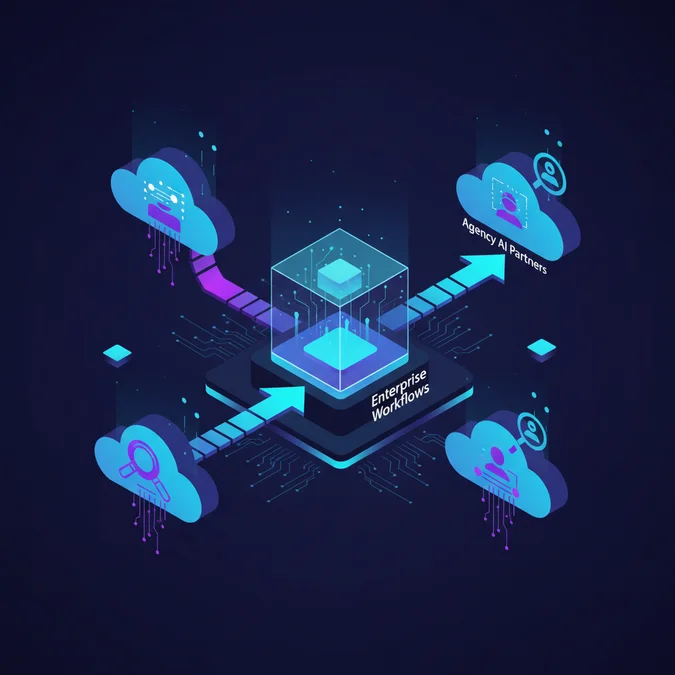
[Event Source] -> [Queue] -> [Agent Controller] -> [Memory Store] -> [Execution Engine]- Observation: The agent polls or listens for events via Webhooks or Kafka streams.
- Reasoning: The agent fetches relevant context from a Vector DB to ground its decision.
- Action: The agent executes an API call or updates a database record.
- Persistence: The outcome is written back to the state store to avoid re-processing.
Implementing this in Python using frameworks like LangGraph allows for stateful checkpoints:
def run_ambient_loop(event, state): try: context = fetch_memory(state.id); response = model.process(event, context); update_state(state.id, response); except RateLimitError: retry_with_backoff(event);
Production Readiness Checklist for Autonomous Systems
Deploying an ambient AI agent requires rigorous engineering standards to ensure system stability and cost control. Because these agents operate in the background, failures can go unnoticed for extended periods.
- [ ] Observability: Implement structured logging for every decision step, including the reasoning trace.
- [ ] Cost Monitoring: Set hard billing alerts on API token usage to prevent runaway loops.
- [ ] Failure Recovery: Build a circuit breaker that pauses the agent if error rates exceed 5% over a 10-minute window.
- [ ] Security: Enforce least-privilege access for the agent’s service account to prevent unauthorized system writes.
- [ ] Latency Tracking: Monitor the time between event ingestion and action completion.
Frequently Asked Questions
What distinguishes an ambient agent from a standard chatbot?
An ambient agent operates in the background, triggered by environmental events rather than explicit user prompts. Unlike chat-based models that wait for input, ambient agents maintain persistent context and proactive reasoning loops to perform tasks autonomously within a system or digital environment.
How does an ambient ai agent manage state over long periods?
These agents utilize persistent memory stores, such as vector databases or graph stores, combined with state machines to track context. By maintaining a continuous event loop, they process incoming telemetry and update their internal state to ensure consistency across long-running background operations.
Transitioning to ambient architectures requires a move toward proactive, stateful engineering. By prioritizing observability and robust error recovery, you can build systems that operate reliably in the background, turning AI from a passive tool into an active, autonomous participant in your software ecosystem.
Review your current infrastructure against the production readiness checklist and ensure your state management strategy can handle long-running, asynchronous operations before scaling your deployments.