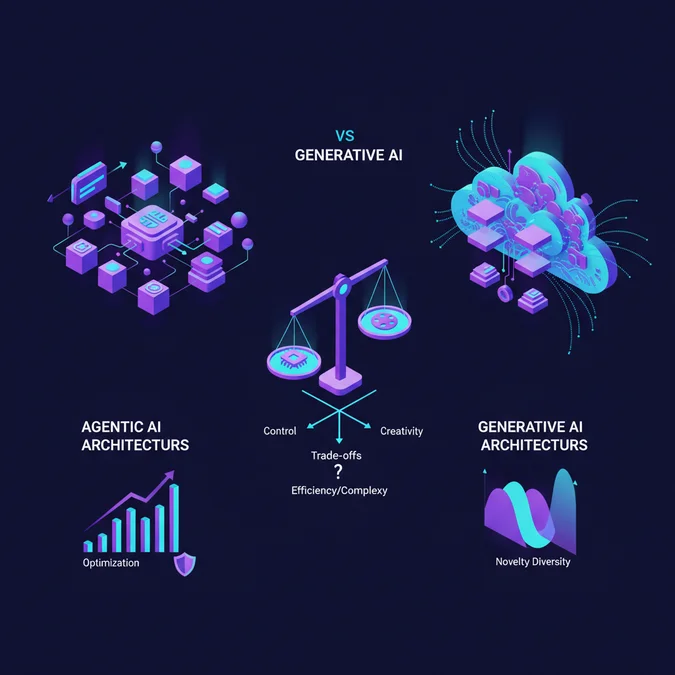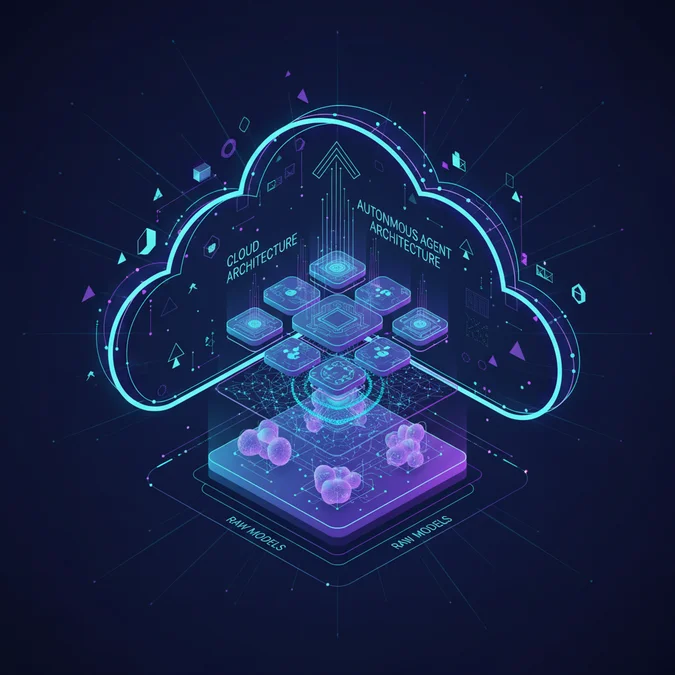

The shift from static LLM chat interfaces to autonomous agentic systems represents the most significant architectural pivot in enterprise software since the transition to cloud-native microservices. In 2026, the future of work with ai agents is no longer theoretical; it is a concrete engineering challenge involving state machine orchestration, non-deterministic execution paths, and rigorous human-in-the-loop oversight.
Organizations failing to treat agentic workflows as first-class distributed systems will struggle with hallucinations, data leaks, and audit failures. This guide provides the technical blueprint for moving beyond simple task automation into a model of persistent, goal-oriented autonomous orchestration.
From Task Automation to Autonomous Orchestration: The Future of Work With AI Agents
The future of work with ai agents is defined by a transition from reactive prompting to proactive goal-seeking. Unlike traditional scripts that follow rigid procedural logic, autonomous agents utilize reasoning loops to decompose high-level objectives into executable sub-tasks, adjusting their strategy based on real-time feedback.
Architectural Insight: The efficacy of an agentic system is directly proportional to its ability to maintain state across multi-step reasoning chains. An agent that cannot remember its previous failures is merely a chatbot with a longer prompt.
In 2026, enterprise architectures are shifting toward event-driven agent loops where agents act as specialized workers in a distributed system, communicating via standardized message queues to ensure reliability and observability.
Taxonomy of AI Agents at Work: Comparative Frameworks
Evaluating the stack for ai agents at work requires understanding how different frameworks handle state, memory, and multi-agent interaction. Choosing the right tool depends on whether your use case requires high-frequency reactive logic or long-running, complex task decomposition.
| Framework | Primary Strength | State Handling | Orchestration Style |
|---|---|---|---|
| LangGraph | Cyclic graph execution | Persistent SQLite/Postgres | Fine-grained control |
| CrewAI | Role-based delegation | Flexible/In-memory | Hierarchical/Manager-led |
| AutoGen | Conversational agents | Distributed/Message-based | Peer-to-peer/Dynamic |
Implementing Human in the Loop Architectural Blueprints
To prevent non-deterministic loops from impacting high-stakes systems, architects must implement a clear ‘interrupt and approve’ mechanism. This requires an asynchronous architecture where an agent pauses its execution, persists its state, and awaits a human trigger via a secure API gateway.
[Agent Process] --> [State Store] --> [Pending Approval Queue] - State Persistence: Always serialize agent memory before awaiting human input.
- Audit Logs: Capture the exact reasoning trace and tool parameters before the human decision.
- Escalation Path: Define a fallback to human operators if confidence scores fall below a specific threshold.
Operational Governance and Security for Agentic Workflows
Governance in an agentic environment is fundamentally about enforcing boundary constraints on model behavior. Without these, agents may inadvertently access unauthorized databases or execute destructive API calls.
- Principle of Least Privilege: Agents must use scoped API keys with strictly limited read/write permissions.
- Input Sanitization: All model outputs must be validated against schema constraints before being passed to downstream services.
- Observability: Implement distributed tracing to visualize agent reasoning steps across multiple services.
Building Versus Buying: Decision Matrix for Enterprise Orchestration
When deciding between proprietary platforms and custom implementation, consider the total cost of ownership regarding maintenance, security patching, and integration complexity. Custom builds offer lower latency and data sovereignty but require a dedicated engineering team for maintenance.
| Criteria | Custom Build | Platform/Managed |
|---|---|---|
| Deployment Speed | Slow | Fast |
| Customization | Unlimited | Restricted |
| Data Privacy | High (In-house) | Variable (Vendor-dependent) |
Engineering Note: If the agentic workflow involves proprietary business logic or unique data pipelines, favor a custom build using modular frameworks like LangGraph to maintain long-term architectural flexibility.
Frequently Asked Questions
How will the future of work with AI agents change job roles?
The future of work with ai agents shifts human roles toward high-level strategy, ethics oversight, and exception management. While agents handle execution, data synthesis, and routine orchestration, human professionals focus on complex decision-making, creative problem-solving, and maintaining the governance guardrails necessary for safe and reliable enterprise operations.
What are the primary challenges of deploying AI agents at work?
Deploying ai agents at work involves significant challenges, including state management, non-deterministic output handling, and data security. Organizations must implement robust observability tools, maintain strict human-in-the-loop protocols, and ensure that agentic workflows comply with existing regulatory standards to prevent hallucinations or unauthorized data exposure in production environments.
The future of work with ai agents is not about replacing human decision-making, but about scaling it through robust, governed, and highly observable agentic systems. Engineers must prioritize state management, security, and human-in-the-loop protocols to transform experimental prototypes into reliable production assets.
By focusing on modular architecture and strict governance, organizations can build agentic workflows that enhance efficiency without compromising the integrity of the underlying enterprise systems.