
To create an AI in 2026, engineers select one of four foundational patterns: prompt-engineered frontier APIs, retrieval-augmented generation (RAG), parameter-efficient fine-tuning (PEFT), or autonomous agent loops with deterministic tool calling. Building an AI system does not require training trillions of tokens from scratch on a multi-million-dollar compute cluster. Instead, modern software engineering treats foundation models as probabilistic runtime engines, wrapping them with deterministic validation layers, persistent memory state machines, and execution sandboxes.
The central challenge is no longer accessing intelligence, but bounding it. Raw language models exhibit non-deterministic outputs, hallucinate structural syntax, and drift off trajectory when tasked with multi-step workflows. A reliable AI system demands architectural discipline: sizing local hardware budgets, controlling latency variance, and constraining model outputs through strict schema validation.
This handbook breaks down the mechanical implementation of modern AI systems. You will evaluate the trade-offs between architectural archetypes, size physical compute envelopes, run local quantized inference, and build a fully operational Python AI agent with automated tool execution and schema-enforced verification guardrails.
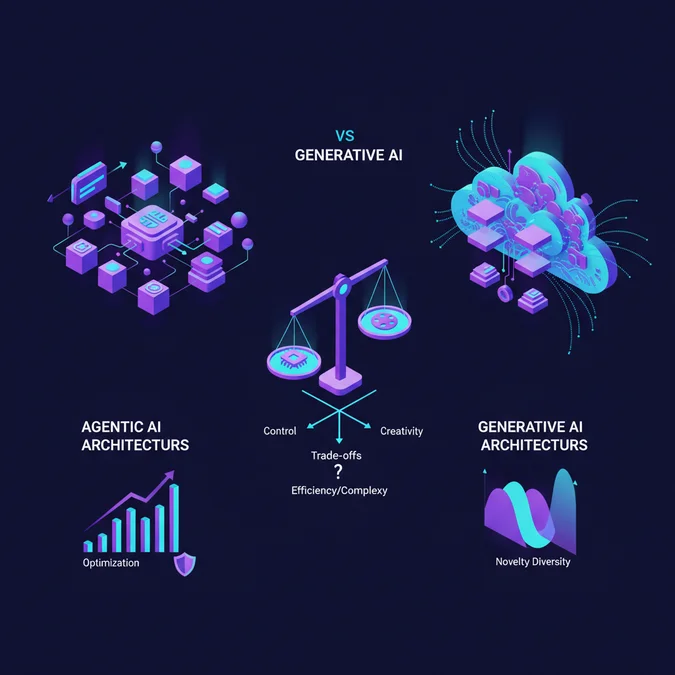
Four Architectural Paths for Developing an AI System
When planning the lifecycle of developing an ai, selecting the wrong foundational path leads to massive compute waste or brittle application logic. AI engineering spans four distinct paradigms, each trading compute intensity against domain specialization and dynamic flexibility.
+-----------------------------------------------------------------------------------+
| AI ARCHITECTURAL SPECTRUM |
+-----------------------------------------------------------------------------------+
| PATH 1: AGENTIC WORKFLOWS |
| - Engine: Frozen Base / Instruct Model |
| - Modality: ReAct Loops, External Tool Calling, Dynamic Planning |
| - Compute Overhead: Low | Context Overhead: High |
+-----------------------------------------------------------------------------------+
 |
 v
+-----------------------------------------------------------------------------------+
| PATH 2: RETRIEVAL-AUGMENTED GENERATION (RAG) |
| - Engine: Frozen Base Model + Vector / Hybrid Index |
| - Modality: Runtime Context Injection, Semantic Chunking |
| - Compute Overhead: Low-Medium | Storage Overhead: Medium |
+-----------------------------------------------------------------------------------+
 |
 v
+-----------------------------------------------------------------------------------+
| PATH 3: PARAMETER-EFFICIENT FINE-TUNING (PEFT / QLORA) |
| - Engine: Adapted Open Weights (e.g. Llama 3, Mistral) |
| - Modality: Low-Rank Adapters, Tone / Style Conditioning, Domain Vocabularies |
| - Compute Overhead: Medium-High | Engineering Overhead: High |
+-----------------------------------------------------------------------------------+
 |
 v
+-----------------------------------------------------------------------------------+
| PATH 4: PRETRAINING FROM SCRATCH |
| - Engine: Random Weight Initialization |
| - Modality: Causal Language Modeling over Trillions of Tokens |
| - Compute Overhead: Massive ($1M-$50M+) | Time Horizon: Months |
+-----------------------------------------------------------------------------------+
The choice between these paradigms depends on whether your problem requires novel knowledge, structured task execution, or specialized token distributions. The following matrix details the operational trade-offs across these tiers:
| Architectural Path | Primary Use Case | Compute Footprint | Data Volume Required | Latency Envelope | Maintenance Overhead |
|---|---|---|---|---|---|
| Agentic Loop | Multi-step workflows, API interaction, dynamic web automation | Minimal (Inference only) | Zero (Prompt instructions only) | High (Multiple round-trips: 1.5s to 12s) | Medium (Managing tool schemas and state transitions) |
| Hybrid RAG | Proprietary documentation query, dynamic live knowledge bases | Low (Embedding generation + Inference) | Hundreds to millions of text documents | Medium (Embedding search + Generation: 400ms to 2.5s) | High (Vector drift, re-indexing, chunk tuning) |
| PEFT (LoRA/QLoRA) | Enforcing strict stylistic formats, specialized syntax, tiny niche tasks | Medium (Single/multi-GPU training runs) | 1,000 to 50,000 high-quality prompt-completion pairs | Low (Identical to base model inference) | Medium (Adapter versioning and evaluation sets) |
| Scratch Pretraining | Creating sovereign base models, new languages, foundational biology | Extreme (Clusters of H100/B200 clusters) | Billions to trillions of deduplicated tokens | Low (Base generation latency) | Extreme (Infrastructure telemetry, checkpoint curation) |
Fine-tuning does not reliably teach a model net-new facts. Fine-tuning conditions the model structure, output style, and syntax compliance. If your goal is teaching a system to read proprietary company documentation, build a hybrid RAG system. If your goal is forcing a model to emit a bespoke AST or proprietary dialect without error, fine-tune an adapter.
Most commercial systems in 2026 settle on a hybrid architecture: an open-weight model adapted with a lightweight LoRA to master specific syntax, wired into a vector index for accurate domain context, and executed inside an agentic loop equipped with validated external functions.
Hardware Sizing, Compute Budgets, and Local Tooling Prerequisites
A common friction point for engineers asking can i build an ai on my own is calculating the hardware requirements needed to serve or fine-tune models locally. Modern open-weight models distribute their storage footprints based on parameter count and quantization precision.
Language model weights are fundamentally matrices of floating-point numbers. Running a model at full precision (FP16 or BF16) requires roughly 2 bytes of VRAM per parameter, plus operational overhead for the Key-Value (KV) cache. Quantization algorithms, such as GGUF, AWQ, and EXL2, compress these matrices into 4-bit or 8-bit integers, drastically reducing memory footprint while maintaining perplexity scores within acceptable margins.
| Model Class | Quantization Level | Weights Footprint (RAM/VRAM) | Context Window (8k KV Cache) | Minimum Recommended Hardware | Inference Throughput (Target) |
|---|---|---|---|---|---|
| 8B Parameters | 4-bit (Q4_K_M / AWQ) | ~5.5 GB | +1.5 GB VRAM | NVIDIA RTX 4060 (8GB VRAM) or Apple M2/M3 (16GB) | ~45 to 80 tok/sec |
| 14B Parameters | 4-bit (Q4_K_M / AWQ) | ~9.5 GB | +2.2 GB VRAM | NVIDIA RTX 4070 (12GB VRAM) or Apple M-Series (24GB) | ~30 to 55 tok/sec |
| 32B Parameters | 4-bit (Q4_K_M / AWQ) | ~20.0 GB | +3.5 GB VRAM | NVIDIA RTX 4090 (24GB VRAM) or Apple M-Series (36GB) | ~20 to 35 tok/sec |
| 70B Parameters | 4-bit (Q4_K_M / AWQ) | ~43.0 GB | +6.0 GB VRAM | 2x RTX 3090/4090 (48GB VRAM) or Apple Mac Studio (64GB+) | ~12 to 22 tok/sec |
To establish a reproducible local engineering environment, verify the following baseline prerequisites:
- Compute Accelerator: Dedicated GPU with at least 12GB VRAM supporting CUDA 12.x or ROCm 6.x, or an Apple Silicon Mac with unified memory (minimum 24GB for seamless multi-agent development).
- Inference Daemon: A high-performance inference engine like Ollama or vLLM. Ollama excels at rapid desktop testing via llama.cpp backends, while vLLM is the production standard for high-throughput PagedAttention serverless hosting.
- Development Stack: Python 3.11+, PyTorch 2.x, and a virtual environment isolation tool such as UV or Poetry to manage dependencies cleanly.
Step-by-Step Pipeline: How to Create an AI Agent with Local Inference and Tool Calling
Understanding how to create an ai requires moving beyond basic text generation to building a stateful agent. An autonomous agent combines three elements: an instruction-tuned model, a tool execution registry, and a deterministic execution loop that inspects model responses, calls external code, and passes structured feedback back to the context window.
- Step 1: Runtime Initialization. Launch an open-weights model locally. We use Ollama running the Llama 3.1 8B Instruct model, exposing a standard REST API at
http://localhost:11434. - Step 2: Tool Registry Declaration. Define external capabilities using clean Pydantic or JSON schemas so the model understands function contracts, parameter types, and return values.
- Step 3: Reasoning and Observation Loop (ReAct). Inject tool definitions into the system prompt, prompt the model for an execution plan, parse structured tool invocation requests, execute the native Python functions, and reinject the runtime outputs.
- Step 4: Output Termination and Guardrail Parsing. Stop the execution loop once the model identifies that all sub-tasks are complete, returning a typed response.
Below is a complete, self-contained Python agent demonstrating this architecture using pure HTTP requests against a local model runtime:
import json
import requests
from typing import Any, Dict, List

OLLAMA_ENDPOINT = "http://localhost:11434/api/chat"
MODEL_NAME = "llama3.1:8b"

def execute_calculator(expression: str) -> str:
 """A safe evaluator for simple mathematical expressions."""
 allowed_chars = set("0123456789+-*/(). ")
 if not set(expression).issubset(allowed_chars):
 return json.dumps({"error": "Invalid characters in mathematical expression."})
 try:
 # Simple arithmetic evaluation inside restricted context
 result = eval(expression, {"__builtins__": {}}, {})
 return json.dumps({"result": float(result)})
 except Exception as e:
 return json.dumps({"error": f"Execution failure: {str(e)}"})

def query_system_metric(metric_name: str) -> str:
 """Mock lookup for server telemetry."""
 metrics = {
 "cpu_utilization": "42.8%",
 "memory_free_gb": 14.2,
 "disk_io_wait_ms": 3.1
 }
 val = metrics.get(metric_name.lower().strip())
 if val is not None:
 return json.dumps({"metric": metric_name, "value": val})
 return json.dumps({"error": f"Metric '{metric_name}' not registered."})

# Map available functions
TOOL_REGISTRY = {
 "execute_calculator": execute_calculator,
 "query_system_metric": query_system_metric
}

SYSTEM_PROMPT = """
You are an autonomous technical operations agent. You have access to the following tools:

1. execute_calculator(expression: str)
 Calculate mathematical expressions. Example: {"name": "execute_calculator", "parameters": {"expression": "45 * 12"}}

2. query_system_metric(metric_name: str)
 Check cluster state. Metrics: cpu_utilization, memory_free_gb, disk_io_wait_ms.
 Example: {"name": "query_system_metric", "parameters": {"metric_name": "cpu_utilization"}}

Response Protocol:
- If you need to invoke a tool, output ONLY a JSON object: {"tool_call": {"name": "tool_name", "parameters": {..}}}
- If you have the final answer, output ONLY a JSON object: {"final_answer": "Your clear response here"}
Always return valid, parsable JSON without markdown wrappers.
"""

def chat_with_runtime(messages: List[Dict[str, str]]) -> str:
 payload = {
 "model": MODEL_NAME,
 "messages": messages,
 "stream": False,
 "format": "json",
 "options": {"temperature": 0.0}
 }
 response = requests.post(OLLAMA_ENDPOINT, json=payload, timeout=30)
 response.raise_for_status()
 return response.json()["message"]["content"]

def run_agent(user_query: str, max_iterations: int = 5) -> str:
 conversation = [
 {"role": "system", "content": SYSTEM_PROMPT},
 {"role": "user", "content": user_query}
 ]

 for step in range(max_iterations):
 raw_response = chat_with_runtime(conversation)
 conversation.append({"role": "assistant", "content": raw_response})

 try:
 parsed = json.loads(raw_response)
 except json.JSONDecodeError:
 # Corrective feedback loop for structural parsing failures
 conversation.append({
 "role": "user",
 "content": "System Error: Malformed JSON. Return strictly a JSON object with tool_call or final_answer."
 })
 continue

 if "final_answer" in parsed:
 return parsed["final_answer"]

 if "tool_call" in parsed:
 tool_meta = parsed["tool_call"]
 func_name = tool_meta.get("name")
 params = tool_meta.get("parameters", {})

 if func_name in TOOL_REGISTRY:
 observation = TOOL_REGISTRY[func_name](**params)
 else:
 observation = json.dumps({"error": f"Tool '{func_name}' does not exist."})

 # Inject observation back into execution context
 conversation.append({
 "role": "user",
 "content": f"Observation from {func_name}: {observation}"
 })

 return "Agent reached maximum iteration limit without converging."

if __name__ == "__main__":
 # Test agent with multi-step observation dependency
 query = "Check the current CPU utilization, then multiply that percentage number by 2.5."
 print(f"User Query: {query}")
 final_output = run_agent(query)
 print(f"Agent Result: {final_output}")
This loop forms the foundational backbone of production agent runtimes. By locking temperature to 0.0, requiring strict JSON mode, and explicitly handling parsing exceptions via corrective prompts, the system behaves predictably across complex operational tasks.
Fine-Tuning Open Weights: Can I Build My Own AI Model on Custom Datasets?
When developers ask can i build my own ai model, they rarely mean deriving token probabilities over common crawl dumps. They usually need to teach an existing foundation model a specialized internal dialect, structured data interchange format, or custom code generation pattern.
Parameter-Efficient Fine-Tuning, specifically Low-Rank Adaptation (LoRA) and its 4-bit quantized variant (QLoRA), allows you to adapt a multi-billion-parameter foundation model without updating its primary weights. LoRA freezes the original pre-trained weight matrix W_0 and injects trainable rank decomposition matrices A and B into the attention layers:
 +-------------------------+
 | Input Vector x (d_in) |
 +-------------------------+
 |
 +----------------+----------------+
 | |
 v v
 +---------------------------+ +---------------------------+
 | Original Matrix W_0 | | Down-Projection A |
 | (Frozen, 4-bit) | | (d_in x r) |
 +---------------------------+ +---------------------------+
 | |
 | v
 | +---------------------------+
 | | Up-Projection B |
 | | (r x d_out) |
 | +---------------------------+
 | |
 +----------------+----------------+
 v
 [ Addition (+) Node ]
 |
 v
 +---------------------------+
 | Output Vector h (d_out) |
 +---------------------------+
Because the rank r is chosen to be small (typically 8, 16, or 32), the number of trainable parameters drops by over 99%, allowing an engineer to fine-tune an 8B parameter model on a single 16GB or 24GB consumer GPU.
Here is an operational PyTorch script using Hugging Face transformers, peft, and trl to train a QLoRA adapter on custom structured instructions:
import torch
from datasets import Dataset
from transformers import AutoModelForCausalLM, AutoTokenizer, BitsAndBytesConfig
from peft import LoraConfig, get_peft_model, prepare_model_for_kbit_training
from trl import SFTTrainer, SFTConfig

BASE_MODEL = "meta-llama/Meta-Llama-3.1-8B-Instruct"

# 1. Configure 4-bit NormalFloat quantization
bnb_config = BitsAndBytesConfig(
 load_in_4bit=True,
 bnb_4bit_quant_type="nf4",
 bnb_4bit_compute_dtype=torch.bfloat16,
 bnb_4bit_use_double_quant=True,
)

# 2. Initialize Tokenizer and Quantized Base Model
tokenizer = AutoTokenizer.from_pretrained(BASE_MODEL, use_fast=True)
tokenizer.pad_token = tokenizer.eos_token

model = AutoModelForCausalLM.from_pretrained(
 BASE_MODEL,
 quantization_config=bnb_config,
 device_map="auto",
 torch_dtype=torch.bfloat16
)

# 3. Prepare model for adapter injection
model = prepare_model_for_kbit_training(model)

peft_config = LoraConfig(
 r=16,
 lora_alpha=32,
 target_modules=["q_proj", "k_proj", "v_proj", "o_proj", "gate_proj", "up_proj", "down_proj"],
 lora_dropout=0.05,
 bias="none",
 task_type="CAUSAL_LM"
)

model = get_peft_model(model, peft_config)
model.print_trainable_parameters()

# 4. Dummy domain dataset (instruction-tuning format)
training_records = [
 {
 "text": "<|begin_of_text|><|start_header_id|>system<|end_header_id|>\nConvert natural intent to cluster commands.<|eot_id|>"
 "<|start_header_id|>user<|end_header_id|>\nReboot the primary ingress controller.<|eot_id|>"
 "<|start_header_id|>assistant<|end_header_id|>\nkubectl rollout restart deploy/ingress-nginx-controller -n ingress-nginx<|eot_id|>"
 }
] * 200

train_dataset = Dataset.from_list(training_records)

# 5. Trainer parameters
training_args = SFTConfig(
 output_dir="./lora_output",
 max_steps=50,
 per_device_train_batch_size=2,
 gradient_accumulation_steps=4,
 learning_rate=2e-4,
 logging_steps=10,
 bf16=True,
 dataset_text_field="text",
 max_seq_length=512
)

trainer = SFTTrainer(
 model=model,
 train_dataset=train_dataset,
 peft_config=peft_config,
 args=training_args,
)

if __name__ == "__main__":
 print("Starting parameter-efficient training run..")
 trainer.train()
 # Save adapter weights (~80MB footprint)
 model.save_pretrained("./custom_infra_adapter")
 print("Adapter successfully written to disk.")
Preventing Catastrophic Forgetting: When fine-tuning adapters on focused datasets, models can lose general conversational coherence and analytical reasoning. Maintain a balanced evaluation set containing both domain-specific examples and general logic tasks. If validation loss on general tasks degrades by more than 15%, lower your learning rate or increase the weight of instruction-mixed regularization data.
Production Hardening: Guardrails, Hallucination Audits, and Verification
Running an AI in production requires continuous defense against hallucinated payloads, prompt injections, and malformed schemas. Building production-grade AI involves surrounding the generative core with deterministic verification mechanisms.
Before promoting an agent to a user-facing or mission-critical workflow, establish this production hardening checklist:
- Grammar and Schema Masking: Enforce strict JSON output parsing at the inference engine level using context-free grammars (such as GBNF in llama.cpp) to mathematically guarantee syntactically valid JSON before generation completes.
- Temperature Lockdown: Lock inference temperature to 0.0 for structural parsing, data extraction, and tool invocation tasks to eliminate stochastic variance.
- Latency Budgeting: Set aggressive timeouts (e.g. 5 seconds per inference step) paired with circuit breakers to prevent runaway generation cycles.
- Adversarial Input Sanitization: Strip control tokens (such as
<|end_of_text|>,<|start_header_id|>) from incoming user prompts to prevent role confusion or prompt injection attacks.
The following production validator demonstrates programmatic schema validation and automated repair patterns using Pydantic:
from typing import List, Optional
from pydantic import BaseModel, Field, ValidationError

class DatabasePatchPlan(BaseModel):
 target_table: str = Field(.. min_length=2, max_length=64)
 operations: List[str] = Field(.. min_items=1)
 requires_downtime: bool
 estimated_duration_sec: int = Field(.. ge=1, le=3600)
 rollback_command: Optional[str] = None

def validate_model_payload(raw_json_str: str) -> DatabasePatchPlan:
 """
 Validates generative output against strict schema models.
 Raises actionable structural errors if the model violates contract.
 """
 try:
 return DatabasePatchPlan.model_validate_json(raw_json_str)
 except ValidationError as err:
 # In production pipelines, return this failure back to the model context for re-generation
 error_details = []
 for e in err.errors():
 field = ".".join([str(loc) for loc in e["loc"]])
 error_details.append(f"Field '{field}' {e['msg']}")
 raise ValueError("Schema validation failed:\n" + "\n".join(error_details))

# Example validation run
if __name__ == "__main__":
 valid_sample = '''{
 "target_table": "users_session_cache",
 "operations": ["ALTER TABLE users_session_cache ADD COLUMN is_active BOOLEAN DEFAULT TRUE;"],
 "requires_downtime": false,
 "estimated_duration_sec": 45,
 "rollback_command": "ALTER TABLE users_session_cache DROP COLUMN is_active;"
 }'''

 invalid_sample = '''{
 "target_table": "u",
 "operations": [],
 "requires_downtime": false,
 "estimated_duration_sec": 90000
 }'''

 print("Testing valid payload:")
 parsed = validate_model_payload(valid_sample)
 print(f"Success: Target Table = {parsed.target_table}")

 print("\nTesting invalid payload:")
 try:
 validate_model_payload(invalid_sample)
 except ValueError as e:
 print(f"Correctly caught structural drift:\n{e}")
By catching structural drift and contract violations at the runtime boundary, downstream databases and APIs remain protected from corrupt, malformed, or out-of-range instructions.
Frequently Asked Questions
Can I build an AI on my own without an enterprise cloud budget?
Yes. A solo developer can build an AI on a single consumer GPU by running open-weight models via Ollama or vLLM. Fine-tuning models with 7B or 14B parameters requires just 16GB to 24GB of VRAM using 4-bit quantization and QLoRA.
What programming languages and frameworks are best for developing an AI?
Python remains the primary language for developing an AI due to libraries like PyTorch, Hugging Face Transformers, and LlamaIndex. For latency-critical inference, modern production deployments frequently pair Python pipelines with Rust or C++ runtimes such as Llama.cpp and vLLM.
Can I build my own AI model from scratch or should I fine-tune?
Pretraining a frontier model from scratch costs millions in compute and massive datasets. Instead, engineers build their own AI model by taking open foundation weights (such as Llama 3 or Mistral) and applying QLoRA fine-tuning or RAG pipelines tailored to specific internal data.
What is the fastest path to create a functional AI prototype?
The fastest path is pulling an open-weight model with Ollama, wrapping it in an OpenAI-compatible Python API client, and attaching custom tool functions using structured JSON parsing. This establishes a functioning local agent prototype within an afternoon.
Creating an AI system in 2026 is an exercise in applied software architecture, not speculative science. By framing the foundation model as a specialized, probabilistic compute block inside an otherwise deterministic pipeline, you can reliably build systems that parse data, invoke tools, and execute workflows without unpredictability.
Begin with the simplest architecture that solves your core problem: start with local quantization engines like Ollama or vLLM, wrap execution paths in schema-validated Python loops, and introduce fine-tuned QLoRA adapters or hybrid RAG components only when your accuracy benchmarks demand structural adaptation. Rigorous evaluation sets, continuous guardrails, and deterministic tool schemas are what turn a basic generative model into a production-grade software engine.