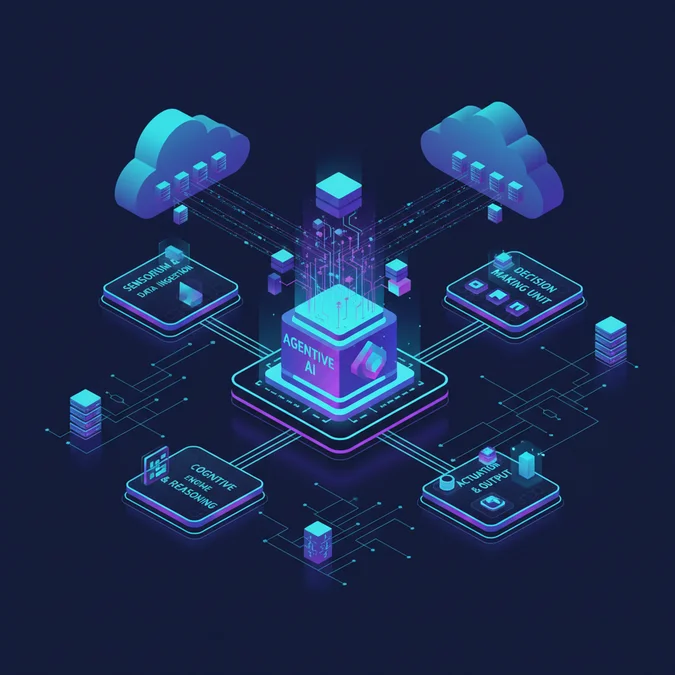

An AI agent marketplace is a distributed registry and runtime orchestration catalog where organizations discover, benchmark, and deploy pre-configured autonomous agents into production environments. Rather than supplying static prompt templates or raw inference APIs, modern marketplaces package autonomous execution loops, persistent episodic memory, deterministic tool-calling manifests, and sandboxed runtimes into deployable units of synthetic labor.
Deploying third-party autonomous systems into critical infrastructure exposes engineering teams to unique systemic hazards. A naive agent integration can silently burn thousands of dollars in unbounded reasoning loops, trigger cascading distributed state corruption across transactional databases, or expose enterprise data lakes to lateral prompt injection through over-permissioned external tool interfaces. Without formal verification standards, commercial agent ecosystems risk devolving into fragile, repackaged API wrappers.
This technical guide provides a vendor-neutral architectural blueprint for evaluating, procuring, and orchestrating commercial autonomous agents. We analyze the underlying registry taxonomy, examine a multi-variable Total Cost of Ownership (TCO) model against custom LangGraph implementations, establish a rigorous sandboxing and security scorecard, and trace deterministic multi-agent communication over standardized protocols.
Taxonomy of the Modern AI Automation Marketplace
Commercial distribution hubs for autonomous software have evolved beyond simple prompt directories. Today, an enterprise-grade ai agent marketplace operates as a composite registry combining runtime virtualization, capability attestations, and cryptographic identity. Understanding how these platforms decouple reasoning models from environmental side effects requires categorizing them into three distinct architectural archetypes.
+---------------------------------------------------------------------------------------+
| AI AUTOMATION MARKETPLACE |
+---------------------------------------------------------------------------------------+
| 1. Full-Stack Digital Workers 2. Modular MCP Skill Packs 3. Composite Meshes |
| (Self-Contained Runtimes) (Dynamic Capabilities) (Multi-Agent DAG)|
| +---------------------------+ +--------------------------+ +------------------+|
| | Ingress -> Orchestrator | | Model Context Protocol | | Supervisor Agent ||
| | MicroVM State / Storage | | Tool Signatures / Schema | | Sub-Agent Worker ||
| | Integrated Fallback Gate | | Ephemeral Auth Tokens | | Event-Driven Bus ||
| +---------------------------+ +--------------------------+ +------------------+|
+---------------------------------------------------------------------------------------+
1. Full-Stack Digital Workers
Full-stack digital workers are opinionated, turnkey systems designed for vertical execution domains such as automated site reliability engineering (SRE), tier-1 SOC alert remediation, or Accounts Payable invoice reconciliation. These units arrive pre-wired with domain-specific system prompts, fine-tuned reflection loops, specialized episodic memory schemas, and out-of-the-box system connectors.
2. Modular Model Context Protocol (MCP) Skill Packs
Rather than packaging an end-to-end agent, modular skill packs provide pluggable capability primitives compliant with the Model Context Protocol (MCP) or OpenAI function-calling specifications. These components contain only the JSON Schema declarations, deterministic parameter validation logic, network transport interfaces, and granular permission boundaries necessary to perform specialized external operations, such as executing arbitrary SQL against an analytics warehouse or modifying Cloudflare DNS records.
3. Composable Workflow Graph Templates
Graph templates distribute non-deterministic workflows serialized as directed acyclic graphs (DAGs) or cyclic state machines. These templates are designed for ingestion by orchestration engines such as LangGraph, Temporal, or LlamaIndex Workflows, exposing explicit state channels, conditional branching checkpoints, and human intervention hooks that engineering teams hydrate with their own inference parameters.
| Marketplace Architecture | Runtime Model | State Management Strategy | Primary Failure Mode | Latency Overhead |
|---|---|---|---|---|
| Full-Stack Digital Worker | Hosted MicroVM or Container | Encapsulated vector store, SQLite/Redis session storage | State divergence, hallucinated side effects | High (1.2s to 8.5s per turn) |
| Modular MCP Skill Pack | Client-side IPC / Ephemeral Process | Stateless: accepts context, returns structured payload | Schema mismatch, target upstream timeout | Low (15ms to 120ms tool execution) |
| Composite Mesh Template | Hybrid Orchestrator (Serverless + Workers) | Distributed state graph with checkpoint recovery (PostgreSQL) | Unbounded loop cycles, cyclic deadlocks | Variable (Task-dependent) |
Selecting an asset from an ai automation marketplace introduces infrastructural trade-offs between execution autonomy and deterministic predictability. While complete digital workers minimize immediate development overhead, their opaque orchestration pipelines make fine-grained control and root-cause debugging difficult under production edge cases.
Architectural Advisory: Treat any marketplace package that fails to expose an inspectable JSON-Schema specification for its tools and external network endpoints as untrusted third-party code. Ephemeral runtime validation is mandatory before binding credentials.
Enterprise TCO Matrix: Why Teams Buy AI Agents vs Build in LangGraph
When technical leaders decide whether to buy ai agents or construct bespoke orchestration layers using LangGraph, Semantic Kernel, or AutoGen, they often fall into the trap of only comparing base SaaS subscription fees against baseline engineering salaries. A comprehensive Total Cost of Ownership (TCO) evaluation for ai business automation must quantify secondary and tertiary operating expenses: prompt token bloat, reflection overhead, vector database ingestion costs, tool call fees, and the engineering resources required to debug distributed state machines.
Inference and Token Consumption Realities
Off-the-shelf agents optimize for wide-ranging autonomy over token parsimony. A commercial customer triage agent often loads expansive system prompts (4,000 to 12,000 tokens), rich conversational context, and extensive schema declarations on every evaluation step. If the agent implements multi-step ReAct (Reason + Act) or self-critique loops, a single incoming payload can trigger 4 to 15 recursive LLM inference calls, rapidly inflating operational costs.
import dataclasses

@dataclasses.dataclass
class AgentUnitEconomics:
 monthly_task_volume: int
 avg_steps_per_task: int
 input_tokens_per_step: int
 output_tokens_per_step: int
 cost_per_million_input: float # e.g. $2.50 for Claude 3.5 Sonnet
 cost_per_million_output: float # e.g. $15.00 for Claude 3.5 Sonnet
 tool_api_cost_per_step: float
 human_review_rate: float # Percentage of tasks requiring manual approval
 cost_per_human_review: float # Loaded engineering / analyst cost

 def calculate_monthly_tco(self) -> dict:
 total_steps = self.monthly_task_volume * self.avg_steps_per_task

 input_cost = (total_steps * self.input_tokens_per_step / 1_000_000) * self.cost_per_million_input
 output_cost = (total_steps * self.output_tokens_per_step / 1_000_000) * self.cost_per_million_output
 token_cost = input_cost + output_cost

 tool_execution_cost = total_steps * self.tool_api_cost_per_step

 human_interventions = self.monthly_task_volume * self.human_review_rate
 hitl_cost = human_interventions * self.cost_per_human_review

 return {
 "monthly_inference_cost": round(token_cost, 2),
 "tool_execution_cost": round(tool_execution_cost, 2),
 "human_intervention_cost": round(hitl_cost, 2),
 "aggregate_operational_cost": round(token_cost + tool_execution_cost + hitl_cost, 2)
 }

# Example benchmark: 50,000 customer resolution tasks per month
params = AgentUnitEconomics(
 monthly_task_volume=50000,
 avg_steps_per_task=4,
 input_tokens_per_step=6000,
 output_tokens_per_step=450,
 cost_per_million_input=2.50,
 cost_per_million_output=15.00,
 tool_api_cost_per_step=0.005,
 human_review_rate=0.04,
 cost_per_human_review=3.50
)

print(params.calculate_monthly_tco())| Cost Vector | Commercial Marketplace Agent | Custom In-House LangGraph Engine |
|---|---|---|
| Initial Implementation Capital | Low: API keys, integration testing (1 to 3 weeks) | High: Core scaffolding, state storage, tracing (8 to 16 weeks) |
| Token Economy Control | Low: Opaque runtime loop, prone to systemic context inflation | High: Granular state compaction, custom sliding windows, model tiering |
| Tool and API Egress Surcharges | Variable: Often bundled with markup fees per action | Zero markup: Direct provider billing at contracted enterprise volume |
| Edge-Case Maintenance | Medium: Bound to vendor update cycles and upstream fixes | High: Internal team maintains regressions, prompt evals, schemas |
| Vendor Lock-In and Migration Cost | High: Proprietary execution formats and memory schemas | Low: Portable code base running on standard infrastructure |
Engineering organizations should typically buy when the underlying business process is generic and well-isolated, such as extracting structured entities from PDF invoices. Conversely, building internal state graphs becomes essential when handling proprietary workflows, multi-tenant databases, or latency-sensitive pipelines where context size directly impacts baseline unit economics.
Vetting an AI for Business Automation Solution: Security, Sandboxing, and Determinism
Procuring an ai for business automation solution from an open or semi-curated ecosystem requires a zero-trust verification model. Because autonomous agents bridge non-deterministic natural language inference with deterministic execution environments, they introduce broad threat surfaces, including prompt injection, remote code execution, and unauthorized data extraction.
The Technical Vetting Checklist
- Tool Call Sandboxing: Does the runtime execute external commands inside secure, ephemeral microVMs (such as Firecracker or gVisor) with absolute file system isolation and restricted network egress?
- Identity Delegation and Scope: Does the agent support OAuth 2.0 Token Exchange (RFC 8693) or fine-grained IAM roles, preventing it from inheriting unrestricted administrative system credentials?
- Static and Dynamic Prompt Injection Resistance: Is untrusted input isolated from orchestration instructions using strict XML/Markdown delimiters, secondary evaluation guardrails, or separate classifier models?
- Deterministic Output Formatting: Does the agent enforce structural schema compliance at the engine level through grammar-guided decoding (e.g. Guidance, Outlines, or instructor) rather than relying on best-effort conversational prompting?
- OpenTelemetry Tracing: Does the system export native OTel spans detailing prompt structures, completion latencies, vector retrieval scores, and precise tool arguments?
Evaluating Tool Call Authorization via Secure Proxy Interceptors
An architecturally sound agent architecture should never hold raw API credentials for external enterprise tools. Instead, the agent interacts with a local or sidecar proxy that validates the generated JSON schema, checks dynamic parameter ranges, and injects transient authentication tokens at the network boundary.
import json
import jsonschema
from typing import Any, Dict

TOOL_SECURITY_SCHEMA = {
 "type": "object",
 "properties": {
 "action": {"type": "string", "enum": ["read_customer_data", "update_record"]},
 "parameters": {
 "type": "object",
 "properties": {
 "customer_id": {"type": "string", "pattern": "^CUST-[0-9]{8}$"},
 "fields": {"type": "array", "items": {"type": "string"}}
 },
 "required": ["customer_id"],
 "additionalProperties": False
 }
 },
 "required": ["action", "parameters"]
}

def intercept_and_validate_agent_call(raw_tool_payload: str) -> Dict[str, Any]:
 try:
 payload = json.loads(raw_tool_payload)
 except json.JSONDecodeError:
 raise ValueError("AGENT_MALFORMED_JSON_FAULT: Execution suspended.")

 # Enforce strict schema constraints
 try:
 jsonschema.validate(instance=payload, schema=TOOL_SECURITY_SCHEMA)
 except jsonschema.ValidationError as err:
 # Prevent hallucinated parameter injection or parameter expansion attacks
 raise PermissionError(f"AGENT_POLICY_VIOLATION: Invalid tool call footprint: {err.message}")

 # Enforce zero-trust attribute checks
 if payload["action"] == "update_record":
 raise PermissionError("ACCESS_DENIED: Third-party agent lacks mutating credentials.")

 return payload
Before signing commercial procurement contracts, insist on evaluating the vendor’s actual model evaluations. Review benchmark scorecards covering determinism under adversarial prompts, state recovery after network timeouts, and tool-call validity over at least 500 contiguous multi-step trajectories.
Architecting the Synthetic Workforce: Building an AI Team with Inter-Agent Protocols
As systems grow in complexity, single monolithic agents running expansive prompts fail under the weight of excessive context. Building an ai team requires migrating to distributed, multi-agent mesh architectures. In these environments, specialized agents function as autonomous microservices, negotiating handoffs, passing task contexts, and coordinating outcomes across standardized transport protocols.
Standardizing on Model Context Protocol (MCP) and Agent-to-Agent (A2A) Primitives
Historically, integrating agents purchased across different marketplaces required brittle, bespoke translation layers. The industry has converged around the Model Context Protocol (MCP) to standardize context provision, resource discovery, and tool interactions. Establishing a predictable multi-agent execution pipeline follows a clear operational sequence:
- Contract Declaration: The primary supervisor agent imports machine-readable MCP tool and capability manifests published by downstream worker agents.
- State Initialization: The orchestrator constructs a shared conversation context across an external distributed store, such as a transactional PostgreSQL ledger or Redis backplane.
- Intent Routing and Validation: Incoming requests pass through an intent classification router that determines whether tasks can be executed sequentially or parallelized across sub-agents.
- Ephemeral Authentication: The gateway issues short-lived, scoped cryptographic tokens to downstream worker agents, restricting their execution window to the assigned task.
- Checkpoint Reconciliation: Worker agents execute their isolated loops and post structured execution fragments back to the central state graph for consensus verification.
from typing import Annotated, Literal, TypedDict
from pydantic import BaseModel, Field

class OrchestratorState(BaseModel):
 session_id: str
 input_task: str
 triage_notes: str = ""
 database_results: list[dict] = Field(default_factory=list)
 escalation_required: bool = False
 current_agent_turn: str = "supervisor"

class RouterDecision(BaseModel):
 next_worker: Literal["sql_retrieval_agent", "human_review_agent", "complete"]
 justification: str
 instruction_payload: str

def supervisor_routing_node(state: OrchestratorState) -> dict:
 """
 Evaluates current shared state and routes to an acquired marketplace sub-agent
 via deterministic structured output validation.
 """
 # Simulating structural evaluation from system prompt
 if not state.database_results and not state.escalation_required:
 return {
 "current_agent_turn": "sql_retrieval_agent",
 "triage_notes": "Dispatched to acquired SQL Agent via MCP endpoint: tools/run_query"
 }

 if state.escalation_required:
 return {
 "current_agent_turn": "human_review_agent",
 "triage_notes": "Risk threshold exceeded during query synthesis. Routing to human."
 }

 return {"current_agent_turn": "complete"}
Using standardized contracts prevents brittle orchestration pipelines. If a specialized agent acquired from a commercial registry underperforms or experiences an upstream outage, engineers can swap it for an alternative MCP-compliant worker without rewriting the supervisor’s core routing logic.
Marketplace Procurement vs Retaining an AI Automation Agency Near Me
Enterprise engineering organizations face an operational crossroads: acquire standardized components from an off-the-shelf marketplace, build internal systems from scratch, or engage an external systems integrator. When enterprise teams search for an ai automation agency near me, they are rarely looking for basic agent configuration. Instead, they are seeking localized compliance, deep architectural discovery, and custom integration with complex, legacy enterprise systems.
| Evaluation Dimension | Commercial Marketplace Agent | AI Automation Agency / Systems Integrator |
|---|---|---|
| Time to First Production Task | Fast (24 to 72 hours for standard integrations) | Moderate to Slow (6 to 16 weeks across discovery and build) |
| Legacy Integration Compatibility | Poor: Requires modern REST/GraphQL APIs or MCP interfaces | High: Builds custom bridges to AS400, on-prem SAP, or legacy DBs |
| Security and Compliance Attestation | Vendor-dependent: Standard SOC2 Type II, limited audit access | Customized: Direct on-prem deployment, client VPC boundaries, tailored compliance |
| Custom Fine-Tuning and Domain Evals | Low: Generally limited to prompt engineering and simple RAG | High: Domain-specific LoRA adapters, bespoke golden evaluation datasets |
| Ongoing Operational Ownership | Internal: Platform teams manage orchestration, updates, and telemetry | External or Hybrid: Retained SLAs, managed monitoring, and escalation paths |
Engineering leadership should leverage off-the-shelf marketplaces when the integration surface is modern, task requirements are standardized, and internal staff can manage runtime monitoring. Conversely, contracting a specialized agency is the better path when automation spans air-gapped systems, requires custom model fine-tuning on proprietary data, or demands bespoke legal and regulatory indemnification.
Procurement Strategy: For critical enterprise infrastructure, adopt a hybrid approach. Purchase commoditized, MCP-compliant functional components from marketplaces, but preserve full internal ownership of the root orchestration graph, data schemas, and security boundaries.
Factors That Affect Development Cost
- Base licensing model (per-seat, per-task, or fixed node subscription)
- Variable LLM token consumption across multi-turn reasoning loops
- External API and tool execution fees
- Human-in-the-loop review overhead for low-confidence outputs
- Internal infrastructure for telemetry, vector databases, and state persistence
Total agent costs vary widely based on task volume, model tier selection, context window sizes, and the frequency of human supervisory interventions.
Frequently Asked Questions
What is an AI agent marketplace?
An AI agent marketplace is a centralized registry where developers and enterprises discover, evaluate, and acquire pre-configured autonomous agents. These platforms provide standardized sandboxing, API integrations, and billing infrastructure to deploy task-oriented digital workers directly into operational stacks.
Should engineering teams buy AI agents or build custom architectures?
Buying pre-built AI agents accelerates time to market for commoditized workflows like customer support triage or data parsing. However, proprietary business logic, specialized RAG pipelines, and strict security compliance generally demand in-house builds using frameworks like LangGraph, AutoGen, or CrewAI.
How do AI automation marketplaces secure purchased agents?
Enterprise marketplaces isolate agent execution using containerized microVMs, deterministic tool-calling constraints, and Model Context Protocol permission boundaries. These mechanisms prevent unauthorized data egress, limit tool invocation privileges, and neutralize latent prompt injection vectors.
What is required when building an AI team of autonomous agents?
Building an AI team requires shared state management, inter-agent communication protocols like MCP, deterministic routing routers, and human-in-the-loop escalation gates. Orchestrators must establish clear role boundaries, mutual authentication, and centralized telemetry to maintain deterministic execution across sub-agents.
The commercial market for autonomous digital workers reflects the historical shift from monolithic software suites to composable, service-oriented cloud infrastructure. While off-the-shelf agent hubs provide fast access to domain-specific automations, they require disciplined architectural governance. Engineering teams must avoid adopting fragile, non-deterministic prompt wrappers by enforcing rigorous evaluation standards, including microVM runtime isolation, strict token usage tracking, and schema-level tool parameter validation.
As standardized protocols like MCP gain wider adoption, winning architectures will decouple agent capabilities from proprietary platform runtimes. By treating external agents as untrusted microservices bound by strict identity, network, and execution constraints, organizations can safely scale a synthetic workforce without compromising enterprise security or cloud unit economics.
Need Engineering Guidance for Your Production Stack?
Evaluate architecture trade-offs, scalability limits, and implementation feasibility with experienced systems engineers.