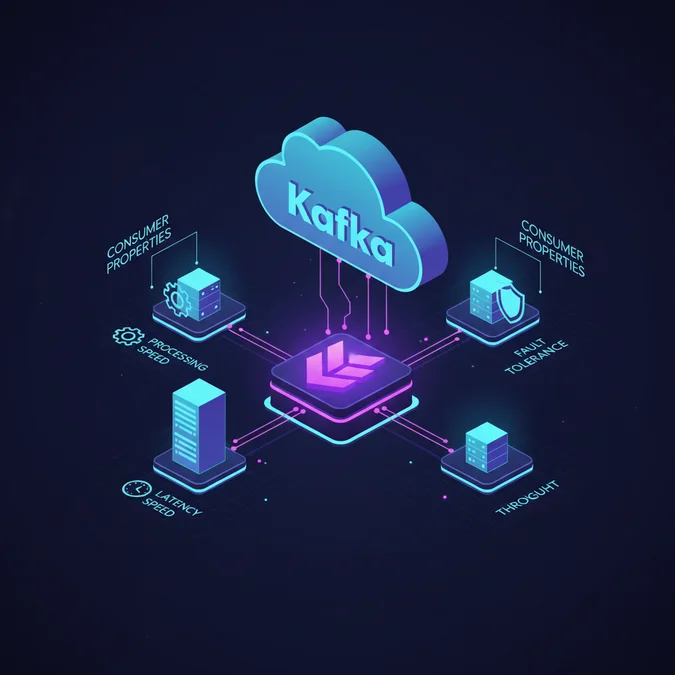

Apache Kafka is a distributed event streaming platform designed for building real-time data pipelines and streaming applications. It functions as a high-throughput, fault-tolerant, and scalable system for handling vast streams of records, facilitating the collection, storage, and processing of data as it occurs. Far more than a traditional message queue, Kafka provides a durable, ordered, and replayable commit log, making it a cornerstone for modern event-driven architectures and big data ecosystems in 2026.
This article provides an engineer’s deep dive into Kafka, exploring its core principles, architectural components, and the practical applications that leverage its unique capabilities. We will examine its evolution, its role in various industries, and the strategic advantages it offers for building robust, scalable data infrastructure.
Deconstructing Apache Kafka: Definition and Core Principles
At its core, what is Kafka? Apache Kafka is an open-source, distributed streaming platform capable of handling trillions of events per day. It was originally developed at LinkedIn and later open-sourced, evolving rapidly to become a de facto standard for event streaming. Unlike traditional message brokers that focus on transient message delivery, Kafka persists all data to disk in an immutable, ordered log structure. This fundamental design choice is central to the kafka definition and its power.
To define Kafka accurately, one must understand it as a three-in-one system:
- A publish-subscribe messaging system: Producers publish records to topics, and consumers subscribe to them.
- A fault-tolerant storage system: It durably stores streams of records in a distributed, replicated cluster.
- A stream processing platform: It allows real-time processing of streams of records as they occur.
This combination means what does Kafka do extends far beyond simple message passing. It serves as a central nervous system for data, enabling real-time data ingestion, transformation, and distribution across an enterprise. As a foundational piece of kafka software, it acts as powerful kafka middleware, decoupling data producers from consumers and enabling asynchronous communication at scale.
Key Principle: The Distributed Commit Log
The heart of apache kafka is its distributed commit log. Every record published to Kafka is appended to this log in a strict order and assigned a unique offset. This immutability and ordering are crucial for stream processing, allowing consumers to replay events from any point in time, enabling powerful features like fault recovery and auditability.
The Distributed Architecture of Kafka: Components and Data Flow
Understanding kafka technology requires delving into its distributed architecture. Kafka operates as a cluster of one or more servers, known as brokers, which can span multiple data centers or cloud regions. Its design ensures high availability, scalability, and durability. The primary components of a Kafka cluster include:
- Producers: Applications that publish records to Kafka topics.
- Consumers: Applications that subscribe to and read records from Kafka topics.
- Brokers: Kafka servers that store records, manage partitions, and handle requests from producers and consumers.
- Topics: Categories or feed names to which records are published. Topics are logically divided into partitions.
- Partitions: Ordered, immutable sequences of records appended to a topic. Each record in a partition is assigned a sequential ID number called an offset.
- Replicas: Copies of partitions stored on different brokers to ensure fault tolerance.
- Consumer Groups: A group of consumers that collectively consume from one or more topics. Each partition is consumed by only one consumer within a group.
Historically, Kafka relied on ZooKeeper for metadata management, but since Kafka 2.8 and the introduction of KIP-500, the Kafka Raft (KRaft) protocol has been adopted. In 2026, KRaft is the standard for new deployments, consolidating metadata management within Kafka brokers themselves, simplifying operations by removing the external ZooKeeper dependency. This makes Kafka clusters self-managed and more resilient.
The core of kafka message broker functionality is how records flow:
+-----------------+ +-----------------------+ +-------------------+| Producer | --> | Kafka Broker (Leader) | --> | Kafka Broker (Replica) || (Publishes Records) | | (Partition 0) | | (Partition 0) |+-----------------+ +-----------------------+ +-------------------+
 ||
 ||
 ||
 VV
+-----------------+ +-----------------------+
| Consumer | <-- | Kafka Broker (Leader) |
| (Reads Records) | | (Partition 0) |
+-----------------+ +-----------------------+
Kafka programming involves using client libraries. While apache kafka language for its core is primarily Scala and Java, client libraries are available for virtually every modern programming language. This makes kafka cs accessible for diverse development teams. For example, a basic Java producer might look like this:
import org.apache.kafka.clients.producer.KafkaProducer;import org.apache.kafka.clients.producer.ProducerRecord;import org.apache.kafka.clients.producer.ProducerConfig;import org.apache.kafka.common.serialization.StringSerializer;import java.util.Properties;public class SimpleProducer { public static void main(String[] args) { Properties props = new Properties(); props.put(ProducerConfig.BOOTSTRAP_SERVERS_CONFIG, "localhost:9092"); props.put(ProducerConfig.KEY_SERIALIZER_CLASS_CONFIG, StringSerializer.class.getName()); props.put(ProducerConfig.VALUE_SERIALIZER_CLASS_CONFIG, StringSerializer.class.getName()); try (KafkaProducer<String, String> producer = new KafkaProducer<>(props)) { for (int i = 0; i < 10; i++) { String key = "key-" + i; String value = "message-" + i; producer.send(new ProducerRecord<>("my_topic", key, value), (metadata, exception) -> { if (exception == null) { System.out.printf("Sent record to topic %s, partition %d, offset %d%n", metadata.topic(), metadata.partition(), metadata.offset()); } else { exception.printStackTrace(); } }); } producer.flush(); // Ensure all records are sent } catch (Exception e) { e.printStackTrace(); } }}This example demonstrates how a producer connects to a Kafka cluster, serializes keys and values, and sends records to a specified topic. The asynchronous `send` method with a callback allows for efficient, non-blocking message delivery and error handling.
| Component | Primary Role | Key Characteristics | Scalability/Resilience |
|---|---|---|---|
| Broker | Stores data, serves client requests | Distributed, persistent log | Horizontal scaling, replication for fault tolerance |
| Topic | Logical category of records | Divided into partitions | Scales with number of partitions/brokers |
| Partition | Ordered, immutable sequence | Append-only, assigned offsets | Parallel processing by consumer group |
| Producer | Publishes records | Asynchronous, can batch records | High throughput |
| Consumer | Reads records | Maintains offset, part of consumer group | Scales by adding consumers to group |
| KRaft Controller | Metadata management | Internal to brokers, replaces ZooKeeper | Streamlined operations, improved stability |
Is Kafka open source? Yes, Apache Kafka is entirely open source, licensed under Apache 2.0, which has fostered a massive community and extensive ecosystem.
Kafka in Action: Understanding Its Power and Practical Applications
The question of what is kafka used for is best answered by examining its diverse applications across industries. Kafka’s ability to handle high-volume, real-time data streams makes it indispensable for modern data architectures. Its key features, such as high-throughput, fault-tolerance, and horizontal scalability, enable a wide range of use cases.
Common Kafka Applications:
- Real-time Analytics and Monitoring: Ingesting operational data, application logs, and metrics for immediate analysis and dashboarding.
- Event Sourcing and CQRS: Storing all state changes as a sequence of events, enabling powerful audit trails and simplified system architecture.
- Microservices Communication: Providing a robust, asynchronous messaging backbone for inter-service communication, decoupling services and enhancing resilience.
- IoT Data Ingestion: Collecting massive streams of data from connected devices for processing and analysis.
- Fraud Detection: Processing financial transactions in real-time to identify and flag suspicious activities immediately.
- Data Integration: Connecting various systems and databases, acting as a central hub for data movement.
The versatility of kafka application extends to virtually any scenario requiring reliable, scalable event streaming. Kafka usage is prevalent in sectors like finance, retail, healthcare, and gaming, where real-time data is critical. For instance, in kafka big data scenarios, it acts as the primary data ingestion layer, feeding data lakes and data warehouses for batch and stream processing.
Consider a scenario where real-time financial transactions need to be processed and analyzed for anomalies. A Java-based Kafka Streams application can be built to achieve this:
import org.apache.kafka.clients.consumer.ConsumerConfig;import org.apache.kafka.common.serialization.Serdes;import org.apache.kafka.streams.KafkaStreams;import org.apache.kafka.streams.StreamsBuilder;import org.apache.kafka.streams.StreamsConfig;import org.apache.kafka.streams.kstream.KStream;import org.apache.kafka.streams.kstream.Printed;import java.util.Properties;public class TransactionAnomalyDetector { public static void main(String[] args) { Properties props = new Properties(); props.put(StreamsConfig.APPLICATION_ID_CONFIG, "transaction-anomaly-detector"); props.put(StreamsConfig.BOOTSTRAP_SERVERS_CONFIG, "localhost:9092"); props.put(StreamsConfig.DEFAULT_KEY_SERDE_CLASS_CONFIG, Serdes.String().getClass()); props.put(StreamsConfig.DEFAULT_VALUE_SERDE_CLASS_CONFIG, Serdes.String().getClass()); props.put(ConsumerConfig.AUTO_OFFSET_RESET_CONFIG, "earliest"); // For dev/test, reset to earliest offset StreamsBuilder builder = new StreamsBuilder(); KStream<String, String> transactions = builder.stream("financial-transactions"); // Example: Detect transactions over a certain amount (e.g. $1000) KStream<String, String> anomalies = transactions.filter((key, value) -> { try { double amount = Double.parseDouble(value.split(",")[1]); // Assuming format "userID,amount" return amount > 1000.0; } catch (NumberFormatException | ArrayIndexOutOfBoundsException e) { System.err.println("Error parsing transaction: " + value + " - " + e.getMessage()); return false; } }); anomalies.to("high-value-transactions"); // Send anomalies to a new topic // For demonstration, print to console anomalies.print(Printed.<String, String>toSysOut().withLabel("Detected Anomaly")); KafkaStreams streams = new KafkaStreams(builder.build(), props); // Clean up persistent state in case of issues - only for dev/test! // streams.cleanUp(); streams.start(); // Add shutdown hook to close Kafka Streams gracefully Runtime.getRuntime().addShutdownHook(new Thread(streams:close)); }}This example demonstrates a simple stream processing topology using Kafka Streams, a client library for building stream processing applications. It consumes records from a ‘financial-transactions’ topic, filters for high-value transactions, and publishes them to a ‘high-value-transactions’ topic for further action. This illustrates how what is apache kafka used for extends to real-time computation and transformation of data streams, crucial for kafka analytics and populating a kafka data warehouse.
Kafka integration is seamless with a vast ecosystem of tools, including Kafka Connect for data import/export from databases and other systems, and ksqlDB for SQL-like queries on streams.
Key Features Enabling Robust Applications:
- High Throughput: Capable of handling millions of messages per second.
- Low Latency: Near real-time message delivery, often in milliseconds.
- Durability: Data is persisted to disk and replicated across brokers.
- Scalability: Horizontally scalable by adding more brokers and partitions.
- Fault-Tolerance: Achieved through replication and leader election mechanisms.
- Ordered Delivery: Guarantees message order within a partition.
- Replayability: Consumers can reread historical data.
The Strategic Advantages of Adopting Apache Kafka
Organizations in 2026 continue to adopt Apache Kafka at an accelerating pace, driven by compelling benefits that address critical challenges in distributed systems. Understanding why use kafka is essential for architects and engineers designing modern data infrastructure.
The primary kafka benefits can be summarized as:
- Scalability: Kafka is designed for horizontal scalability. You can add more brokers to a cluster to increase capacity and throughput, or add more partitions to a topic to increase parallelism. This makes it ideal for handling unpredictable and massive data volumes.
- Durability and Fault-Tolerance: Data in Kafka is replicated across multiple brokers, ensuring that even if one or more brokers fail, data is not lost and remains available. This built-in redundancy is a major factor in why apache kafka is chosen for mission-critical applications.
- High Performance: Kafka is optimized for high-throughput, low-latency message delivery. Its sequential disk I/O, batching of messages, and efficient network protocols enable it to process millions of events per second with sub-10ms latency.
- Decoupling: Kafka acts as a buffer between data producers and consumers. Producers don’t need to know who consumes their data, and consumers don’t need to know who produced it. This architectural decoupling enhances system resilience, simplifies maintenance, and allows independent evolution of services.
- Real-time Data Processing: With its ability to process data streams as they arrive, Kafka enables real-time analytics, monitoring, and immediate responses to events, which is crucial for modern business intelligence and operational efficiency.
- Rich Ecosystem: The Kafka ecosystem includes Kafka Connect for integration with external systems, Kafka Streams for building stream processing applications, and ksqlDB for real-time SQL queries on streams. This comprehensive set of tools significantly reduces development effort for data pipelines.
- Backpressure Handling: Unlike traditional message queues that might collapse under heavy load, Kafka’s durable log architecture naturally handles backpressure. Consumers can process data at their own pace, and Kafka will retain messages until they are consumed, preventing data loss during spikes.
These advantages of apache kafka collectively make it a powerful choice for building robust, agile, and data-driven applications. Why use apache kafka boils down to its unparalleled ability to provide a unified, high-performance, and resilient platform for managing the flow of events across an organization.
Strategic Advantage Summary:
Adopting Kafka provides a strategic advantage by enabling organizations to build highly scalable, fault-tolerant, and performant data pipelines. It facilitates real-time data processing, decouples microservices, and offers a rich ecosystem, positioning businesses to leverage their data for immediate insights and operational agility.
Frequently Asked Questions
What is Apache Kafka primarily used for in 2026?
Apache Kafka is primarily used as a distributed event streaming platform to build real-time data pipelines, stream analytics applications, and event-driven microservices. It excels at handling high-throughput, fault-tolerant, and scalable data feeds, making it crucial for log aggregation, IoT data processing, and financial transaction systems.
Is Kafka considered a message broker or a streaming platform?
While Kafka shares some characteristics with traditional message brokers, it is fundamentally a distributed streaming platform. It differentiates itself through its log-centric architecture, high-throughput capabilities, and ability to store streams of records durably, enabling both real-time processing and historical data replay, which goes beyond typical message queuing.
What programming languages are commonly used with Apache Kafka?
Apache Kafka itself is written primarily in Scala and Java. For client applications, official client libraries are available for Java and Scala. Additionally, a wide array of community-maintained clients exist for popular languages like Python, Go, C#, JavaScript, and Ruby, allowing developers to integrate Kafka into diverse application ecosystems.
Is Apache Kafka an open-source technology?
Yes, Apache Kafka is entirely open-source software, released under the Apache 2.0 License. This open-source nature fosters a vibrant community, continuous development, and allows organizations to freely deploy, modify, and integrate Kafka into their systems without proprietary licensing costs, promoting widespread adoption and innovation.
How does Kafka provide benefits like scalability and durability?
Kafka achieves scalability through its distributed, partitioned log architecture, allowing data to be spread across multiple brokers. Durability is ensured by replicating partitions across several brokers, meaning data is safely stored even if a broker fails. These features, combined with its high-throughput design, make it a robust choice for critical data streaming.
What role does Kafka play in big data and analytics?
In big data ecosystems, Kafka acts as a central nervous system for data ingestion. It reliably captures real-time data from various sources and feeds it into big data processing engines (like Spark, Flink) and data warehouses for analysis. This enables real-time analytics, machine learning model training, and operational intelligence on massive datasets.
What are critical engineering considerations for what is kafka software?
When implementing what is kafka software, prioritize deterministic execution, rigorous error handling, observability metrics, and strict security isolation to maintain production reliability and eliminate latency bottlenecks.
What are critical engineering considerations for kafka overview?
When implementing kafka overview, prioritize deterministic execution, rigorous error handling, observability metrics, and strict security isolation to maintain production reliability and eliminate latency bottlenecks.
What are critical engineering considerations for kafka advantages?
When implementing kafka advantages, prioritize deterministic execution, rigorous error handling, observability metrics, and strict security isolation to maintain production reliability and eliminate latency bottlenecks.
What are critical engineering considerations for benefits of apache kafka?
When implementing benefits of apache kafka, prioritize deterministic execution, rigorous error handling, observability metrics, and strict security isolation to maintain production reliability and eliminate latency bottlenecks.
Apache Kafka has cemented its position as the leading distributed event streaming platform, evolving from a simple message queue to a sophisticated system critical for modern data architectures. Its unique log-centric design, coupled with its distributed and fault-tolerant nature, provides unparalleled capabilities for real-time data ingestion, processing, and distribution.
For engineers and architects navigating the complexities of big data, microservices, and event-driven systems, a deep understanding of Kafka’s components, operational principles, and strategic advantages is indispensable. As data volumes continue to grow and the demand for real-time insights intensifies, Kafka remains a foundational technology, empowering organizations to build scalable, resilient, and highly responsive applications.