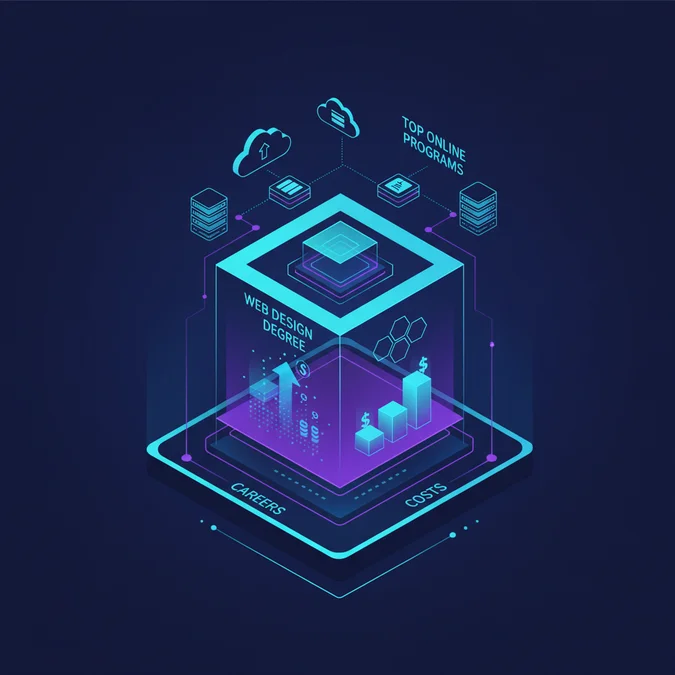

A web design degree provides a structured educational pathway into the digital product development industry, equipping individuals with foundational knowledge in user experience, visual design principles, and front-end development. It prepares graduates for diverse roles in a rapidly evolving tech landscape, offering a credentialed entry point often preferred by employers for comprehensive skill sets.
Choosing the right educational path, whether a specialized web design degree or a broader web development degree, requires understanding curriculum differences, career prospects, and program structures. This guide dissects these options, providing insights into what to expect from a web coding degree, especially when considering online learning.
Web Design vs. Web Development Degrees: Understanding Your Path
When considering a career in digital product creation, a fundamental distinction lies between a web design degree and a web development degree. While often intertwined in practice, their academic focuses and core skill sets diverge significantly, influencing your career trajectory.
A web design degree primarily emphasizes the visual, interactive, and user experience (UX) aspects of digital products. Students delve into principles of graphic design, typography, color theory, layout, and information architecture. The curriculum typically covers user research, wireframing, prototyping, and user interface (UI) design using industry-standard tools like Figma, Adobe XD, and Sketch. Graduates are adept at creating aesthetically pleasing, intuitive, and accessible user experiences.
Conversely, a web development degree, or a website development degree, focuses on the technical implementation and functionality of websites and web applications. This path involves rigorous training in programming languages, databases, server management, and application logic. Students learn to build the infrastructure that makes designs functional, covering front-end technologies (e.g., HTML, CSS, JavaScript frameworks), back-end languages (e.g., Python, Node.js, PHP), and database systems (e.g., SQL, NoSQL). Graduates are skilled in engineering robust, scalable, and secure digital platforms.
Key Distinction: A web design degree cultivates visual and user-centric problem solvers, focusing on how a product looks and feels. A web development degree trains engineers to build the underlying architecture, focusing on how a product works.
While some programs offer a blend, understanding this core difference is crucial for aligning your education with your career aspirations.
What You’ll Learn: Core Curriculum for Web Coding Degrees
A comprehensive web coding degree program equips students with a robust skill set spanning various programming languages, frameworks, and tools essential for modern web creation. The curriculum is designed to move beyond theoretical concepts, providing practical, hands-on experience in building functional web applications.
Typical coursework often begins with foundational web technologies, progressing to more advanced topics. Below is a representative overview of core subjects and associated technologies:
| Curriculum Area | Key Concepts Taught | Associated Technologies/Tools |
|---|---|---|
| Foundational Web | HTML structure, CSS styling, Responsive Design, Accessibility standards | HTML5, CSS3, Flexbox, Grid, Media Queries |
| Client-Side Development | JavaScript fundamentals, DOM manipulation, Asynchronous programming, API interaction | JavaScript (ES6+), React.js, Angular, Vue.js, jQuery |
| Server-Side Development | Backend logic, Database integration, RESTful APIs, Authentication/Authorization | Node.js (Express), Python (Django, Flask), PHP (Laravel), Ruby (Rails), Java (Spring Boot) |
| Database Management | Data modeling, Querying, Relational and Non-relational databases | SQL (PostgreSQL, MySQL), NoSQL (MongoDB, Redis) |
| Version Control & Deployment | Collaborative coding, Code branching, Deployment pipelines | Git, GitHub/GitLab, Netlify, Vercel, AWS S3/EC2, Docker |
| User Experience (UX) & Interface (UI) | User research, Wireframing, Prototyping, Usability testing, Information architecture | Figma, Adobe XD, Sketch, UserTesting.com |
| Web Security | Common vulnerabilities (XSS, CSRF), Secure coding practices, Data protection | OWASP Top 10, HTTPS, JWT |
Students will often engage in project-based learning, applying these concepts to build portfolio-worthy applications. For instance, a typical JavaScript module might involve:
// Example: Fetching data from an API
async function fetchData(url) {
  try {
    const response = await fetch(url);
    if (!response.ok) {
      throw new Error(`HTTP error! status: ${response.status}`);
    }
    const data = await response.json();
    console.log(data);
    return data;
  } catch (error) {
    console.error("Error fetching data:", error);
  }
}

fetchData('https://api.example.com/data');
Beyond coding, many programs integrate crucial soft skills, including problem-solving, critical thinking, teamwork, and effective communication, preparing graduates for dynamic team environments in the tech industry.
Online Web Design & Development Degrees: Flexibility and Focus
Pursuing an online web development degree or an online web design degree has become a prevalent and highly effective pathway for many aspiring professionals. The digital format offers unparalleled flexibility, making higher education accessible to individuals balancing work, family, or other commitments. A website design degree online can provide the same rigorous academic foundation as its on-campus counterpart, often with added advantages tailored to the modern learner.
Key benefits of online programs include:
- Geographical Flexibility: Learn from anywhere in the world, removing relocation barriers.
- Self-Paced Learning: Many programs offer asynchronous courses, allowing students to complete coursework on their own schedule, within deadlines.
- Cost-Effectiveness: Often, online programs have lower tuition fees, and students save on commuting, housing, and other campus-related expenses.
- Diverse Learning Resources: Access to extensive digital libraries, online forums, virtual labs, and recorded lectures.
- Skill Alignment with Industry: Online environments often simulate remote work setups, preparing students directly for distributed teams common in the tech industry.
However, online learning demands a specific set of skills and considerations:
Checklist for Online Degree Success:
- Self-Discipline and Time Management: Essential for staying on track without a fixed daily physical presence.
- Strong Internet Connection and Reliable Hardware: Non-negotiable for accessing course materials and participating in virtual sessions.
- Proactive Communication: Engaging with instructors and peers through online forums, email, and virtual meetings.
- Technical Aptitude: Comfort with digital tools and learning management systems.
- Accreditation Verification: Ensure the online program is accredited by a recognized agency for credential validity.
- Student Support Services: Look for robust online academic advising, technical support, and career services.
The best online programs leverage technology to foster interactive learning, including live virtual classes, collaborative project platforms, and dedicated online communities, ensuring students receive a rich and engaging educational experience.
Choosing the Best Online Schools for Web Development: A Comparative Guide
Selecting among the best online schools for web development requires a systematic approach, evaluating programs against your personal and professional goals. While specific school recommendations vary based on individual needs, a comparative framework can guide your decision-making process. Focus on institutional reputation, curriculum relevance, faculty expertise, and career outcomes.
Here is a comparative table outlining critical factors to consider when evaluating online programs:
| Evaluation Factor | Description | Why It Matters |
|---|---|---|
| Accreditation | Official recognition that a program meets quality standards. | Ensures degree validity, transferability of credits, and eligibility for financial aid. |
| Curriculum Focus | Specific technologies, frameworks, and design principles covered. | Aligns with current industry demands and your desired specialization (e.g., front-end, full-stack, UX/UI). |
| Faculty Expertise | Experience and credentials of professors and instructors. | Instructors with industry experience bring real-world insights and connections. |
| Program Duration | Time required to complete the degree (e.g., 2 years for Associate, 4 years for Bachelor). | Impacts career entry timeline and overall cost. |
| Cost & Financial Aid | Tuition fees, additional expenses, and available scholarships or grants. | Directly affects affordability and return on investment. |
| Student Support | Academic advising, technical support, mental health services, online community. | Crucial for success in a remote learning environment. |
| Career Services | Internship opportunities, job placement assistance, alumni network. | Directly impacts post-graduation employment prospects. |
| Portfolio/Project Emphasis | How much the program focuses on building a practical project portfolio. | A strong portfolio is essential for demonstrating skills to employers. |
Beyond these structured factors, a deeper vetting process is advisable. Consider the following checklist:
Online School Vetting Checklist:
- Does the program offer specializations that align with your interests? (e.g., UI/UX, full-stack, mobile web).
- What is the student-to-faculty ratio in online courses? Lower ratios often mean more personalized attention.
- Are there opportunities for hands-on projects and real-world client work? Practical experience is invaluable.
- How active and supportive is the online student community? Peer interaction can enhance learning and networking.
- What are the alumni success stories, and where are graduates employed? Provides insight into career outcomes.
- Does the program cover emerging technologies like AI in design, Web3, or serverless architecture? Future-proofs your skill set.
- Is there a clear pathway to building a professional portfolio throughout the program? Essential for job applications.
- What are the technical requirements for participation, and is technical support readily available? Ensures a smooth learning experience.
By meticulously evaluating these points, you can identify an online web development program that not only fits your budget and schedule but also provides a high-quality education and strong career support.
Career Outlook: Jobs, Salaries, and Future Trends in Web Development
Graduating with a web design degree or web development degree opens doors to a dynamic and expanding job market. The demand for skilled professionals who can build and maintain engaging digital experiences remains consistently high across various industries. Career paths are diverse, ranging from creative design roles to highly technical engineering positions.
Here’s an overview of common job titles and their general characteristics:
| Job Title | Primary Focus | Key Skills |
|---|---|---|
| Web Designer | Visual aesthetics, user experience, graphic elements. | UI/UX principles, graphic design software, HTML, CSS. |
| Front-End Developer | Client-side development, user interface implementation. | JavaScript (React, Angular, Vue), HTML, CSS, API integration. |
| Back-End Developer | Server-side logic, database management, API creation. | Python, Node.js, PHP, Ruby, Java, SQL/NoSQL, cloud platforms. |
| Full-Stack Developer | Both front-end and back-end development. | Proficiency in multiple client and server-side technologies. |
| UX/UI Designer | User research, wireframing, prototyping, usability testing. | User-centered design, Figma, Adobe XD, information architecture. |
| DevOps Engineer | Automating software delivery, infrastructure management. | CI/CD, Docker, Kubernetes, AWS/Azure/GCP. |
| Web Project Manager | Overseeing web projects, managing teams and timelines. | Agile methodologies, communication, technical understanding. |
Salaries in web development and design are competitive and vary significantly based on experience, location, specialization, and company size. Entry-level positions typically offer solid starting salaries, which can grow substantially with experience and the acquisition of specialized skills. For instance, a junior front-end developer might earn in the low to mid-five figures annually, while a senior full-stack engineer in a major tech hub could command a six-figure salary or more.
Future Trends Shaping the Web Industry:
- Artificial Intelligence (AI) in Design and Development: AI tools are increasingly assisting with code generation, design optimization, and personalized user experiences.
- Web3 and Blockchain Technologies: Decentralized applications (dApps), NFTs, and the metaverse are creating new paradigms for web interaction and data ownership.
- Serverless Architecture: Growing adoption of serverless functions (e.g., AWS Lambda, Azure Functions) reduces infrastructure management overhead.
- Jamstack: A modern web development architecture based on JavaScript, APIs, and Markup, offering enhanced performance and security.
- Progressive Web Apps (PWAs): Blurring the lines between web and native mobile applications, offering offline capabilities and push notifications.
- Accessibility First Design: Increased focus on building inclusive web experiences for all users, regardless of ability.
A degree provides a strong foundation, but continuous learning and adaptation to these emerging trends are crucial for a long and successful career in web development.
Frequently Asked Questions
Is a web design degree worth it for a career in tech?
Yes, a web design degree can be highly valuable, providing a structured foundation in design principles, user experience, and front-end technologies. It equips graduates with a comprehensive skill set, industry connections, and a portfolio, enhancing career prospects and earning potential in the competitive tech landscape.
What is the main difference between an online web development degree and an online web design degree?
An online web development degree typically focuses on the functional aspects of websites, including coding, databases, and server-side logic. An online web design degree emphasizes visual aesthetics, user experience (UX), user interface (UI), and graphic design principles, ensuring a site is both appealing and intuitive.
How long does it typically take to complete a website design degree online?
The duration for an online website design degree varies by program and institution. An associate’s degree usually takes two years, while a bachelor’s degree typically requires four years of full-time study. Part-time options can extend these timelines, offering flexibility for working professionals.
What kind of jobs can you get with a web coding degree?
With a web coding degree, you can pursue roles such as Front-End Developer, Back-End Developer, Full-Stack Developer, Software Engineer, Web Programmer, or even specialized positions like UI Developer. These roles involve building, maintaining, and optimizing websites and web applications using various programming languages.
Choosing to pursue a web design degree or a web development degree is a significant investment in your professional future. These programs provide not just technical skills but also a structured understanding of digital ecosystems, critical thinking, and problem-solving abilities. Whether you opt for an immersive on-campus experience or the flexibility of an online web design degree, the key is to select a program that aligns with your learning style, career aspirations, and financial considerations.
By understanding the distinctions between design and development, scrutinizing curriculum details, and meticulously evaluating potential online schools, you can make an informed decision that paves the way for a rewarding career. The digital landscape is ever-evolving, and a solid educational foundation is your best asset for navigating its complexities and contributing meaningfully to the next generation of web experiences.
NR Studio builds custom web apps, mobile apps, SaaS platforms, and internal tools for growing businesses. If you’re working through a technical decision, feel free to reach out — no commitment required.