
Becoming a web developer typically involves mastering core programming languages like HTML, CSS, and JavaScript, building a practical project portfolio, and continuously learning new frameworks to meet evolving industry demands. This pathway is accessible through various education routes, leading to a dynamic and in-demand career.
The digital landscape is in constant flux, creating a persistent demand for skilled web developers who can build, maintain, and innovate across diverse platforms. Whether you aspire to craft engaging user interfaces or engineer robust backend systems, understanding the foundational principles and modern practices is paramount for success.
This article provides a comprehensive guide, detailing the essential skills, educational pathways, and career progression strategies necessary to thrive in web development. We will explore technical requirements, portfolio building, and insights into the current job market.
Understanding Web Development: Roles, Types, and Impact
Web development is the process of creating websites and web applications for the internet or a private network. It encompasses everything from designing a simple static page to building complex enterprise systems. The field is broadly categorized into several key roles, each with distinct responsibilities and skill sets.
Web development continues to be a critical driver of digital transformation, impacting industries from e-commerce to healthcare. Its demand reflects the pervasive need for accessible, interactive, and data-driven online experiences.
The primary roles include:
- Front-End Developer: Focuses on the user-facing side of a website, ensuring a visually appealing and interactive experience. They work with HTML, CSS, and JavaScript.
- Back-End Developer: Deals with the server-side logic, databases, and APIs that power the website. Common languages include Python, Node.js, Ruby, PHP, and Java.
- Full-Stack Developer: Possesses proficiency in both front-end and back-end technologies, capable of handling all aspects of web application development.
- DevOps Engineer: Specializes in streamlining the development lifecycle, focusing on continuous integration and continuous deployment (CI/CD), infrastructure as code, and system reliability.
- Web Designer: Concentrates on the visual aesthetics and user experience (UX) of a website, often working closely with front-end developers.
The impact of web development is profound, shaping how businesses interact with customers, how individuals communicate, and how information is consumed globally. A well-developed website or application can drive economic growth, foster communities, and deliver critical services.
Essential Web Developer Skills: Technical Foundations & Modern Stacks
To become a proficient web developer, a robust set of technical web dev skills is non-negotiable. These skills form the bedrock for building any web-based project, from simple landing pages to sophisticated web applications. Mastery begins with core languages and extends to modern frameworks and development practices.
Key technical skills include:
- HTML (HyperText Markup Language): The standard markup language for documents designed to be displayed in a web browser. It defines the structure of web content.
- CSS (Cascading Style Sheets): Used for describing the presentation of a document written in HTML. CSS handles the look and feel of web pages.
- JavaScript: A high-level, interpreted programming language that enables interactive web pages. It’s essential for front-end interactivity and can also be used for back-end development with Node.js.
Here’s a basic HTML structure with inline CSS and JavaScript for a button:
<!DOCTYPE html>
<html lang="en">
<head>
    <meta charset="UTF-8">
    <meta name="viewport" content="width=device-width, initial-scale=1.0">
    <title>Basic Web Page</title>
    <style>
        body { font-family: sans-serif; text-align: center; margin-top: 50px; }
        button { padding: 10px 20px; background-color: #007bff; color: white; border: none; cursor: pointer; }
    </style>
</head>
<body>
    <h1>Welcome to Web Development</h1>
    <button onclick="alert('Hello World!');">Click Me</button>
</body>
</html>
Beyond these fundamentals, modern web development demands proficiency in several other areas:
Core Web Dev Skills Checklist
- Version Control Systems (e.g., Git): Essential for collaborative development and tracking changes.
- Frontend Frameworks/Libraries: React, Angular, Vue.js are dominant for building complex user interfaces.
- Backend Frameworks: Node.js (with Express), Django (Python), Ruby on Rails (Ruby), Laravel (PHP) are popular choices.
- Databases: SQL (PostgreSQL, MySQL) and NoSQL (MongoDB, Redis) are crucial for data storage and retrieval.
- APIs (Application Programming Interfaces): Understanding how to build and consume RESTful or GraphQL APIs.
- Package Managers: npm or Yarn for JavaScript, pip for Python, Composer for PHP.
- Web Security Fundamentals: Knowledge of common vulnerabilities and best practices for secure coding.
- Testing: Unit, integration, and end-to-end testing for ensuring code quality and reliability.
- Deployment & Hosting: Familiarity with platforms like Netlify, Vercel, AWS, Google Cloud, or Heroku.
- Responsive Design: Ensuring websites function and look good across various devices and screen sizes.
Popular modern tech stacks include MERN (MongoDB, Express.js, React, Node.js), MEAN (MongoDB, Express.js, Angular, Node.js), and LAMP (Linux, Apache, MySQL, PHP). The JAMstack architecture (JavaScript, APIs, Markup) is also gaining traction for its performance and security benefits, often leveraging static site generators and CDNs.
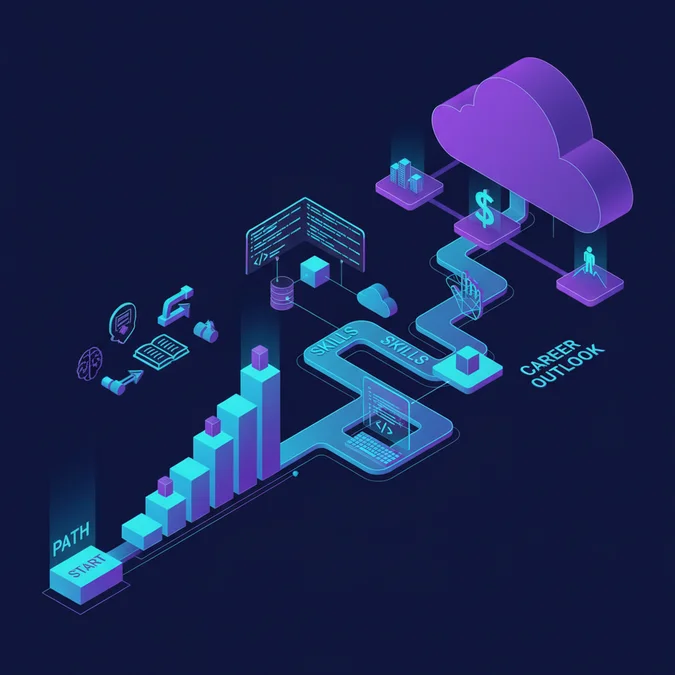
Your Roadmap to Becoming a Web Developer: Education & Training Paths
Embarking on the journey to become a web developer involves choosing an educational path that aligns with your learning style, timeline, and financial resources. There are several viable routes, each with its own advantages and considerations, shaping the web developer education requirements you will encounter. Regardless of the path, the goal is to acquire practical skills and build a demonstrable portfolio.
Comparison of Educational Paths
| Path Type | Description | Pros | Cons | Typical Duration |
|---|---|---|---|---|
| Self-Taught | Learning independently through online tutorials, documentation, and personal projects. | Flexible, low cost, self-paced. | Requires high self-discipline, lack of structured feedback. | 6-24 months |
| Coding Bootcamps | Intensive, short-term programs focused on practical, job-ready skills. | Fast-paced, career-focused, networking opportunities. | High cost, very demanding, limited theoretical depth. | 3-6 months |
| Formal Degree (CS/IT) | University programs in Computer Science or Information Technology. | Deep theoretical understanding, broad knowledge, recognized credential. | Long duration, high cost, potentially less practical focus. | 3-4 years | Apprenticeships | On-the-job training combined with structured learning. | Paid learning, real-world experience, direct mentorship. | Competitive, limited availability. | 6-12 months |
Ordered Steps to Become a Web Programmer
- Master Core Fundamentals: Begin with HTML, CSS, and JavaScript. Build several small projects to solidify your understanding. Resources like MDN Web Docs, freeCodeCamp, and Codecademy are excellent starting points.
- Learn a Version Control System: Git is industry standard. Understand branching, merging, and collaboration. Practice daily on platforms like GitHub or GitLab.
- Choose a Specialization: Decide whether to focus on front-end (e.g., React, Vue), back-end (e.g., Node.js, Python/Django), or aim for full-stack. This guides your next learning steps.
- Dive into Frameworks/Libraries: Once fundamentals are solid, learn a popular framework relevant to your chosen specialization. Work through official documentation and build projects.
- Understand Databases & APIs: Learn how to store and retrieve data using SQL or NoSQL databases. Practice building and consuming RESTful APIs.
- Build a Portfolio of Projects: This is crucial. Create diverse projects that showcase your skills, problem-solving abilities, and code quality. Focus on projects that solve real-world problems or demonstrate complex functionalities.
- Learn Deployment & Hosting: Understand how to take your applications live. Experiment with cloud platforms and continuous integration/continuous deployment (CI/CD) pipelines.
- Practice Problem Solving & Algorithms: Websites like LeetCode or HackerRank help sharpen your logical thinking and prepare for technical interviews.
- Network & Engage with the Community: Attend meetups, join online forums, and connect with other developers. This provides support, learning opportunities, and potential job leads.
- Stay Current: The web development landscape evolves rapidly. Continuously learn new technologies, update your skills, and adapt to industry changes.
Regardless of the path you choose, persistence, a strong desire to learn, and a passion for building are the most important assets to become a web programmer.
Building a Powerful Portfolio & Landing Your First Job
Securing your first web developer job hinges significantly on a compelling portfolio and an effective job search strategy. Your portfolio is your resume in action, demonstrating your practical skills and problem-solving capabilities to potential employers. A ‘day in the life’ of a web developer often involves continuous problem-solving, collaboration, and iterative development, which your portfolio should reflect.
Building an Impactful Portfolio
- Showcase Diverse Projects: Include projects that demonstrate a range of skills, from basic HTML/CSS layouts to full-stack applications with database integration and API consumption.
- Quality Over Quantity: Three well-executed, fully functional projects are more impressive than ten incomplete ones.
- Include Real-World Use Cases: Build projects that solve a problem, automate a task, or provide a service. For example, a simple e-commerce site, a task management application, or a weather app using a public API.
- Document Your Process: For each project, include a clear README file explaining the technologies used, challenges faced, and lessons learned. Provide live demos and links to your GitHub repository.
- Personal Branding Website: Create your own developer portfolio website to showcase your projects, skills, and personality. This acts as a meta-project.
- Contribute to Open Source: Even small contributions can demonstrate your ability to collaborate and work within existing codebases.
Your portfolio is not just a collection of code; it’s a narrative of your growth, your problem-solving approach, and your passion for development. Treat it as your most important asset.
Job Search Checklist
- Optimize Your Resume/CV: Tailor it to each job description, highlighting relevant skills and projects.
- Craft a Strong Cover Letter: Personalize it for each application, explaining why you’re a good fit for that specific role and company.
- Leverage Professional Networks: Connect with recruiters and developers on LinkedIn. Attend virtual and in-person meetups.
- Prepare for Technical Interviews: Practice coding challenges, understand data structures and algorithms, and be ready to discuss your projects in detail.
- Understand Company Culture: Research potential employers to ensure alignment with your values and work preferences.
- Follow Up Thoughtfully: Send thank-you notes after interviews and follow up on applications without being intrusive.
- Be Persistent: The job search can be challenging. Learn from rejections and continue refining your skills and approach.
Many entry-level roles will prioritize practical experience demonstrated through projects over formal qualifications. Focus on applying the skills you’ve learned to create tangible results.
Career Progression & Specializations in Web Development
The journey of how to become a web developer extends far beyond landing your first entry-level position. Web development offers a rich landscape for career progression and specialization, allowing developers to carve out niche expertise and take on greater responsibilities. Continuous learning and adaptation are key to advancing in this dynamic field.
Typical Career Path Progression
| Role Level | Responsibilities | Key Skills & Focus | Estimated Experience |
|---|---|---|---|
| Junior Developer | Implementing features, fixing bugs, learning codebase, under mentorship. | HTML, CSS, JavaScript, basic framework knowledge, Git. | 0-2 years |
| Mid-Level Developer | Designing and implementing features, contributing to architectural decisions, mentoring juniors. | Proficiency in chosen stack, problem-solving, API design, testing. | 2-5 years |
| Senior Developer | Leading projects, architectural design, complex problem-solving, code reviews, mentorship. | Deep expertise in multiple technologies, system design, leadership. | 5-8 years |
| Lead Developer/Architect | Setting technical direction, managing teams, strategic planning, cross-functional collaboration. | Strategic thinking, advanced system architecture, team leadership. | 8+ years |
| Principal Engineer/CTO | Driving technological innovation, shaping company’s technical vision, executive leadership. | Business acumen, innovation, broad industry knowledge. | 10+ years |
Beyond traditional progression, web developers can specialize in various domains:
- Mobile Web Development: Focusing on responsive design, progressive web apps (PWAs), or cross-platform frameworks like React Native or Flutter for web-like mobile experiences.
- Performance Optimization: Specializing in improving website speed, load times, and overall user experience through code optimization, caching, and CDN strategies.
- Web Security Specialist: Concentrating on identifying and mitigating vulnerabilities, implementing secure coding practices, and ensuring data protection.
- Accessibility (A11y) Expert: Ensuring web applications are usable by people with disabilities, adhering to WCAG guidelines.
- UI/UX Engineer: Bridging the gap between design and development, focusing on user interfaces and user experience implementation.
- DevOps Engineer: Streamlining the software development lifecycle, automating infrastructure, deployments, and monitoring.
- Technical Writer: Leveraging development knowledge to create clear, concise documentation for APIs, tools, or internal processes.
Salary expectations vary significantly based on location, experience, specialization, and company size. Entry-level developers can expect competitive starting salaries, which grow substantially with experience and the acquisition of advanced, in-demand skills. For instance, a senior developer specializing in a high-demand framework like React or Node.js in a major tech hub will command a significantly higher salary than a junior developer in a less competitive market.
Frequently Asked Questions
What are the typical web developer education requirements?
Typical web developer education requirements vary, ranging from self-taught learning with online resources and bootcamps to formal computer science degrees. While a degree isn’t always mandatory, a strong portfolio demonstrating practical skills and projects is crucial for entry-level positions.
What are the core web dev skills needed to become a web programmer?
To become a web programmer, core web dev skills include proficiency in HTML, CSS, and JavaScript for front-end development. Back-end roles require languages like Python, Node.js, Ruby, or PHP, along with database knowledge. Version control (Git) and problem-solving are also essential.
Becoming a web developer is an achievable goal for anyone committed to learning and persistent practice. By mastering core web dev skills, building a robust portfolio, and choosing an educational path that fits your circumstances, you can confidently enter this exciting field. The journey requires dedication, but the rewards of creating impactful digital experiences and engaging in continuous learning are immense.
The web development landscape will continue to evolve, making lifelong learning an integral part of a successful career. Embrace new technologies, contribute to the community, and consistently refine your craft. Your dedication today will lay the groundwork for a fulfilling and dynamic career tomorrow.
NR Studio builds custom web apps, mobile apps, SaaS platforms, and internal tools for growing businesses. If you’re working through a technical decision, feel free to reach out — no commitment required.