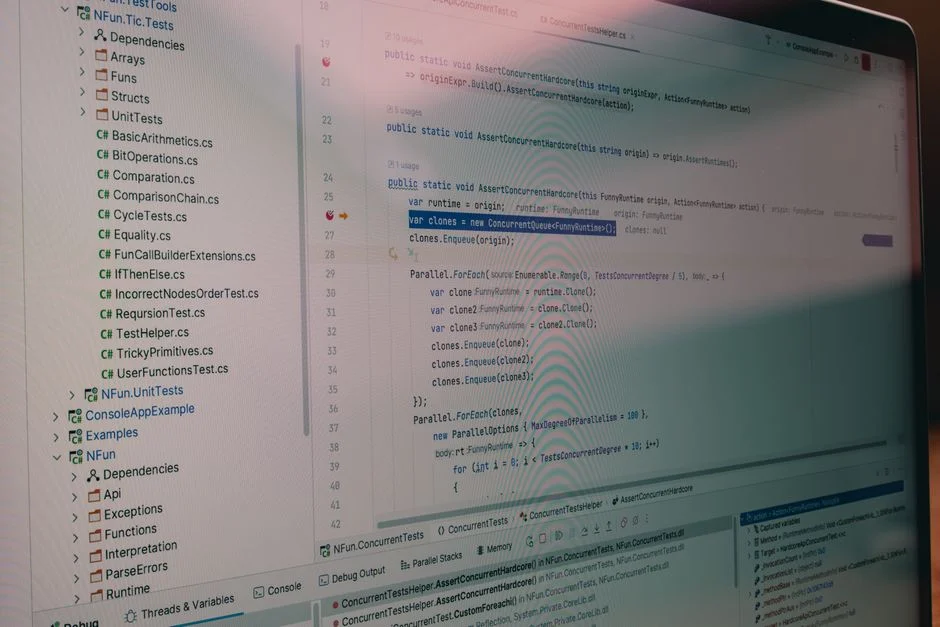

You are likely reading this because your current release cycle is plagued by regressions, or your production environment has become a minefield of unpredictable bugs that your internal team can no longer manage. As a CTO, I understand the friction: you are balancing the pressure to ship features with the cold reality that technical debt is compounding every time a sprint concludes without adequate validation. When your engineering team is forced to spend 40% of their time on manual hotfixes rather than building new value, you have reached a critical point where internal testing processes are no longer sustainable.
Software testing services are not merely about ‘finding bugs’—they are about de-risking your business operations and ensuring that your technical foundation remains scalable as your user base grows. Poorly executed testing is a silent tax on your velocity, leading to inflated Total Cost of Ownership (TCO) and customer churn. In this article, we will examine how to evaluate, integrate, and optimize professional testing services to move your development lifecycle from reactive firefighting to a proactive, automated, and high-velocity engine.
The Real Cost of Poor Quality Assurance
When leadership views testing as a cost center rather than a strategic investment, the organization inevitably pays a premium in the form of technical debt. A bug caught in the development phase might cost $100 to fix; that same defect, once it reaches production and triggers a customer support ticket, downtime, or a security audit, can easily balloon to $5,000 or more in labor, reputation, and lost opportunity cost. This is the primary driver of TCO in software projects.
- Increased Time-to-Market: Every hour spent debugging production issues is an hour stolen from product innovation.
- Escalating Maintenance Costs: As the codebase grows, the lack of a robust regression suite means every new feature carries an exponentially higher risk of breaking existing functionality.
- Customer Churn: Modern users have zero tolerance for instability. If your application fails, your competitors are only a click away.
By engaging specialized software testing services, you are effectively shifting the burden of quality control to partners who operate with standardized frameworks. This allows your senior engineers to remain focused on architecture and core product development rather than manual verification. A mature testing strategy is the only way to achieve consistent delivery cadence without sacrificing the integrity of your production environment.
Evaluating Engagement Models for Testing Services
Choosing the right engagement model is fundamental to the long-term success of your testing strategy. Many organizations default to hourly staffing, which often leads to misaligned incentives where the vendor is rewarded for ‘hours billed’ rather than ‘defects prevented.’ Instead, consider the following models based on your current project maturity and internal team structure.
| Model | Best For | Pros | Cons |
|---|---|---|---|
| Staff Augmentation | Teams needing specific skill sets | Direct control, seamless integration | Requires internal management overhead |
| Managed Testing Services | Projects with clear KPIs | Outcome-based, minimal management | Less flexibility for pivot-heavy projects |
| Dedicated QA Pods | Scaling startups | Predictable velocity, ownership | Highest initial investment |
For most of our clients at NR Tech Studio, a hybrid approach works best. We often integrate a dedicated lead who works alongside your internal engineering team to build out automated test suites, while utilizing offshore resources for high-volume manual exploratory testing. This ensures that the strategic oversight remains in-house, while the execution scales efficiently based on your sprint requirements.
The Economics of Testing: Pricing and Investment Ranges
Pricing for software testing services varies drastically based on the depth of automation required, the complexity of the tech stack, and the required turnaround time. As an executive, you should view these costs as a hedge against the much higher costs of remediation and downtime. Below are the industry-standard ranges for professional software testing services.
| Service Type | Cost Range (Monthly) | Typical Deliverables |
|---|---|---|
| Manual QA Testing | $3,000 – $7,000 | Test plans, bug reports, smoke testing |
| Test Automation Suite | $8,000 – $15,000 | CI/CD integration, Selenium/Playwright scripts |
| Full-Cycle QA Managed | $15,000 – $30,000+ | Strategy, automation, manual, security, load |
It is important to note that these figures represent market averages for high-quality, professional-grade services. If you are seeing quotes significantly below these ranges, you are likely paying for ‘check-the-box’ testing that fails to identify edge cases or performance bottlenecks. The goal is to build an automated foundation where the marginal cost of running a test suite approaches zero, drastically lowering your long-term maintenance burden.
Automation vs. Manual: A Strategic Balance
A common mistake in software quality is the ‘automate everything’ fallacy. While automation is critical for regression testing and CI/CD pipelines, it is not a panacea. Investing in heavy automation for a feature that is subject to frequent UI changes is a waste of capital. Instead, we follow a risk-based approach to automation.
When to use Automation:
- Repetitive Tasks: Any workflow that is executed every time code is committed to the main branch.
- API Integrity: Ensuring that REST API endpoints consistently return expected schemas and statuses.
- Load Testing: Simulating traffic spikes to identify bottlenecks before they affect real users.
When to use Manual Testing:
- Usability Testing: Humans are better at identifying UX friction that scripts might ignore.
- Exploratory Testing: Discovering ‘unknown unknowns’ that occur when users interact with the system in unexpected ways.
- Edge Case UI Validation: Testing complex flows where the visual output is highly subjective.
By balancing these two approaches, you ensure that your testing budget is spent on high-impact areas that directly protect your business logic and user experience.
Integrating QA into CI/CD Pipelines
The ultimate goal of modern software testing is to achieve ‘shift-left’ testing, where quality checks are embedded directly into the development workflow. When your testing service is disconnected from your CI/CD pipeline, you are essentially performing post-mortem analysis. To scale effectively, your testing infrastructure must be a first-class citizen of your deployment process.
Using technologies like GitHub Actions or GitLab CI, we ensure that every pull request triggers a suite of automated unit and integration tests. If the build fails, the developer is notified immediately, preventing the defect from ever reaching the staging environment. This tight feedback loop is what separates high-performing engineering organizations from those bogged down by constant ‘fix-it’ sprints.
# Example: Basic CI/CD test trigger in a YAML config
name: Run Tests
on: [push]
jobs:
  test:
    runs-on: ubuntu-latest
    steps:
      - uses: actions/checkout@v3
      - name: Install Dependencies
        run: npm install
      - name: Run Jest Suite
        run: npm test
This level of integration requires a deep understanding of your tech stack, whether you are running Laravel, Next.js, or a complex microservices architecture. Our team focuses on building these pipelines so that quality is an automated output of your development process, not a separate, manual phase.
Technical Debt and the Role of Regression Testing
Technical debt is the interest paid on poor code quality. As your platform evolves, the risk of regressions—where new code inadvertently breaks legacy features—increases linearly. Without a robust regression test suite, your developers will naturally become more cautious, slowing down the pace of innovation. This is where professional regression testing becomes a vital business asset.
We build comprehensive regression suites that cover your most critical business flows: user registration, payment processing, data retrieval, and core application logic. By treating these tests as part of your core codebase, you allow your team to move with confidence. When a developer refactors a module, they have immediate validation that the refactor did not break the existing system. This confidence is the engine of velocity.
If you are struggling with a codebase that feels ‘brittle,’ you are likely suffering from a lack of automated regression coverage. We prioritize the stabilization of these core flows first, providing immediate ROI by reducing the number of production incidents reported by users.
Security and Compliance in Testing
For industries like healthcare, finance, and logistics, security is not optional. Modern testing services must go beyond functional validation to include security and compliance checks. This involves automated vulnerability scanning, dependency audits, and penetration testing simulations. Waiting until a security audit to find vulnerabilities is a catastrophic business risk.
We integrate tools that automatically check your dependencies for known vulnerabilities (CVEs) during the build process. Furthermore, for applications handling sensitive data, we implement automated compliance checks to ensure that PII (Personally Identifiable Information) is handled according to industry standards like GDPR or HIPAA. By integrating these checks into your pipeline, you are building a ‘secure-by-design’ culture that protects your business from the start.
Scalability and Performance Testing
A common failure point for growing businesses is the ‘success crash’—when your application works perfectly under low load but collapses when your marketing efforts drive a sudden influx of users. Scalability testing is often neglected because it requires specialized infrastructure to simulate thousands of concurrent users.
Our performance testing methodology involves:
- Baseline Benchmarking: Establishing what ‘normal’ performance looks like for your APIs and database queries.
- Load Testing: Gradually increasing traffic to identify the point at which your system begins to degrade.
- Stress Testing: Pushing the system beyond its limits to understand how it fails, ensuring graceful degradation rather than hard crashes.
By identifying these bottlenecks early, you can optimize your database indexes, implement caching strategies, or adjust your infrastructure scaling policies, ensuring that your growth is never capped by your software’s inability to handle demand.
The Decision Matrix for Outsourcing QA
Deciding whether to build an internal QA team or hire an external service depends on your current stage and long-term goals. Internal teams provide cultural alignment, but they are expensive to hire and maintain, often costing upwards of $120k per engineer per year, plus benefits and management overhead. External services provide specialized expertise and immediate scalability without the long-term headcount commitment.
If you are in a high-growth phase, the flexibility of an outsourced testing partner allows you to adjust capacity based on your product roadmap. You are not paying for idle time during lulls in development, nor are you bottlenecked by the time required to recruit and train new hires. When evaluating a potential partner, look for firms that have deep experience in your specific stack—whether that is Laravel, React, or complex cloud-native architectures—to ensure they understand the nuances of your implementation.
Common Pitfalls in Testing Service Engagements
Even with the best intentions, testing engagements can fail if not managed correctly. The most common pitfall is ‘siloing,’ where the testing team is treated as a third party that only receives finished features. This prevents the collaboration necessary for effective bug detection. Testing should start during the requirements phase, not after the code is written.
Another pitfall is focusing on vanity metrics, such as the total number of bugs found. This can lead to a perverse incentive where testers report low-impact, minor UI issues just to inflate their numbers, while missing critical logical flaws. We focus on impact-based metrics: time to detect, time to resolve, and the reduction in production incidents. By aligning our success with your product stability, we ensure that our efforts are always focused on what moves the needle for your business.
Architecture Review: The Foundation of Quality
Before you invest in extensive testing services, it is critical to ensure that your underlying software architecture is actually testable. A monolithic, tightly coupled system is notoriously difficult to test, often requiring complex mocks and fragile test environments. At NR Tech Studio, we specialize in evaluating and refining your architecture to ensure it is built for long-term maintainability and automated validation.
Our Architecture Review service is designed to identify the structural weaknesses that prevent you from scaling your quality assurance efforts. We analyze your codebase, deployment pipelines, and database design to provide a roadmap for modernization. This is the most effective way to lower your TCO and prepare your platform for the next stage of growth. If you are struggling with high defect rates, it is often a symptom of architectural decay that no amount of testing can fix alone. Let us help you identify the root cause.
Factors That Affect Development Cost
- Depth of test automation requirements
- Complexity of the software architecture
- Frequency of deployment cycles
- Security and compliance requirements
- Volume of manual exploratory testing needed
Costs are highly dependent on the level of automation and the complexity of the existing codebase, with monthly retainers typically scaling based on the number of active test suites and manual QA hours.
Software testing is not just an insurance policy against failure; it is a competitive advantage that enables your team to ship faster and with more confidence. By moving away from reactive, manual testing and toward a structured, automated approach, you can drastically reduce your TCO and focus your internal resources on the features that actually grow your business. The cost of inaction—measured in lost user trust and wasted engineering hours—is far higher than the investment in a professional, scalable testing strategy.
If you are ready to stabilize your development lifecycle and eliminate the bottlenecks hindering your growth, we invite you to start with an Architecture Review. Understanding the health of your current system is the first step toward building a high-velocity, reliable platform. Reach out to NR Tech Studio today to discuss how we can help you build the quality infrastructure your business deserves.
Ready to Build a Custom Solution?
NR Tech Studio specializes in custom software built around your workflow. Tell us what you’re building and we’ll walk through your options together.