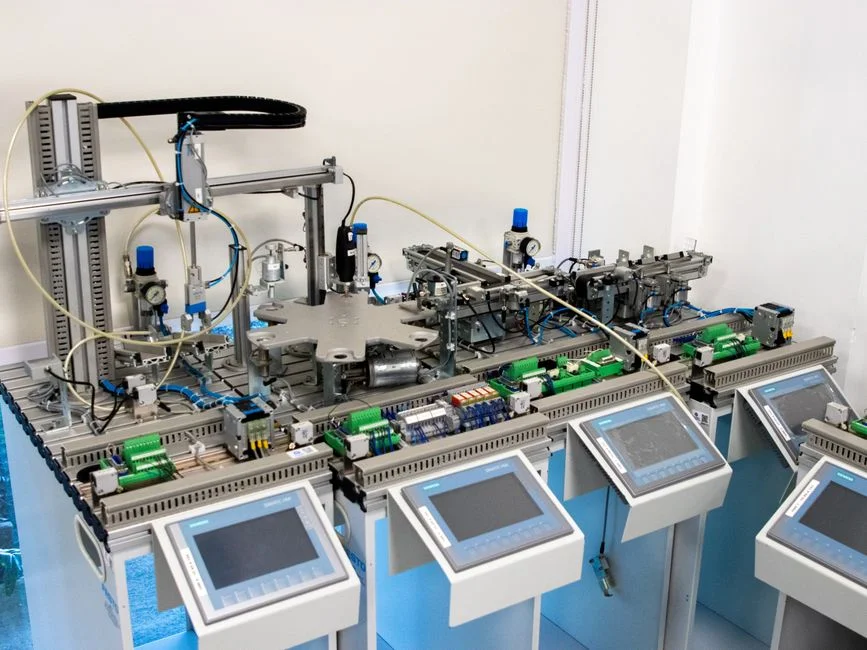

Software factory models now sit behind nearly every major enterprise build. In 2023, DORA’s research showed elite teams deploy code 100 times more frequently than low performers, with change lead times under one hour. A software factory is the operational construct that turns that aspirational benchmark into repeatable delivery: fixed roles, shared component libraries, automated pipelines, and continuous quality measurement.
The term gets misused. A software factory is not a body shop with a logo. It is a governance model that treats software production as a managed industrial process. For a CTO, that difference shows up in total cost of ownership, team velocity, and the amount of technical debt you accept without knowing it.
This article breaks down the model, pricing, failure patterns, and the metrics that separate a real factory from a rebranded vendor team.
Key Takeaways
- Software factories reduce change lead time by 30–50% in the first two quarters when DORA metrics are enforced at the pipeline level.
- Total cost of ownership usually equals 1.8–2.4x the loaded developer rate once attrition, management overhead, and defect remediation are included.
- A factory without automated quality gates accumulates technical debt at roughly 50% higher velocity than a regular dev team.
What a Software Factory Actually Is
A software factory is a delivery organization that applies industrial engineering to software production. Instead of ad hoc project teams, work moves through standardized assembly stages: intake, design, build, test, release, and operate. Each stage has defined entry criteria, output artifacts, and a quality checkpoint.
The concept is not new. NATO software engineering conferences in 1968 described a software factory as a way to move programming from craft into a repeatable engineering discipline. Today, the term applies to internal platform teams and outsourced vendor pods.
- Standardized roles: L1 developers write component-level code, L2 leads modules, L3 owns service architecture, L4 handles cross-system design.
- Reusable assets: Template repositories, shared UI libraries, and API scaffolding reduce greenfield ramp time by 20–40%.
- Automated pipelines: CI/CD runs on every commit; no manual build handoffs.
- Metric-driven management: Velocity, lead time, defect density, and cycle time feed weekly reviews.
Most agile teams already use sprints. A software factory differs by making the delivery system itself a product. The factory team owns build templates, deployment runbooks, and quality gates so feature teams do not reinvent them.
Why the Factory Metaphor Breaks Traditional Outsourcing Assumptions
Conventional outsourcing follows a project mindset: you write a spec, vendor estimates, developers disappear, and you reconcile later. Software factory contracts invert that dynamic: the vendor operates a persistent production line with stable throughput and accountable service levels.
That shift matters for the business. A project engagement optimizes for contractually defensible delivery. A factory optimizes for cycle time and defect rate, because the vendor’s margin depends on using automation, not headcount.
- Traditional: requirements frozen, fixed fee, handoff at end, knowledge lost.
- Factory: rolling intake, capacity-based cost, shared code ownership, retention of architecture.
The tradeoff is loss of immediate control. You no longer assign every task to a specific developer. Instead, you specify standards, priorities, and acceptance criteria. That can be uncomfortable for a CTO who has been managing named staff augmentation resources.
Data from outsourcing studies shows rework accounts for 20–30% of total delivery cost in fragmented multi-vendor models. A factory’s shared pipelines cut that rework by catching integration defects before they reach QA.
Core Components of a Modern Software Factory
Five components signal whether a vendor is a real software factory or a marketing label. Ask your prospective vendor to show the actual artifacts, not just describe them.
| Component | What It Looks Like in Practice | Why It Reduces Cost |
|---|---|---|
| Reusable component library | Versioned UI kit, API client SDK, auth module | Cuts new feature build time by 25–40% |
| Platform engineering team | Owns CI runners, infrastructure as code, observability | Eliminates duplicate DevOps work per team |
| Automated quality gates | Lint, test coverage, security scan in CI | Defects found at build cost 10–100x less than in production |
| Metrics dashboard | Live DORA metrics per squad | Makes bottlenecks visible in days instead of quarters |
| Governance board | Weekly architectural review with CTO | Stops local optimizations that create cross-team debt |
These components are not optional add-ons. They are the reason a factory can deliver 3x the output of an equal-sized staff augmentation team at similar loaded cost.
Software Factory vs. Staff Augmentation: Cost, Control, and Accountability
| Dimension | Staff Augmentation | Software Factory | Typical Business Impact |
|---|---|---|---|
| Cost model | Hourly per resource | Monthly pod or output-based | Factory shifts 60–80% of cost risk to vendor |
| Control over tasks | Direct day-to-day | Backlog priorities and acceptance criteria | CTO time shifts from management to architecture |
| Accountability | Individual developer | Vendor for delivery outcomes | Escalations land at vendor management, not your desk |
| Ramp-up speed | 3–6 weeks per developer | 2–4 weeks for factory to absorb new domain | Faster realization, but less hand-picked control |
| Technical debt risk | High if team rotates | Medium; gates enforce consistency | Factory debt is more predictable, not zero |
The choice is not binary. Many companies run a hybrid: factory for product-line delivery and three to five key staff augmentation engineers for architectural spikes. The pitfall is failing to split work streams clearly; otherwise, both teams fight over the same codebase with no defined ownership.
Measuring Factory Velocity with DORA Metrics
DORA metrics are the industrial telemetry of a software factory. Four signals define elite, high, medium, and low performance:
- Deployment frequency: how often code ships to production.
- Lead time for changes: commit to production.
- Change failure rate: percentage of deployments causing service degradation.
- Time to restore service: mean recovery from a failure.
DORA’s 2023 report shows elite performers deploy multiple times per day, achieve lead time under one hour, change failure rate below 5%, and restore service in under an hour. Low performers ship once per month with days-long recovery.
A factory should publish these metrics per team weekly. The following Python script reads a CSV of deployment records and computes deployment frequency and change failure rate. It is a minimal, runnable starting point for vendor oversight.
import csv
from datetime import datetime

def parse_datetime(value):
    return datetime.fromisoformat(value.replace('Z','+00:00'))

with open('deployments.csv') as f:
    reader = csv.DictReader(f)
    deployments = list(reader)

total = len(deployments)
failed = sum(1 for d in deployments if d['status'].lower() == 'failed')
days_window = 30  # trailing metrics window

recent = [d for d in deployments if (datetime.now(datetime.timezone.utc) - parse_datetime(d['deployed_at'])).days < days_window]
deploy_frequency = len(recent) / days_window
change_failure_rate = (failed / total) * 100 if total else 0.0

print(f'Deployment frequency: {deploy_frequency:.2f} deploys/day')
print(f'Change failure rate: {change_failure_rate:.1f}%')
You do not need a commercial observability suite to start. A simple CSV and Python script gives you an independent check against vendor-reported numbers.
Total Cost of Ownership: The Real Math Behind a Factory
Sticker price per developer hides the majority of software cost. In a factory engagement, senior accounting treats labor as one line item, but operational TCO includes at least seven categories:
- Recruitment and onboarding: loading into domain, credentials, security training.
- Management overhead: vendor management, backlog grooming, architecture reviews.
- Infrastructure and tooling: CI/CD, test environments, cloud sandboxes.
- Attrition and ramp-down: knowledge transfer, handover, orphaned modules.
- Quality remediation: defect fixing, hotfixes, regression cycles.
- Coordination loss: meetings, handoffs, status reporting across time zones.
- Opportunity cost: time-to-market delays while ramping mismatch with demand.
A practical TCO formula for a 12-month factory pod of six:
base_labor = loaded_hourly_rate * 1880 * headcount
onboarding = base_labor * 0.08
management = base_labor * 0.12
infra_tooling = base_labor * 0.10
quality_remediation = base_labor * 0.15
total_tco = base_labor + onboarding + management + infra_tooling + quality_remediation
For a $45/hour blended rate and six engineers, base labor runs about $507,600 per year. With realistic overhead multipliers, TCO lands around $735,000–$780,000. That 1.45–1.55x multiplier is conservative; many organizations forget attrition and ramp-down until a key module loses its owner.
Technical Debt and Quality Gates in a Factory Pipeline
Factories are optimized for throughput. Without enforced quality gates, throughput becomes the fastest way to compound technical debt. The same automation that speeds delivery also gives you the leverage to gate commits before they merge.
A minimal quality gate pipeline runs four checks before a pull request can merge:
- Static analysis and linting to catch style and obvious defects.
- Unit and integration tests with a coverage floor.
- Dependency vulnerability scan.
- Architecture fitness checks, such as forbidden imports between modules.
The following bash snippet runs all four stages locally. Use it as a pre-commit script or in CI. It fails fast and writes a report artifact.
#!/usr/bin/env bash
set -euo pipefail

echo 'Running quality gates...'
ruff check . --output-format=concise
pytest --cov=src --cov-fail-under=80 -q
npm audit --audit-level=high --production
npx depcruise --config .dependency-cruiser.js src

echo 'All quality gates passed.' > quality_gate_report.txt
The coverage floor and vulnerability threshold should be tuned per codebase. Starting at 80% coverage on new modules and blocking high severity CVEs is reasonable. Teams that skip these gates in a factory pace end up reworking 25–35% of shipped features within three months.
Scaling a Software Factory Without Losing Architectural Discipline
When a factory grows from one pod to five, the failure that kills velocity is not lack of code. It is lack of architectural boundaries. Conway’s law applies: the factory’s communication structure shapes the software system structure. If three pods all edit one monolith, merge conflicts and integration defects rise geometrically.
Scaling requires dividing the system into independently deployable modules with explicit API contracts. That is the only way to keep DORA metrics stable as headcount doubles.
- Assign each pod ownership of a bounded context, not a layer.
- Publish OpenAPI or gRPC contracts before implementation.
- Create a platform pod that owns CI/CD, observability, and ephemeral environments.
- Run contract tests in CI to detect breaking changes across pods.
This architecture matters even for specialized builds. When engineering custom case management software for social services, the factory model forces you to separate intake workflow from document management and benefits calculation modules before the vendor team scales. Without that separation, a change to eligibility rules propagates across every service and blocks unrelated releases.
The scale-up cost curve is nonlinear. Five coordinated pods deliver 3–4x the output of one pod, not 5x, because communication overhead consumes 15–20% of capacity.
When Not to Use a Software Factory
Not every product should move to a factory. The model performs worst under high uncertainty, rapid discovery, or where the codebase has undocumented legacy behavior that requires co-located judgement.
- Pre-product-market fit: requirements change weekly; factory entry criteria cause friction.
- Heavy exploratory R&D: no repeatable process to industrialize.
- Regulatory unknown: compliance interpretation is still being negotiated and needs tight in-house control.
- Legacy reconstruction: reverse engineering a 15-year-old monolith with tribal knowledge defeats factory assumptions.
In these scenarios, staff augmentation or an internal tiger team yields better outcomes, even at higher per-developer cost. The CTO software project red flags checklist highlights a typical failure pattern: pushing uncertain work into a fixed-process vendor and then blaming the vendor for slow delivery. The constraint is the workflow, not the developers.
A useful decision test: if you cannot define acceptance criteria for the next three sprints without a discovery phase, do not open a factory contract.
Software Factory Pricing: Hourly, Retainer, and Outcome-Based Models
Software factory pricing falls into three primary structures. The right choice depends on demand predictability and how much delivery risk you want on the vendor.
Hourly rates
Typical blended rates in 2024:
| Region | Junior Developer | Senior Developer | Tech Lead |
|---|---|---|---|
| India | $18–25/hour | $30–45/hour | $50–70/hour |
| Eastern Europe | $22–30/hour | $40–60/hour | $60–85/hour |
| Latin America | $25–35/hour | $45–70/hour | $65–90/hour |
| United States | $70–90/hour | $110–150/hour | $150–200/hour |
Hourly is flexible but encourages vendor overhead: every meeting, context switch, and idle hour is billable. Monthly retainers align better with factory production lines.
Monthly retainer
A five-to-eight-person pod typically runs:
- Offshore pod: $18,000–$32,000/month
- Nearshore pod: $28,000–$45,000/month
- Onshore pod: $55,000–$95,000/month
Retainers fix capacity cost but not output. You still need delivery metrics to prevent a comfortable pod that under-delivers.
Project-based fixed price
Most software factories price fixed-bid work at 1.8–2.5x the internal estimated effort to cover requirement variance. Typical project fees:
- Small feature set or integration: $25,000–$60,000
- Mid-size web application: $80,000–$180,000
- Large platform or ERP extension: $200,000–$500,000
Fixed price transfers scope risk to the vendor, but you pay a premium for that transfer. Use it only when requirements are stable and acceptance tests can be written upfront.
Outcome-based
Some vendors offer shared risk pricing: a lower base rate plus a bonus for hitting DORA performance targets or release milestones. This can reduce base cost by 10–20% while aligning incentives, but it requires independent verification.
AI Software Factories and the Next Evolution
The next layer in software factories is AI-assisted delivery. Companies now call this an AI software factory: the same industrial pipeline, but with generative AI embedded in code review, test generation, and backlog refinement.
Current applications include:
- Copilot-style code completion inside factory IDEs.
- Automated unit test generation from commit diffs.
- AI triage of failing CI builds to suggest likely root cause.
- Natural language backlog to draft technical specifications.
Early data from controlled studies shows AI pair programmers can complete routine CRUD tasks 20–55% faster, but the gain is inconsistent on complex system design. In a factory context, AI works best on standard, repeatable components: form validation, API boilerplate, data mappers.
AI does not replace engineering judgment. A factory that pushes AI-generated code without architecture gates will accelerate the accumulation of subtly incorrect patterns. The same quality gates from earlier remain mandatory.
Frequently Asked Questions About Software Factories
These questions appear repeatedly in search data around software factories. Short answers below; more detailed context in the sections above.
| Question | One-Line Answer |
|---|---|
| What is L1, L2, L3, and L4 engineer? | A seniority and scope ladder: L1 component, L2 module, L3 service architecture, L4 cross-system design. |
| What are the big 5 software companies? | Microsoft, Alphabet, Apple, Amazon, and Meta. |
| Who is the CEO of factory AI? | Public sources list Eno Reyes as co-founder and CEO of Factory AI. |
| What are AI software factories? | Software factories that embed generative AI in coding, testing, and backlog refinement stages. |
The engineer-level question matters because factory contracts often quote blended rates. A pod with four L2 engineers and one L3 is not the same as a team of two L4 engineers, even if the blended rate is identical.
Factors That Affect Development Cost
- Region and labor arbitrage
- Team seniority mix
- Engagement model (hourly, retainer, fixed price)
- Automation maturity of the factory
- Domain complexity and regulatory requirements
- Quality gate and security requirements
- Length of commitment
Pricing varies significantly based on factory maturity, region, and the level of delivery risk the vendor absorbs. Always request a fully loaded cost breakdown that separates labor from infrastructure and tooling.
Frequently Asked Questions
What is L1, L2, L3, and L4 engineer?
L1 through L4 describe engineering seniority and scope. L1 writes component-level code under supervision. L2 owns a module or feature area. L3 owns service-level architecture and cross-team technical decisions. L4 designs systems that span multiple services or domains.
What are the big 5 software companies?
The big five software and technology companies are Microsoft, Alphabet, Apple, Amazon, and Meta. These firms dominate platform revenue, cloud infrastructure, and consumer software. The grouping is based on market capitalization and product reach.
Who is the CEO of factory AI?
Factory AI is a technology company focused on autonomous software engineering. Public sources list Eno Reyes as co-founder and CEO. Titles and leadership can change, so verify with the company’s latest announcements.
What are AI software factories?
AI software factories are production pipelines that embed generative AI into code generation, test creation, and backlog refinement. They apply the same industrial quality gates but augment developer productivity with AI assistance. The goal is faster realization of routine components without losing architectural control.
A software factory is an operational contract, not a location. For a CTO, the determinant of success is whether the vendor can show automated pipelines, measured DORA performance, and quality gates before the engagement begins. If those artifacts are missing, the factory label is only a pricing strategy.
When the factory fits, it compresses time-to-market, makes technical debt visible, and shifts delivery risk to the vendor. When it does not fit, it adds governance overhead to work that still needs discovery. The line between the two is whether your next six sprints can be defined as repeatable work with objective acceptance criteria.
Explore our complete Software Development — Outsourcing directory for more guides.
NR Studio builds custom web apps, mobile apps, SaaS platforms, and internal tools for growing businesses. If you’re working through a technical decision, feel free to reach out — no commitment required.