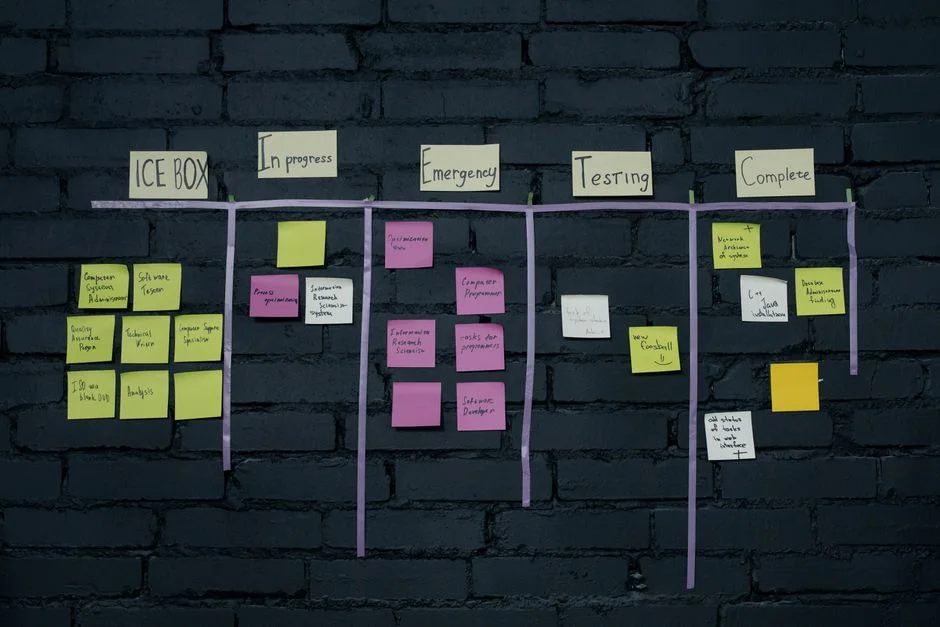

The 2024 Stack Overflow Developer Survey continues to show that most teams mix delivery models, but engineering cost overruns still trace back to a single source: the gap between methodology assumptions and real code changes. For a backend engineer, a methodology is not a ceremony. It is a rule set that determines when database schema changes are allowed, who pays for memory leak remediation, and how a fixed-bid contract absorbs a late security patch.
Agile, Scrum, XP, Kanban, Lean, and Waterfall all make different promises about predictability. The Agile Manifesto, published in 2001, explicitly values responding to change over following a plan. That choice has a direct dollar figure attached to it. A plan-driven contract looks cheaper on day one because discovery is front-loaded, but the rework tax arrives later. An iterative contract looks more expensive per sprint, but the cost of change stays roughly flat.
This article examines software development methodologies from an operational cost and estimation perspective. It focuses on the backend architecture constraints that methodologists often ignore: database migration cost, memory profiling time, code review cycles, and the price of failed deployments. If you are estimating a project or hiring a development partner, the methodology is not a checkbox. It is the financial instrument behind every commit.
Why Methodology Choice Is a Cost Decision First
For a backend engineer, the selection of a software development methodology determines more than meeting cadence. It sets the cost of change, which is the single largest variable in any estimate. In a waterfall model, a database schema change discovered in user acceptance testing can trigger a 10x cost multiplier compared with catching it during design. In an iterative model, the same change may be absorbed as a routine backlog item, but the team carries a higher ongoing overhead for refinement, demos, and continuous integration.
The financial impact shows up in three areas: discovery cost, delivery cost, and rework cost. Discovery cost includes requirements analysis, architecture spikes, and data modeling. Delivery cost includes coding, testing, and deployment. Rework cost includes bug fixes, refactoring, and migration rollback. Each methodology distributes these costs differently. A fixed-bid Waterfall contract front-loads discovery and assumes delivery costs are predictable. An Agile contract accepts higher discovery overhead per sprint because the product owner can reprioritize at every iteration. A Kanban flow optimizes for steady delivery when the product already exists. The right choice depends on whether your backend is greenfield, where uncertainty is high, or brownfield, where schema and code constraints are known.
One practical way to evaluate this is through a build versus buy analysis for referral marketing or any subsystem. If the methodology cannot tolerate late integration changes, the cost of integrating a third-party referral platform may be lower than building it, even when the hourly rate looks higher. The methodology dictates whether you can exploit that flexibility.
Backend systems are especially sensitive because they involve persistent storage, query plans, connection pooling, and memory allocation. A front-end framework can swap a component in a day. A backend migration on a 40-million-row table cannot be undone with a simple rollback. Methodology choices that ignore this constraint produce estimates that fail the moment the schema changes.
Seven SDLC Models and Their Cost Profiles
Most teams refer to SDLC models rather than pure methodologies. The seven common models include Waterfall, V-Shaped, Iterative, Spiral, Big Bang, Agile, and DevOps. Each has a different relationship with budget, timelines, and backend risk. The table below summarizes how a backend engineer evaluates their cost profiles.
| SDLC Model | Delivery cadence | Change cost profile | Backend engineering risk |
|---|---|---|---|
| Waterfall | Single release at end | Low early, high late | Late schema changes cause full regression |
| V-Shaped | Single release with test gates | Moderate, tests freeze early | Test scripts lock incorrect behavior |
| Iterative | Repeated cycles, partial scope | Decreasing over iterations | Half-built APIs create contract debt |
| Spiral | Risk-driven prototypes | High prototype cost, lower rework | Prototype code pollutes production if not thrown away |
| Big Bang | Unplanned, single shot | Unpredictable | No architecture, DB schema drifts |
| Agile | Short sprints, continuous scope | Roughly flat per sprint | Requires strict CI/CD and refactoring discipline |
| DevOps | Continuous delivery | Low if automated, high if manual | Database migration must be backward-compatible |
The cost profiles above are not theoretical. A 2023 research paper from the IEEE analyzing software cost overruns found that projects with late requirements changes had a median cost overrun of 45% when compared with baselined estimates. While that paper is behind a paywall, the pattern matches what backend engineers observe: the later you find a data modeling error, the more you pay. Waterfall and V-Shaped models push data modeling early, which is good if requirements are stable, but punishing if the business changes direction. Agile and DevOps tolerate change, but they require investment in automated tests, feature flags, and expandable contracts. That investment is real money: a proper CI/CD pipeline with staging environments and database migration tooling can cost $4,000 to $8,000 to set up for a small team, before any feature code is written.
Choosing a model based only on popularity ignores these backend costs. For example, in a healthcare claims system where HIPAA rules freeze the schema, Waterfall may be less expensive because Agile’s repeated migrations would trigger audit reviews each sprint. In a startup MVP for a referral program, Agile is more appropriate because the referral rules will change weekly. The model needs to match the data volatility.
Waterfall and Fixed-Bid Contracts: The Rework Tax
Waterfall is still common in fixed-bid contracts, especially for government, healthcare, and ERP integrations. The contract typically defines a scope, a schedule, and a total price. A backend engineer sees a hidden variable in that structure: the rework tax. If the client asks for a change after the design freeze, the vendor has two choices – absorb the cost or trigger a change order. Change orders are priced at premium rates because the team must context-switch away from the original plan.
Consider a concrete scope: a 6-month claim adjudication API in .NET or Laravel. The fixed price may be $180,000, broken down as 400 hours of discovery at $150/hr ($60,000), 800 hours of build at $130/hr ($104,000), and 120 hours of contingency at $133/hr ($16,000). If the client requests a change to the eligibility rule after 70% of the build is complete, the vendor will estimate the impact on the entity relationship diagram, the stored procedures, and the test suite. A small rule change can require touching 11 tables, rewriting 4 stored procedures, and re-running regression tests. At $165/hr for change requests, that single change might cost $18,000. The original $180,000 estimate is now $198,000, a 10% overrun, and the schedule slips by three weeks.
Waterfall’s rework tax is not always bad. If the domain is stable and regulated, the fixed price gives the client budget certainty. But backend teams must protect themselves by building a ‘change request rate card’ into the contract. That rate card should explicitly price database migration work, performance testing, and security patching. Without it, the fixed-bid vendor may cut corners on memory profiling or index tuning to preserve margin. The client then pays later in production incidents.
For a startup deciding whether to build a referral engine, a fixed-bid Waterfall contract can be dangerous if the referral rules depend on marketing experiments. The business will want to change the reward logic every two weeks, and the rework tax will consume the budget. A build versus buy analysis for referral marketing should account for that rework tax when comparing a custom build with a SaaS referral tool.
Agile and Scrum: Iterative Scope and Estimation Uncertainty
Scrum is a framework, not a methodology, but most teams use it as their Agile delivery model. The Scrum Guide defines three roles, five events, and three artifacts. From a cost perspective, Scrum changes the unit of purchase from a whole project to a sprint. A sprint is a timeboxed iteration, usually two weeks. The cost of a sprint can be calculated precisely: team size, blended hourly rate, and working hours. For a team of four backend engineers and one QA at a blended rate of $135/hr, a two-week sprint with 40 hours per week each equals 400 hours. At $135/hr, that is $54,000 per sprint. That is real money every two weeks.
The Scrum estimation uncertainty comes from backlog grooming and velocity. A product owner may value a feature set at 20 story points per sprint. If the team’s velocity is 20, they will deliver in one sprint. If the team’s velocity drops to 12 because of technical debt or database migration complexity, the same scope takes 1.67 sprints and costs $90,000 instead of $54,000. The cost overrun is not from any single bad estimate but from the compounding effect of underestimated complexity.
Backend engineers often deal with the worst kind of uncertainty: ambiguous data contracts. In Agile, the team defers detailed design until the sprint. That is good for front-end features, but for a database schema, deferring design can lead to a migration that requires downtime. If the team discovers in sprint 3 that the original one-to-many relationship should be many-to-many, the migration cost may be 40 engineer-hours, plus the cost of zero-downtime strategy. At $140/hr, that’s $5,600. An upfront architecture spike could have cost $1,200. Agile defers that cost, but it does not eliminate it.
Scrum’s true cost advantage is that it allows the business to stop delivery early. If the MVP shows low traction, the product owner can cancel remaining sprints. With a fixed-bid Waterfall contract, the company must pay the full contract even if the product is not viable. That optionality has a financial value, and it is one reason Agile is dominant in venture-funded startups. However, agencies and dev shops that sell Scrum must disclose that a sprint is not a guarantee of a specific feature. It is a guarantee of team time. The client is renting a team, not buying a deliverable. This distinction matters when you estimate a project or negotiate a contract.
Extreme Programming (XP): Engineering Practices That Change Burn Rate
Extreme Programming is a set of engineering practices, not a project management methodology. Its core practices include test-driven development (TDD), pair programming, continuous integration, refactoring, and small releases. The cost impact of XP is immediate and measurable. TDD requires writing tests before production code. That front-loads effort, but it reduces the defect discovery cost from production to the developer’s machine. A production defect in a payment API can cost $5,000 in customer impact, plus $10,000 in emergency fixes. A unit test failing at compile time costs almost nothing.
Pair programming doubles the direct labor cost of a feature but reduces the code review queue and the hand-off cost. In a complex database migration, two senior engineers working together for 8 hours at $160/hr each costs $2,560. The alternative of one engineer working 12 hours and then spending 4 hours in review and rework often totals the same. XP optimizes for predictable burn rate rather than lowest hourly spend.
Continuous integration is a backend non-negotiable. Every merge should trigger a pipeline that runs migrations, unit tests, and integration tests. The cost of setting up CI for a Laravel or Next.js backend with GitHub Actions and a staging database is around $800 to $2,000 in engineering time. If a team skips it, the first failed production deployment that corrupts a table can cost 20 times that. The XP practice of refactoring also has a direct cost: developers spend 10-15% of their sprint on improving code structure. In a 400-hour sprint at $135/hr, that’s $5,400 to $8,100 of ‘no visible feature’ work. That spend prevents the technical debt that would otherwise reduce velocity in later sprints.
XP is not free. It demands senior developers who can write tests first and tolerate pairing. A team of junior developers using XP may slow down because they lack the design skills. The cost calculator must include a hiring premium: experienced XP practitioners command 20-30% higher salaries. But the reduction in defect rework often pays for that premium within three to six months. For a backend team maintaining a 50,000-line codebase, XP practices can mean the difference between a 2-day release cycle and a 4-week release cycle.
Lean and Kanban: Flow Efficiency and Budget Consumption
Lean software development focuses on eliminating waste, and Kanban is the visual system for managing that flow. A backend team using Kanban does not work in sprints. Work items move across a board with WIP limits. The financial metric that matters is flow efficiency: the ratio of active work time to total lead time. In many teams, a bug fix spends 2 hours of active work but waits 5 days in a queue. Flow efficiency is 2 / (5 days * 8 hours + 2) = 4.7%. The cost of that waiting is holding cost: the feature or fix is not generating revenue or reducing risk.
Kanban is ideal for maintenance and support contracts because the budget is often a monthly retainer. A typical SLA contract might say ‘up to 40 hours per month of bug fixes and small enhancements, unused hours roll over or expire.’ Kanban’s WIP limits ensure the team does not start 10 tasks simultaneously and finish none. If a company pays $4,000 per month for 20 hours of backend maintenance at $200/hr, the Kanban board makes the queue visible. The client can see that a high-priority bug is blocked by a dependency, and the vendor can reprioritize. That visibility is worth money because it prevents the ‘where is my fix’ escalation and the resulting emergency context switching.
Kanban does not solve scope problems. It simply exposes them. If the backlog has 300 items and the team closes 3 per week, the client can calculate the time to empty the queue: 100 weeks. That number often forces a build versus buy conversation. For example, if the backlog includes a dozen integrations with referral partners, and the Kanban team cannot clear them in a quarter, buying a referral API or using a managed platform may be cheaper than continuing to burn retainer hours. The same logic applies when comparing offshore engineering teams in Indonesia, India, and Vietnam: a lower hourly rate in a Kanban flow does not help if the waiting time dominates the lead time. The real cost per completed work item is flow efficiency times hourly rate.
Hybrid Approaches: Backend Architecture Stability vs. Business Flexibility
Most real-world backend projects use a hybrid: fixed data contracts with agile feature delivery, or a discovery phase in Waterfall followed by Scrum sprints. The hybrid approach exists because pure Agile assumes the product owner can change the schema every sprint, but a production database cannot tolerate that. A practical hybrid is to run a two-week ‘architecture runway’ at the start: data modeling, API contracts, and database migration strategy. After the runway, the team uses Scrum for feature delivery with a strict rule: schema changes require a separate migration ticket and a rollback plan.
The cost difference is measurable. In a pure Agile project, a late schema change may consume 30% of a sprint. In a hybrid with frozen data contracts, the team loses some flexibility but avoids that 30% tax. The tradeoff is upfront design effort. A data modeling spike for a moderate ERP module costs $4,500 to $7,000. But if it prevents a $30,000 migration failure six weeks later, the hybrid pays for itself. Backend engineers prefer hybrid because it aligns the methodology with the physical constraints of relational databases, connection pools, and memory limits.
Hybrid models also allow fixed-price discovery and time-and-materials delivery. A vendor might charge $12,000 for a 3-week discovery sprint to produce an API specification and a database schema. Then the build phase is time-and-materials at $135/hr. This protects the client from paying full project price for unknown unknowns, and protects the vendor from absorbing unlimited changes. In our experience, hybrid is the least understood but most financially honest model.
When comparing vendors across geographies, the hybrid contract terms matter more than the hourly rate. Teams in Indonesia, India, and Vietnam may offer lower rates, but the fixed-price discovery phase protects both parties from the hidden cost of misunderstood requirements. The architecture runway becomes the most valuable deliverable: it sets the database schema, the migration plan, and the performance targets before a single feature is coded.
Database Performance and Memory Management Under Different Methodologies
Methodology affects database performance indirectly, through the timing of tuning. Waterfall teams tune the database at the end, after the schema is final. Agile teams tune continuously. The cost of that timing difference is significant. A query that scans a 5-million-row table in production because no one profiled it during development is a production incident. At a $150/hr emergency rate, a 4-hour incident costs $600 in labor, plus the business cost of slowdown or downtime.
In Agile, database migration scripts are part of the definition of done. Every sprint should include a migration review: check new indexes, verify query plans, and monitor buffer pool hit rates. The code below is a practical query for identifying slow statements in MySQL, which a backend engineer can run in staging before release.
SELECT DIGEST_TEXT, COUNT_STAR, SUM_TIMER_WAIT, AVG_TIMER_WAIT
FROM performance_schema.events_statements_summary_by_digest
WHERE SCHEMA_NAME = 'billing'
ORDER BY SUM_TIMER_WAIT DESC
LIMIT 10;
Memory management is similar. Waterfall projects often defer profiling to the final performance testing phase. If the application has a memory leak that only appears after 10,000 requests, a 4-week waterfall system test may catch it late. The fix could require refactoring the object allocation pattern in three services. In Agile, a k6 or JMeter load test can be run in a smoke fashion after each release. The cost of an automated memory profiling pipeline is $1,500 to $4,000 in setup and $300 per month in cloud resources. It is far cheaper than the $20,000 emergency escalation when a production instance OOM-kills in the middle of the night.
The methodology also determines who owns performance. In a fixed-bid Waterfall contract, performance requirements may be vague: ‘the system should be fast.’ The vendor may interpret that as 2-second response time, while the client expected 500ms. In Agile, the definition of ready should include performance acceptance criteria. For example: ‘the checkout API must respond in under 300ms at p95 with 500 concurrent users.’ That spec forces the backend engineer to write proper indexes and connection pooling from sprint one, not after launch.
Estimation Techniques: Story Points, Function Points, and Actuals
Estimation techniques are the bridge between methodology and budget. The three most common in backend projects are story points, function points, and actuals-based forecasting. Story points are relative estimates, not time. A 5-point story is roughly twice as complex as a 2-point story. The conversion to cost requires velocity and team cost. If a team of four at $120/hr blended has a velocity of 20 points per two-week sprint, the sprint cost is 4 people x 80 hours x $120 = $38,400. The cost per story point is $1,920. A feature estimated at 8 points costs $15,360. This is a loose estimate because story points are not linear, but it gives a planning figure.
Function points are more formal and often used in fixed-bid contracts. They count inputs, outputs, inquiries, internal logical files, and external interface files. A well-defined ERP module might be 250 function points. With an average productivity of 10 function points per person-month and a fully loaded cost of $16,000 per person-month, the module costs $400,000. Function points work better for backend-heavy systems with lots of data entities and reports, while story points work better for user-facing features.
Actuals-based forecasting is the most honest method for maintenance and retainer work. Instead of estimating, you use historical cycle time and throughput. If the team delivered 37 work items in the last 3 months, and the average item cost $480, then the next quarter’s backlog of 60 items is likely to cost 60 * $480 = $28,800. This method accounts for the real overhead of code review, testing, and deployment. It is especially useful when comparing the cost of buying a SaaS referral platform versus building and maintaining an in-house referral engine. The actuals will show that a simple referral system costs $1,200/month in maintenance, while the SaaS costs $400/month, making the build option only viable if the customization value exceeds $800/month.
All three techniques fail if the backend team does not include migration complexity. A story point estimate for ‘add user profiles’ must include the time to alter the users table, backfill data, update indexes, and deploy a backward-compatible migration. A senior backend engineer will add 2-3 points to every data-heavy story for that reason. Junior teams often miss it, and that is where estimation errors come from.
Comparing Cost Models: Hourly Billing, Monthly Retainer, and Fixed Price
Cost models interact with methodology. Hourly billing is the default for Agile, monthly retainers for maintenance under Kanban, and fixed price for Waterfall discovery and small-scope builds. Each model shifts risk differently. The table below shows concrete ranges based on common scopes for a mid-sized backend project with a senior engineer at $140-$170/hr.
| Cost model | Typical unit | Example scope | Estimated total | Risk owner |
|---|---|---|---|---|
| Hourly billing | $140-$170/hr | 80-hour change request for a referral API modification | $11,200-$13,600 | Client (cost overrun) |
| Monthly retainer | $4,000-$20,000/month | 20-40 hours/month of maintenance, monitoring, and small enhancements | $4,000-$20,000 per month | Shared, capped hours |
| Fixed price | Project total | 3-month MVP: REST API, PostgreSQL schema, auth, admin dashboard | $25,000-$45,000 | Vendor (scope overrun) |
| Hybrid (discovery + T&M) | Discovery fixed + hourly build | 2-week discovery, then 12-week build at $150/hr | $12,000 + $72,000 = $84,000 | Shared with retainer |
The dollar amounts above assume a US-based or senior offshore team with rigorous code review and CI/CD. Offshore teams in Southeast Asia may quote 40-60% lower hourly rates, but the measurement of effective output often changes. A backend engineer’s real cost is not the hourly rate; it is the cost per completed, tested, documented work item. A $70/hr team that takes 2.5x longer to close a story because of communication overhead costs the same as a $175/hr team with instant clarity. That is why comparing teams solely on hourly rate is misleading.
Fixed price seems safe for clients but works only when the scope is immutable. For a database migration from MySQL to PostgreSQL, fixed price is appropriate: the schema transformation is known, and the vendor can quote $18,000-$28,000. For a CRM integration with unknown data quality issues, fixed price will produce inflated contingency or vendor losses. Monthly retainers work best for post-launch maintenance because the client can scale up or down with notice. A typical retainer contract should specify a rollover policy: unused hours expire after 90 days. The client pays for availability, not necessarily for every hour worked.
Cost factors include project complexity, number of integrations, compliance requirements, database migration size, team location, and methodology overhead. The range note is that a 200-hour project and a 2,000-hour project cannot be compared by rate alone; the fixed cost of code review tooling, pipeline setup, and environment configuration is amortized over more hours in larger projects.
Implementation Strategy: Choosing a Methodology for Maintainable Systems
For a backend engineer, maintainability is the primary non-functional requirement. It determines the cost of every future change. A methodology can either support or undermine maintainability. Waterfall can produce a well-documented system if the architecture is designed upfront, but it often skips automated tests because they are not in the plan. Agile can produce a messy codebase if the team skips refactoring to meet sprint goals. The key is to match the methodology to the system’s lifecycle stage.
A greenfield MVP with high uncertainty should use lightweight Agile or Kanban until the schema stabilizes. The database should be designed with a migration tool like Prisma Migrate or Laravel migrations from day one. The team should enforce a rule: every migration must be backward-compatible for at least one release. That rule costs an extra 10% in design time but prevents the need for a destructive migration later.
A brownfield system with strict compliance and low change frequency may use a Waterfall-like release train with formal change control. The cost of a formal change review board is roughly 50-80 hours per month of management time, but it prevents unapproved schema changes that could trigger HIPAA or PCI audit failures. The tradeoff is speed: a change that takes 1 day in Agile may take 10 days in a controlled Waterfall release train.
The decision matrix below summarizes the recommendation from a backend maintainability perspective:
| Scenario | Recommended methodology | Typical cost impact |
|---|---|---|
| Startup MVP with changing rules (e.g., referral logic) | Scrum + XP practices | $50,000-$80,000 for 3-month MVP |
| Healthcare claims system with fixed regulations | Waterfall + V-model | $180,000-$250,000 for 6-month build |
| Internal ERP with existing messy schema | Kanban + technical debt sprints | $8,000-$15,000/month retainer |
| API-only product with high availability needs | Hybrid: architecture runway + Scrum | $100,000-$150,000 for 4-month build |
The costs above assume a 3-5 person team and include CI/CD and code review. They do not include cloud hosting, third-party API fees, or ongoing security monitoring. A referral marketing build versus buy analysis fits into the first row: the MVP rules change often, so the Agile approach is necessary, but the team must budget for refactoring the referral engine after the first growth experiment.
Monitoring, Observability, and Security Implications
Methodology determines when you find out that the system is broken. A waterfall project discovers production issues after the final release. An agile project discovers them in integration testing every sprint. The cost of failure is measured by mean time to recovery (MTTR) and change failure rate. The DevOps Research and Assessment (DORA) metrics show that high-performing teams deploy more frequently and recover from failures in less than an hour. That performance is not free. It requires monitoring infrastructure: log aggregation, distributed tracing, and alerting. For a small backend service, a basic monitoring stack with Grafana, Loki, and Prometheus costs about $150-$300 per month in cloud resources plus $2,000-$5,000 in setup time. The alternative is flying blind until a customer reports an error, at which point the emergency cost is 5-10x the monthly monitoring cost.
Security implications differ sharply by methodology. Waterfall projects often place security testing as a final phase. A penetration test before release can cost $8,000-$15,000 and may uncover issues that require schema changes or API contract changes, which are expensive at that stage. Agile teams can incorporate security into each sprint with threat modeling in refinement and static analysis in the CI pipeline. Tools like SonarQube or Snyk add $20-$100 per developer per month. The cost of a data breach or a compliance fine dwarfs that figure, but many fixed-bid contracts exclude security testing to keep the price competitive. A backend engineer should flag that exclusion as a red flag.
From an observability standpoint, a methodology that forces daily deployments increases the need for feature flags. Feature flags allow a code change to be deployed but inactive. That costs $100-$500 per month for a flag management platform, but it reduces the blast radius of a deployment. If a new schema migration fails, the feature flag can be turned off without rolling back the database. Pure Waterfall does not need feature flags because releases are infrequent, but then the risk is concentrated in a single big-bang deployment.
The backend team’s observability posture should be part of the methodology decision, not an afterthought. For any project exceeding $50,000, we recommend including a 3-5% budget line for observability setup and tooling. That means a $50,000 project should spend $1,500-$2,500 on monitoring, tracing, and alerting. It is an insurance policy against the $20,000 production outage.
Further Cost Estimation Resources
If you are in the middle of estimating a software project, the methodology is only one variable. The other variables include team location, architecture complexity, integration surface, and post-launch maintenance. The articles below can help you avoid the common mistake of comparing vendors on headline rates alone.
First, a deeper look at the build versus buy analysis for referral marketing can show how methodology choice affects whether you should build a referral feature in-house or integrate a third-party platform. The same logic applies to any subsystem where requirements change frequently.
Second, the engineering comparison of offshore teams in Indonesia, India, and Vietnam explains how geography, communication overhead, and timezone overlap change the effective cost per story point. That article is particularly useful when you have a hybrid fixed-price discovery followed by time-and-materials delivery.
For more on cost and estimation across the entire cluster, start with our directory: Explore our complete Software Development — Cost & Estimation directory for more guides.
Factors That Affect Development Cost
- Project complexity
- Number of integrations
- Compliance requirements (HIPAA, PCI)
- Database migration size
- Team location and seniority
- Methodology overhead (ceremonies, tooling)
- Testing and observability depth
Exact cost varies widely because a two-week sprint for a payment integration is not comparable to a six-month claim adjudication system; fixed costs for setup and compliance are amortized differently.
Methodology selection determines whether a database schema change costs $500 in sprint 2 or $18,000 in UAT. Waterfall offers budget certainty when requirements are frozen; Agile offers optionality when they are not; XP reduces defect rework; Kanban exposes flow inefficiency. A backend engineer evaluates all of them by the same question: how much does it cost to change the database, fix a memory leak, or patch a security hole after deployment?
If you are preparing an estimate or comparing development partners, treat the methodology as a cost allocation strategy, not a process label. For more engineering-driven breakdowns of software cost and estimation, browse our other articles or join our newsletter. We publish specific, senior-level guidance without the vendor fluff.
NR Studio builds custom web apps, mobile apps, SaaS platforms, and internal tools for growing businesses. If you’re working through a technical decision, feel free to reach out — no commitment required.