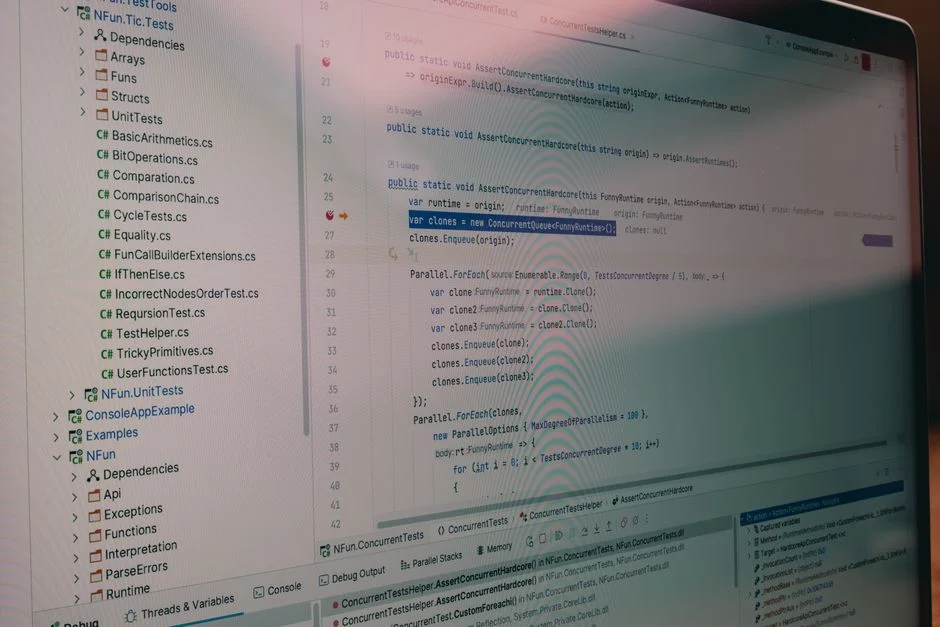

Software application architecture defines the fundamental structure of a software system, encompassing its components, their external properties, and the relationships between them, crucially guiding how the system addresses functional and non-functional requirements including security, performance, and scalability.
From a security engineer’s perspective, this architectural blueprint is not merely an organizational diagram; it is the primary defense perimeter, dictating how vulnerabilities are introduced or mitigated, and how data integrity, confidentiality, and availability are maintained. A poorly conceived architecture can introduce systemic weaknesses that no amount of perimeter defense can fully compensate for, making early and continuous security integration paramount.
Ignoring security at the architectural stage guarantees a system riddled with exploitable flaws, leading to potential data breaches, compliance violations, and significant financial and reputational damage. Our focus here is to dissect the architectural choices that either fortify or compromise an application’s security posture, guiding developers and stakeholders toward building inherently resilient systems.
Defining Secure Software Application Architecture
Secure software application architecture is the deliberate design of a system’s structure to minimize attack surfaces, enforce security policies, and withstand malicious activities, all while meeting functional requirements. It moves beyond merely adding security features as an afterthought, embedding security considerations into every layer and component from conception. This approach ensures that security is an inherent quality, not an optional add-on, fundamentally shaping how components interact, data flows, and access is managed.
Key principles underpinning secure architecture include least privilege, defense-in-depth, separation of concerns, fail-safe defaults, and comprehensive threat modeling. The goal is to create a system where a compromise in one area does not automatically lead to a complete system breach, and where security mechanisms are layered and redundant. This requires a deep understanding of potential attack vectors, the value of the data being protected, and the regulatory landscape governing the application’s domain. Architects must consider not only external threats but also internal risks, such as insider threats or misconfigurations.
A critical aspect of this definition involves understanding the trade-offs. Implementing stringent security measures can sometimes impact performance, development velocity, or user experience. A security engineer’s role is to identify these trade-offs, quantify their risks, and propose solutions that balance security effectiveness with operational realities. For instance, strong encryption adds computational overhead, but the risk of unencrypted sensitive data exposure often outweighs this performance impact. Similarly, overly complex access control policies can hinder legitimate users, necessitating careful design to ensure usability without sacrificing security.
Moreover, secure architecture is not a static state; it is an ongoing process. As threats evolve and new vulnerabilities emerge, the architecture must adapt. This necessitates continuous monitoring, regular security audits, and a robust incident response plan built into the architectural fabric. The choice of technologies, frameworks, and third-party services also directly impacts the security posture. For example, using well-maintained, open-source libraries with active security communities tends to be more secure than relying on obscure, unmaintained alternatives. Furthermore, secure configurations for all infrastructure components, from operating systems to network devices, are integral to the overall security of the application. This holistic view of security, embedded within the architectural design process, is what truly defines a secure software application architecture.
Consideration must also be given to the deployment environment. Whether on-premises, in a public cloud, or a hybrid setup, each environment presents unique security challenges and opportunities. Cloud environments, for example, offer shared responsibility models where the cloud provider secures the underlying infrastructure, but the application owner is responsible for securing their application, data, and configurations. Understanding these boundaries and implementing appropriate controls, such as network segmentation, identity and access management (IAM) policies, and data encryption at rest and in transit, becomes a core architectural concern. The architecture must also facilitate compliance with various regulatory standards, such as GDPR, HIPAA, or PCI DSS, by design, rather than attempting to retrofit compliance controls later.
Core Architectural Patterns and Their Security Implications
The choice of architectural pattern significantly influences an application’s security posture. Each pattern presents distinct advantages and disadvantages from a security perspective, which must be thoroughly evaluated during the design phase. Understanding these implications is crucial for a security engineer.
Monolithic Architecture
A monolithic architecture, where all components are tightly coupled within a single codebase and deployment unit, can offer simplified security management in some respects. There’s a single attack surface to protect, and internal communication between components typically doesn’t traverse network boundaries, reducing the risk of man-in-the-middle attacks. However, a single vulnerability can compromise the entire application. A flaw in one module might provide an attacker with access to all other modules and data. Patching and updating the monolith requires redeploying the entire application, which can be a slow process, leaving vulnerabilities exposed for longer periods. Furthermore, enforcing granular access control within a large, sprawling codebase can become complex and error-prone, increasing the likelihood of privilege escalation vulnerabilities.
Microservices Architecture
Microservices, characterized by small, independent, loosely coupled services communicating via APIs, introduce a distributed security challenge. While a compromise in one microservice might not immediately bring down the entire system, each service represents a new attack surface that needs individual protection. This multiplies the number of endpoints, APIs, and data stores requiring secure configuration, authentication, and authorization. Securing inter-service communication, often over a network, becomes critical, typically requiring mutual TLS (mTLS), API gateways, and robust authorization mechanisms. Managing secrets across numerous services also adds complexity. However, microservices can offer better isolation; a compromised service might be more easily contained, and faster deployment cycles allow for quicker patching of vulnerabilities. The principle of least privilege can be more effectively applied, as each service can be granted only the permissions it specifically needs to function, reducing the blast radius of a successful attack. For a deeper understanding of how these architectural decisions impact startups, consider our Startup Software Architecture Decision Guide: A Security-First Approach.
Serverless Architecture
Serverless architectures, leveraging functions-as-a-service (FaaS), shift much of the infrastructure security responsibility to the cloud provider. This can reduce the operational burden for the development team, but it introduces new security considerations. Individual functions are often short-lived and event-driven, which can make traditional security monitoring challenging. The primary security concerns revolve around proper function permissions, secure API Gateway configurations, input validation for event triggers, and managing secrets accessed by functions. Overly permissive IAM roles for functions are a common vulnerability. The fragmented nature of serverless deployments can also make it difficult to gain a holistic view of the application’s security posture.
N-tier Architecture
The N-tier architecture, commonly separating presentation, business logic, and data layers, inherently provides a degree of security through segmentation. Each tier can reside on separate servers or networks, allowing for distinct security controls, such as firewalls between tiers. This separation limits direct access from the presentation layer to the database, enforcing a controlled flow through the business logic layer. However, securing the communication channels between these tiers is paramount. SQL injection, cross-site scripting (XSS), and other common web vulnerabilities often target the interfaces between these layers. Proper input validation at each boundary and secure configuration of inter-tier communication protocols are essential. The security of each tier is interdependent, meaning a weakness in one tier, such as the application server, can expose the data tier even if it’s otherwise well-protected.
Regardless of the pattern chosen, the security engineer must advocate for a comprehensive approach that includes secure coding practices, rigorous input validation, robust authentication and authorization, and continuous security testing. The architectural pattern provides the canvas, but the details of implementation ultimately determine the security strength.
Threat Modeling and Risk Assessment in Architecture Design
Threat modeling is a structured process for identifying, quantifying, and mitigating security risks within an application’s architecture from an attacker’s perspective. It’s a proactive security practice that should begin early in the design phase and continue throughout the software development lifecycle. For a security engineer, threat modeling is not optional; it’s a fundamental requirement for building secure systems. The core idea is to understand what assets need protection, what threats exist, what vulnerabilities could be exploited, and what countermeasures can be implemented.
A common methodology for threat modeling is STRIDE (Spoofing, Tampering, Repudiation, Information Disclosure, Denial of Service, Elevation of Privilege), developed by Microsoft. This framework helps categorize potential threats based on security properties they violate. Another popular approach is DREAD (Damage, Reproducibility, Exploitability, Affected Users, Discoverability) for risk ranking. The output of a threat model should be a prioritized list of threats and corresponding mitigation strategies, integrated directly into the architectural design and development backlog. This ensures that security issues are addressed where they are most effective: at the design level.
The process typically involves several steps: first, defining the scope and identifying assets, which includes data, services, and infrastructure components. Second, creating an architectural diagram, often a data flow diagram (DFD), to visualize how data moves through the system and how components interact. Third, identifying threats against each component and data flow using frameworks like STRIDE. Fourth, identifying vulnerabilities that could allow these threats to materialize. Fifth, determining the risk level of each threat and prioritizing them based on their potential impact and likelihood. Finally, defining and implementing countermeasures and verifying their effectiveness.
For example, in a typical web application, threat modeling might identify SQL injection as a tampering threat against the data access layer, mitigated by parameterized queries. Cross-site scripting (XSS) could be an information disclosure or spoofing threat against the presentation layer, mitigated by output encoding and Content Security Policy (CSP). A lack of robust authentication mechanisms could lead to spoofing and elevation of privilege, mitigated by multi-factor authentication (MFA) and strong password policies. Each identified threat requires a specific architectural or implementation-level countermeasure. This systematic approach ensures that security is baked in, rather than bolted on.
Risk assessment builds upon threat modeling by evaluating the likelihood and impact of identified threats to determine the overall risk level. This allows for informed decision-making on which risks to accept, mitigate, transfer, or avoid. Factors considered in risk assessment include the sensitivity of the data, the potential financial loss, reputational damage, and regulatory penalties. A high-impact, high-likelihood threat demands immediate architectural attention, whereas a low-impact, low-likelihood threat might be accepted with appropriate monitoring. The output of risk assessment helps justify investment in security controls and guides the allocation of security resources. It also provides a clear communication channel between security engineers, development teams, and business stakeholders, ensuring everyone understands the security posture and the rationale behind architectural decisions. This systematic approach is crucial for managing the complex security landscape of modern software applications.
Implementing Security by Design: Principles and Practices
Security by Design is an architectural philosophy that mandates incorporating security considerations into every phase of the software development lifecycle, starting from initial concept and design. It’s about proactive prevention rather than reactive patching. For a security engineer, this means advocating for and enforcing principles that make systems inherently more resilient to attack.
Principle of Least Privilege
This principle dictates that every module, user, or process should be granted only the minimum permissions necessary to perform its function, and no more. Architecturally, this translates to fine-grained access controls, role-based access control (RBAC), and ensuring that services communicate with each other using credentials that only permit the specific operations required. For example, a web server should not have write access to critical database tables, and a microservice responsible for sending notifications should not have access to user authentication tokens. Implementing this requires careful mapping of responsibilities to permissions, often using IAM policies in cloud environments or granular permissions within operating systems and databases.
Defense-in-Depth
Defense-in-depth involves layering multiple, independent security controls to protect assets. If one control fails, another is in place to provide protection. Architecturally, this means combining network segmentation (firewalls, VPCs), application-level controls (input validation, authentication), data encryption (at rest and in transit), and host-level security (antivirus, intrusion detection systems). For instance, an attacker might bypass a web application firewall, but then face robust authentication, followed by strong authorization, and finally encrypted data storage. No single control is foolproof, but their combination significantly increases the effort and complexity required for a successful breach. This approach is fundamental to building a resilient system, acknowledging that perfect security is unattainable.
Secure Defaults and Fail-Safe Defaults
Systems should be designed with secure default configurations. For example, unnecessary ports should be closed, debugging features disabled, and strong authentication methods enforced by default. Fail-safe defaults mean that if a security mechanism fails, access should be denied rather than granted. For instance, if an authorization service is unreachable, the system should default to denying access until the service is restored, preventing unauthorized access. This prevents accidental exposure due to oversight or system malfunction.
Input Validation and Output Encoding
A vast majority of application vulnerabilities stem from improper handling of user input. Architecturally, robust input validation must be enforced at all entry points into the system, including web forms, API endpoints, and file uploads. This involves checking data types, lengths, formats, and ranges. Output encoding is equally critical to prevent injection attacks like XSS by ensuring that data displayed to users is rendered harmlessly, rather than being interpreted as executable code. These controls should be implemented at the boundaries of the application and across different architectural layers, often through dedicated validation services or libraries.
Separation of Concerns
Architecturally, separating components based on their function, particularly security-sensitive functions, improves maintainability and reduces the impact of a compromise. For example, authentication services should be distinct from business logic services. This principle is naturally supported by microservices architectures. By isolating components, a vulnerability in one area is less likely to affect others. This also makes security auditing more manageable, as each component can be reviewed in isolation for its specific security posture.
These principles, when consistently applied throughout the architectural design and implementation, form the bedrock of a truly secure application. They represent a proactive stance, acknowledging that security must be an inherent characteristic of the system, not an afterthought. For a broader view of how these patterns fit into a comprehensive strategy, refer to Software Functional Architecture: Mapping Business Needs to Systems.
Data Security and Compliance in Architecture
Data is often the most valuable asset an application handles, making its security and compliance paramount in architectural design. A security engineer must ensure that the architecture protects data confidentiality, integrity, and availability throughout its lifecycle, from creation and storage to processing and transmission. Non-compliance can lead to severe penalties, legal ramifications, and irreparable damage to an organization’s reputation.
Data Classification and Handling
The first step in securing data architecturally is to classify it based on its sensitivity and regulatory requirements. Data like personally identifiable information (PII), protected health information (PHI), or payment card industry (PCI) data requires significantly stricter controls than public information. The architecture must then enforce handling rules specific to each classification, dictating where it can be stored, who can access it, and how it must be protected. This often involves data masking, tokenization, or anonymization for less sensitive environments like development or testing.
Encryption at Rest and in Transit
Encryption is a fundamental control for data security. The architecture must mandate encryption for all sensitive data both at rest (when stored in databases, file systems, or backups) and in transit (when data moves across networks). For data at rest, this typically involves full-disk encryption, database-level encryption, or application-layer encryption. Key management, including secure generation, storage, rotation, and revocation of encryption keys, is a critical architectural consideration. For data in transit, TLS (Transport Layer Security) must be universally applied for all network communications, including internal service-to-service communication within a microservices architecture. Architecturally, this means ensuring all endpoints are configured to use HTTPS and enforcing strong cipher suites.
Data Residency and Sovereignty
Regulatory frameworks like GDPR (General Data Protection Regulation) or specific national data sovereignty laws dictate where certain types of data can be stored and processed. The architecture must be designed to accommodate these requirements, potentially involving geo-fencing data to specific regions, implementing multi-region deployments, or utilizing specialized cloud services that guarantee data residency. This impacts database choices, deployment strategies, and disaster recovery planning. A failure to address data residency can result in significant legal and financial penalties.
Compliance by Design
Architectural decisions directly impact an application’s ability to comply with various regulations such as GDPR, HIPAA, PCI DSS, CCPA, and others. For example, for GDPR, the architecture must support features like data subject rights (right to access, erase, portability), consent management, and privacy by design. For HIPAA, strict access controls, audit logging, and data encryption are mandatory. For PCI DSS, the architecture must secure cardholder data environments, often requiring network segmentation, vulnerability management programs, and strong access controls. This means incorporating compliance requirements into the initial architectural blueprints, rather than attempting to retrofit them. Automated compliance checks within CI/CD pipelines can also be architecturally integrated to ensure ongoing adherence.
Audit Logging and Tamper Detection
To ensure data integrity and accountability, the architecture must include robust, immutable audit logging for all security-relevant events, especially those involving access to or modification of sensitive data. These logs must be protected from tampering and stored securely, often in a centralized, specialized logging system (SIEM). The architecture should also incorporate mechanisms for detecting unauthorized data access or modification attempts, such as intrusion detection systems (IDS) or file integrity monitoring (FIM) tools. This provides a crucial forensic capability in the event of a breach, allowing security engineers to understand the scope and impact of an incident. The architectural design must specify what events are logged, how logs are protected, and how they are retained, to meet both security and compliance objectives.
Authentication, Authorization, and Session Management
Robust authentication, authorization, and secure session management are foundational pillars of any secure application architecture. From a security engineer’s viewpoint, these mechanisms control who can access the system, what they can do, and for how long, directly mitigating threats like unauthorized access and privilege escalation.
Authentication Mechanisms
Authentication verifies a user’s identity. The architecture must support strong authentication methods, moving beyond simple username/password combinations. Multi-factor authentication (MFA), incorporating something the user knows (password), something they have (token, phone), and/or something they are (biometrics), should be a mandatory architectural requirement, especially for sensitive applications. Architecturally, this often involves integrating with established identity providers (IdPs) like OAuth 2.0, OpenID Connect, or SAML. These standards provide a secure, federated approach to identity management, offloading the complexity of credential storage and verification to specialized services. Custom authentication schemes are generally discouraged due to the high risk of introducing vulnerabilities. The architecture should also consider password policies, such as minimum length, complexity, and disallowing common passwords, and mechanisms for secure password resets.
Authorization Strategies
Authorization determines what an authenticated user is permitted to do. The architecture should implement a granular authorization model, typically Role-Based Access Control (RBAC) or Attribute-Based Access Control (ABAC). RBAC assigns permissions to roles, and users are assigned roles. This simplifies management and ensures consistency. ABAC provides even finer-grained control, allowing access decisions based on attributes of the user, resource, and environment. Architecturally, authorization logic should be centralized and decoupled from business logic as much as possible, often implemented as an authorization service or using an authorization library. All access decisions must be made on the server-side, never relying on client-side controls, which are easily bypassed. Every API endpoint and critical function must have explicit authorization checks. For a comprehensive overview of various architectural approaches, consider A Comprehensive Guide to Software Architecture Patterns.
Secure Session Management
Session management maintains the state of a user’s interaction with the application after authentication. Architectural considerations for secure session management include:
- Session ID Generation: Session IDs must be long, random, and unpredictable to prevent brute-force or guessing attacks.
- Session ID Transmission: Session IDs should always be transmitted over encrypted channels (HTTPS) and protected from client-side scripting attacks using the
HttpOnlyandSecureflags for cookies. - Session Expiration: Sessions must have appropriate idle and absolute timeouts to minimize the window of opportunity for session hijacking.
- Session Invalidation: Mechanisms for immediate session invalidation upon logout, password change, or suspicious activity are critical.
- Session Fixation Prevention: The application should generate a new session ID after successful authentication to prevent attackers from pre-setting a session ID.
Architecturally, session management often involves a dedicated session store, such as a secure, in-memory cache (e.g., Redis) or a database, configured with appropriate security measures. The use of JWT (JSON Web Tokens) for stateless session management is common in microservices, but requires careful handling of token expiration, revocation, and secure storage to prevent misuse.
Single Sign-On (SSO) and Identity Federation
For complex ecosystems involving multiple applications, Single Sign-On (SSO) is an architectural pattern that allows users to authenticate once and gain access to multiple related applications. SSO solutions, often based on SAML or OpenID Connect, centralize identity management, reducing the attack surface associated with managing multiple credentials. From a security perspective, SSO simplifies user management, improves the user experience, and can enforce consistent security policies across an enterprise. However, the SSO provider itself becomes a critical target, necessitating extremely robust security measures for the identity provider and its integration points.
Secure API Design and Integration
APIs (Application Programming Interfaces) are the backbone of modern software architecture, especially in microservices and SaaS platforms. However, they also represent a significant attack surface. A security engineer’s focus on secure API design and integration is critical to prevent data breaches and service disruptions. Poorly designed or secured APIs are a top vector for attacks, often leading to data exposure, unauthorized access, and denial of service.
API Authentication and Authorization
Every API endpoint must be protected by robust authentication and authorization. Common authentication methods for APIs include OAuth 2.0 for delegated authorization, API keys for client identification, and JWTs (JSON Web Tokens) for stateless authentication in microservices. OAuth 2.0, while powerful, requires careful implementation to avoid common pitfalls like improper scope validation or insecure client credential handling. API keys, if used, must be treated as sensitive secrets, never hardcoded, and rotated regularly. JWTs must be signed with strong algorithms, have short expiration times, and be transmitted over TLS. Authorization must be granular, ensuring that an authenticated client or user can only access resources and perform actions explicitly permitted by their role or attributes. This means validating permissions for every incoming API request at the gateway or service level.
Input Validation and Output Encoding
Just like web applications, APIs are highly susceptible to injection attacks if input is not properly validated. All data received through API requests, whether in the URL, headers, or request body, must undergo strict validation against expected data types, formats, lengths, and acceptable values. This protects against SQL injection, NoSQL injection, command injection, and other forms of malicious input. Output from APIs must also be properly encoded to prevent XSS or other client-side vulnerabilities when consumed by web or mobile applications. This is especially critical when APIs return data that might be rendered directly in a user interface.
Rate Limiting and Throttling
To prevent abuse, denial-of-service (DoS) attacks, and brute-force attempts, APIs must implement rate limiting and throttling. Rate limiting restricts the number of requests a client can make within a given time frame. Throttling controls the rate at which an API can be accessed, often based on resource availability. These controls are typically implemented at an API Gateway or reverse proxy level. Architecturally, this means designing the API infrastructure to support these mechanisms effectively, distinguishing between legitimate high-volume usage and malicious activity.
API Versioning and Deprecation
As APIs evolve, new versions are introduced, and older ones are deprecated. The architecture must provide a clear strategy for API versioning (e.g., via URL paths or HTTP headers) and a secure deprecation process. Deprecated APIs should eventually be retired, but with sufficient notice and migration paths for consumers. Leaving old, unmaintained API versions active can create a significant attack surface, as they might contain known vulnerabilities that are no longer patched.
API Gateways and Edge Security
In microservices architectures, an API Gateway acts as a single entry point for all client requests, routing them to the appropriate backend services. This gateway is a critical security enforcement point. It can handle authentication, authorization, rate limiting, SSL termination, and input validation before requests even reach the backend services. Architecturally, placing robust security controls at the edge, via an API Gateway or Web Application Firewall (WAF), provides a crucial layer of defense, shielding internal services from direct exposure to the internet. OpenAPI specifications (formerly Swagger) can be used to formally define API contracts, which can then be used to automate validation and security testing, ensuring that implemented APIs adhere to their defined security policies.
Infrastructure Security and Deployment Considerations
The underlying infrastructure where an application resides is as critical to its security as the application code itself. A security engineer must extend the architectural security considerations beyond the application to encompass the entire deployment environment, including servers, networks, containers, and CI/CD pipelines. A strong application built on a weak infrastructure is inherently insecure.
Secure CI/CD Pipelines
The Continuous Integration/Continuous Delivery (CI/CD) pipeline is the path through which code moves from development to production. Architecturally, this pipeline must be secured end-to-end to prevent the injection of malicious code or tampering with artifacts. This involves:
- Source Code Security: Secure code repositories, access controls, and code review processes.
- Automated Security Testing: Integrating static application security testing (SAST), dynamic application security testing (DAST), and software composition analysis (SCA) into the pipeline to identify vulnerabilities early.
- Secure Build Environments: Ensuring build servers are hardened and isolated.
- Signed Artifacts: Digitally signing build artifacts to verify their integrity before deployment.
- Least Privilege for Deployment Accounts: Deployment agents or credentials should only have the permissions strictly necessary to deploy.
A compromised CI/CD pipeline can lead to widespread application compromise, making its security architecture a top priority.
Container Security
For applications deployed in containers (e.g., Docker, Kubernetes), container security is a specialized architectural concern. This includes:
- Secure Base Images: Using minimal, hardened base images from trusted sources.
- Image Scanning: Integrating vulnerability scanning into the CI/CD pipeline to detect known vulnerabilities in container images.
- Runtime Protection: Implementing container runtime security tools to monitor and enforce policies during execution.
- Network Segmentation: Using Kubernetes network policies or similar mechanisms to restrict container-to-container communication.
- Secrets Management: Securely injecting secrets into containers, avoiding hardcoding them in images.
Architecturally, the orchestration platform (like Kubernetes) must also be securely configured, with RBAC, network policies, and audit logging enabled and monitored.
Cloud Security Posture Management (CSPM)
For cloud-native applications, Cloud Security Posture Management (CSPM) is an architectural necessity. This involves continuously monitoring and improving the security posture of cloud environments (AWS, Azure, GCP). Architectural considerations include:
- IAM Policies: Implementing least-privilege IAM roles and policies for all cloud resources.
- Network Security: Configuring Virtual Private Clouds (VPCs), subnets, security groups, and network access control lists (NACLs) to restrict network traffic.
- Data Storage Security: Ensuring S3 buckets, databases, and other storage services are not publicly exposed and have encryption enabled.
- Configuration Management: Automating the enforcement of secure configurations across all cloud resources using Infrastructure as Code (IaC) tools and policy engines.
The shared responsibility model in the cloud means the application owner is fully responsible for securing their configurations and data, making CSPM an architectural imperative.
Patch Management and Vulnerability Management
Architecturally, the system must facilitate efficient patch management for all operating systems, libraries, frameworks, and application components. This includes automated patching where feasible and a clear process for identifying, testing, and deploying security updates. A robust vulnerability management program, integrating vulnerability scanning, penetration testing, and bug bounty programs into the architectural review cycle, is crucial for continuous security assurance. This proactive approach ensures that newly discovered vulnerabilities are addressed swiftly, minimizing exposure time.
Monitoring, Logging, and Incident Response in a Secure Architecture
A secure software application architecture is not complete without robust mechanisms for monitoring, logging, and a well-defined incident response plan. Even with the most stringent preventative controls, breaches can occur. A security engineer understands that the ability to detect, respond to, and recover from security incidents quickly is as critical as preventing them. These capabilities must be architected into the system from day one.
Comprehensive Security Logging
The architecture must mandate comprehensive logging of all security-relevant events across all layers of the application and infrastructure. This includes:
- Authentication Attempts: Successes, failures, and brute-force attempts.
- Authorization Decisions: Access grants and denials.
- Data Access and Modification: Who accessed what sensitive data and when.
- System Changes: Configuration updates, deployments, and infrastructure modifications.
- Error and Exception Handling: Malformed requests, unexpected inputs, and application errors that might indicate an attack.
- Network Activity: Ingress and egress traffic, firewall logs, and IDS/IPS alerts.
Logs must include sufficient context (timestamp, source IP, user ID, event type, outcome) to reconstruct an incident. Architecturally, these logs should be centralized into a Security Information and Event Management (SIEM) system or a centralized logging platform, where they can be aggregated, correlated, and analyzed. Logs must also be protected from tampering and ensured for integrity, often through immutable storage and cryptographic hashing.
Proactive Security Monitoring and Alerting
Beyond collecting logs, the architecture must support active monitoring and alerting for suspicious activities or security anomalies. This involves defining specific thresholds and patterns that trigger alerts for security teams. Examples include:
- Repeated failed login attempts from a single IP address.
- Unusual data access patterns (e.g., a user accessing a large volume of sensitive records outside of normal working hours).
- Unauthorized changes to critical configuration files.
- Spikes in API error rates or traffic from unexpected geographical locations.
Monitoring tools, such as IDS/IPS, network traffic analysis, and application performance monitoring (APM) with security capabilities, should be integrated into the architecture. The alerting mechanism must be robust, ensuring that critical alerts reach the appropriate personnel promptly, through various channels (e.g., Slack, PagerDuty, email).
Architecting for Incident Response
An effective incident response (IR) plan relies heavily on the underlying architecture. The architecture must facilitate the IR process by providing:
- Forensic Readiness: Logs and system state information must be easily retrievable and understandable for forensic analysis.
- Isolation Capabilities: The ability to quickly isolate compromised components or segments of the network to contain a breach. This might involve dynamic network segmentation or container orchestration features.
- Rollback and Recovery: Architecting for rapid rollback to a known good state and efficient data recovery from secure backups.
- Playbooks and Automation: Integrating automation into the architecture to execute predefined IR playbooks, such as automatically blocking a malicious IP or temporarily disabling a compromised account.
Architecturally, this means designing for observability, segmenting the application, and having resilient deployment and data management strategies. Without these architectural considerations, incident response becomes a chaotic, manual, and often ineffective process, prolonging the impact of a breach.
Security Audits and Penetration Testing
The architecture should not only be designed for security but also for verifiable security. This means building in hooks and processes for regular security audits, vulnerability assessments, and penetration testing. These external validations help uncover architectural weaknesses or implementation flaws that might have been missed. The results of these tests should feed back into the architectural design process, leading to continuous improvement. For example, if a penetration test reveals a critical misconfiguration in a cloud service, the architectural design should be updated to prevent that misconfiguration in future deployments, possibly through automated policy enforcement. This iterative process of testing, learning, and refining is fundamental to maintaining a strong security posture. Our team offers comprehensive code and architecture audits to identify and address these critical gaps.
Cost Implications of Secure Software Architecture
Implementing a truly secure software application architecture is an investment, not an expense. While the upfront costs can seem substantial, they are invariably less than the financial and reputational damage incurred from a major security breach. A security engineer must articulate these costs and demonstrate the return on investment (ROI) of a security-first approach. These costs are primarily associated with expertise, tools, and processes.
Expertise and Personnel Costs
The most significant cost factor is often the human capital required. Designing, implementing, and maintaining a secure architecture demands specialized skills. This includes:
- Security Architects/Engineers: Hiring or training dedicated security professionals to embed security into the design phase. Salaries for experienced security architects can range from $120,000 to $200,000+ annually, depending on location and experience.
- Security Consultants: Engaging external experts for threat modeling, architectural reviews, and compliance audits. Consulting rates typically range from $150 to $400 per hour, or project-based fees from $10,000 to $100,000+ for comprehensive assessments.
- Developer Training: Investing in secure coding training for development teams. This can cost $500 to $2,000 per developer for a multi-day course.
Security Tools and Technologies
A secure architecture relies on a suite of specialized tools, each with its own licensing or subscription costs:
- SAST/DAST Tools: Static and Dynamic Application Security Testing tools can cost from $5,000 to $50,000+ annually for enterprise licenses, depending on features and scan volume.
- SCA Tools: Software Composition Analysis tools to identify vulnerabilities in open-source dependencies, often costing $3,000 to $20,000+ annually.
- SIEM/Logging Platforms: Security Information and Event Management systems or centralized logging solutions can range from $1,000 to $10,000+ per month, depending on data ingestion volume and retention.
- WAF/API Gateway: Web Application Firewalls and API Gateways often have subscription models, from $500 to $5,000+ per month for managed services, or significant infrastructure costs for self-hosted solutions.
- Vulnerability Scanners: Network and application vulnerability scanners can cost $2,000 to $20,000+ annually.
- Cloud Security Posture Management (CSPM): Tools for monitoring cloud configurations can range from $1,000 to $10,000+ per month.
Process and Operational Costs
Beyond personnel and tools, there are ongoing operational costs associated with maintaining a secure architecture:
- Regular Security Audits and Penetration Tests: These can cost anywhere from $10,000 to $50,000+ per engagement, depending on the scope and complexity of the application.
- Compliance Certifications: Achieving and maintaining certifications like ISO 27001, SOC 2, or PCI DSS involves audit fees and ongoing operational overhead, potentially costing $20,000 to $100,000+ annually for audits alone.
- Incident Response Planning and Drills: The time and resources dedicated to developing and testing IR plans.
- Infrastructure Hardening: The cost of implementing and maintaining secure configurations across all servers, networks, and cloud resources.
Here is a breakdown of typical cost components:
| Cost Category | Typical Annual Range (Example) | Description |
|---|---|---|
| Security Personnel (FTE) | $120,000 – $200,000+ | Salary for a dedicated Security Architect or Engineer. |
| Security Consulting (Project) | $10,000 – $100,000+ | External expertise for threat modeling, audits, or specialized reviews. |
| Developer Security Training | $500 – $2,000 per dev | Courses and workshops for secure coding practices. |
| SAST/DAST/SCA Tools | $8,000 – $70,000+ | Licensing for automated code and dependency vulnerability scanning. |
| SIEM/Logging Platform | $12,000 – $120,000+ | Annual cost for centralized security event management. |
| WAF/API Gateway | $6,000 – $60,000+ | Annual cost for edge security and API protection. |
| Penetration Testing | $10,000 – $50,000+ per test | Cost for professional ethical hacking engagements. |
| Compliance Audits | $20,000 – $100,000+ | Annual fees for certifications like SOC 2, ISO 27001, PCI DSS. |
While these figures may seem high, the cost of a data breach, which can include regulatory fines, legal fees, customer notification costs, forensic investigation, and reputational damage, often runs into millions of dollars. Architecting security in from the start is a preventive measure that significantly reduces the likelihood and impact of such catastrophic events, yielding a substantial long-term ROI. The investment in secure architecture is a strategic decision that protects the business’s assets, reputation, and customer trust.
Continuous Security Assurance and Architectural Evolution
Software application architecture is not a static artifact; it is a living blueprint that must evolve alongside business requirements, technological advancements, and, critically, the ever-changing threat landscape. For a security engineer, continuous security assurance and architectural evolution are paramount to maintaining a resilient security posture over the long term. This involves an iterative process of assessment, adaptation, and validation.
Regular Architectural Security Reviews
Even after initial design and deployment, the architecture must undergo periodic security reviews. These reviews should assess whether the implemented controls remain effective against current threats, identify any drift from the intended secure state, and evaluate the security implications of new features or integrations. Architectural reviews should be a formal process, often involving dedicated security architects and external consultants, using methodologies like threat modeling refreshers. These reviews ensure that the foundational security decisions are still valid and that the system hasn’t inadvertently introduced new vulnerabilities through incremental changes.
Automated Security Testing Integration
Integrating automated security testing into the CI/CD pipeline is a cornerstone of continuous assurance. This includes:
- Static Application Security Testing (SAST): Analyzing source code for known vulnerabilities before compilation.
- Dynamic Application Security Testing (DAST): Testing the running application for vulnerabilities by simulating attacks.
- Software Composition Analysis (SCA): Identifying vulnerabilities in third-party libraries and open-source components.
- Infrastructure as Code (IaC) Scanning: Checking cloud configurations and infrastructure templates for security misconfigurations.
These automated tools provide immediate feedback to developers, allowing vulnerabilities to be remediated early in the development cycle, when they are cheapest and easiest to fix. Architecturally, the pipeline must be designed to halt deployments if critical security vulnerabilities are detected, enforcing a security gate.
Vulnerability Management and Patching Strategy
A robust vulnerability management program is essential. This involves continuous scanning of the application, its dependencies, and the underlying infrastructure for known vulnerabilities. When new vulnerabilities are discovered (e.g., CVEs in a library), the architecture must support a rapid patching strategy. This means designing for modularity, easy updates, and minimal downtime. For example, containerized applications can be updated by simply building and deploying new images, while microservices allow for isolated patching without affecting the entire system. The architectural design should prioritize components that can be updated independently and frequently.
Security Observability and Feedback Loops
The architecture must provide mechanisms for continuous security observability. This extends beyond basic logging to include real-time monitoring of security metrics, anomaly detection, and the ability to trace security events across distributed systems. Security Operation Centers (SOCs) or dedicated security teams rely on this architectural capability to detect and respond to threats. Furthermore, establishing feedback loops from incident response to architectural design is critical. Every security incident or vulnerability discovered should trigger an architectural review to understand the root cause and implement preventative measures to avoid recurrence. This continuous learning and adaptation are vital for evolving the security posture. This iterative refinement process is key to building durable and secure systems, a core tenet of our approach at NR Studio.
Compliance Evolution
Regulatory landscapes are constantly changing. The architecture must be flexible enough to adapt to new compliance requirements (e.g., new data privacy laws, industry-specific certifications). This might involve architecting for configurable data retention policies, dynamic consent management, or adaptable audit logging. Proactive monitoring of regulatory changes and integrating them into architectural planning ensures that the application remains compliant without requiring costly, last-minute overhauls. This forward-looking approach to compliance is a hallmark of mature, secure architectures.
The comprehensive security of any software application begins and ends with its architecture. As security engineers, our mandate is to ensure that every design decision, every component integration, and every deployment strategy is scrutinized through a security-first lens. The initial investment in a robust, secure architecture, though potentially significant, is a critical preventative measure against the far greater costs of a data breach, regulatory non-compliance, and irreparable damage to trust and reputation.
Adopting principles like least privilege, defense-in-depth, and secure defaults, coupled with continuous threat modeling, rigorous data protection, and proactive incident response planning, transforms an application from a potential liability into a resilient asset. The architectural choices made today will determine the security posture of your application for years to come, demanding foresight, diligence, and an unwavering commitment to security excellence.
If you are looking to fortify your existing application or build a new one with security as its cornerstone, our team of expert security engineers and architects can help. We offer comprehensive code and architecture audits to identify vulnerabilities, assess risks, and provide actionable recommendations for enhancing your application’s security posture.
Explore our complete SaaS, Architecture directory for more guides.
NR Studio builds custom web apps, mobile apps, SaaS platforms, and internal tools for growing businesses. If you’re working through a technical decision, feel free to reach out — no commitment required.