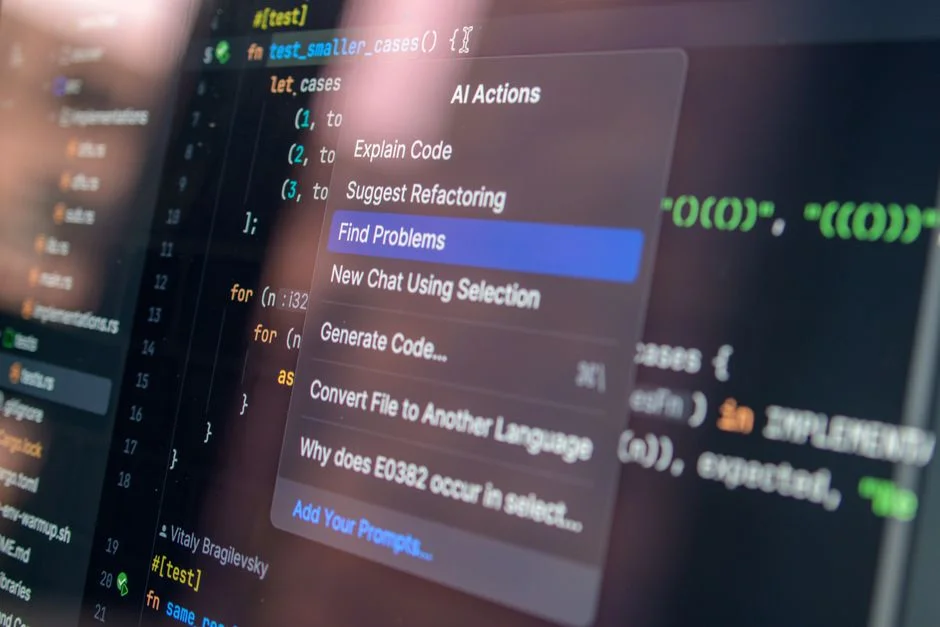

AI code generation tools, encompassing Large Language Models (LLMs) and specialized coding assistants, represent a fundamental shift in software engineering workflows. By predicting and synthesizing syntax based on vast training corpuses, these models offer accelerated development cycles. However, from a security engineering perspective, this convenience introduces significant, often overlooked, attack vectors. These tools do not possess an inherent understanding of business logic, security constraints, or the specific compliance requirements of an enterprise environment.
As organizations integrate these assistants into their CI/CD pipelines and local development environments, they inadvertently expose their codebase to automated vulnerabilities. The risks range from the introduction of insecure patterns to the inadvertent leakage of proprietary intellectual property. This article examines the technical security landscape of AI-assisted development, focusing on how these tools interact with existing security postures and where they fail to align with established secure coding standards.
Insecure Code Synthesis and the OWASP Top 10
The primary risk when using AI code generation tools is the synthesis of insecure code patterns that mirror common vulnerabilities documented in the OWASP Top 10. Because these models are trained on public repositories, they frequently ingest code that includes SQL injection vulnerabilities, cross-site scripting (XSS) risks, and improper cryptographic implementations. When an engineer prompts an AI to generate a database query or an authentication handler, the model may suggest a solution that is syntactically correct but fundamentally broken from a security standpoint.
For instance, an AI might suggest a raw SQL query concatenation instead of utilizing parameterized queries or an ORM-based approach. If the developer fails to perform a rigorous code review, this vulnerability is committed directly into the codebase. Unlike human developers who might be trained on secure coding principles, the LLM treats code completion as a probabilistic task rather than a security-conscious one. The model lacks the context of the application’s threat model, leading it to ignore essential input validation routines or fail to implement proper sanitization layers.
Furthermore, these tools often struggle with modern security frameworks. They may suggest deprecated libraries or legacy patterns that have known security advisories. In an enterprise context, relying on AI to write critical security modules creates a “shadow vulnerability” scenario where the engineering team believes they have covered a requirement, while the reality is that the implementation is brittle. To mitigate this, teams must treat AI-generated code as untrusted input, subjecting it to the same static application security testing (SAST) and dynamic application security testing (DAST) as human-written code. You should prioritize implementing automated scanning tools that specifically flag insecure patterns before they reach production, ensuring that your development team is not inadvertently building a house of cards.
Data Leakage and Proprietary Intellectual Property
A critical concern for any organization is the potential for data leakage when using cloud-based AI coding assistants. When developers interact with these tools, they often feed context from their local environment, such as variable names, function signatures, API keys, and sometimes even snippets of business logic, into the model’s prompt stream. Depending on the service provider’s data retention policy, this information may be used to retrain the model, potentially exposing sensitive corporate knowledge to other users of the same platform.
This risk is amplified when dealing with internal proprietary algorithms or compliance-sensitive data. If an engineer inadvertently includes a configuration file or a snippet of code containing hardcoded credentials in their prompt, they are effectively transmitting that data outside the secure perimeter of the organization. Even if the provider claims to anonymize data, the risk of model inversion attacks remains a theoretical but serious concern for high-security environments. Organizations must enforce strict policies regarding what information can be shared with AI models, often requiring the use of enterprise-grade versions of these tools that offer zero-data-retention guarantees.
Beyond simple data leakage, there is the risk of “code poisoning,” where an attacker might attempt to influence the training data of an AI tool to introduce backdoors into popular open-source libraries that the model is trained on. If a developer uses a compromised model to generate code, they might unknowingly import malicious patterns. This necessitates a proactive approach to security, ensuring that all third-party dependencies are vetted through a robust software composition analysis (SCA) process. When you are building out your infrastructure, it is vital to account for these risks by keeping your internal security protocols robust while you are navigating the complexities of mitigating prompt injection risks within your own applications to ensure a layered defense strategy.
The Illusion of Security and Cognitive Bias
The psychological impact of AI-assisted development often leads to a false sense of security among engineers. When an AI produces a functional-looking block of code, developers are cognitively predisposed to trust the output, especially when under pressure to meet tight deadlines. This “automation bias” causes engineers to skip the deep, manual verification steps that are mandatory for sensitive modules like authentication, authorization, and data encryption. Consequently, the quality of code reviews can degrade as reviewers assume that the AI has already handled the “boilerplate” security concerns.
This phenomenon is particularly dangerous in complex systems where security is a matter of configuration rather than just syntax. An AI might generate code that correctly implements a hash function but fails to configure the salt or the iteration count according to the organization’s specific security policy. Because the code appears to work—that is, it passes unit tests and compiles without error—the security flaw remains hidden until it is exploited in a production environment. This underscores the necessity of maintaining human-in-the-loop oversight, where every AI-generated suggestion is treated as a hypothesis rather than a final implementation.
To combat this, engineering managers should foster a culture of critical inquiry. Development teams should treat AI as a junior assistant whose work is always subject to senior-level scrutiny. This involves implementing mandatory peer reviews for all AI-assisted pull requests and utilizing automated linters that enforce strict security policies. By acknowledging that AI is a tool for productivity and not a replacement for security expertise, organizations can leverage these advancements without sacrificing their defensive posture. For those planning to scale these capabilities, understanding the financial and technical implications is key, especially when you are evaluating the technical and financial requirements of integrating AI into your core product architecture.
Compliance and Supply Chain Integrity
For organizations operating in highly regulated industries such as healthcare, finance, or logistics, the use of AI code generation tools presents significant compliance challenges. Standards like SOC2, HIPAA, and GDPR require strict control over the software development lifecycle (SDLC) and the provenance of code. When a significant portion of an application’s codebase is generated by an AI, documenting the origins of that code and ensuring it meets regulatory requirements becomes significantly more difficult. Auditors may require evidence of how security decisions were made, which is impossible to provide when the code is the output of a non-deterministic black-box model.
Furthermore, AI-generated code can introduce obscure dependencies that violate supply chain security policies. If the AI suggests a library or a framework that hasn’t been properly vetted by the security team, the organization risks introducing vulnerabilities through the backdoor of “convenient” coding suggestions. This necessitates a rigid software bill of materials (SBOM) management strategy. Every piece of code, regardless of whether it was human-written or AI-generated, must be inventoried and scanned for vulnerabilities.
Maintaining supply chain integrity also requires that developers do not blindly accept AI suggestions for package imports. AI models often hallucinate library names or suggest packages that have been abandoned by their maintainers, which are prime targets for dependency confusion attacks. A secure development environment must include automated tools that block the installation of unverified packages, ensuring that the software supply chain remains pristine. By enforcing these controls, businesses can maintain compliance while still benefiting from the velocity that AI tools provide, provided they do not treat these tools as an autonomous substitute for security governance.
Architectural Strategies for Secure AI Integration
To safely integrate AI tools into the development lifecycle, organizations must adopt an architecture that assumes the AI is potentially adversarial or, at the very least, unreliable. This begins with the isolation of AI-generated code. Rather than allowing AI tools to inject code directly into the main branch, organizations should utilize a “sandbox-first” approach. AI-generated code should be pushed to a feature branch where it must undergo automated security testing, manual peer review, and integration testing before being merged into the codebase.
Architecturally, this means ensuring that critical components—such as identity management, payment processing, or data persistence—are strictly off-limits to AI-assisted generation. These areas require a level of context and security awareness that current LLMs cannot provide. Developers should be encouraged to use AI for non-critical tasks like unit test boilerplate, documentation generation, or refactoring simple helper functions, while retaining full manual control over security-sensitive logic. This segmentation of concerns allows for the safe use of AI while insulating the most sensitive parts of the application from potential vulnerabilities.
Additionally, implementing a robust logging and monitoring system is essential. If a vulnerability is introduced via AI-generated code, the engineering team must be able to trace its origin and impact quickly. This involves maintaining clear git commit history, annotating commits that involved AI assistance, and using observability tools to detect anomalous behavior in production that might stem from an insecure implementation. By building this visibility into the development and deployment process, teams can react swiftly to security incidents and continuously refine their security policies based on real-world observations of how their AI tools are performing.
AI Integration and Tooling Governance
As we continue to evolve our technical infrastructure, maintaining a clear view of our AI strategy is paramount for long-term stability and security. Explore our complete AI Integration — AI APIs & Tools directory for more guides.
Factors That Affect Development Cost
- Depth of security auditing required
- Implementation of automated SAST/DAST pipelines
- Complexity of compliance requirements
- Training and governance policy development
Costs vary significantly based on the existing security maturity of the organization and the scale of the codebase being audited.
The integration of AI code generation tools is not a simple binary choice between innovation and security. It is a nuanced balancing act that requires a disciplined approach to risk management. By treating AI-generated code as inherently suspect, enforcing rigorous automated testing, and maintaining strict human oversight, organizations can harness the productivity gains of these tools without compromising their security posture. The goal is to build a development culture where AI acts as a force multiplier for human expertise, not a replacement for fundamental security principles.
We invite you to stay informed on the latest developments in secure software engineering by subscribing to our newsletter, where we dive into the technical challenges of modern infrastructure and AI integration. Your commitment to secure coding practices is the most significant defense in an increasingly automated world.
NR Tech Studio builds custom web apps, mobile apps, SaaS platforms, and internal tools for growing businesses. If you’re working through a technical decision, feel free to reach out — no commitment required.