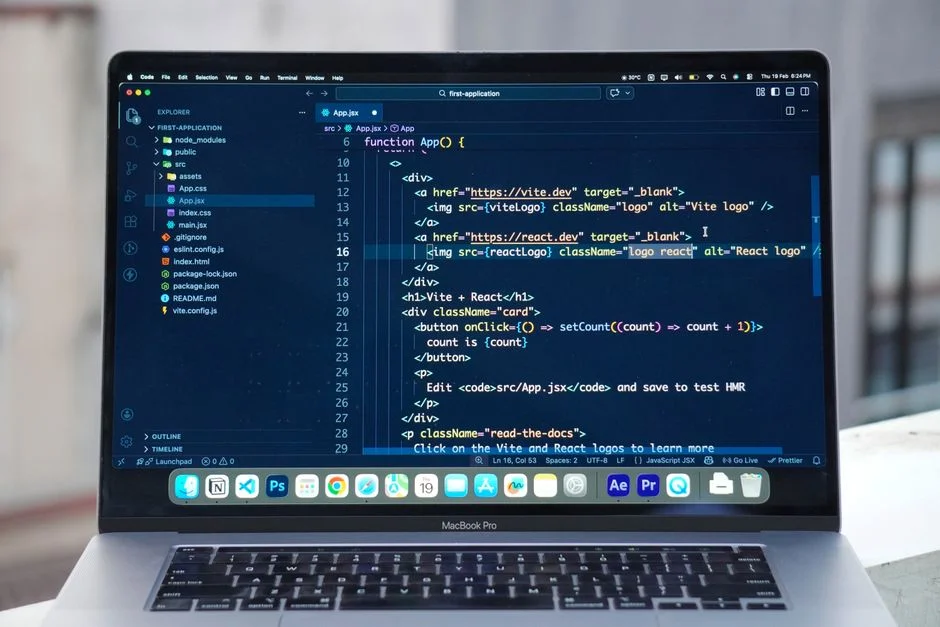

A React online compiler is a web-based platform that allows developers to write, execute, and debug React code directly in a browser environment without local setup. While offering unparalleled convenience for learning, rapid prototyping, and collaborative development, these tools introduce a complex attack surface that demands rigorous security scrutiny. For any organization considering their use, understanding the inherent risks and implementing robust mitigation strategies is paramount to protecting intellectual property, user data, and system integrity.
Why do organizations often overlook the profound security implications of integrating or relying on third-party React online compilers, treating them as mere development utilities rather than critical infrastructure components? The convenience factor frequently eclipses a thorough security assessment, leaving systems vulnerable to code injection, data exfiltration, and resource abuse. From a security perspective, an online compiler is not just a sandbox for code execution, it is a potential gateway for malicious actors, making a deep understanding of its architecture and potential weaknesses indispensable.
This analysis will dissect the security landscape surrounding React online compilers, from architectural vulnerabilities to data handling risks and the critical compliance considerations. We will explore pragmatic strategies for risk assessment, secure configuration, and continuous monitoring, ensuring that the benefits of rapid development do not come at the expense of an organization’s security posture. Our focus will be on identifying and neutralizing threats across the entire lifecycle of code execution within these web-based environments.
Understanding the Threat Model of React Online Compilers
A React online compiler, at its core, accepts arbitrary user code, executes it, and displays the output. This fundamental capability, while enabling rapid iteration and learning, inherently creates a significant security challenge: how to safely execute untrusted code in a shared environment. The threat model begins with the assumption that any code submitted could be malicious, designed to exploit the compiler’s infrastructure, compromise other users’ data, or exfiltrate sensitive information from the hosting environment. This is not merely a hypothetical concern, it is a foundational principle for secure system design in this context.
The primary vector for attack is often through **code injection**. Malicious JavaScript within a user’s React code could attempt to break out of its intended sandbox, access browser APIs, or interact with the underlying server. For instance, an attacker might try to use Node.js specific modules if the backend execution environment is not properly isolated, or attempt to perform Cross-Site Scripting (XSS) against other users viewing the output. The execution environment, whether client-side (browser) or server-side (Node.js for server-side rendering or transpilation), dictates the nature of these vulnerabilities. Client-side execution typically poses risks to the end-user’s browser session, while server-side execution can endanger the entire compiler infrastructure and its hosted data.
Another critical aspect of the threat model involves **resource exhaustion attacks**. An online compiler relies on shared computing resources. Unchecked, a malicious script could enter an infinite loop, consume excessive CPU cycles, or allocate vast amounts of memory, leading to a denial-of-service (DoS) for other users or even the entire platform. This highlights the need for robust resource limits and monitoring. Furthermore, the compiler’s interaction with external services, such as package registries (npm), presents an opportunity for dependency confusion attacks or the introduction of compromised libraries. Even seemingly benign features, like file upload or output persistence, can be weaponized if not secured.
Consider the potential for **data exfiltration**. If an attacker can gain even limited access to the compiler’s internal network or storage, they might be able to steal user credentials, source code from other projects, or API keys. This is particularly relevant if the compiler stores user sessions or project files in a weakly isolated manner. The principle of least privilege must be rigorously applied to every component, from the runtime environment to the file system and network access. Any external integration, such as a connection to a database or a version control system, must be treated as a potential pivot point for an attacker. Therefore, a comprehensive threat model must enumerate all possible attack paths, from the moment user input is received to the final display of output, and account for both direct and indirect compromise vectors.
Architectural Security: Sandboxing and Isolation Techniques
The cornerstone of securing a React online compiler lies in its architecture, specifically its ability to isolate untrusted user code. Without stringent sandboxing and isolation, the platform becomes an open invitation for exploitation. The goal is to create an execution environment where user code has minimal privileges, restricted access to system resources, and absolutely no way to interfere with other users’ code or the host system itself. This requires a multi-layered approach, addressing both client-side and server-side execution contexts.
For client-side React code execution, the primary isolation mechanism is the **browser’s Same-Origin Policy (SOP)**. However, simply rendering user-provided HTML and JavaScript in an iframe is insufficient. Malicious code can often bypass basic iframe sandboxing if not configured correctly. The sandbox attribute of an iframe is crucial here, allowing fine-grained control over what the embedded content can do. For example, <iframe sandbox="allow-scripts"> would permit scripts but disallow popups, form submissions, or pointer lock. A more restrictive policy, like <iframe sandbox="allow-scripts allow-forms">, might be necessary, but each permission granted expands the attack surface. Additionally, Content Security Policy (CSP) headers are vital to restrict the sources from which scripts and other resources can be loaded, mitigating XSS risks even if code injection occurs.
Server-side execution, often used for transpilation, server-side rendering, or Node.js specific code, demands even more robust isolation. Technologies like **Docker containers** or **virtual machines (VMs)** are standard practice. Each user’s code execution can be spun up in a dedicated, ephemeral container or VM, ensuring complete process and file system isolation. The container should run with the absolute minimum necessary privileges, a read-only root file system, and severely restricted network access. For example, disabling outbound network calls unless explicitly required for specific functionalities (e.g., fetching npm packages) significantly reduces the risk of data exfiltration or command-and-control communication. Resource limits (CPU, memory, disk I/O) are also critical within these containers to prevent DoS attacks.
Beyond containers, advanced techniques like **WebAssembly (Wasm)** or **Google’s gVisor** can offer even finer-grained sandboxing. Wasm allows running compiled code in a secure, sandboxed environment within the browser, offering a potential future for highly isolated client-side execution. For server-side, gVisor provides an application kernel that intercepts system calls from sandboxed applications and translates them into host kernel calls, providing a stronger isolation boundary than traditional containers. Regardless of the technology, the principle remains: user code must be executed in an environment completely decoupled from the host system and other user environments. This extends to file system access, network interfaces, and even environment variables. Implementing a strong isolation boundary requires careful attention to detail and continuous auditing to ensure no escape hatches exist. When considering the underlying infrastructure, organizations should also evaluate how platforms like Vercel manage authentication and isolation for their serverless functions, as these practices offer valuable insights into securing distributed execution environments. You can learn more about Vercel Authentication: Securing Modern Web Applications on the Edge to understand these concepts better.
Input Validation and Output Sanitization: Preventing Code Injection
Even with robust sandboxing, strict **input validation** and **output sanitization** remain non-negotiable security controls for React online compilers. These measures act as crucial front-line defenses, preventing malicious payloads from ever reaching the execution environment or from being rendered in a way that harms other users. The principle is simple: never trust user input, and always assume output might contain hostile content. This dual approach is essential to maintaining the integrity and safety of the platform.
Input validation must occur at multiple layers. When a user submits React code, the initial parsing and compilation steps should meticulously check for syntactical correctness and adherence to expected language features. Beyond basic syntax, however, more sophisticated validation is required. This involves static analysis of the code to identify potentially dangerous constructs, such as direct DOM manipulation, use of eval(), or attempts to import restricted modules. While a full static analysis to detect all malicious intent is computationally intensive and complex, basic checks can filter out obvious attack patterns. For example, disallowing direct access to browser objects like window or document within the submitted code, or blacklisting specific Node.js modules if the execution is server-side, can significantly reduce the attack surface. The goal is to constrain the user’s code to only perform its intended function, React component rendering, without allowing side effects.
Output sanitization is equally vital, particularly when the compiled or executed code’s result is displayed back to the user or other users. If a malicious script successfully executes and produces output containing XSS payloads, simply rendering this output without sanitization could compromise the viewer’s browser. All HTML, JavaScript, or CSS generated by user code must be rigorously escaped or stripped of any active content before being inserted into the main application’s DOM. Libraries like DOMPurify for HTML sanitization are indispensable here, ensuring that only safe markup is rendered. The sanitization process should be comprehensive, converting any potentially executable characters (like <, >, &, ") into their HTML entities, thereby rendering them inert. This prevents an attacker from injecting their own scripts into the victim’s browser session, which could lead to cookie theft, session hijacking, or defacement.
Furthermore, any data passed between the user’s code and the compiler’s backend API must also undergo strict validation. For instance, if the compiler allows fetching external data, the URLs must be validated to prevent Server-Side Request Forgery (SSRF) attacks. Similarly, if the compiler saves code snippets to a database, the data must be properly parameterized to prevent SQL injection. The mantra here is ‘validate on input, sanitize on output’. This systematic approach, coupled with strong architectural isolation, forms a formidable defense against a wide array of code injection vulnerabilities. It is a continuous process, requiring vigilance as new attack techniques emerge and as the platform evolves. Employing robust static analysis tools can help automate parts of this validation, catching common security flaws before they become exploitable. Just as feature flags require careful implementation to avoid security regressions, ensuring that new features in an online compiler integrate securely into these validation pipelines is crucial, a concept explored in detail in resources like Architecting Scalable Laravel Feature Flags: A Technical Implementation Guide.
Data Privacy and Compliance in Multi-Tenant Environments
Operating a React online compiler, especially in a multi-tenant environment where multiple users share the same infrastructure, introduces significant challenges regarding data privacy and compliance. Organizations must meticulously address how user-submitted code, personal data, and execution results are handled, stored, and segregated to meet stringent regulatory requirements like GDPR, CCPA, HIPAA, or industry-specific standards. Failure to comply can result in severe legal penalties, reputational damage, and loss of user trust.
The first step is to identify all types of data that are processed by the online compiler. This includes the source code itself, intermediate compilation artifacts, execution outputs, error logs, user metadata (e.g., IP addresses, session IDs), and any data the user’s code might generate or interact with. Each data type requires a clear classification based on its sensitivity and regulatory applicability. For instance, source code might be intellectual property, while error logs could inadvertently contain personally identifiable information (PII) if not properly sanitized. User metadata, even if seemingly innocuous, often falls under privacy regulations.
Effective **data segregation** is paramount in a multi-tenant architecture. This means ensuring that one user’s data cannot be accessed, modified, or even inferred by another user. This is achieved through strict access controls at the file system level, database row-level security, and network segmentation. For execution environments, as discussed previously, dedicated containers or VMs for each user session enforce strong isolation. Any shared storage must implement cryptographic separation, where each tenant’s data is encrypted with a unique key, preventing cross-tenant data leakage even if the underlying storage is compromised. Access to these keys must be strictly controlled and audited.
Beyond technical controls, robust **data governance policies** are essential. This includes clear data retention policies: how long is user code stored? When are execution logs purged? Users must be informed about these policies transparently. The principle of ‘privacy by design’ dictates that privacy considerations are embedded into the architecture from the outset, rather than being an afterthought. This means minimizing data collection, anonymizing data where possible, and providing users with clear mechanisms to access, rectify, or delete their data, aligning with ‘right to be forgotten’ clauses in regulations like GDPR.
For sectors handling sensitive data, such as healthcare (HIPAA) or finance, the use of a generic online compiler might be outright prohibited or require extensive customization and auditing. In such cases, a privately hosted, highly customized compiler with end-to-end encryption, strict access controls, and regular security audits might be the only viable option. Continuous monitoring for data access anomalies and regular penetration testing are also critical components of a comprehensive compliance strategy. The legal and financial implications of a data breach in a non-compliant online compiler environment far outweigh the convenience it offers, mandating a cautious and proactive approach to data privacy and compliance. Organizations must conduct regular Data Protection Impact Assessments (DPIAs) to continuously evaluate and mitigate risks associated with data processing activities.
Secure Configuration and Hardening of Compiler Infrastructure
The security of a React online compiler is not just about its core isolation mechanisms, it is equally dependent on the secure configuration and hardening of its underlying infrastructure. This encompasses everything from the operating system and network settings to the web server, database, and any third-party services integrated into the compiler’s ecosystem. A single misconfiguration can undermine even the most sophisticated sandboxing, creating an exploitable vulnerability that malicious actors can leverage.
Starting with the **operating system**, the principle of least privilege must be strictly applied. The user account running the compiler processes should have only the necessary permissions to perform its functions, nothing more. Unnecessary services, packages, and open ports should be disabled or removed. Regular patching and updates are non-negotiable to protect against known vulnerabilities. Tools for security configuration management, such as Ansible or Chef, can enforce baseline security configurations and ensure consistency across all instances. Furthermore, kernel hardening techniques, like SELinux or AppArmor, can provide an additional layer of mandatory access control, restricting what processes can do even if they are compromised.
Network configuration is another critical area. The online compiler’s servers should reside in a **Virtual Private Cloud (VPC)** with strict network segmentation. Firewalls must be configured to allow only essential inbound and outbound traffic, blocking all other connections. For instance, outbound connections from user code execution environments should be blocked by default and only whitelisted for specific, controlled services (e.g., npm registry). Internal network communication between different compiler components (frontend, backend, execution engine) should be encrypted using TLS and authenticated with strong credentials or mutual TLS. DDoS protection services should also be implemented to safeguard against volumetric attacks that could disrupt service availability.
Database security is paramount, as it often stores user code, project metadata, and possibly user credentials. The database server must be isolated from public access, accessible only from authorized application servers. Strong, unique passwords must be used for database accounts, and these accounts should have the minimum necessary privileges. Data at rest should be encrypted, and all communication with the database should use TLS. Regular backups, encrypted and stored securely off-site, are essential for disaster recovery and data integrity. Furthermore, proper indexing and query optimization are not just for performance, they can also indirectly mitigate certain types of DoS attacks that target database resources.
Finally, any **third-party integrations** or APIs used by the compiler must be scrutinized. API keys and secrets should be stored securely, ideally in a dedicated secrets management system, and rotated regularly. Each integration should be thoroughly vetted for its security posture and compliance with relevant standards. For example, if the compiler integrates with a version control system, ensure that OAuth tokens are handled securely and scope is limited to only what is necessary. Regular security audits and penetration tests of the entire infrastructure, including all third-party components, are crucial to identify and remediate configuration weaknesses before they can be exploited by malicious actors. This holistic approach to hardening ensures that the entire attack surface is minimized and protected.
Monitoring, Logging, and Incident Response for Online Compilers
Even with the most robust security measures, no system is entirely impervious to attack. Therefore, comprehensive **monitoring, logging, and a well-defined incident response plan** are indispensable for any React online compiler. These capabilities allow an organization to detect security incidents in real-time, understand their scope, and respond effectively to minimize damage and restore normal operations. Proactive monitoring transforms a reactive security posture into a resilient one.
Effective monitoring involves collecting metrics and logs from every layer of the compiler’s architecture. This includes system-level metrics (CPU, memory, disk I/O, network traffic) from host machines and containers, application-level logs (API calls, user authentications, code compilation events, execution errors), and security-specific logs (firewall alerts, intrusion detection system notifications). These logs should be centralized into a Security Information and Event Management (SIEM) system for aggregation, correlation, and analysis. Anomaly detection algorithms can then flag unusual patterns, such as a sudden spike in compilation errors from a single user, excessive resource consumption, or attempts to access restricted files.
Specific metrics to monitor include: failed login attempts, unusual outbound network connections from execution environments, execution duration outliers, and any changes to critical system files. Alerts should be configured for high-severity events, triggering immediate notification to the security team. For example, an alert for a container attempting to make a privileged system call, or an unexpected network connection from a user’s execution sandbox, would demand immediate investigation. Regular review of security logs is also critical, as some sophisticated attacks might not trigger immediate alerts but can be identified through pattern analysis over time.
A well-structured **incident response plan** is the cornerstone of cyber resilience. This plan should clearly define roles and responsibilities, communication protocols, and step-by-step procedures for handling various types of security incidents, from a simple denial-of-service to a full-blown data breach. The plan should cover: identification (detecting the incident), containment (isolating compromised systems to prevent further spread), eradication (removing the threat), recovery (restoring systems from clean backups), and post-incident analysis (learning from the incident to improve future defenses). Regular tabletop exercises and simulations are vital to test the plan’s effectiveness and ensure the team is prepared.
For a React online compiler, incident response might involve immediately terminating a user’s session and execution environment, blocking their IP address, and analyzing the submitted code for malicious payloads. If a data breach is suspected, legal and public relations teams must be engaged according to predefined protocols. The post-incident analysis should meticulously document the attack vector, the vulnerabilities exploited, and the actions taken, leading to concrete improvements in security controls and policies. This continuous feedback loop, where monitoring informs incident response, and incident response informs security enhancements, is what drives a mature security program. It is a critical component for maintaining trust and ensuring the long-term viability of the online compiler service, especially when considering the implications of a security incident on complex systems that might use tools like GitHub Copilot, where understanding the flow of information and potential vulnerabilities is crucial. For further insights into managing and securing developer tools, consider reviewing resources like GitHub Copilot Pricing: A Comprehensive Guide for Enterprise Adoption.
The Costs of Securing a React Online Compiler
Securing a React online compiler is not a one-time task, it is an ongoing investment that demands significant financial and human resources. The costs associated with achieving and maintaining a robust security posture are multi-faceted, encompassing infrastructure, specialized tooling, expert personnel, and continuous auditing. These expenditures are often overlooked in initial project estimations, leading to underfunded security initiatives and increased risk exposure. Organizations must recognize that these are not optional expenses but foundational requirements for a trustworthy and reliable platform.
The primary cost drivers can be categorized as follows:
- Infrastructure for Isolation: Implementing robust sandboxing via containerization (Docker, Kubernetes) or virtualization (VMs) requires dedicated computing resources. While cloud providers offer these, the cost scales with usage, especially for ephemeral environments. Specialized isolation technologies like gVisor or WebAssembly runtime environments also incur development and operational overhead.
- Security Tooling and Software: This includes SIEM systems for log aggregation and analysis, intrusion detection/prevention systems (IDS/IPS), static and dynamic application security testing (SAST/DAST) tools, vulnerability scanners, and secrets management solutions. Licensing fees for these tools can range from thousands to hundreds of thousands of dollars annually, depending on scale and features.
- Expert Personnel: Hiring and retaining skilled security engineers, DevOps specialists with security expertise, and compliance officers is a significant expense. An experienced security engineer can command salaries upwards of $150,000 to $250,000+ per year, excluding benefits. Outsourcing security audits or penetration testing to specialized firms can cost anywhere from $10,000 to $100,000+ per engagement, depending on the scope and complexity of the compiler.
- Compliance and Legal Costs: Meeting regulatory requirements (GDPR, HIPAA, etc.) involves legal counsel, compliance audits, and potentially certification processes. These costs can be substantial, especially for initial setup and ongoing verification. Legal fees for data breach preparedness and response planning are also a necessary, albeit hopefully unused, expense.
- Continuous Monitoring and Maintenance: Security is not static. Continuous monitoring, vulnerability management, patch management, and regular security updates to all components (OS, libraries, frameworks) are ongoing operational costs. This includes the human effort to analyze alerts, investigate incidents, and apply necessary remediations.
To illustrate the financial commitment, consider a breakdown:
| Cost Category | Estimated Annual Cost Range (USD) | Description |
|---|---|---|
| Cloud Infrastructure (Isolation) | $10,000 – $100,000+ | Dedicated VMs/containers, network egress, storage for logs/artifacts. |
| Security Software Licenses | $5,000 – $75,000+ | SIEM, SAST/DAST, vulnerability scanners, WAF. |
| Security Engineering Personnel | $150,000 – $250,000+ (per FTE) | Dedicated security engineer(s) for design, implementation, and operations. |
| External Security Audits/Pen Tests | $10,000 – $100,000+ (per engagement) | Annual or biannual expert assessments. |
| Compliance & Legal Consultancy | $5,000 – $50,000+ | GDPR, HIPAA, SOC 2 preparation, legal advice. |
| Training & Awareness | $1,000 – $10,000+ | Developer security training, incident response drills. |
| Incident Response Retainer | $5,000 – $20,000+ | Third-party incident response team on standby. |
These figures represent a significant investment, underscoring that a truly secure React online compiler is a premium offering. Attempting to cut corners in any of these areas directly translates to increased risk and potential for catastrophic financial and reputational damage from a breach. The cost of a breach, including remediation, legal fees, fines, and lost customer trust, often far exceeds the proactive investment in security. Therefore, these costs should be factored into the business model from the very beginning, treated as an essential operational expenditure rather than a discretionary one.
Secure Development Lifecycle for Online Compiler Features
Integrating new features into a React online compiler, or even maintaining existing ones, requires a rigorous **Secure Development Lifecycle (SDL)**. Security cannot be an afterthought, bolted on at the end of the development process. Instead, it must be woven into every phase, from requirements gathering and design to coding, testing, deployment, and ongoing maintenance. This proactive approach significantly reduces the likelihood of introducing new vulnerabilities and ensures that the compiler remains resilient against evolving threats.
The SDL begins with **security requirements and threat modeling** during the design phase. For every new feature, developers and security engineers must collaborate to identify potential threats, define security controls, and establish clear security acceptance criteria. This involves asking questions like: How could this feature be abused? What data does it touch, and how sensitive is it? What are the trust boundaries? Tools like STRIDE (Spoofing, Tampering, Repudiation, Information Disclosure, Denial of Service, Elevation of Privilege) can guide this threat modeling process, ensuring a systematic identification of risks.
During the **development phase**, secure coding practices are paramount. Developers should adhere to established secure coding guidelines, such as those provided by OWASP. This includes proper input validation, output encoding, error handling that avoids information disclosure, and secure API usage. Using static application security testing (SAST) tools as part of the continuous integration (CI) pipeline can automatically scan code for common vulnerabilities, providing immediate feedback to developers. This shifts security left, catching issues early when they are less costly to fix.
Security testing is integrated throughout the development process. This includes unit tests that specifically target security-relevant code paths, integration tests that verify interaction with security controls, and dedicated security tests. Dynamic Application Security Testing (DAST) tools can be used to test the running application for vulnerabilities, simulating attacks. Furthermore, manual penetration testing by security experts should be conducted regularly, especially before major releases or after significant architectural changes. Fuzz testing, which involves feeding malformed or unexpected inputs to the compiler, can uncover edge cases that might lead to crashes or exploitable behavior.
The **deployment phase** requires secure configuration management, as discussed previously. Infrastructure as Code (IaC) tools can help enforce secure baselines and prevent configuration drift. Automated deployment pipelines should include security gates, such as vulnerability scans of container images and configuration audits, before code is pushed to production. Post-deployment, continuous monitoring and logging, as outlined in the previous section, become critical for detecting and responding to incidents.
Finally, the SDL extends to **ongoing maintenance and patch management**. Regular security updates for all libraries, frameworks, and operating system components are essential. A robust vulnerability management program, including a clear process for reporting and remediating discovered vulnerabilities (e.g., through a bug bounty program), ensures that the compiler remains secure over its lifetime. The SDL is not a one-time checklist, it is a continuous cycle of improvement, adapting to new threats and technologies. By embedding security into every stage, organizations can build and maintain a React online compiler that is both functional and trustworthy.
Mitigating OWASP Top 10 Risks in Online Compilers
The OWASP Top 10 provides a standard awareness document for developers and web application security. For a React online compiler, many of these risks are directly applicable and demand specific mitigation strategies. Addressing these common vulnerabilities systematically is crucial for building a secure and resilient platform, especially given the inherent risk of executing untrusted code.
1. Broken Access Control
Online compilers often manage user projects and settings. Broken access control means an attacker could bypass authorization checks to view, edit, or delete another user’s project, or even access administrative functions. Mitigation involves implementing robust, granular access control checks at every layer, ensuring that every request is authorized against the authenticated user’s permissions. This includes server-side validation of user IDs and project IDs, not relying solely on client-side checks. Role-based access control (RBAC) should be meticulously designed and enforced.
2. Cryptographic Failures
This includes inadequate encryption of data at rest or in transit, or weak cryptographic algorithms. For an online compiler, this means ensuring all communication (user to server, server to database, internal microservices) uses strong TLS 1.2+ encryption. Sensitive data, such as API keys or user tokens, must be encrypted at rest using industry-standard algorithms (e.g., AES-256). Key management must be secure, with keys stored in hardware security modules (HSMs) or dedicated secrets managers, and rotated regularly.
3. Injection
This is perhaps the most critical for an online compiler. It refers to various forms of injection, including SQL injection, NoSQL injection, and most relevantly, **code injection (JavaScript, HTML, CSS)**. Mitigation involves strict input validation and output sanitization, as detailed previously. Parameterized queries for database interactions, context-aware output encoding, and strong sandboxing for code execution are essential. Disallowing direct DOM manipulation or specific dangerous functions within user code is also a key defense.
4. Insecure Design
This category highlights flaws in the architecture or design logic that create vulnerabilities. For an online compiler, this might include insufficient isolation between user environments, an overly permissive API design, or a lack of clear trust boundaries. Mitigation requires thorough threat modeling during the design phase, adherence to security principles like least privilege, and designing for defense-in-depth, where multiple security layers protect against a single attack vector. This also means carefully considering the implications of features, such as allowing external API calls from user code, and designing controls around them.
5. Security Misconfiguration
This involves improperly configured security settings, default credentials, or unnecessary features. For an online compiler, this could mean default passwords on databases, open ports on production servers, or overly permissive file system permissions for execution environments. Mitigation requires automated security configuration management, removal of default credentials, principle of least privilege for all services, and regular vulnerability scanning to detect misconfigurations. All unnecessary services and features should be disabled or removed.
6. Vulnerable and Outdated Components
Using libraries, frameworks, or other software components with known vulnerabilities. React online compilers rely on numerous dependencies (Node.js, Babel, Webpack, React itself). Mitigation requires a robust software supply chain security program, including regular dependency scanning, tracking known vulnerabilities (CVEs), and promptly updating components. Automated dependency management tools can help identify and flag outdated or vulnerable packages. A strong policy for third-party code review is also recommended.
7. Identification and Authentication Failures
Weak authentication or session management. This includes insecure password policies, weak multi-factor authentication (MFA) implementations, or easily guessable session IDs. Mitigation involves enforcing strong password policies, implementing robust MFA, using secure session management practices (e.g., HTTP-only, secure cookies, short session lifespans), and rate-limiting authentication attempts to prevent brute-force attacks. Secure token handling and revocation mechanisms are also vital. For example, ensuring that user sessions are properly invalidated upon logout or inactivity.
By systematically addressing these OWASP Top 10 risks, a React online compiler can significantly enhance its security posture, reducing the likelihood of successful attacks and safeguarding both the platform and its users.
Real-World Security Incidents and Lessons Learned
Examining real-world security incidents, even if not directly involving React online compilers, provides invaluable lessons applicable to their secure operation. These incidents highlight common vulnerabilities, the ingenuity of attackers, and the critical importance of a proactive, layered security approach. While specific breaches of React online compilers are not frequently publicized in detail, incidents involving cloud-based development environments, code execution platforms, and multi-tenant SaaS applications offer direct parallels.
Consider the numerous **supply chain attacks** that have affected the software industry. If a React online compiler allows users to import arbitrary npm packages, it becomes susceptible to dependency confusion or malicious package injection. An attacker could publish a malicious package with a similar name to a legitimate internal or popular package, tricking the compiler or its users into installing it. Once executed, such a package could exfiltrate data, install backdoors, or launch further attacks. The lesson here is to implement strict controls over package resolution, verify package integrity, and potentially proxy package registries to vet dependencies before they are available to users. This also underscores the need for robust static analysis of imported code, even from seemingly legitimate sources.
Another common vector is **cloud misconfiguration**, which has led to countless data breaches. An online compiler hosted in the cloud might suffer from an S3 bucket left publicly accessible, an unpatched database, or overly permissive IAM roles. These misconfigurations can expose user code, project data, or internal system secrets to the internet. The lesson learned is the absolute necessity of automated configuration management, continuous auditing of cloud resources, and adherence to cloud security best practices. Even the most secure application code cannot compensate for a fundamentally insecure infrastructure. Regular penetration testing should specifically target cloud configurations and identify potential exposure points.
Incidents involving **container escape vulnerabilities** are also highly relevant. While Docker and Kubernetes provide strong isolation, vulnerabilities in the container runtime or kernel can allow a malicious process to break out of its container and gain access to the host system. This is a nightmare scenario for an online compiler, as it could lead to compromise of the entire platform and all user data. The lesson is to keep container runtimes patched, use minimal base images, run containers with the fewest possible privileges (e.g., non-root user, read-only file system), and employ advanced isolation technologies like gVisor or kernel hardening techniques. Continuous monitoring for unusual system calls or process activity within containers is also critical.
Finally, **Cross-Site Scripting (XSS) and Cross-Site Request Forgery (CSRF)** continue to be prevalent. If a React online compiler’s output rendering is not properly sanitized, an XSS payload injected by one user could compromise another user’s session. Similarly, if the compiler’s backend APIs are vulnerable to CSRF, an attacker could trick a logged-in user into performing unintended actions. The lesson is unwavering commitment to output sanitization for all user-generated content and robust CSRF protection mechanisms (e.g., anti-CSRF tokens) for all state-changing operations. These incidents underscore that security is a continuous battle, requiring constant vigilance, adaptation, and a willingness to learn from past mistakes, both our own and those of others, to fortify defenses against the next wave of threats.
Future of Secure React Online Compilers: Emerging Threats and Defenses
The landscape of web development and cybersecurity is in constant flux, meaning the future of secure React online compilers will be shaped by evolving threats and the development of new defensive technologies. Staying ahead requires anticipating these shifts and integrating forward-looking security strategies. The trends point towards more sophisticated attacks, but also more powerful, built-in security mechanisms.
One significant emerging threat is the **rise of AI-powered attacks**. Malicious actors are increasingly leveraging artificial intelligence and machine learning to generate highly convincing phishing attempts, discover zero-day vulnerabilities through automated fuzzing, or even craft polymorphic malware that evades traditional detection. For an online compiler, this could mean AI-generated malicious code that is harder for static analysis tools to flag, or AI-driven reconnaissance to identify configuration weaknesses. Defenses will need to incorporate AI-powered anomaly detection, behavioral analytics, and more sophisticated code analysis that can understand intent beyond simple pattern matching. The arms race between offensive and defensive AI is already underway.
Another area of concern is **deepfake code and integrity compromises**. As development workflows become more distributed and automated, verifying the authenticity and integrity of code becomes harder. An attacker might inject malicious code into a trusted dependency, or even compromise a developer’s account to push malicious changes. For an online compiler, this means the need for stronger supply chain security, cryptographically verifiable code origins, and robust code signing mechanisms. Blockchain-based solutions for code provenance, while nascent, could play a role in ensuring that the code being compiled is indeed what it purports to be, and has not been tampered with.
On the defense side, advancements in **zero-trust architectures** will become even more critical. This paradigm, which dictates ‘never trust, always verify’, means that even within the online compiler’s internal network, every component and every user request is treated as potentially hostile. Micro-segmentation, granular access controls, and continuous authentication will be standard. For online compilers, this translates to even tighter isolation between services, ephemeral credentials, and dynamic policy enforcement based on real-time risk assessment.
The adoption of **homomorphic encryption** and **federated learning** could revolutionize how sensitive code and data are handled. Homomorphic encryption allows computations to be performed on encrypted data without decrypting it, potentially enabling highly secure code execution environments where user code remains encrypted even during compilation and execution. Federated learning could allow compiler analytics to be performed on decentralized data, enhancing privacy. While these technologies are still largely in research or early adoption phases, they hold immense promise for future generations of secure online compilers.
Ultimately, the future of secure React online compilers lies in a blend of cutting-edge technology, rigorous process, and a deep understanding of human factors. Continuous education for developers on secure coding, fostering a strong security culture, and proactive engagement with the security research community will be as important as any technological defense. The goal is to build platforms that are not just functional, but inherently trustworthy and resilient against an ever-evolving threat landscape, ensuring that the convenience of online compilation does not come at the cost of security.
Risk Assessment and Decision Framework for Adopting Online Compilers
Before adopting or building a React online compiler, organizations must conduct a thorough **risk assessment** to understand the potential security implications and make informed decisions. This is not a trivial exercise, it requires a systematic evaluation of threats, vulnerabilities, and the potential impact on the business. A robust decision framework ensures that the convenience and agility offered by online compilers do not introduce unacceptable levels of risk.
The risk assessment process typically involves several key steps:
- Asset Identification: Identify all assets that could be affected by a compromise of the online compiler. This includes user data, intellectual property (source code), system infrastructure, developer productivity, and organizational reputation. Assign a value or criticality level to each asset.
- Threat Identification: Enumerate all potential threats, both internal and external. This includes malicious users, external attackers, accidental misconfigurations, and software vulnerabilities. Consider the motivations and capabilities of various threat actors.
- Vulnerability Analysis: Identify weaknesses in the compiler’s architecture, implementation, configuration, and operational processes that could be exploited by identified threats. This includes reviewing code, conducting penetration tests, and analyzing existing security controls.
- Risk Calculation: For each identified risk (threat x vulnerability), assess the likelihood of it occurring and the potential impact if it does. This often involves qualitative (high, medium, low) or quantitative (cost in dollars) measures. The combination of likelihood and impact determines the overall risk level.
- Risk Treatment: Based on the calculated risks, determine appropriate treatment strategies:
- Accept: Acknowledge the risk and decide not to take action, usually for low-impact, low-likelihood risks.
- Mitigate: Implement controls to reduce the likelihood or impact of the risk. This is the most common approach.
- Transfer: Shift the risk to a third party, e.g., through cyber insurance.
- Avoid: Choose not to engage in the activity that creates the risk (e.g., deciding not to use an online compiler if risks are too high).
A critical component of the decision framework is to evaluate third-party online compiler providers. This involves due diligence on their security certifications (e.g., SOC 2, ISO 27001), their incident response capabilities, data privacy policies, and their track record of security. Do they offer strong isolation? What are their data retention policies? How do they handle vulnerabilities? A vendor security assessment questionnaire is an indispensable tool here.
For internal development, the decision framework should weigh the benefits of rapid prototyping and collaboration against the investment required for secure development, infrastructure, and ongoing operations. If the organization lacks the internal security expertise or resources, the risk of building and maintaining a secure online compiler might be too high, making a carefully vetted third-party solution more appealing. Conversely, if intellectual property is extremely sensitive, an in-house, highly customized and controlled environment might be the only acceptable option.
Ultimately, the decision to adopt or build a React online compiler must be a strategic one, informed by a clear understanding of the security posture, regulatory obligations, and the organization’s risk appetite. It is a continuous process, requiring periodic re-assessment as the threat landscape evolves and as the compiler’s functionality expands. Ignoring this rigorous assessment is tantamount to gambling with an organization’s most valuable assets.
Best Practices for Secure Integration with Existing Systems
When a React online compiler is not a standalone tool but integrated into a broader development ecosystem, its security posture becomes intrinsically linked to the security of the interconnected systems. Poor integration practices can introduce new attack vectors, exposing both the compiler and the systems it interacts with. Adhering to best practices for secure integration is paramount to maintaining a holistic security perimeter.
The first principle is **API Security**. Any integration points, whether REST APIs, GraphQL endpoints, or message queues, must be secured with robust authentication and authorization. This typically involves using OAuth 2.0 or API keys, ensuring that tokens are securely stored and transmitted. Authorization must be granular, applying the principle of least privilege: the online compiler should only have access to the specific resources and operations it absolutely needs on the integrated system, and nothing more. For instance, if it integrates with a version control system, it should only have permissions to read/write to specific repositories, not to delete user accounts or administrative settings. All API calls should be encrypted via HTTPS/TLS, and API gateways can provide an additional layer of protection, offering rate limiting, input validation, and centralized authentication.
**Data Flow and Data Minimization** are critical considerations. Understand exactly what data flows between the online compiler and other systems. Only transmit the absolute minimum necessary data. If user code is sent to an external transpilation service, ensure that no sensitive user metadata is inadvertently included. Similarly, if the compiler saves project data to a central repository, ensure that only necessary data is stored, and sensitive information is encrypted at rest. Data masking or anonymization should be applied wherever possible, especially for non-production environments.
**Secure Credential Management** for integrations is non-negotiable. API keys, secrets, and database credentials should never be hardcoded into the application or stored in version control. Instead, they should be managed using a dedicated secrets management solution (e.g., HashiCorp Vault, AWS Secrets Manager, Azure Key Vault). These systems provide secure storage, access control, and rotation capabilities for sensitive credentials, minimizing the risk of compromise. Access to the secrets manager itself must be tightly controlled and audited.
**Network Segmentation and Firewalls** play a crucial role in isolating integrated systems. The online compiler’s execution environment should be in a separate network segment from sensitive backend systems (e.g., production databases, internal administrative tools). Firewalls should strictly control traffic between these segments, allowing only authorized communication on specific ports. This creates a defense-in-depth strategy, where even if the compiler’s execution environment is compromised, the blast radius is limited, preventing lateral movement to other critical systems.
Finally, **Continuous Monitoring and Auditing** of integration points are essential. Log all API calls, authentication attempts, and data transfers between the online compiler and integrated systems. Monitor for unusual traffic patterns, failed authentications, or attempts to access unauthorized resources. Regular security audits of the integration code and configuration, coupled with penetration testing that specifically targets these integration points, will help identify and remediate vulnerabilities before they can be exploited. By treating every integration as a potential point of compromise, organizations can build a resilient and secure development ecosystem around their React online compiler.
The utility of a React online compiler for rapid development, education, and collaboration is undeniable. However, this convenience introduces a formidable array of security challenges that demand a cautious, risk-averse, and highly protective approach. From the inherent dangers of executing untrusted code to the complexities of data privacy in multi-tenant environments, every aspect of an online compiler’s design, implementation, and operation carries significant security implications. Organizations must prioritize robust architectural isolation, stringent input validation, comprehensive output sanitization, and continuous monitoring to mitigate these risks effectively.
Ultimately, securing a React online compiler is a continuous journey, not a destination. It requires an ongoing investment in secure development practices, advanced security tooling, expert personnel, and a proactive stance against evolving threats. By embracing a security-first mindset and meticulously addressing the vulnerabilities discussed, organizations can harness the power of online compilation while safeguarding their intellectual property, user data, and overall system integrity.
Explore our complete Laravel, Basics directory for more guides.
NR Studio builds custom web apps, mobile apps, SaaS platforms, and internal tools for growing businesses. If you’re working through a technical decision, feel free to reach out — no commitment required.