
A pre mortem in software development is a managerial and architectural exercise conducted before writing code where an engineering team assumes an initiative has suffered a complete operational or functional failure, working backward to identify vulnerabilities, race conditions, memory leaks, and organizational blind spots. By legitimizing skepticism up front, teams neutralize confirmation bias and eliminate architectural flaws before committing engineering hours.
Think of it like an aerospace engineering stress simulation before a rocket launch. Rather than waiting for a structural failure during flight and sifting through black-box debris in an emergency post-mortem, engineers place the prototype inside a wind tunnel, chill the fuel lines past nominal limits, and deliberately calculate where the alloy will shear under atmospheric friction. In software systems, a pre mortem simulates extreme traffic spikes, database connection starvation, and state corruption before a single deployment ever hits a production cluster.
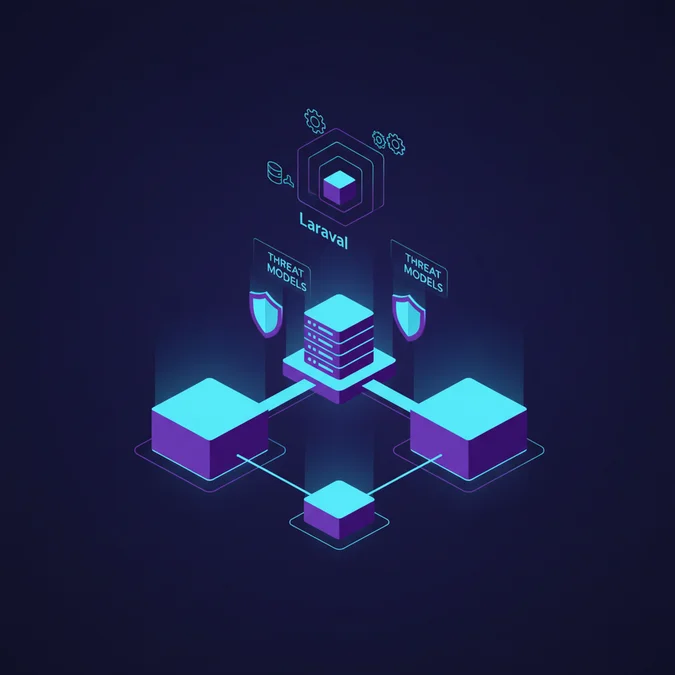
For backend engineers working in ecosystems like Laravel and distributed PHP services, failure rarely stems from missing business logic syntax. It stems from unindexed polymorphic database queries collapsing under load, unthrottled worker queues exhausting Redis memory, uncontrolled third-party HTTP timeouts, and distributed split-brain states. The following analysis breaks down how to run technical pre mortems, model architectural failure modes, and build structural defenses directly into your application runtime.
The Mechanics of a Technical Pre Mortem
Unlike broad project management discussions that focus vaguely on missed milestones, a technical pre mortem centers strictly on operational viability, infrastructure limits, and failure boundaries. Developed psychologically by Gary Klein, the exercise flips traditional risk assessments from a cautious inquiry (“What might go wrong?”) to an assumed outcome: The year is next quarter, the feature was deployed yesterday, and the platform suffered an catastrophic multi-hour outage that wiped out our database pool. What caused it?
Removing the burden of optimism allows engineers to bypass corporate politeness. In traditional planning sessions, junior and senior engineers alike often hesitate to challenge a proposed data model or queue design because doing so feels obstructive. Once failure is framed as an objective given, speaking up becomes an act of diagnosis rather than resistance.
The Five-Stage Technical Protocol
- Preparation and Context Setting: The lead architect provides the system design document, API contracts, sequence diagrams, and schema definitions at least 24 hours prior.
- Silent Failure Generation (10 Minutes): Every engineer writes down technical failure modes without discussion. These must be concrete: not “the database gets slow,” but “the Eloquent query executes a nested N+1 on 50,000 parent records inside a loop, locking MySQL connections.”
- Consolidated Failure Enumeration: The facilitator gathers all failure modes on an engineering whiteboard, de-duplicating infrastructure, application-layer, external dependency, and operational items.
- Severity and Likelihood Scoring: The team scores each failure across Probability (1 to 5) and Impact (1 to 5), yielding a Risk Priority Number (RPN).
- Architectural Remediation and Task Generation: The highest-ranked risks are assigned immediate preventative tasks: structural code changes, database indexing, dead-letter queues, timeout policies, or circuit breakers.
Database Bottlenecks: Modeling Lock Contention and Query Traps
Database failure is consistently the leading cause of backend collapse. During a pre mortem, engineers should scrutinize how relational databases behave not under test conditions with 20 records, but under concurrent writes, foreign key cascading locks, and deep pagination requests.
Consider an e-commerce balance ledger or an inventory counter built with Laravel’s Eloquent ORM. A common failure mode surfaced in pre mortems is row-level lock contention during flash sales, where hundreds of requests attempt to mutate the same account balance record concurrently.
Simulating Lock Starvation in Code
If two workers attempt to update a row using standard select-then-save semantics without proper transaction isolation or atomic balance updates, race conditions cause phantom writes or deadlocks:
<php

namespace App\Services;

use App\Models\Account;
use Illuminate\Support\Facades\DB;
use Exception;

class LedgerService
{
 /**
 * Vulnerable implementation identified during pre mortem.
 * Highly prone to race conditions and lock starvation under concurrency.
 */
 public function deductFundsNaive(int $accountId, int $amountInCents): void
 {
 DB:transaction(function () use ($accountId, $amountInCents) {
 // Pre mortem risk: Concurrent requests read identical balance before deduction
 $account = Account:findOrFail($accountId);

 if ($account->balance_cents < $amountInCents) {
 throw new Exception("Insufficient balance");
 }

 $account->balance_cents -= $amountInCents;
 $account->save();
 });
 }

 /**
 * Hardened implementation: Uses atomic database decrements and optimistic constraints
 */
 public function deductFundsHardened(int $accountId, int $amountInCents): void
 {
 // Solves race condition: Atomic update executed in a single query
 $affected = DB:table('accounts')
 ->where('id', $accountId)
 ->where('balance_cents', '>=', $amountInCents)
 ->decrement('balance_cents', $amountInCents);

 if ($affected === 0) {
 throw new Exception("Insufficient funds or account locked.");
 }
 }
}
During the pre mortem, your team must also map out query execution plans. For teams implementing complex acceptance tests, integrating behavior-driven security architectures ensures that authorization, query limits, and concurrency limits are enforced systematically at the boundary of your domain.
Queue Collapse: Worker Exhaustion and Poison Pills
Asynchronous job queues represent another major operational vulnerability. Teams frequently push heavy workloads to background queues (such as Redis or SQS) under the false assumption that offloading work completely insulates the user experience. In reality, queue systems introduce subtle cascading failure vectors.
During a pre mortem, ask: What happens when an external payment gateway begins responding in 30 seconds instead of 200 milliseconds? Without defensive controls, every background worker becomes blocked waiting for HTTP sockets to close, exhausting the worker pool. New jobs accumulate in Redis memory, eventually triggering the operating system Out Of Memory (OOM) killer and dropping pending workloads permanently.
Core Queue Failure Modes
- Poison Pill Payloads: A job with unparseable or corrupted payload data that crashes the worker daemon, gets retried immediately, crashes again, and loops until the entire queue backlog stalls.
- Unbounded Memory Growth: Processing massive Eloquent collections or heavy file transformations inside long-running worker processes without running garbage collection or chunking memory.
- Queue Starvation via Priority Inversion: Low-priority batch notifications starving critical notifications because both share the same default worker queue.
The code below demonstrates how to configure production-grade Laravel jobs with strict timeouts, exponential backoff, and dead-letter queue isolation:
<php

namespace App\Jobs;

use Illuminate\Bus\Queueable;
use Illuminate\Contracts\Queue\ShouldQueue;
use Illuminate\Foundation\Bus\Dispatchable;
use Illuminate\Queue\InteractsWithQueue;
use Illuminate\Queue\SerializesModels;
use Throwable;
use Illuminate\Support\Facades\Log;

class ProcessVendorWebhook implements ShouldQueue
{
 use Dispatchable, InteractsWithQueue, Queueable, SerializesModels;

 // Prevent indefinite worker blocking: Kill process if job exceeds 15 seconds
 public int $timeout = 15;

 // Limit retries to prevent poison pill loops
 public int $tries = 3;

 // Exponential backoff to avoid hammering recovering services (5s, 15s, 45s)
 public array $backoff = [5, 15, 45];

 // Prevent memory leaks on long-running workers
 public int $maxExceptions = 2;

 public function __construct(
 public readonly array $payload
 ) {}

 public function handle(): void
 {
 // Enforce internal processing timeout using stream contexts or Guzzle configs
 $result = app('PaymentClient')->verifyWebhook($this->payload);

 if (! $result->isSuccessful()) {
 throw new \RuntimeException("Upstream vendor error: ". $result->getErrorMessage());
 }
 }

 public function failed(?Throwable $exception): void
 {
 // Dead-letter queue pattern: log failure and store raw payload for manual triage
 Log:critical('Poison pill detected in webhook queue', [
 'payload' => $this->payload,
 'error' => $exception?->getMessage(),
 ]);
 }
}
Network Partitions, Cascading Failures, and Circuit Breakers
When downstream microservices or third-party APIs fail, naive architectures propagate that failure upward. If a third-party tax calculation API experiences degraded latency, synchronous HTTP calls inside incoming HTTP requests will saturate web server process pools (PHP-FPM, Puma, or Node event loops). The resulting resource saturation brings down the entire application, turning a minor vendor degradation into a total platform outage.
In a pre mortem, teams evaluate how systems behave when upstream or downstream dependencies fail completely or, worse, degrade partially. The table below illustrates standard failure behaviors versus defensive engineering patterns established through pre mortems:
| Failure Scenario | Default / Unhardened Behavior | Hardened Pre Mortem Pattern |
|---|---|---|
| Downstream HTTP API Timeout | Synchronous worker thread blocks for 60s; web server exhaust thread pool. | Circuit breaker trips open; default fallback data returned; 1.5s strict timeout. |
| Redis Connection Dropped | Application throws unhandled 500 error on session access. | Graceful fallback to memory or read-only database session store. |
| Third-Party Webhook Flood | Database inundated with unbounded write operations. | Rate-limited edge reverse proxy; ingest directly to decoupled message broker. |
| Database Replica Lag | Users read stale data immediately after write operations. | Read-your-own-writes pinning to the primary database connection for 5 seconds. |
Architecting containerized infrastructure using a clean containerized deployment blueprint ensures your staging environments can explicitly mirror network latency and worker constraints, allowing failure simulation to occur before deployment.
Memory Leaks and Worker Lifecycle Management
In standard PHP request-response lifecycles, memory management is forgiving because the runtime terminates the process and releases all allocated memory at the end of each request. However, modern backend architectures frequently leverage long-running processes through queue workers, daemonized consumers, or runtimes like Laravel Octane, RoadRunner, and Swoole.
During a pre mortem, teams must treat long-running process runtimes with suspicion. Under Octane or persistent queue workers, static variable mutations, unclosed file descriptors, and growing singletons do not clear automatically. A single unbound array appended across thousands of requests will steadily consume memory until the process runs out of space.
Identifying Memory Decay Patterns
- Accumulating Event Listeners: Registering anonymous closures within singletons causes memory allocations to compound over time.
- Database Query Logging: Enabling query logging (such as
DB:enableQueryLog()) in worker routines stores every executed SQL statement in RAM indefinitely. - Unflushed Doctrine/Eloquent Unit of Work: Retaining managed entity states in long-running CLI scripts prevents the garbage collector from freeing memory cycles.
Mitigating this failure mode requires introducing worker lifecycle limits: recycling workers after processing a designated volume of requests or memory footprint, avoiding static state within container bindings, and running automated leak detection in continuous integration suites.
Operational Cost Analysis of Technical Pre Mortems
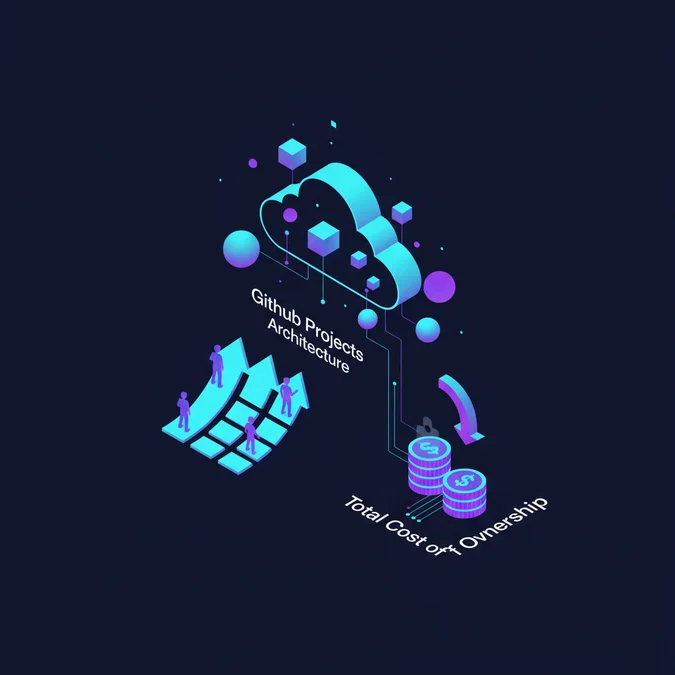
Executing technical pre mortems requires an investment of high-value engineering hours. However, balancing these engineering hours against the financial consequences of uncontrolled production outages reveals significant cost advantages. Calculating these trade-offs requires modeling real-world figures based on standard market rates and downtime impacts.
A typical enterprise engineering team consists of five senior engineers and one principal systems architect. Allocating two hours to prepare architectural threat assessments and two hours to conduct the pre mortem session totals 24 engineering hours per critical feature launch. At average market rates, this equates to a measurable direct cost.
| Engagement / Resource Tier | Hourly Rate Range | Per-Feature Cost (24 Hours) | Monthly Retainer Model |
|---|---|---|---|
| Mid-Level Engineering Team | $65 to $95 / hr | $1,560 to $2,280 | $8,000 to $12,000 / mo |
| Senior / Lead Engineering Team | $110 to $160 / hr | $2,640 to $3,840 | $14,000 to $20,000 / mo |
| Principal Systems Consultant | $180 to $250 / hr | $4,320 to $6,000 | $22,000 to $32,000 / mo |
| Specialized DevOps / SRE Firm | $200 to $320 / hr | $4,800 to $7,680 | $25,000 to $40,000 / mo |
Compare these predictable preparation figures against the actual cost of unplanned outages. According to industry averages, Tier-1 service downtime costs between $5,600 and $9,000 per minute in direct transaction loss, SLA penalties, and incident remediation labor. A single two-hour database outage can easily cost an organization over $600,000. Investing $3,840 in an engineering pre mortem yields an immediate, massive return on investment by mitigating systemic launch hazards.
Integrating Pre Mortem Findings into CI/CD Pipelines
A pre mortem document that sits untouched in a team wiki fails to protect your platform. The true value of the exercise emerges when every identified risk is translated directly into automated tests, static analysis assertions, or continuous integration gates.
For instance, if the pre mortem team flags that developers might accidentally write unindexed queries across polymorphic relationships, this risk should not remain a manual pull-request reminder. It should be codified into a static analysis rule using tools like PHPStan, Psalm, or custom architecture test suites like Pest Arch.
<php

// tests/Architecture/QueryPerformanceTest.php

use App\Models\Order;
use Illuminate\Support\Facades\DB;

test('orders table query does not exceed memory limit or trigger full table scans',
function () {
 DB:enableQueryLog();

 // Execute target domain query under realistic seed parameters
 Order:query()
 ->with(['customer', 'items.product'])
 ->where('status', 'processing')
 ->where('created_at', '>=', now()->subDays(7))
 ->limit(100)
 ->get();

 $queries = DB:getQueryLog();
 DB:disableQueryLog();

 // Verify eager loading was correctly configured to prevent N+1 queries
 expect(count($queries))
 ->toBeLessThanOrEqual(4, 'Detected N+1 queries during Order processing retrieval');

 // Run an EXPLAIN statement to ensure the composite index is utilized
 $explain = DB:select('EXPLAIN '. $queries[0]['query'], $queries[0]['bindings']);

 // Confirm MySQL index usage rather than ALL (full table scan)
 expect($explain[0]->type)->not->toBe('ALL');
});
By transforming assumptions into automated guardrails, the engineering organization creates a self-defending codebase that prevents regressions from quietly bypassing review during accelerated release cycles.
Comparing Pre Mortems, Post Mortems, and Chaos Engineering
Engineering teams frequently confuse pre mortems with other reliability disciplines. While post-mortems and chaos engineering operate on the same continuum of resilience, each occupies a distinct position within the software delivery lifecycle.
| Attribute | Pre Mortem | Chaos Engineering | Post Mortem |
|---|---|---|---|
| Execution Phase | Pre-implementation / Architecture design | Staging / Production runtime | Post-incident / Recovery phase |
| Primary Mechanism | Cognitive simulation and structured risk modeling | Deliberate fault injection (network, latency, instance kill) | Root cause analysis (RCA) and timeline reconstruction |
| Cost of Remediation | Lowest: Code is not yet written or finalized | Medium: Requires staging parity and automated rollback | Highest: Incident has caused revenue loss or data damage |
| Primary Deliverable | Architectural revisions, strict timeouts, defensive tests | Empirical blast-radius metrics, telemetry improvements | Preventative action items, public status updates, runbooks |
A mature software development lifecycle incorporates all three disciplines. The pre mortem anticipates structural limits; chaos engineering validates those assumptions against running systems by terminating nodes or simulating dropped packets; the post mortem handles any remaining unknown unknowns that escape into production.
Facilitator Anti-Patterns to Avoid
Running an effective pre mortem requires navigating team dynamics carefully. Without strong facilitation, these sessions can degenerate into unproductive complaining or, conversely, sterile compliance exercises where engineers repeat generic platitudes.
Common Failure Modes in Pre Mortem Sessions
- Vague, Non-Actionable Threat Definitions: Statements like “the server could crash” or “the API might get overwhelmed” offer no engineering utility. Demand specifics: “Under a flood of 2,000 RPS, the payment gateway connection pool will exhaust local TCP ports due to improper
TIME_WAITreuse.” - The Blame Game: Allowing the exercise to target specific teammates rather than architectural designs. The focus must always remain on system properties, code paths, and infrastructure boundaries.
- Ignoring Organizational Risks: Code is tightly coupled to team topology. If a feature depends on an external team that lacks an SLA for webhook deliveries, that organizational dependency is just as critical an architectural risk as an unindexed column.
- Failing to Assign Ownership: Generating an extensive list of failure vectors without assigning each prioritized risk to an owner with a ticket, deadline, and acceptance criterion turns the session into an expensive academic exercise.
Master Directory and Foundational Resources
Mastering early risk modeling, structured design sessions, and defensive systems design is an ongoing technical discipline for backend teams. [Explore our complete Laravel, Basics directory for more guides.](/topics/topics-laravel-basics/)
Factors That Affect Development Cost
- Team seniority and architectural expertise
- Complexity of distributed systems and dependencies
- Meeting duration and preparation requirements
- Scope of automated test implementation following the session
Direct costs range from $1,500 to over $7,500 per architectural review depending on whether internal senior staff or external specialty consultants lead the review.
Frequently Asked Questions
What is the difference between a pre mortem and a traditional risk assessment?
A risk assessment asks what might go wrong, which frequently triggers confirmation bias and optimism from team members. A pre mortem assumes the system has already catastrophically failed in the future, freeing engineers to identify deep technical vulnerabilities without fear of sounding negative.
How long should a software pre mortem session take?
A typical engineering pre mortem lasts between 60 and 90 minutes. Keeping the session focused on a specific architecture, service boundary, or critical launch prevents fatigue and ensures failure modes remain concrete and technically actionable.
Who should attend a technical pre mortem?
The session should include backend engineers, database administrators, site reliability engineers (SREs), product managers, and at least one engineer unfamiliar with the immediate codebase to provide a fresh, unbiased perspective on system assumptions.
At what stage of development should a pre mortem be conducted?
The ideal time is immediately after the architectural design document and database schema are drafted, but before widespread code implementation begins. Conducting it at this point allows architectural modifications to occur when refactoring costs are lowest.
System resilience is not an accidental byproduct of disciplined coding; it is the calculated outcome of rigorous, adversarial architectural review. By conducting pre mortems early in the design cycle, engineering teams replace optimism with structured skepticism, exposing query lock contention, worker starvation, memory degradation, and network fragility long before code touches production infrastructure.
Adopting this practice shifts engineering culture away from frantic, middle-of-the-night emergency firefighting toward deliberate, confident deployments. When your systems are designed from day one with the assumption that every network link will fail, every queue will congest, and every database pool will be challenged, your platform remains stable regardless of operational pressures.