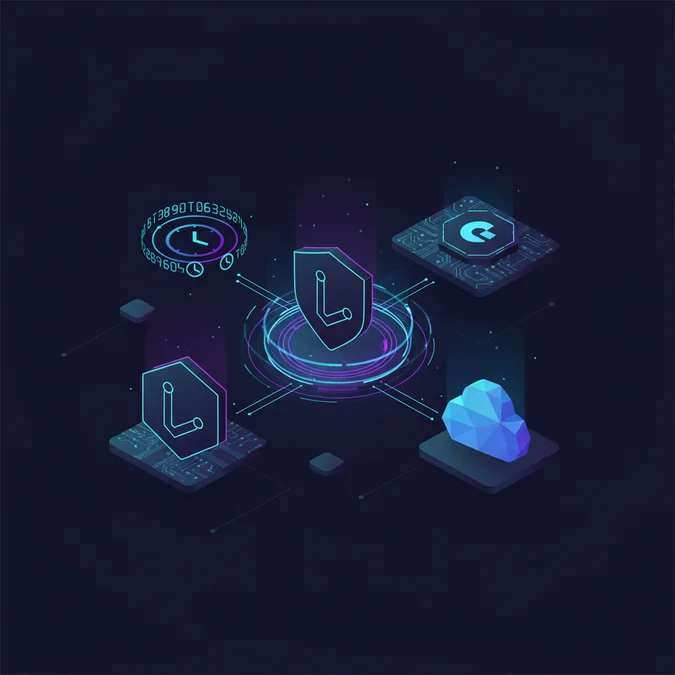

Integrating Google Authenticator into Laravel requires implementing RFC 6238 Time-Based One-Time Passwords (TOTP) to secure user authentication flows against credential stuffing and session hijacking. This setup binds a cryptographically generated shared secret to an authenticated identity, generating rolling, time-sensitive six-digit tokens validated on the application server via HMAC-SHA1 hashing algorithms.
Laravel core maintainers have moved security defaults toward standardized modular libraries, shifting away from legacy monolith facades and toward composable, cryptographically audited packages. Official authentication layers like Laravel Fortify provide native primitives for two-factor authentication, while custom domain architectures frequently demand standalone TOTP engines using packages like pragmarx/google2fa-laravel to support granular lifecycle management, custom cryptographic key rotation, and strict enterprise session boundary handling.
As web systems encounter automated brute-force attacks and credential stuffing vectors targeting administrative surfaces, application architects must treat one-time authenticators not merely as UI conveniences, but as hardened cryptographic checkpoints. Implementing TOTP securely demands robust secret storage, replay attack mitigations, clock drift compensation, and strict emergency recovery workflows that withstand edge-case failures without degrading security.
Core Cryptographic Mechanics of RFC 6238 and RFC 4226
Google Authenticator relies directly on the open RFC 6238 standard for Time-Based One-Time Passwords (TOTP), which itself builds upon the foundation of RFC 4226 HMAC-Based One-Time Passwords (HOTP). Understanding these low-level mathematical operations prevents systemic architectural mistakes when handling verification windows, token lifetimes, and cryptographic generation.
The HOTP algorithm generates a dynamic token by computing an HMAC-SHA1 hash using a shared symmetric secret key, denoted as K, and an 8-byte counter value, denoted as C. The mathematical expression evaluates as:
// Conceptual representation of RFC 4226 HOTP
$hash = hash_hmac('sha1', pack('N*', 0). pack('N*', $counter), $secret, true);
$offset = ord($hash[19]) & 0x0f;
$binary = ((ord($hash[$offset]) & 0x7f) << 24) |
 ((ord($hash[$offset + 1]) & 0xff) << 16) |
 ((ord($hash[$offset + 2]) & 0xff) << 8) |
 (ord($hash[$offset + 3]) & 0xff);
$token = str_pad($binary % 1000000, 6, '0', STR_PAD_LEFT);
TOTP replaces the discrete integer counter C with a dynamic time counter derived from the Unix epoch. The time step window, usually configured to T0 = 0 and X = 30 seconds, computes the counter as T = floor((Current_Unix_Time - T0) / X). This ensures that both the mobile device and the Laravel backend independently derive the exact same integer counter, generating matching six-digit values within a uniform 30-second window.
Because client clocks and server clocks rarely align perfectly down to the millisecond, RFC 6238 permits an operational drift window. A verification window of 1 checks the current time step, the preceding time step (30 seconds in the past), and the subsequent time step (30 seconds into the future). Widening this window beyond a threshold of 1 introduces severe replay vulnerabilities.
Database Architecture and Encrypting Secrets at Rest
Storing TOTP shared secrets in plaintext within your persistence tier violates compliance baselines including SOC 2, HIPAA, and PCI-DSS. A compromised database snapshot would immediately expose every user account secret, enabling adversaries to clone authenticators off-site and bypass multi-factor authentication entirely.
Shared secrets must be encrypted using authenticated symmetric encryption, such as AES-256-GCM or AES-256-CBC with HMAC validation. In Laravel, you can enforce this automatically by configuring Eloquent attribute casting. The following migration demonstrates the schema design required for production safety, including recovery backup codes and confirmation timestamps:
use Illuminate\Database\Migrations\Migration;
use Illuminate\Database\Schema\Blueprint;
use Illuminate\Support\Facades\Schema;

return new class extends Migration {
 public function up(): void
 {
 Schema:table('users', function (Blueprint $table) {
 // Encrypted base32 TOTP secret string
 $table->text('two_factor_secret')->nullable();

 // JSON array of encrypted, single-use recovery hashes
 $table->text('two_factor_recovery_codes')->nullable();

 // Audit timestamp establishing when TOTP verification was confirmed
 $table->timestamp('two_factor_confirmed_at')->nullable();
 });
 }

 public function down(): void
 {
 Schema:table('users', function (Blueprint $table) {
 $table->dropColumn([
 'two_factor_secret',
 'two_factor_recovery_codes',
 'two_factor_confirmed_at',
 ]);
 });
 }
};
In the Eloquent model, define the casts array to enforce automatic AES-256 encryption via Laravel application encryption key (APP_KEY). Any access to the attribute decrypts the data in memory, preventing raw plaintext leakage to database query logs or unencrypted replica dumps:
namespace App\Models;

use Illuminate\Foundation\Auth\User as Authenticatable;

class User extends Authenticatable
{
 protected $casts = [
 'two_factor_secret' => 'encrypted',
 'two_factor_recovery_codes' => 'encrypted:array',
 'two_factor_confirmed_at' => 'datetime',
 ];
}- Encrypted casting prevents internal operators, read-only analytics replicas, and compromised database snapshots from reading the Base32 seed keys.
- Confirmation timestamps ensure unverified TOTP setup procedures cannot accidentally lock a user out of their profile.
- Array casting ensures recovery codes serialize securely without custom encoding logic that could fail edge-case parsing.
Generating Cryptographic Secrets and QR Code Payloads
To set up an authenticator device, the backend generates an unguessable Base32 secret key conforming to RFC 3548. Base32 uses the character set A-Z and 2-7, avoiding easily confused alphanumeric glyphs like 0, O, 1, and l. The secret must possess at least 128 bits of cryptographic entropy, though 160 bits (20 bytes) remains the common baseline for SHA-1 TOTP configurations.
Packages such as pragmarx/google2fa-laravel encapsulate this generation via cryptographically secure pseudo-random number generators (CSPRNG):
namespace App\Services;

use PragmaRX\Google2FA\Google2FA;

class TwoFactorService
{
 protected Google2FA $engine;

 public function __construct(Google2FA $engine)
 {
 $this->engine = $engine;
 }

 /**
 * Generate a high-entropy Base32 secret string (160 bits / 20 bytes).
 */
 public function generateSecretKey(): string
 {
 return $this->engine->generateSecretKey(160);
 }

 /**
 * Build the standard otpauth:// URI for the QR code payload.
 */
 public function getQrCodeUrl(string $company, string $holderEmail, string $secret): string
 {
 return $this->engine->getQRCodeUrl($company, $holderEmail, $secret);
 }
}
The output URL adopts the standardized otpauth:// schema, which mobile authenticator applications parse via barcode scanning:
otpauth://totp/AcmeCorp:dev%40domain.internal?secret=JBSWY3DPEHPK3PXP&issuer=AcmeCorp&algorithm=SHA1&digits=6&period=30Avoid generating QR codes through external third-party image generation APIs (such as Google Image Charts API). Passing unencrypted shared secrets over public network boundaries to external services completely breaks secret confidentiality. QR codes must be rendered strictly in-process on the application server using native SVG libraries like bacon/bacon-qr-code.
Two-Phase Enrollment and Activation Flow
A critical architectural flaw in custom TOTP implementations is activating two-factor enforcement immediately upon generating the shared secret. If the user closes their browser window, loses device connectivity, or scans the code improperly before generating their first valid token, they are permanently locked out of their account.
Enrollment must follow a strict two-phase atomic state machine. The application holds the secret in an unconfirmed state until the user proves possession of the private key by submitting an accurate, contemporaneous one-time token.
- Initiation Phase: The user requests 2FA setup. The server creates the Base32 secret, saves it into
two_factor_secret, leavestwo_factor_confirmed_atas null, and outputs the QR code. - Verification Phase: The user opens Google Authenticator, scans the barcode, and inputs the currently active 6-digit code into a validation form.
- Activation Phase: The backend verifies the code against the unconfirmed secret. Only upon validation does the application stamp the current timestamp into
two_factor_confirmed_atand generate permanent backup recovery keys.
namespace App\Http\Controllers;

use Illuminate\Http\Request;
use Illuminate\Http\JsonResponse;
use PragmaRX\Google2FA\Google2FA;

class TwoFactorActivationController extends Controller
{
 public function confirm(Request $request, Google2FA $engine): JsonResponse
 {
 $validated = $request->validate([
 'code' => ['required', 'string', 'size:6'],
 ]);

 $user = $request->user();

 if (! $user->two_factor_secret || $user->two_factor_confirmed_at) {
 return response()->json(['message' => 'Invalid enrollment state.'], 400);
 }

 // Window of 1 evaluates T-1, T, and T+1 (30s drift compensation)
 $valid = $engine->verifyKey(
 $user->two_factor_secret,
 $validated['code'],
 1
 );

 if (! $valid) {
 return response()->json(['message' => 'Provided verification token is invalid or expired.'], 422);
 }

 $user->forceFill([
 'two_factor_confirmed_at' => now(),
 ])->save();

 return response()->json(['message' => 'Two-factor authentication successfully activated.']);
 }
}
When engineering authentication pipelines early in application cycles, running rigorous integration suites during your prototyping software phase helps identify missing confirmation boundaries before reaching staging or production infrastructure.
Authentication Pipeline and Intermediate Session States
During traditional login, credentials pass through the primary password verifier. If valid, the user identity must not be marked fully authenticated until multi-factor requirements clear. Logging the user into the primary guard immediately and relying on UI redirects exposes protected routes to unauthenticated access.
Instead, implement an intermediate session state. The primary authentication controller verifies the password, isolates the partial session, and holds standard authentication guards in abeyance:
namespace App\Http\Controllers\Auth;

use App\Http\Controllers\Controller;
use Illuminate\Http\Request;
use Illuminate\Support\Facades\Auth;
use Illuminate\Support\Facades\Hash;
use App\Models\User;

class LoginController extends Controller
{
 public function authenticate(Request $request)
 {
 $credentials = $request->validate([
 'email' => ['required', 'email'],
 'password' => ['required', 'string'],
 ]);

 $user = User:where('email', $credentials['email'])->first();

 if (! $user ||! Hash:check($credentials['password'], $user->password)) {
 return back()->withErrors(['email' => 'Invalid credentials supplied.']);
 }

 // If two-factor is enabled and fully confirmed, transition to pending 2FA state
 if ($user->two_factor_confirmed_at!== null) {
 $request->session()->put('auth.mfa.user_id', $user->id);
 $request->session()->put('auth.mfa.remember', $request->boolean('remember'));

 return redirect()->route('auth.mfa.challenge');
 }

 // Standard login path for non-2FA users
 Auth:login($user, $request->boolean('remember'));
 $request->session()->regenerate();

 return redirect()->intended('dashboard');
 }
}
In high-throughput environments tracking active user sessions, combining these transitions with event channels like Laravel Echo architecture enables frontend clients to synchronize concurrent authorization challenges across multiple browser tabs simultaneously.
Mitigating Token Replay Attacks with Cache Atomic Locks
A critical vulnerability within standard TOTP implementations is the token replay attack. Because RFC 6238 defines valid time steps across a 30-second window (extended to 90 seconds when supporting a plus-or-minus drift of 1), an intercepted token remains cryptographically valid until that window expires.
If an attacker sniffs a token via a local proxy, shoulder surfing, or temporary server log inspection, they can submit that identical six-digit token within the remaining seconds of the window. RFC 6238 explicitly mandates that the validating server must reject an identical token if it has already been consumed within the current time step.
To stop replay attacks in Laravel, implement an atomic cache lock or Redis transaction that records the user ID, timestamp bucket, and verified code. If a second attempt arrives with identical values inside that bucket window, reject the request instantly:
namespace App\Services;

use Illuminate\Support\Facades\Cache;
use PragmaRX\Google2FA\Google2FA;

class AntiReplayTotpValidator
{
 protected Google2FA $engine;

 public function __construct(Google2FA $engine)
 {
 $this->engine = $engine;
 }

 public function verify(string $secret, string $code, int $userId): bool
 {
 // Verify with window = 1
 $timestamp = $this->engine->verifyKeyNewer($secret, $code, null, 1);

 if ($timestamp === false) {
 return false;
 }

 // Build an atomic cache key tied to the validated timestamp interval
 $cacheKey = "totp_used:{$userId}:{$timestamp}";

 // Reserve the key for 120 seconds to outlive any possible clock drift
 $acquired = Cache:add($cacheKey, true, 120);

 if (! $acquired) {
 // Token has already been used within this active window
 return false;
 }

 return true;
 }
}verifyKeyNewerreturns the exact integer time slice matching the user submission instead of a simple boolean.Cache:add()is an atomic operation; if the key exists, it returns false, defeating race conditions across concurrent application threads.- The TTL covers the full duration of the drift compensation window to completely prevent re-use.
Mitigating Clock Drift Between Client and Server
Time synchronization discrepancies between client authenticator devices and the application server represent the single highest cause of false-negative TOTP authentications in production. Mobile devices utilize Network Time Protocol (NTP) to maintain internal system clocks, but hardware drift, improper operating system configurations, and travel across international timezone borders can offset the device clock by tens of seconds.
The server must run native NTP daemon synchronizers, such as chrony or systemd-timesyncd, ensuring host clock variance stays well under 50 milliseconds relative to global UTC references.
Window Size Trade-offs
Adjusting the verification window on your server configuration balances accessibility against security exposure. The table below illustrates the defensive trade-offs involved:
| Window Setting | Time Window Evaluated | Total Time Span | Risk Profile |
|---|---|---|---|
0 |
T (Current Only) | 30 seconds | High user failure rate; zero tolerance for client drift. |
1 (Recommended) |
T-1, T, T+1 | 90 seconds | Industry standard; tolerates up to 30s drift while maintaining a tight replay boundary. |
2 |
T-2 to T+2 | 150 seconds | High risk; grants adversaries a 2.5-minute window for intercepted tokens. |
4+ |
T-4 to T+4 | 270+ seconds | Extremely insecure; violates RFC guidelines and elevates brute-force feasibility. |
Keep the verification window set to 1. Never increase this setting past 1 to fix user sync complaints. Instead, instruct users to run the native “Time sync for codes” diagnostic tool embedded directly in the Google Authenticator application settings menu.
Rate Limiting and Brute-Force Defenses
Because a standard TOTP token is an 8-bit to 20-bit numeric string comprising only 1,000,000 potential permutations (from 000000 to 999999), it is susceptible to brute-force attacks if left unprotected by aggressive rate limiting. An adversary armed with valid primary credentials could automate parallel submission requests to exhaust the numeric space within the valid time window.
Laravel provides robust rate limiting via RateLimiter abstractions. The challenge submission endpoint must be throttled by an aggregated key combining the target user ID and the client source IP address:
namespace App\Providers;

use Illuminate\Cache\RateLimiting\Limit;
use Illuminate\Http\Request;
use Illuminate\Support\Facades\RateLimiter;
use Illuminate\Support\ServiceProvider;

class RouteServiceProvider extends ServiceProvider
{
 public function boot(): void
 {
 RateLimiter:for('two-factor-challenge', function (Request $request) {
 $userId = $request->session()->get('auth.mfa.user_id')? 'guest';
 $clientIp = $request->ip();

 return Limit:perMinute(5)->by("{$userId}|{$clientIp}")->response(function () {
 return response()->json([
 'message' => 'Too many validation attempts. Account access throttled for 60 seconds.',
 ], 429);
 });
 });
 }
}
Five attempts per minute provides adequate tolerance for human typos while capping maximum automated permutation exploration to 0.0005% of the total search space per interval, neutralizing brute-force discovery models.
Architecting Cryptographically Secure Recovery Codes
When a physical authenticator device is lost, stolen, or damaged, users must possess an out-of-band mechanism to regain access to their accounts. Without emergency recovery codes, users face permanent lockout, prompting risky administrative interventions that open support desks to social engineering attacks.
Recovery codes must meet the following cryptographic requirements:
- High Entropy: Derived using
random_bytes()to ensure statistical unpredictability. - Single-Use Enforced: Immediately burned, removed, or marked consumed upon first successful redemption.
- Hashed or Encrypted at Rest: Stored using standard hashing (e.g. Argon2id/Bcrypt) or authenticated database encryption.
The service implementation below demonstrates secure code generation and atomic single-use redemption:
namespace App\Services;

use Illuminate\Support\Str;
use App\Models\User;

class RecoveryCodeService
{
 /**
 * Generate a batch of high-entropy, human-readable recovery codes.
 */
 public function generateRecoveryCodes(int $amount = 8): array
 {
 $codes = [];
 for ($i = 0; $i < $amount; $i++) {
 // Generate format: XXXXX-XXXXX (10 chars base32 safe)
 $codes[] = strtoupper(Str:random(5). '-'. Str:random(5));
 }
 return $codes;
 }

 /**
 * Validate and atomically consume a single-use recovery code.
 */
 public function consume(User $user, string $code): bool
 {
 $codes = $user->two_factor_recovery_codes;

 if (empty($codes) ||! is_array($codes)) {
 return false;
 }

 $cleanCode = strtoupper(trim($code));
 $index = array_search($cleanCode, $codes, true);

 if ($index === false) {
 return false;
 }

 // Remove consumed recovery code from available array
 unset($codes[$index]);
 $user->two_factor_recovery_codes = array_values($codes);
 $user->save();

 return true;
 }
}
Security Implications: OWASP Top 10 and Compliance Baselines
Implementing custom TOTP configurations impacts several threat boundaries defined within the OWASP Top 10 and regulatory frameworks like SOC 2, ISO 27001, and NIST SP 800-63B.
Identification and Authentication Failures (OWASP A07:2021)
MFA implementations often fail when fallback mechanisms compromise security boundaries. A common architecture flaw allows password resets via email to automatically strip TOTP requirements. This vulnerability enables attackers with compromised email accounts to bypass multi-factor security completely. When users change passwords or reset forgotten credentials, their 2FA state must remain intact.
Cryptographic Failures (OWASP A02:2021)
Do not attempt to roll custom hashing routines for token verification. Using custom Base32 decoders or standard unpadded base conversions can introduce side-channel timing leaks. Always use peer-reviewed, RFC-compliant libraries with constant-time equality comparisons (such as PHP hash_equals()) to evaluate values.
NIST SP 800-63B Guidelines
NIST specifies that software-based TOTP using shared secrets qualifies as an Authenticator Assurance Level 2 (AAL2) factor. To maintain AAL2 compliance, application architectures must guarantee that shared secrets cannot be retrieved by unauthorized actors, cannot be exported after enrollment, and are shielded from shoulder-surfing via masked inputs in browser forms.
Production Implementation: Fortify vs Standalone Engines
Laravel engineering teams face a foundational architectural choice: adopt the built-in Laravel Fortify headless authentication backend or build a custom, standalone TOTP pipeline using packages like pragmarx/google2fa-laravel. Both approaches carry architectural trade-offs depending on system requirements.
| Metric / Feature | Laravel Fortify | Standalone Custom Implementation |
|---|---|---|
| Time to Production | Low (Pre-configured routes, contracts, and views) | Medium (Manual design of controllers, sessions, UI) |
| Architectural Coupling | High (Requires aligning with Fortify pipeline models) | Zero (Plugs into custom guards and dynamic domains) |
| Custom Crypto Configuration | Rigid (Locked to default window and hashing profiles) | Extensible (Configurable algorithms, window, drift) |
| Multi-Tenant Secret Keys | Complex (Single schema assumptions) | Simple (Secrets bind to any multi-tenant key store) |
| Direct Session Control | Abstracted across Fortify actions | Direct control over every intermediate authentication step |
Choose Laravel Fortify if you are designing a greenfield application that directly utilizes standard Eloquent database providers and standard Blade/Inertia scaffolding. Choose a custom implementation with pragmarx/google2fa-laravel if you maintain high-compliance enterprise infrastructure requiring granular event pipelines, custom multi-tenant database partitions, hardware security module (HSM) integrations, or specialized intermediate authentication session stores.
Total Cost of Ownership and Engineering Pricing Models
Securing enterprise authentication infrastructure requires weighing engineering costs against recurring third-party vendor expenses. Custom Google Authenticator implementations require upfront software engineering and ongoing maintenance, but they eliminate the per-user licensing fees common to commercial identity platforms like Okta, Auth0, or Duo.
The table below provides a comprehensive operational cost breakdown across three common implementation approaches over a three-year enterprise application lifecycle:
| Implementation Model | Upfront Engineering Cost | Monthly Operational / SaaS Fees | Total Year 1 Cost | Total Year 3 Cost |
|---|---|---|---|---|
| In-House Custom / Fortify | $8,000 to $14,000 (Initial build and audit) | $50 to $150 (Hosting and Redis resources) | $8,600 to $15,800 | $10,000 to $19,400 |
| External Agency Retainer | $15,000 to $25,000 (Turnkey delivery) | $1,500 to $3,500/mo (Ongoing maintenance) | $33,000 to $67,000 | $69,000 to $151,000 |
| Identity SaaS (Auth0 / Okta) | $2,500 to $6,000 (Integration wiring) | $1,200 to $6,000/mo (Based on 5,000+ MAU) | $16,900 to $78,000 | $45,700 to $222,000 |
For independent engineering teams and mid-market organizations with over 10,000 active users, building native TOTP verification directly within Laravel yields significant cost efficiencies. Software-based TOTP consumes negligible server memory and CPU cycles while avoiding vendor lock-in and per-seat fee escalations.
Explore the Laravel Basics Architecture Directory
Constructing enterprise-grade authentication is only one component of designing secure web applications. To explore broader framework mechanics, request lifecycles, and core architectural patterns, consult our curated architectural resources.
Explore our complete Laravel, Basics directory for more guides.
Frequently Asked Questions
What is the recommended verification window for Google Authenticator in Laravel?
The recommended verification window is 1. This checks the current 30-second time slice as well as one step prior and one step ahead, giving users a 90-second operational window to compensate for minor clock drift without introducing replay vulnerabilities.
How should TOTP secrets be stored in the Laravel database?
TOTP secrets must never be stored as plaintext strings. They must be protected using authenticated symmetric encryption, such as Laravel encrypted casting (AES-256-CBC or AES-256-GCM), ensuring database backups or replicas do not expose raw Base32 keys.
How do you prevent TOTP replay attacks in Laravel?
Replay attacks are stopped by recording each successfully validated timestamp and user combination in an atomic cache store like Redis with a 90 to 120-second TTL. If a subsequent request arrives containing an identical token for that same time interval, it is immediately rejected.
Can I use the Google Charts API to generate TOTP QR codes?
No. Sending secret keys across the network to external third-party generation services exposes your Base32 keys in query parameters and external server logs. All QR codes must be rendered directly on the local application server using packages like bacon-qr-code.
Implementing Google Authenticator in Laravel requires precise adherence to RFC 6238 specifications, disciplined state management, and strict cryptographic safeguards. By moving beyond basic verification scripts and addressing token replay vectors, attribute-level encryption, clock drift, and brute-force mitigation, engineering teams can build resilient identity boundaries that protect application data against credential attacks.
Whether adopting the out-of-the-box scaffolding of Laravel Fortify or orchestrating a specialized engine using standalone packages, security teams must treat multi-factor authentication as an immutable security barrier. Thorough code reviews, atomic recovery state handling, and ongoing security audits will keep your Laravel authentication systems secure against emerging threat landscapes.