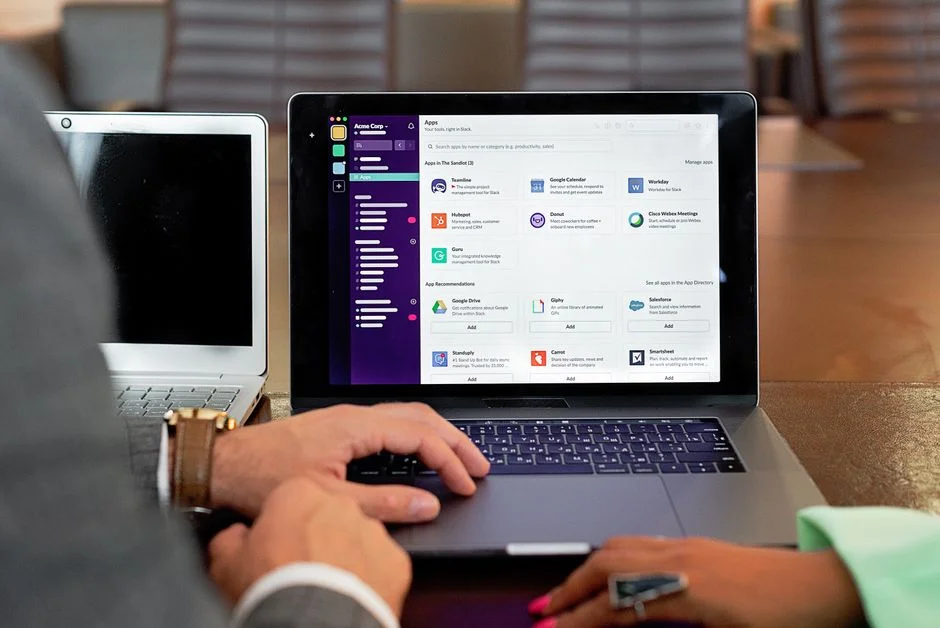

OpenClaw Slack integration involves connecting a hypothetical, robust Laravel-based monitoring and alerting platform, OpenClaw, with Slack to deliver real-time notifications, incident reports, and interactive commands directly to development and operations teams. This integration is crucial for reducing Mean Time To Detection (MTTD) and enabling rapid response workflows in complex distributed systems. Architecting such a system demands careful consideration of reliability, security, scalability, and maintainability to ensure critical alerts are never missed and operational efficiency is maximized.
This article will delve into the core architectural principles, implementation strategies, and operational considerations necessary for building a high-fidelity OpenClaw to Slack integration. We will explore webhook-based communication, secure data transmission, event-driven patterns, and advanced interactive capabilities. The goal is to provide a comprehensive guide for engineers tasked with developing a resilient, performant, and cost-effective alerting infrastructure.
The Architectural Imperatives of OpenClaw Slack Integration
OpenClaw Slack integration, at its core, is about establishing a reliable, secure, and performant communication channel between a backend monitoring system, OpenClaw (imagined as a Laravel application), and the Slack messaging platform. The primary objective is to deliver critical operational insights, alerts, and system status updates to the right personnel in real time. This is not merely about sending a message; it involves a sophisticated interplay of data processing, message formatting, error handling, and an understanding of both platforms’ API ecosystems.
From an architectural standpoint, the integration must account for several imperatives. First, **reliability** is paramount. A missed alert can lead to extended outages or data loss. This necessitates robust retry mechanisms, message queuing, and circuit breakers to handle transient failures in network connectivity or Slack API rate limits. Second, **security** is non-negotiable. Alert data, especially from production systems, can contain sensitive information. Proper authentication, authorization, and encryption protocols are essential to prevent data leakage or unauthorized access. Third, **scalability** is a key concern. As the monitored infrastructure grows, the volume of alerts can increase dramatically. The integration must be designed to handle bursts of events without degrading performance or losing messages. Finally, **maintainability** ensures the integration remains functional and adaptable over time, requiring clear code structure, comprehensive logging, and thorough documentation.
A typical OpenClaw system, built on Laravel, would likely generate various types of events: application errors (e.g., Sentry-like events), infrastructure metrics (e.g., high CPU usage), deployment notifications, or custom business logic alerts. Each of these event types may require different Slack channels, message formats, and interactivity options. For instance, a critical production error might trigger an immediate notification in a dedicated incident channel, complete with buttons to acknowledge, escalate, or link to a runbook. A less critical warning might go to a general operations channel with less urgency. The architectural design must be flexible enough to accommodate these varied requirements, often leveraging a configuration-driven approach where alert rules and corresponding Slack actions are defined centrally.
The underlying mechanism often involves webhooks. OpenClaw processes an event, formats a payload according to Slack’s Incoming Webhook specification, and then dispatches an HTTP POST request. However, direct HTTP calls can introduce latency and coupling. A more resilient approach involves an intermediate message queue (e.g., Redis Queue, Amazon SQS, RabbitMQ) where OpenClaw enqueues Slack messages. A dedicated worker process then consumes these messages, handles rate limiting, retries, and error reporting, decoupling the alert generation from the delivery mechanism. This pattern significantly enhances fault tolerance and allows for asynchronous processing, preventing the monitoring system from being blocked by Slack API response times. Furthermore, the integration should support message templating, allowing dynamic content to be inserted into Slack messages based on the specific alert data, providing context-rich notifications rather than generic messages.
Designing a Resilient Webhook-Based Integration
A resilient webhook-based integration for OpenClaw and Slack moves beyond simple HTTP POST requests to incorporate mechanisms that guarantee message delivery and graceful degradation under stress. While Slack’s Incoming Webhooks provide a straightforward endpoint, relying solely on direct HTTP calls from the event source can lead to dropped messages if Slack’s API is temporarily unavailable, network issues occur, or the OpenClaw application becomes overwhelmed. The cornerstone of resilience here is the introduction of an asynchronous messaging layer.
In a Laravel context, this typically involves using Laravel Queues. When OpenClaw detects an event that requires a Slack notification, instead of making an immediate HTTP call, it dispatches a job to a queue. This job encapsulates all necessary data for the Slack message, including the webhook URL, message payload, and any metadata required for retries or logging. A dedicated queue worker then processes these jobs. This architecture offers several advantages: **decoupling** the event generation from message sending, **buffering** against high traffic spikes, and enabling **retries** for transient failures. Laravel’s built-in queue system, backed by drivers like Redis or database, provides robust retry logic, exponential backoff, and failure handling, ensuring messages are eventually delivered.
Consider the following simplified Laravel job structure for sending Slack notifications:
<?php namespace App\Jobs; use Illuminate\Bus\Queueable; use Illuminate\Contracts\Queue\ShouldQueue; use Illuminate\Foundation\Bus\Dispatchable; use Illuminate\Queue\InteractsWithQueue; use Illuminate\Queue\SerializesModels; use Illuminate\Support\Facades\Http; use Throwable; class SendSlackNotification implements ShouldQueue { use Dispatchable, InteractsWithQueue, Queueable, SerializesModels; public $tries = 3; // Attempt delivery 3 times public $backoff = [10, 30, 60]; // Retry after 10, 30, 60 seconds private array $payload; private string $webhookUrl; public function __construct(string $webhookUrl, array $payload) { $this->webhookUrl = $webhookUrl; $this->payload = $payload; } public function handle(): void { $response = Http::timeout(5) // 5-second timeout for Slack API ->retry($this->tries - 1, 1000, function (Throwable $exception, Http\Client\Request $request) { // Log retry attempts Log::warning("Slack webhook retry for {$this->webhookUrl}: " . $exception->getMessage()); return true; }) ->post($this->webhookUrl, $this->payload); if ($response->failed()) { // Log the failure for investigation throw new \Exception("Slack webhook failed: " . $response->body()); } } // Optional: Handle failed jobs public function failed(Throwable $exception): void { // Notify administrators or log to a persistent error tracking system Log::critical("Failed to send Slack notification after multiple retries: " . $exception->getMessage(), [ 'webhook_url' => $this->webhookUrl, 'payload' => $this->payload ]); } } This job configuration specifies retries and backoff strategies, critical for handling transient network issues or Slack API rate limits. The `handle` method includes a timeout and client-side retries before the job itself is re-queued. The `failed` method provides a hook to capture messages that ultimately fail after all retries, ensuring no alert is silently lost. Furthermore, implementing circuit breakers (e.g., using libraries like `predis/predis` to manage a Redis-backed circuit breaker) can temporarily stop sending requests to Slack if it continuously fails, preventing resource exhaustion and allowing the Slack API to recover. This approach ensures that the OpenClaw system remains stable even when external dependencies like Slack experience intermittent issues, safeguarding the integrity of the alerting pipeline.
Securing the OpenClaw to Slack Data Flow
Securing the data flow between OpenClaw and Slack is critical, especially when dealing with production system alerts that may contain sensitive operational details, user data, or intellectual property. The security posture must address data in transit, data at rest (briefly, within queues), and authentication/authorization for both incoming and outgoing communications. Slack’s security model, while robust, relies on proper configuration and adherence to best practices from the integrating application.
For outgoing messages from OpenClaw to Slack via Incoming Webhooks, the primary concern is preventing unauthorized parties from sending messages to your channels using your webhook URL. While the webhook URL itself is a secret, it’s not ideal as the sole security measure. Organizations often restrict outbound network access from their servers, allowing connections only to known, whitelisted endpoints. This acts as a perimeter defense. On the Slack side, webhook URLs are tied to specific workspaces and channels, providing a basic level of scope control. However, for enhanced security, especially if your OpenClaw system handles alerts that should only be seen by specific teams, consider generating unique webhook URLs for different channels or teams, and managing these URLs as environment variables or in a secure secrets management system (e.g., HashiCorp Vault, AWS Secrets Manager) rather than hardcoding them.
For incoming interactions from Slack to OpenClaw (e.g., Slash Commands, Interactive Components), Slack provides robust verification mechanisms. Every request from Slack includes a `X-Slack-Signature` header and a `X-Slack-Request-Timestamp` header. These headers, combined with your application’s Slack Signing Secret, allow you to verify the authenticity and freshness of the request. The verification process involves constructing a base string from the request body and timestamp, and then computing an HMAC-SHA256 signature. This signature is then compared with the `X-Slack-Signature` header. Discrepancies indicate a tampered or spoofed request. The timestamp check helps mitigate replay attacks.
<?php namespace App\Http\Middleware; use Closure; use Illuminate\Http\Request; use Symfony\Component\HttpFoundation\Response; class VerifySlackRequest { public function handle(Request $request, Closure $next): Response { $signingSecret = config('services.slack.signing_secret'); if (empty($signingSecret)) { // Log error or abort if secret is not configured return abort(403, 'Slack signing secret not configured.'); } $timestamp = $request->header('X-Slack-Request-Timestamp'); $signature = $request->header('X-Slack-Signature'); // Check for replay attacks if (abs(time() - (int)$timestamp) > 60 * 5) { // Request is older than 5 minutes return abort(403, 'Request timestamp too old.'); } $basestring = 'v0:' . $timestamp . ':' . $request->getContent(); $mySignature = 'v0=' . hash_hmac('sha256', $basestring, $signingSecret); if (!hash_equals($mySignature, $signature)) { return abort(403, 'Invalid Slack signature.'); } return $next($request); } } This middleware, applied to your API routes handling Slack interactions (which you might define using Next.js API Routes or Laravel routes), ensures that only legitimate requests from Slack are processed. Furthermore, always use HTTPS for all communication endpoints to encrypt data in transit. Ensure your Laravel application and its underlying infrastructure are hardened, with minimal exposed ports, up-to-date dependencies, and regular security audits. Any secrets, such as webhook URLs or signing secrets, should never be committed to source control directly but injected via environment variables or a secure configuration management system. Implementing these measures creates a robust security perimeter for your OpenClaw Slack integration.
Implementing Event-Driven Architectures for Real-time Alerts
An event-driven architecture (EDA) significantly enhances the real-time capabilities and scalability of an OpenClaw Slack integration by decoupling the producers of events (e.g., monitoring agents, application logs) from the consumers (e.g., Slack notification service). Instead of a direct, synchronous call, events are published to a central message broker or bus. Consumers subscribe to relevant event types and react accordingly. This paradigm is particularly well-suited for alerting systems, where various system components might generate events that need to be aggregated, filtered, and then dispatched to Slack.
In a Laravel context, this can be achieved using Laravel’s native event system combined with queues. When an incident occurs or a metric threshold is crossed within OpenClaw, an application event is dispatched. For example, an `AnomalyDetected` event or a `ServiceUnavailable` event. Listeners, which are often queued jobs, then react to these events. One such listener would be responsible for formatting the Slack message and dispatching the `SendSlackNotification` job discussed previously. This creates a flexible pipeline where multiple actions can be triggered by a single event, such as logging, updating a dashboard, and sending a Slack notification, all without tight coupling.
Consider a scenario where OpenClaw monitors various services. When a service goes down, an event `ServiceDownEvent` is fired. This event carries details about the service, the timestamp, and the severity. A Slack listener would then consume this event:
<?php namespace App\Events; use Illuminate\Foundation\Events\Dispatchable; use Illuminate\Queue\SerializesModels; class ServiceDownEvent { use Dispatchable, SerializesModels; public string $serviceName; public string $reason; public string $severity; public function __construct(string $serviceName, string $reason, string $severity) { $this->serviceName = $serviceName; $this->reason = $reason; $this->severity = $severity; } } <?php namespace App\Listeners; use App\Events\ServiceDownEvent; use App\Jobs\SendSlackNotification; use Illuminate\Contracts\Queue\ShouldQueue; use Illuminate\Queue\InteractsWithQueue; class SendServiceDownSlackNotification implements ShouldQueue { use InteractsWithQueue; public function handle(ServiceDownEvent $event): void { $webhookUrl = config('services.slack.incident_webhook'); $payload = [ 'text' => ":rotating_light: Service '{$event->serviceName}' is DOWN!", 'attachments' => [ [ 'color' => $event->severity === 'critical' ? 'danger' : 'warning', 'fields' => [ ['title' => 'Service', 'value' => $event->serviceName, 'short' => true], ['title' => 'Reason', 'value' => $event->reason, 'short' => true], ['title' => 'Severity', 'value' => strtoupper($event->severity), 'short' => true], ['title' => 'Timestamp', 'value' => now()->toDateTimeString(), 'short' => true], ] ] ] ]; SendSlackNotification::dispatch($webhookUrl, $payload)->onQueue('slack-alerts'); } } This event-driven pattern allows OpenClaw to scale by adding more event sources or listeners without modifying existing code. It also provides a clear separation of concerns: the monitoring logic generates events, and the Slack integration logic consumes these events to format and send notifications. For very high-throughput systems, external message brokers like Apache Kafka or Amazon Kinesis might be considered as the central event bus, offering superior durability, replayability, and horizontal scalability compared to basic Redis queues. However, for most Laravel applications, the built-in queue system with Redis as a backend provides sufficient performance and resilience for event-driven alerting. This architectural style ensures that alerts are processed efficiently and delivered to Slack with minimal latency, critical for maintaining operational awareness.
Data Serialization and Slack Message Formatting
Effective Slack integration goes beyond merely sending text; it involves structuring information in a way that is immediately actionable and easy to digest. Slack’s rich messaging capabilities, including Block Kit, allow for highly customizable and interactive messages. The challenge for OpenClaw is to serialize its internal event data into a JSON payload that conforms to Slack’s API specifications and presents the information clearly and concisely.
The fundamental building blocks for Slack messages are `blocks` and `attachments`. While `attachments` are a legacy feature, they are still widely used for simple, color-coded messages. `blocks` offer significantly more flexibility and are the recommended approach for modern Slack apps. Blocks allow you to create complex layouts with text, images, buttons, select menus, and more. When an event occurs in OpenClaw, the raw data (e.g., `service_id`, `error_message`, `stack_trace`, `user_affected`) needs to be transformed into a structured Slack message payload.
A common approach is to define message templates within OpenClaw, perhaps as configuration files or dedicated classes, that map specific event types to predefined Slack Block Kit layouts. For example, a `CriticalError` event might trigger a message with a red border, a bold headline, key-value pairs for context, and an action button to acknowledge the error. A `DeploymentSuccess` event might use a green border with a summary and a link to the deployment log.
<?php namespace App\Services\Slack; use App\Events\CriticalErrorEvent; use Illuminate\Support\Arr; class SlackMessageFormatter { public static function formatCriticalError(CriticalErrorEvent $event): array { return [ 'text' => ":fire: Critical Error Detected in `{$event->service}`", 'blocks' => [ [ 'type' => 'section', 'text' => [ 'type' => 'mrkdwn', 'text' => ":fire: *Critical Error Detected in `{$event->service}`*" ] ], [ 'type' => 'section', 'fields' => [ [ 'type' => 'mrkdwn', 'text' => "*Error Message:*\n`{$event->message}`" ], [ 'type' => 'mrkdwn', 'text' => "*Timestamp:*\n" . $event->timestamp->toDateTimeString() ] ] ], [ 'type' => 'context', 'elements' => [ [ 'type' => 'mrkdwn', 'text' => "*Affected User ID:* `{$event->userId}`" ] ] ], [ 'type' => 'actions', 'elements' => [ [ 'type' => 'button', 'text' => [ 'type' => 'plain_text', 'text' => 'Acknowledge Error' ], 'style' => 'danger', 'value' => "acknowledge_{$event->errorId}", 'action_id' => 'acknowledge_error_button' ], [ 'type' => 'button', 'text' => [ 'type' => 'plain_text', 'text' => 'View Logs' ], 'url' => "https://logs.openclaw.com/{$event->errorId}", 'action_id' => 'view_logs_button' ] ] ] ] ]; } public static function formatDeploymentSuccess(array $deploymentData): array { return [ 'text' => ":white_check_mark: Deployment to `" . Arr::get($deploymentData, 'environment') . "` successful!", 'blocks' => [ [ 'type' => 'section', 'text' => [ 'type' => 'mrkdwn', 'text' => ":white_check_mark: *Deployment to `" . Arr::get($deploymentData, 'environment') . "` successful!*" ] ], [ 'type' => 'context', 'elements' => [ [ 'type' => 'mrkdwn', 'text' => "*Version:* `" . Arr::get($deploymentData, 'version') . "` | *Deployed By:* `" . Arr::get($deploymentData, 'user') . "`" ] ] ] ] ]; } } This `SlackMessageFormatter` service demonstrates how to encapsulate the logic for converting raw event data into structured Slack payloads. By centralizing this formatting, consistency is maintained across all notifications, and updates to Slack’s API or messaging guidelines can be managed in one place. The use of `mrkdwn` for rich text formatting within blocks allows for bolding, italics, and code snippets, making messages more readable. The inclusion of action buttons directly within the message facilitates immediate responses from team members, transforming passive notifications into interactive workflows. Careful design of these message formats is paramount; overly verbose or poorly structured messages can lead to alert fatigue, diminishing the effectiveness of the entire integration.
Advanced Interaction Patterns: Buttons, Modals, and Slash Commands
Beyond simple one-way notifications, OpenClaw’s Slack integration can be significantly enhanced by leveraging advanced interaction patterns provided by the Slack API. These include interactive buttons, dynamic dropdowns, modals, and Slash Commands, which enable two-way communication and turn Slack into a powerful command-and-control interface for operational tasks. This transforms Slack from a mere notification sink into an active participation platform for incident response and system management.
Interactive components, such as **buttons** and **select menus**, embedded directly within messages, allow users to take immediate action without leaving Slack. For example, an OpenClaw alert for a critical service failure could include buttons to ‘Acknowledge’, ‘Escalate’, or ‘Restart Service’. When a user clicks such a button, Slack sends an interaction payload to a designated API endpoint on your OpenClaw application. This endpoint, often a specialized Next.js API Route or Laravel controller, must then process the interaction, perform the requested action (e.g., update an incident status in a database, trigger a deployment), and optionally update the original Slack message to reflect the action taken, providing real-time feedback.
For more complex interactions requiring multiple inputs, **modals** are invaluable. A modal is a pop-up window within Slack that can contain various input fields (text, dropdowns, checkboxes). For instance, an ‘Escalate Incident’ button could open a modal prompting the user to select an escalation path, add notes, and assign a priority. Once the user submits the modal, Slack sends a `view_submission` payload to your application, which then processes the collected data. Modals provide a structured way to gather information, reducing errors and ensuring all necessary data is captured for an operational task.
<?php namespace App\Http\Controllers\Slack; use Illuminate\Http\Request; use Illuminate\Support\Facades\Log; use App\Jobs\ProcessSlackAction; use App\Jobs\ProcessModalSubmission; use App\Services\Slack\SlackApi; class InteractionController extends Controller { public function handle(Request $request) { // Verify Slack request signature (as discussed in security section) // ... $payload = json_decode($request->get('payload'), true); switch ($payload['type']) { case 'block_actions': // User clicked a button or selected from a menu ProcessSlackAction::dispatch($payload)->onQueue('slack-interactions'); break; case 'view_submission': // User submitted a modal ProcessModalSubmission::dispatch($payload)->onQueue('slack-interactions'); break; case 'slash_commands': // Not typically handled here, but for completeness Log::info('Received slash command payload in interaction controller unexpectedly.'); break; default: Log::warning('Unhandled Slack interaction type: ' . $payload['type']); break; } // Acknowledge receipt immediately to avoid Slack retries return response()->json(['ok' => true]); } } **Slash Commands** provide a way for users to execute predefined commands directly from the Slack message input. For example, `/openclaw status [service_name]` could query the status of a specific service and respond directly in Slack. When a user types a Slash Command, Slack sends a payload to your configured endpoint. Your OpenClaw application processes the command, queries its internal state or external APIs, and then responds to Slack, either with a simple message or a more complex Block Kit layout. The ability to perform quick lookups or trigger actions via Slash Commands significantly improves operational agility, allowing engineers to get critical information or perform routine tasks without switching context to other tools.
Implementing these advanced interaction patterns requires careful state management, especially for multi-step workflows. Slack provides `response_url`s and `trigger_id`s in interaction payloads, which are essential for updating messages or opening modals in response to user actions. By thoughtfully integrating these capabilities, OpenClaw can become a central hub for not just receiving alerts, but actively managing and resolving incidents directly within the team’s communication platform.
Operational Monitoring, Alerting, and Maintainability
An OpenClaw Slack integration, as a critical component of an overall observability stack, must itself be observable. It is not enough for the integration to send alerts; it must also signal its own health and operational status. This involves comprehensive logging, metrics collection, and internal alerting to ensure the integration pipeline is functioning correctly, messages are being delivered, and no backlogs are forming in the queues. Without proper monitoring of the integration itself, a failure in the alerting system could go undetected, rendering the entire monitoring infrastructure ineffective.
**Logging** is the first line of defense. Every significant action within the Slack integration, from job dispatch to API call success/failure, should be logged. Laravel’s robust logging capabilities (e.g., Monolog) can direct logs to various destinations, such as file systems, syslog, or centralized logging platforms like ELK Stack or Datadog. Critical information to log includes: event IDs, Slack webhook URLs (redacted for sensitive parts), full Slack API responses, and any errors or exceptions encountered. Structured logging (e.g., JSON format) is highly recommended as it facilitates easier parsing and querying in log aggregation systems. For example, a failed Slack API call should log the HTTP status code, response body, and the specific `payload` that caused the failure (again, redacting sensitive data).
Beyond logs, **metrics collection** provides a quantitative view of the integration’s performance. Key metrics to track include: the number of Slack notifications dispatched, the number of successful deliveries, the number of failed deliveries, queue length for Slack jobs, and the latency of Slack API calls. Tools like Prometheus, Datadog, or New Relic can collect these metrics from your Laravel application. Laravel’s queues provide events that can be listened to for metric collection, such as `JobProcessed` and `JobFailed`. Custom middleware for HTTP requests to Slack can also capture latency and status codes. Visualizing these metrics in dashboards allows operators to quickly identify trends, bottlenecks, or anomalies in the integration’s behavior.
Based on these metrics, **internal alerting** should be configured for the integration itself. Examples include: alerts for consistently high queue lengths (indicating a backlog or worker issue), a high rate of failed Slack API calls, or a complete absence of Slack notifications for an extended period (suggesting the integration has stopped functioning). These alerts, ironically, might be sent to a fallback notification channel (e.g., email or SMS) or a different Slack channel to avoid a circular dependency where the primary Slack channel is also down. This multi-channel approach ensures that even if the primary Slack integration fails, the operations team is still notified of the failure.
Finally, **maintainability** is achieved through clear code organization, comprehensive documentation, and automated testing. The Slack integration logic should be encapsulated in dedicated services or jobs, with clear interfaces. Automated unit and integration tests should cover message formatting, webhook dispatch, and interaction handling to prevent regressions. Documentation should detail the configuration parameters, message templates, expected payloads, and troubleshooting steps. Regular reviews of the integration’s performance and security posture, along with staying updated on Slack API changes, are crucial for its long-term viability and effectiveness within the operational ecosystem.
Performance Engineering and Scalability Considerations
For an OpenClaw Slack integration to be effective in high-volume environments, careful performance engineering and scalability considerations are paramount. An alerting system that cannot keep up with the pace of events or introduces significant latency defeats its purpose. The goal is to ensure that alerts are delivered promptly, even during peak load, without overwhelming the OpenClaw application or exceeding Slack’s API rate limits.
The primary bottleneck in many integration scenarios is the external API call. Slack’s API, like any external service, has rate limits. Exceeding these limits can lead to temporary blocks, dropped messages, and degraded performance. The asynchronous queue-based architecture discussed earlier is the first and most critical step towards scalability. By offloading Slack API calls to background jobs, the main OpenClaw application can continue processing events without being blocked by network latency or API response times. The queue acts as a buffer, smoothing out bursts of activity.
Within the queue workers, intelligent rate limiting is essential. Instead of relying solely on Slack’s error responses for retries, proactive rate limiting can prevent hitting the limits in the first place. This can be implemented using a token bucket or leaky bucket algorithm, often backed by Redis. Each time a Slack message is sent, a token is consumed. If no tokens are available, the job is delayed or re-queued with a specific backoff. This ensures that the rate of requests to Slack’s API stays within acceptable bounds. Libraries like `spatie/laravel-rate-limited-job` can assist with this in Laravel.
Consider the processing capacity of your queue workers. If the volume of alerts is consistently high, you may need to horizontally scale your worker fleet. This involves running multiple instances of `php artisan queue:work` (or using a process manager like Supervisor or Kubernetes deployments) across different servers. Each worker consumes jobs from the queue concurrently, increasing throughput. Proper resource allocation, including CPU and memory, for these workers is crucial. Monitoring queue length and worker CPU utilization will help determine the optimal number of workers required.
Furthermore, optimizing the Slack message payload itself contributes to performance. While Block Kit offers rich formatting, overly complex or large payloads can increase network transfer times and Slack’s processing overhead. Strive for concise and relevant information. If an alert requires a large amount of detail, consider providing a link to an external dashboard or log viewer rather than embedding all information directly in Slack. This reduces payload size and keeps Slack messages focused on actionable insights.
Database performance within OpenClaw is also a factor. If the process of generating an alert involves complex database queries, optimizing these queries, indexing relevant columns, and potentially caching frequently accessed data (e.g., using Redis for caching frequently accessed user preferences or service configurations) can reduce the time it takes to prepare the Slack message payload. For high-volume event processing, consider using a high-performance data store for event logging, such as ClickHouse or Elasticsearch, rather than solely relying on a relational database, to prevent I/O bottlenecks. These combined strategies ensure that the OpenClaw Slack integration remains performant and scalable, capable of handling the demands of a growing infrastructure.
Cost Implications of OpenClaw Slack Integration Development and Maintenance
Understanding the cost implications of developing and maintaining an OpenClaw Slack integration is crucial for budgeting and resource allocation. While the immediate perception might be that it’s ‘just a few webhooks,’ a production-grade, resilient, secure, and feature-rich integration involves significant investment in development time, infrastructure, and ongoing operational overhead. Costs are typically categorized into initial development, infrastructure, and recurring maintenance.
Initial Development Costs
The initial development cost is primarily driven by engineering effort. This encompasses design, coding, testing, and deployment. The complexity of the integration directly correlates with the required development hours.
| Factor | Description | Estimated Hours (NR Studio) | Approx. Cost Range (USD) |
|---|---|---|---|
| Basic Webhook Integration | One-way notifications, simple text. No queues or advanced error handling. | 40-80 hours | $4,000 – $8,000 |
| Resilient Webhook (Queued) | Asynchronous processing, retries, basic error handling, logging. | 80-160 hours | $8,000 – $16,000 |
| Secure Two-Way Interaction | Webhook verification, Slash Commands, basic interactive buttons. | 160-320 hours | $16,000 – $32,000 |
| Advanced Interactive System | Complex Block Kit layouts, modals, dynamic dropdowns, state management. | 320-600+ hours | $32,000 – $60,000+ |
| Comprehensive Monitoring & Alerting | Integration self-monitoring, metrics, internal alerts, extensive logging. | 100-200 hours | $10,000 – $20,000 |
| Performance Optimization & Scaling | Rate limiting, worker auto-scaling, database optimization specific to integration. | 120-240 hours | $12,000 – $24,000 |
| Project Management & QA | Coordination, testing, documentation, deployment pipeline setup. | 40-120 hours | $4,000 – $12,000 |
These figures are based on typical hourly rates for experienced senior software engineers, which at NR Studio, range from $100 to $150 per hour depending on project scope and specialization. A simple, one-way integration might take a few weeks, while a full-featured, highly resilient, and interactive system could easily span several months of dedicated engineering time.
Infrastructure Costs
Infrastructure costs are generally lower but still present. They include:
- **Server Resources:** For running Laravel applications and queue workers. This could be a small dedicated virtual private server (VPS) or instances on cloud platforms like AWS EC2, Google Cloud Compute, or Azure VMs. Costs range from $20/month for a basic VPS to hundreds or thousands for high-availability, auto-scaling cloud setups.
- **Database:** For storing configuration, logs, and potentially state for interactive workflows. Managed database services (e.g., AWS RDS, Google Cloud SQL) offer ease of management but come at a higher cost than self-hosted solutions. Expect $15-$100+ per month.
- **Queue Service:** Redis (self-hosted or managed) is common for Laravel queues. Managed Redis services start from $10-$50/month.
- **Logging & Monitoring Tools:** Centralized log aggregators (e.g., ELK Stack, Datadog, Splunk) and metrics platforms (e.g., Prometheus, Grafana, Datadog) have varying costs, from free open-source solutions to hundreds or thousands of dollars per month for enterprise-grade services, depending on data volume and retention.
- **Secrets Management:** Solutions like AWS Secrets Manager or HashiCorp Vault have usage-based pricing, typically low (tens of dollars per month) for this scale.
Ongoing Maintenance Costs
Maintenance is an often-underestimated cost. This includes:
- **Bug Fixes & Troubleshooting:** Addressing issues that arise during operation, especially when Slack API changes or unexpected edge cases occur.
- **Feature Enhancements:** Adding new alert types, improving message formatting, or integrating new interactive Slack features.
- **Security Updates:** Keeping libraries and dependencies up to date, patching vulnerabilities.
- **Monitoring & Alerting Review:** Regularly reviewing dashboards, alerts, and logs to ensure the system is healthy and performing as expected.
- **Infrastructure Management:** Scaling workers, managing queue backlogs, ensuring database health.
These operational costs can range from 15% to 30% of the initial development cost annually, depending on the complexity and how actively the integration is evolved. For a highly critical integration, a dedicated on-call rotation might also be a hidden cost, requiring engineers to be available 24/7 to respond to issues related to the alerting system itself. The total cost, therefore, is a continuous investment rather than a one-time expenditure, reflecting the critical nature of a reliable alerting pipeline.
Factors That Affect Development Cost
- Project complexity (simple notifications vs. advanced interactions)
- Number of event types and custom message formats
- Required level of resilience (queues, retries, circuit breakers)
- Security requirements (webhook verification, secrets management)
- Integration with existing monitoring/logging systems
- Performance and scalability demands (high event volume)
- Ongoing maintenance and support needs
- Hourly rate of engineering talent
The total cost for a production-grade OpenClaw Slack integration can vary significantly, ranging from a few thousand dollars for basic functionality to well over sixty thousand dollars for comprehensive, highly resilient, and interactive systems, before considering ongoing operational expenses.
Architecting a robust OpenClaw Slack integration is a sophisticated undertaking that transcends merely sending messages. It demands meticulous attention to reliability, security, scalability, and maintainability, ensuring that critical operational insights are delivered promptly and securely. By leveraging asynchronous processing with queues, implementing rigorous security verification, and employing Slack’s rich interactive capabilities, development teams can transform a basic notification system into a powerful incident response and management platform. The investment in a well-engineered integration pays dividends in reduced downtime, improved operational efficiency, and enhanced team collaboration, ultimately contributing to the stability and success of complex software systems.
As systems evolve, so too must their alerting mechanisms. The principles outlined in this guide provide a foundation for building an integration that is not only effective today but also adaptable to future operational demands and technological changes. Continuous monitoring, proactive maintenance, and an understanding of the underlying costs are essential for the long-term success of this critical communication pipeline.
Explore our complete Laravel, Basics directory for more guides.
NR Studio builds custom web apps, mobile apps, SaaS platforms, and internal tools for growing businesses. If you’re working through a technical decision, feel free to reach out — no commitment required.