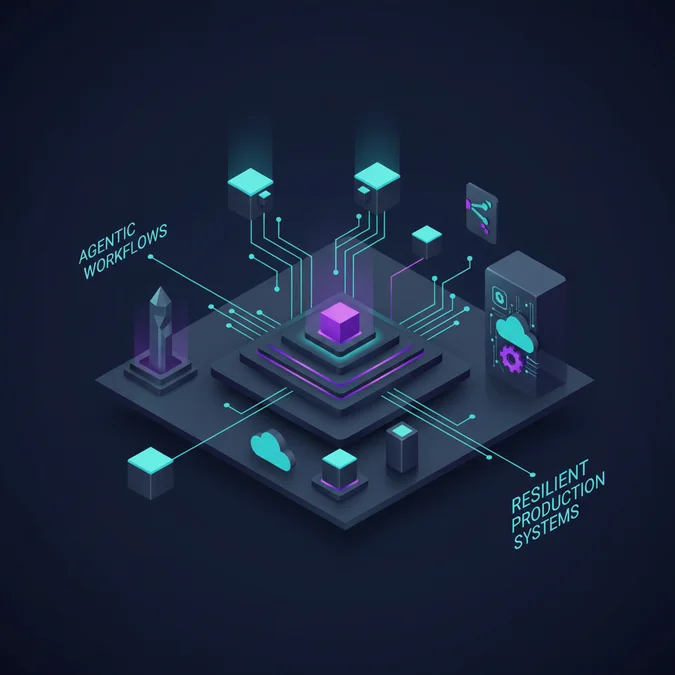

When a single LLM call hits a bottleneck in reasoning, context window limits, or accuracy, the engineering response is rarely to scale the model size. Instead, it is to decompose the workflow. Multi agent AI represents a paradigm shift from monolithic prompting to a distributed, collaborative architecture where specialized agents handle granular sub-tasks, negotiate outcomes, and manage state in a shared environment.
This article provides an engineering-first perspective on designing, orchestrating, and deploying these systems. We move past theoretical abstraction to address the reality of production-grade agentic workflows, covering message-passing primitives, failure recovery, and the critical trade-offs between centralized and decentralized orchestration patterns.
Foundations of Multi Agent AI Design Principles
At its core, multi agent AI relies on the principle of agentic modularity. Rather than a singular prompt encompassing an entire business process, the system decomposes tasks into atomic units assigned to specialized actors. Successful implementation of multiagent AI design principles requires strict adherence to role-based constraints, where each agent possesses a narrow system prompt, a defined set of tools, and a clear output contract.
Callout: The most common failure in production agent systems is ‘context creep’, where agents lose focus because their system prompts are too broad. Always design for single-responsibility agents.
Key design axioms include:
- Statelessness: Agents should remain stateless, relying on an external state manager to persist conversation history and task progress.
- Idempotency: Every action taken by an agent should be idempotent, ensuring that retries do not result in duplicated side effects.
- Deterministic Orchestration: While agent reasoning is non-deterministic, the control flow directing the agent network must be strictly defined.
Evaluating the Modern Agent System Landscape
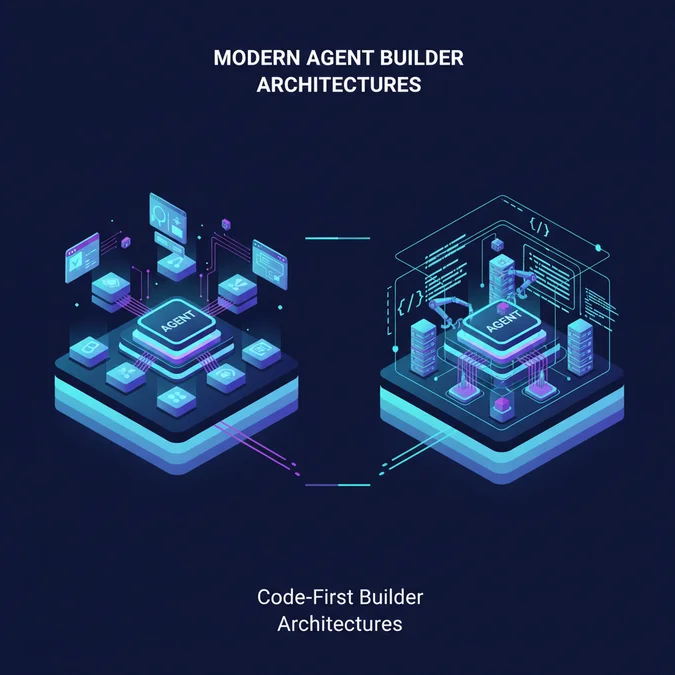
Choosing an orchestration pattern is the most critical decision for your agent system. The choice between centralized and decentralized patterns directly impacts latency, observability, and the ability to debug complex loops.
| Feature | Centralized Orchestrator | Decentralized (Peer-to-Peer) |
|---|---|---|
| Latency | Higher (hub-and-spoke) | Lower (direct routing) |
| Observability | High (single audit log) | Low (complex trace) |
| Scalability | Bottleneck at central node | Highly scalable |
| Complexity | Easier to manage | High maintenance |
In production, centralized orchestration is generally preferred for enterprise workflows where auditability and strict state control are non-negotiable. Decentralized systems, while efficient for massive scale, introduce significant challenges in tracking global state and preventing infinite recursion cycles.
Implementation Mechanics: Orchestrating Multiple Agents
Orchestrating multiple agents requires a robust message bus or state machine. Below is a production-grade Python snippet demonstrating a basic orchestrator pattern that handles task delegation between a researcher agent and a writer agent.
class AgentOrchestrator: def __init__(self): self.state = {} def execute_workflow(self, task): try: research_result = self.researcher.run(task) writer_result = self.writer.run(research_result) return writer_result except Exception as e: self.log_failure(e) return self.handle_recovery(task)Production Checklist:
- Implement circuit breakers on all LLM calls.
- Validate agent outputs against a JSON schema before passing to the next agent.
- Ensure timeout mechanisms are attached to every agent turn.
Production Reliability and Multi Agents at Scale
When deploying multi agents into production, the primary challenge is the emergence of non-deterministic loops. Without guardrails, two agents may enter a negotiation deadlock, consuming tokens indefinitely.
Failure Recovery Strategy:
- Recursion Limits: Hard-code the maximum number of turns per task.
- Deadlock Detection: Monitor for repeating state patterns in the history buffer.
- Cost Monitoring: Inject a cost-tracking middleware to terminate agents exceeding a token budget per request.
Callout: Observability is not optional. You must implement distributed tracing that follows a single request as it passes through multiple agents, noting latency and token consumption at every hop.
Frequently Asked Questions
What are the primary multiagent AI design principles for production systems?
Key design principles include modularity, statelessness at the agent level, idempotent messaging protocols, and robust error handling. Effective systems prioritize clear role separation, centralized orchestration for state tracking, and rigorous observability to monitor agent interactions and prevent infinite recursion in complex task chains.
How do you distinguish a standard agent system from multi agent AI architecture?
A standard agent system typically features a single autonomous entity executing tasks. In contrast, multi agent AI involves a collaborative ecosystem where specialized agents communicate, negotiate, and share state to solve multi-step problems that are too complex for a single model to manage effectively.
Why use multiple agents instead of a single powerful LLM?
Using multiple agents allows for task decomposition, enabling specialized models to handle specific domains. This modularity improves output quality, facilitates easier debugging, reduces latency by running sub-tasks in parallel, and optimizes costs by routing simple queries to smaller, cheaper models while reserving complex reasoning for high-end LLMs.
What are the biggest challenges when scaling multi agents?
Scaling multi agent systems introduces significant challenges including inter-agent communication overhead, state synchronization across distributed environments, increased token costs, and potential for emergent instability. Production environments require advanced observability tools and circuit breakers to manage latency and ensure agent loops remain within defined performance bounds.
Building resilient multi agent AI systems requires moving beyond simple prompt chains toward rigorous software engineering practices. By prioritizing observability, modularity, and strict orchestrator control, you can harness the power of agentic collaboration while maintaining production-level stability and cost-efficiency.
Start by auditing your current task workflows, identifying bottlenecks where a single model fails, and decomposing those steps into isolated, testable agent roles. The future of production AI lies in the orchestration of these specialized units, not the raw power of a single model.