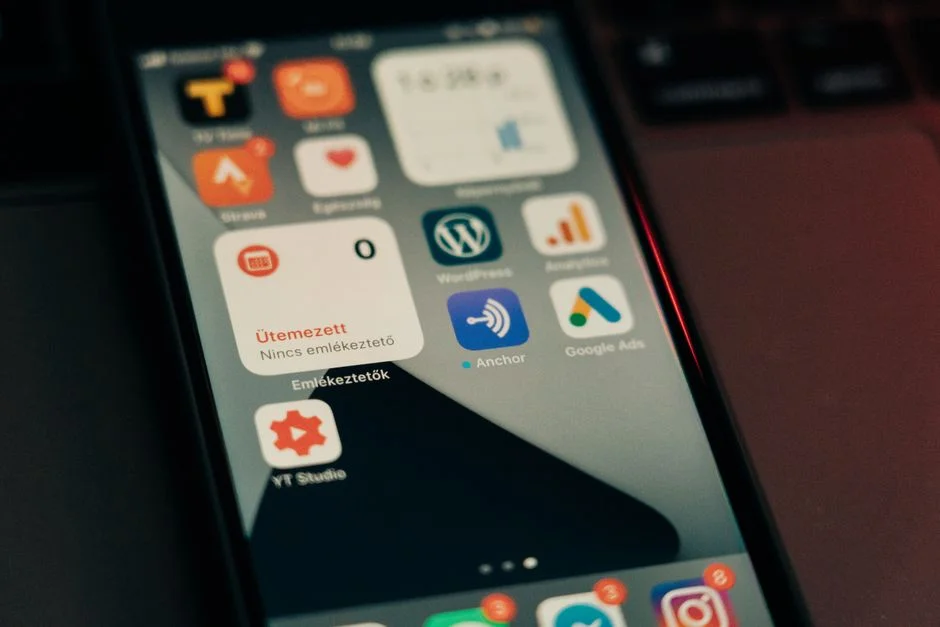

Laravel push notifications enable applications to send real-time alerts, messages, and updates to users, even when the application is not actively in use. This functionality, typically facilitated by services like Firebase Cloud Messaging (FCM) or Apple Push Notification service (APNs), bypasses traditional HTTP request-response cycles to deliver critical information directly to mobile devices or web browsers. The recent trend towards asynchronous, event-driven architectures has amplified the reliance on push notifications for critical user engagement, from transactional alerts to security warnings.
However, the convenience of direct, unsolicited communication also introduces a complex attack surface. From a security engineering perspective, every component involved, from the Laravel backend generating the notification to the third-party service delivering it and the client device receiving it, presents potential vulnerabilities. Ensuring the confidentiality, integrity, and availability of these notifications, alongside user privacy, demands a rigorous threat modeling approach and robust implementation practices throughout the entire notification lifecycle.
Understanding the Laravel Push Notification Ecosystem
Laravel push notifications leverage the framework’s robust notification system, abstracting the complexities of interacting with various third-party push notification services. At its core, a Laravel push notification is a message dispatched from your application, routed through a designated channel (like FCM for Android/Web or APNs for iOS), and delivered to a specific user’s device. This process is inherently asynchronous and relies on external infrastructure, which immediately flags several security considerations.
The Laravel framework provides a unified API for sending notifications across different channels. Developers define a “Notification” class, specifying how the message should be formatted for various delivery mechanisms. For push notifications, this typically involves defining a toFcm() or toApn() method within the notification class, which then constructs the payload according to the respective service’s specifications. This abstraction, while beneficial for development velocity, can inadvertently obscure the underlying security implications of each service and its unique payload requirements.
Core Components and Their Security Implications
- Laravel Application (Backend): This is the origin of the notification. It generates the content, determines the recipient, and dispatches the notification. Vulnerabilities here, such as SQL injection, Cross-Site Scripting (XSS), or insecure direct object references (IDOR), could lead to unauthorized notification sending, content manipulation, or recipient spoofing. Secure coding practices, input validation, and robust authentication/authorization are paramount.
- Notification Channels (e.g., FCM, APNs, Web Push): These are the third-party services responsible for delivering the notification to the client device. They act as intermediaries, requiring authentication credentials (API keys, service account files, certificates) from your Laravel application. Compromise of these credentials would grant an attacker the ability to send arbitrary notifications on behalf of your application, leading to spam, phishing, or even denial-of-service (DoS) attacks against your users.
- Client Devices (Mobile Apps, Web Browsers): The ultimate destination of the notification. The client application or browser must register for push notifications and receive a unique device token. This token is then sent to your Laravel backend and associated with a user. The security of this token, its storage, and its transmission are critical. If an attacker obtains a device token, they can impersonate the user to receive notifications or potentially send malicious notifications to that device if the backend is not properly secured.
- Database/Cache: Device tokens and user notification preferences are typically stored in your application’s database or a cache. Insecure storage (e.g., unencrypted tokens) or unauthorized access to this data can lead to token theft and subsequent notification abuse.
Each of these components represents a potential point of failure from a security perspective. A comprehensive threat model must consider the data flow and potential attack vectors at every stage. For instance, the use of queues in Laravel to dispatch notifications asynchronously introduces resilience but also means that notification payloads might reside in a queue system for a period, requiring secure queue configurations and potentially encryption at rest for sensitive data. The choice of push notification provider also directly impacts the security posture, as each service has its own security features, compliance certifications, and data handling policies that must be evaluated thoroughly.
Threat Modeling Push Notification Flows for Laravel Applications
Effective security for Laravel push notifications begins with a rigorous threat modeling exercise. This systematic approach identifies potential vulnerabilities, assesses their risk, and informs mitigation strategies before any code is written. Given the multi-component nature of push notifications, a thorough threat model must span the entire communication chain, from the Laravel server to the end-user device.
We can utilize frameworks like STRIDE (Spoofing, Tampering, Repudiation, Information Disclosure, Denial of Service, Elevation of Privilege) to categorize potential threats at each stage of the notification flow. This helps in systematically identifying weaknesses that might otherwise be overlooked in a purely functional analysis.
Key Threat Vectors and STRIDE Analysis:
- Spoofing: An attacker pretends to be the legitimate Laravel application to send notifications, or a user pretends to be another user to receive notifications. This could involve compromising API keys, forging device tokens, or exploiting weak authentication mechanisms.
- Tampering: An attacker modifies the content of a notification while it is in transit or at rest. This could lead to misinformation, phishing attempts, or unauthorized command execution if the notification payload contains executable instructions.
- Repudiation: The inability to prove who sent a notification or who received it. While less critical for general informational notifications, it becomes vital for security-sensitive alerts (e.g., password reset notifications) where non-repudiation can be an audit requirement.
- Information Disclosure: Sensitive data within the notification payload is exposed to unauthorized parties. This could happen due to unencrypted communication channels, insecure storage of notification data, or accidental logging of sensitive information.
- Denial of Service (DoS): An attacker floods the notification service or target devices with excessive notifications, causing service degradation, battery drain, or rendering legitimate notifications unusable. This could also involve exhausting rate limits on the push notification service.
- Elevation of Privilege: An attacker, by exploiting a vulnerability in the notification system, gains higher access rights or capabilities than intended. For example, a malicious notification payload might trigger an unintended action with elevated permissions on the client device.
For each identified threat, a security engineer must assess the likelihood and impact, then prioritize mitigation efforts. For instance, the compromise of a server-side API key for FCM or APNs has a high likelihood of enabling spoofing and DoS, with a severe impact on user trust and system integrity. Mitigation strategies would then focus on securing API keys, implementing robust access controls, and rate limiting.
Consider also the data stored related to notifications. Device tokens, user IDs, and notification preferences are critical assets. Any component handling these, including the database, cache, and internal APIs, must be subject to stringent access controls and encryption. Developers must treat device tokens as sensitive credentials; they should never be exposed client-side or transmitted over insecure channels. The entire notification processing pipeline, including Laravel queues and worker processes, needs to be secured against unauthorized access and payload inspection. This includes ensuring proper permissioning on queue services and encrypting queue payloads if they contain sensitive information at rest. A robust LLD Software Development process can ensure that security considerations are baked into the design from the ground up, rather than being an afterthought.
Secure Provider Selection and Credential Management
The choice of push notification provider significantly impacts the overall security posture of your Laravel application. Major providers like Firebase Cloud Messaging (FCM) and Apple Push Notification service (APNs) offer robust, scalable infrastructure, but their security is ultimately dependent on how your application interacts with them and how you manage their credentials. Web Push, while offering broad browser compatibility, introduces its own set of cryptographic challenges.
Evaluating Push Notification Providers:
- Firebase Cloud Messaging (FCM): Owned by Google, FCM is widely used for Android and web push notifications, and can also target iOS. It relies on a server key or service account JSON file for authentication. The security of FCM hinges on protecting these credentials. Google’s infrastructure provides strong transport security (TLS) for communication, but the integrity of the messages within their network and the privacy of metadata are critical considerations.
- Apple Push Notification service (APNs): Apple’s proprietary service for iOS, macOS, and watchOS devices. APNs historically used certificate-based authentication, but now strongly recommends token-based (JWT) authentication, which offers better security and management. Protecting the private key used to sign these JWTs is paramount. APNs enforces strict payload limits and provides end-to-end encryption for the payload between APNs and the device.
- Web Push (W3C Standard): This standard allows web applications to send push notifications to browsers. It uses the Push API and Notification API. The security model involves a Voluntary Application Server Identification (VAPID) key pair (public and private keys) for authentication and encryption. Critically, Web Push encrypts the notification payload end-to-end between your application server and the browser, preventing the push service from reading the content. This strong encryption is a significant security advantage but requires careful management of the VAPID private key.
Credential Management: A Critical Security Boundary
Regardless of the provider, the management of authentication credentials (API keys, service account files, certificates, private keys) is a top security priority. Compromised credentials directly lead to spoofing and unauthorized notification sending. In a Laravel application, these credentials should never be hardcoded or stored directly in version control.
- Environment Variables: Store sensitive credentials as environment variables (e.g., in
.envfiles for development, or managed secrets for production environments like AWS Secrets Manager, Azure Key Vault, or HashiCorp Vault). Laravel’sconfig()helper provides a secure way to access these. - Strict Access Control: Ensure that only authorized personnel and deployment pipelines have access to these environment variables or secret management systems. Implement least privilege access.
- Rotation: Regularly rotate API keys and certificates, especially if there is any suspicion of compromise. Token-based authentication (like APNs JWTs) simplifies rotation compared to certificates.
- Principle of Least Privilege: If a service account is used (e.g., with FCM), ensure it has only the minimum necessary permissions to send notifications and nothing more. Avoid granting broad administrative access.
For Web Push, the VAPID private key is used to sign requests and encrypt payloads. This key must be treated with the same level of protection as an SSL/TLS private key. It should be generated securely, stored in a secure secrets manager, and never exposed to client-side code. Any lapse in VAPID private key security would allow an attacker to send encrypted notifications that appear to originate from your application, undermining trust and potentially facilitating sophisticated phishing attacks. The secure configuration of Laravel Backpack Settings can also play a role in managing administrative access to notification configurations, further hardening the application’s security perimeter.
Secure Implementation Practices for Laravel Notification Dispatch
Implementing push notifications securely within Laravel requires attention to detail at every stage of the dispatch process. Beyond simply sending a message, developers must consider payload construction, recipient validation, and asynchronous processing to mitigate risks like data tampering, unauthorized access, and denial of service.
Payload Construction and Validation:
The notification payload is the data sent to the user’s device. This data can be sensitive, and its integrity is paramount. Laravel’s notification system provides methods to build these payloads. It is critical to:
- Sanitize and Validate All Input: Any user-generated or external data included in the notification payload must be thoroughly sanitized and validated to prevent injection attacks or malformed data. For example, if a notification includes a user’s name, ensure it’s properly escaped.
- Avoid Sensitive Data in Direct Payloads: Where possible, avoid sending highly sensitive or personally identifiable information (PII) directly in the notification payload. Instead, send a unique identifier and instruct the client application to fetch the sensitive data securely from your API once the notification is received and the user interacts with it. This reduces the risk of data exposure if the notification is intercepted or logged insecurely.
- Minimize Payload Size: Large payloads can consume more resources, increase latency, and potentially exceed service limits. From a security perspective, smaller payloads reduce the attack surface for tampering and information disclosure.
Here’s an example of a secure notification class, emphasizing input validation and minimal sensitive data:
<?phpnamespace App\Notifications;use Illuminate\Bus\Queueable;use Illuminate\Contracts\Queue\ShouldQueue;use Illuminate\Notifications\Notification;use NotificationChannels\Fcm\FcmChannel;use NotificationChannels\Fcm\FcmMessage;use NotificationChannels\Fcm\Resources\AndroidConfig;use NotificationChannels\Fcm\Resources\AndroidFcmOptions;use NotificationChannels\Fcm\Resources\ApnConfig;use NotificationChannels\Fcm\Resources\ApnFcmOptions;use NotificationChannels\Fcm\Resources\WebpushConfig;use NotificationChannels\Fcm\Resources\WebpushFcmOptions;class AccountActivityAlert extends Notification implements ShouldQueue{ use Queueable; protected $userId; protected $activityType; protected $transactionId; public function __construct(int $userId, string $activityType, ?string $transactionId = null) { // Validate inputs immediately to prevent malformed data if (!in_array($activityType, ['login_success', 'login_failure', 'password_change', 'transaction_alert'])) { throw new \InvalidArgumentException('Invalid activity type provided.'); } $this->userId = $userId; $this->activityType = $activityType; $this->transactionId = $transactionId; } public function via($notifiable) { return [FcmChannel::class]; // Or other channels like ['apn', 'webpush'] } public function toFcm($notifiable) { $title = 'Account Activity Alert'; $body = ''; $data = [ 'user_id' => (string) $this->userId, 'activity_type' => $this->activityType ]; // Conditionally add sensitive data via ID, not directly if ($this->transactionId) { $body = "New {$this->activityType} detected. Details available in app."; $data['transaction_id'] = $this->transactionId; // Send ID, not full details } else { $body = "Your account had a {$this->activityType} event."; } return FcmMessage::create() ->setNotification( \NotificationChannels\Fcm\Resources\Notification::create() ->setTitle($title) ->setBody($body) ) ->setData($data) // Use data payload for app-specific info, not notification display ->setAndroid( AndroidConfig::create() ->setFcmOptions(AndroidFcmOptions::create()->setAnalyticsLabel('account_activity')) ) ->setApn( ApnConfig::create() ->setFcmOptions(ApnFcmOptions::create()->setAnalyticsLabel('account_activity')) ) ->setWebpush( WebpushConfig::create() ->setFcmOptions(WebpushFcmOptions::create()->setAnalyticsLabel('account_activity')) ); }}Recipient Validation and Authorization:
Before dispatching any notification, your Laravel application must rigorously validate that the intended recipient is legitimate and authorized to receive that specific message. This involves:
- Device Token Association: Ensure that the device token used for sending is correctly associated with the authenticated user and has not been revoked or expired. Stale tokens should be removed from your database.
- User Preferences: Respect user notification preferences. If a user has opted out of certain notification types, your system must honor that preference. This is not just a UX concern but also a privacy and compliance requirement.
- Authorization Checks: For sensitive notifications, perform granular authorization checks. For instance, only the owner of an account should receive a password change alert for that account. This prevents IDOR vulnerabilities where an attacker could manipulate a request to send notifications to other users.
Laravel’s Notifiable trait and its routeNotificationFor() methods are powerful tools for managing recipient routing securely. By implementing custom logic within these methods, you can enforce strict authorization rules before a notification ever leaves your application. For example, ensuring that the notifiable instance truly represents the intended recipient and that its associated device tokens are valid and active.
Data Privacy and Compliance in Push Notification Workflows
The nature of push notifications, which involve transmitting data across networks and storing device-specific identifiers, places them squarely within the scope of data privacy regulations like GDPR, CCPA, and similar frameworks. A security engineer must ensure that the entire push notification workflow adheres to these legal and ethical obligations to protect user data and avoid severe penalties.
Consent Management:
A cornerstone of data privacy is informed consent. Users must explicitly opt-in to receive push notifications. This consent should be granular, allowing users to choose which types of notifications they wish to receive. Your Laravel application needs a robust mechanism to record and manage these consent preferences.
- Clear Opt-in Process: The user interface for requesting push notification permission must be clear, transparent, and provide sufficient information about what types of notifications will be sent.
- Granular Preferences: Offer users control over different notification categories (e.g., promotional, transactional, security alerts). This can be managed through a user settings panel in your Laravel application, allowing users to toggle preferences.
- Revocation of Consent: Users must be able to easily revoke their consent at any time. When consent is revoked, your application must immediately cease sending those notifications and, ideally, remove or anonymize associated device tokens.
Data Minimization and Anonymization:
The principle of data minimization dictates that you should only collect and process the data strictly necessary for the intended purpose. For push notifications, this means:
- Device Tokens: While device tokens are necessary for targeting, they should be treated as sensitive identifiers. Store them securely, link them only to anonymized user IDs where possible, and delete them when they become stale or a user opts out.
- Payload Content: As discussed, avoid including PII or highly sensitive data directly in notification payloads. If such data is necessary, consider sending a reference ID instead and requiring the client to authenticate and fetch the full details via a secure API endpoint.
- Analytics Data: If using analytics features of push notification services, ensure that any collected data is anonymized or aggregated to prevent re-identification of individuals.
Data Storage and Retention:
Device tokens, notification preferences, and potentially notification logs are stored by your Laravel application. These data points fall under data privacy regulations.
- Secure Storage: All data related to push notifications, especially device tokens, must be stored in encrypted databases with strong access controls. Consider encryption at rest for database columns containing sensitive identifiers.
- Retention Policies: Define clear data retention policies. Device tokens should be deleted if they become invalid or if a user opts out. Notification logs should only be retained for as long as necessary for operational or auditing purposes, then securely purged.
- Data Processing Agreements (DPAs): If using third-party push notification services (FCM, APNs), ensure you have appropriate Data Processing Agreements (DPAs) in place with these providers. These agreements outline their responsibilities for data protection and compliance.
Adhering to these privacy principles is not merely a compliance checkbox; it is a fundamental aspect of building user trust and maintaining a secure application. Failure to do so can lead to legal ramifications, reputational damage, and erosion of user confidence. Integrating privacy by design into your notification architecture, much like a robust Laravel Livewire Volt deployment, ensures that security and privacy are considered from the initial design phase.
Authentication and Authorization for Notification Endpoints
Securing the mechanisms by which your Laravel application sends and manages push notifications is paramount. This involves rigorous authentication for your application with the push service provider and robust authorization checks to ensure that only legitimate, intended notifications are dispatched to the correct recipients. Weaknesses in these areas are prime targets for spoofing and unauthorized notification attacks.
Application Authentication with Push Services:
Your Laravel application must authenticate itself to push notification services (FCM, APNs) to prove its identity and gain permission to send messages. This typically involves:
- API Keys/Server Keys: For FCM, a server key is commonly used. This key grants your application the ability to send messages. It must be kept strictly confidential on your server, never exposed client-side.
- Service Account Files: FCM also supports authentication using service account JSON files, which provide a more granular and secure way to authenticate server-to-server communications. These files contain private keys and credentials and must be protected with the highest level of security, similar to other sensitive server-side secrets.
- APNs Certificates/Tokens: APNs uses either TLS certificates (the older method) or token-based authentication (the recommended modern approach). Token-based authentication involves signing a JSON Web Token (JWT) with a private key. This private key is extremely sensitive and must be protected, as its compromise allows an attacker to forge tokens and send notifications on behalf of your application.
The core principle here is that these credentials represent your application’s identity to the push service. Their compromise is equivalent to an attacker gaining full control over your notification sending capabilities. Therefore, they must be stored securely (e.g., in environment variables, secret managers) and accessed only by the necessary server-side processes. Regular rotation of these credentials is also a recommended security practice.
Recipient Authorization within Laravel:
Beyond authenticating with the push service, your Laravel application must authorize which users can receive which notifications. This prevents attackers from:
- Spoofing Recipients: Sending notifications meant for User A to User B.
- Spamming Users: Sending excessive or irrelevant notifications to users.
- Triggering Sensitive Actions: Sending notifications that could trick users into performing sensitive actions (e.g., clicking a malicious link in a password reset notification).
Implementation considerations:
- Ownership Verification: Before dispatching a notification, always verify that the authenticated user initiating the action is indeed the owner of the resource or the intended recipient of the notification. For example, if a user requests a password reset, ensure the notification is sent only to the email/device associated with that user’s account after proper identity verification.
- Granular Permissions: Use Laravel’s authorization features (Gates or Policies) to control which notification types can be sent under what conditions. For instance, an administrator might have permission to send broadcast notifications, while a regular user can only trigger notifications related to their own account.
- Device Token Management: Maintain a secure mapping between authenticated users and their valid device tokens. When a user logs out, their device token should be invalidated or unlinked from their account. When a new device token is issued, it should replace the old one, ensuring that notifications are not sent to stale or compromised tokens.
- Rate Limiting: Implement server-side rate limiting on notification dispatch endpoints to prevent a single user or an attacker from overwhelming the system with notification requests. This is crucial for preventing DoS attacks and managing resource consumption. Laravel’s built-in rate limiting features can be adapted for this purpose.
By enforcing strong authentication for push services and robust authorization for recipients, you create a layered defense that significantly reduces the risk of malicious notification activity. This proactive security stance is vital for maintaining user trust and the integrity of your communication channels.
Payload Security: Encryption and Integrity for Notifications
The content of a push notification, the payload, can range from simple informational messages to critical security alerts or even data that triggers specific actions within a client application. Ensuring the confidentiality and integrity of this payload is a significant security challenge, especially when relying on third-party services.
Confidentiality: Protecting Sensitive Information
While most push notification services (FCM, APNs) encrypt the communication channel (TLS/SSL) between their servers and the client device, the content of the notification payload itself may not always be end-to-end encrypted from your Laravel application to the end-user’s device in a way that prevents the push service provider from potentially reading it. This is a critical distinction.
- Web Push End-to-End Encryption: The Web Push standard is unique in that it mandates end-to-end encryption of the notification payload. Using VAPID, your Laravel application encrypts the payload with the user’s public key (obtained during subscription) before sending it to the push service. Only the user’s browser, possessing the corresponding private key, can decrypt the message. This is the strongest form of confidentiality for push notifications.
- FCM/APNs Payload Obfuscation/Encryption: For FCM and APNs, if the notification contains highly sensitive data that absolutely cannot be exposed to the push service provider, you must implement your own application-level encryption. This means:
- Encrypting the sensitive part of the payload within your Laravel application using a symmetric key.
- Sending the encrypted blob and a key identifier (or other necessary metadata) within the standard notification payload.
- The client application, upon receiving the notification, uses its own secure key management to decrypt the sensitive portion.
This application-level encryption adds complexity but provides true end-to-end confidentiality. The choice of encryption algorithm (e.g., AES-256 GCM) and secure key management (e.g., deriving keys from user credentials, using secure enclaves on devices) are paramount for this approach.
Integrity: Preventing Tampering
Beyond confidentiality, ensuring that the notification payload has not been tampered with in transit is equally important. An attacker modifying a notification could change a link from a legitimate domain to a phishing site, or alter a transaction amount.
- Digital Signatures: While push notification services typically handle message authentication to prevent direct tampering by external parties on their network, for critical notifications, your Laravel application can implement its own digital signing mechanism. This involves:
- Generating a hash of the notification payload.
- Signing the hash with a private key known only to your Laravel application.
- Including the signature in the notification payload.
- The client application verifies the signature using the corresponding public key.
- HMAC (Hash-based Message Authentication Code): A simpler alternative to digital signatures for integrity checking. Your Laravel application and the client share a secret key. The server computes an HMAC of the payload and sends it. The client recomputes the HMAC and compares it, ensuring the message hasn’t been altered. This requires secure secret key distribution to clients.
The decision to implement application-level encryption or integrity checks depends heavily on the sensitivity of the data and the potential impact of compromise. For standard informational notifications, the transport-level security provided by FCM/APNs and the end-to-end encryption of Web Push are often sufficient. However, for financial transactions, health data, or security-critical alerts, these advanced measures become a necessity. Always prioritize security, especially when dealing with data that could lead to financial loss or privacy breaches.
Preventing Notification Abuse, Spam, and Denial of Service
Push notifications, by their very nature, can be a powerful tool for engagement, but they are also susceptible to various forms of abuse, including spamming users, conducting phishing attacks, and launching denial-of-service (DoS) campaigns. A robust security strategy for Laravel push notifications must include mechanisms to prevent these abuses.
Rate Limiting Notification Dispatches:
One of the most effective defenses against spam and DoS is server-side rate limiting. Your Laravel application should impose limits on how many notifications a single user, or even the entire application, can send or trigger within a given timeframe.
- User-Specific Rate Limits: Prevent individual users from triggering an excessive number of notifications. For example, limit password reset notifications to one per minute per user. Laravel’s built-in rate limiting can be adapted using keys based on user ID or IP address.
- Global Rate Limits: Implement global rate limits for certain notification types to prevent an attacker from consuming all resources of your push notification service quota or overwhelming your backend.
- Queue-Based Throttling: When using Laravel queues for notification dispatch, implement queue-level throttling to ensure that workers don’t flood the push notification service APIs, which often have their own rate limits. This prevents your application from being temporarily blocked by the provider.
Example of Laravel rate limiting for notifications:
Route::middleware('throttle:5,1')->group(function () { Route::post('/send-alert', [NotificationController::class, 'sendSecurityAlert']);});// In app/Http/Controllers/NotificationController.php:public function sendSecurityAlert(Request $request){ // Validate request... $user = Auth::user(); if (RateLimiter::tooManyAttempts('send-alert:' . $user->id, $perMinute = 1)) { return response()->json(['message' => 'Too many notification attempts. Please wait.'], 429); } RateLimiter::hit('send-alert:' . $user->id); // Dispatch notification... $user->notify(new SecurityAlert($request->message)); return response()->json(['message' => 'Security alert sent.']);}Anti-Phishing and Content Integrity:
Phishing attacks delivered via push notifications are a growing concern. Attackers can leverage compromised credentials or exploit vulnerabilities to send notifications that mimic legitimate alerts, tricking users into revealing sensitive information.
- Consistent Branding: Ensure all legitimate notifications maintain consistent branding, sender identity, and tone. Deviations should raise suspicion.
- Avoid Direct Links to Sensitive Actions: For critical actions like password resets or account changes, avoid sending direct, clickable links in the notification. Instead, direct the user to open the application and navigate to the relevant section, where they can then authenticate securely.
- Educate Users: Regularly educate your users about how to identify legitimate notifications, what information your application will never ask for via push, and what to do if they suspect a phishing attempt.
Device Token Management and Revocation:
Stale or compromised device tokens are a significant security risk. An attacker with a valid, active token can receive notifications intended for the legitimate user.
- Token Expiration and Refresh: Implement mechanisms to regularly refresh device tokens and invalidate old ones. Push notification services often provide feedback on invalid tokens; your application should process this feedback to clean up your database.
- Explicit Token Revocation: When a user logs out, changes their password, or reports a lost device, explicitly revoke all associated device tokens from your database. This ensures that notifications are not delivered to potentially compromised endpoints.
- Secure Token Storage: Store device tokens encrypted at rest in your database and ensure strict access controls on the table where they reside.
By integrating these preventative measures, your Laravel application can significantly reduce the risk of push notification abuse, protecting both your users and your service reputation. A proactive approach to these threats is essential in maintaining a secure and trustworthy communication channel.
Monitoring, Logging, and Incident Response for Notification Systems
Even with the most robust preventative measures, security incidents can occur. A mature security posture for Laravel push notifications includes comprehensive monitoring, logging, and a well-defined incident response plan to detect, analyze, and mitigate potential breaches or abuses quickly. This is where security operations meet real-time communication.
Comprehensive Logging:
Effective logging is the foundation of any incident detection and forensic analysis. Your Laravel application should log key events related to push notification dispatch, but with careful consideration for data privacy.
- Dispatch Attempts: Log when a notification is attempted to be sent, including the notification type, the intended recipient (e.g., user ID, not device token directly unless necessary for debugging), and the outcome (success/failure).
- Provider Responses: Log responses from FCM, APNs, or Web Push services. These responses often contain valuable information about delivery status, invalid tokens, or errors that could indicate an issue.
- Error Conditions: Log all errors related to notification processing, such as failed queue jobs, authentication failures with push services, or database errors during token lookup.
- No Sensitive Data in Logs: Critically, logs should never contain sensitive notification payload content, device tokens in plaintext, or other PII. Only log identifiers and metadata necessary for auditing and debugging. Mask or redact sensitive fields.
Example of secure logging in Laravel:
use Illuminate\Support\Facades\Log;class AccountActivityAlert extends Notification implements ShouldQueue{ // ... existing code ... public function handleNotificationSent(string $channel, array $response) { Log::info('Notification sent', [ 'user_id' => $this->userId, 'activity_type' => $this->activityType, 'channel' => $channel, 'response_status' => $response['status'] ?? 'unknown', 'response_message' => $response['message'] ?? 'N/A' // Avoid logging full sensitive response ]); } public function handleNotificationFailed(string $channel, \Throwable $exception) { Log::error('Notification failed', [ 'user_id' => $this->userId, 'activity_type' => $this->activityType, 'channel' => $channel, 'exception_message' => $exception->getMessage(), 'exception_code' => $exception->getCode() ]); }}Real-time Monitoring and Alerting:
Beyond logging, active monitoring is crucial for detecting anomalous behavior in real-time. This involves defining key metrics and setting up alerts for deviations.
- Notification Volume: Monitor the rate of notifications dispatched. Sudden spikes could indicate a DoS attempt, a misconfigured system, or a compromised account.
- Error Rates: Track the percentage of failed notifications. A sudden increase in errors could point to authentication issues with the push service, invalid tokens, or a problem with your Laravel application.
- Latency: Monitor the end-to-end latency of notification delivery. High latency could indicate network issues, provider problems, or an overloaded system.
- Credential Access: Monitor access to your secret management system where push service credentials are stored. Any unauthorized access attempts should trigger immediate alerts.
Integrate your Laravel application’s logs and metrics with a centralized monitoring system (e.g., Prometheus, Grafana, ELK stack, Datadog) to provide a unified view and enable automated alerting based on predefined thresholds.
Incident Response Plan:
A clear, documented incident response plan is essential for minimizing the impact of a security incident involving push notifications. This plan should outline:
- Detection: How alerts are triggered and who is responsible for initial triage.
- Analysis: Steps to investigate the scope and nature of the incident (e.g., reviewing logs, checking system status, confirming credential compromise).
- Containment: Actions to stop the abuse (e.g., revoking API keys, invalidating device tokens, temporarily disabling notification types, blocking malicious IPs).
- Eradication: Fixing the root cause (e.g., patching vulnerabilities, reconfiguring access controls).
- Recovery: Restoring normal operations and verifying system integrity.
- Post-Incident Review: Learning from the incident to improve future security posture.
Regularly test your incident response plan with simulated scenarios to ensure your team is prepared. The ability to quickly respond to a compromised notification system can prevent widespread user distrust and significant reputational damage.
Vulnerability Management and Secure Development Lifecycle (SDLC)
Integrating security into the entire Software Development Lifecycle (SDLC) is crucial for building and maintaining secure Laravel push notification features. Vulnerability management is not a one-time audit but a continuous process of identifying, assessing, and remediating security weaknesses from design through deployment and operation. For a security engineer, this means embedding security controls and checks at every stage.
Secure Design and Architecture:
The earliest stages of feature development are the most cost-effective for addressing security. When designing push notification features:
- Threat Modeling: As discussed, conduct thorough threat modeling early to identify potential attack vectors specific to your notification flows.
- Security Requirements: Define explicit security requirements for notification features (e.g.,
Advanced Security Considerations: Token Revocation and Multi-Factor Auth
Beyond the foundational security practices, certain advanced scenarios in Laravel push notification deployments demand even more stringent security measures. These often revolve around managing the lifecycle of access tokens, ensuring robust user identity verification, and handling complex revocation scenarios to prevent persistent threats.
Robust Device Token Revocation:
Device tokens are the key to targeting specific user devices. Their secure management, especially revocation, is paramount. A compromised or stale token can allow an attacker to receive notifications intended for the legitimate user, or, if your system permits, even trigger actions.
- Explicit Revocation Mechanisms: Implement API endpoints in your Laravel application that allow users to explicitly revoke device tokens. This is crucial for scenarios like:
- Lost/Stolen Devices: A user should be able to remotely de-authorize devices.
- Password Changes: A password change should ideally trigger a revocation of all active tokens, forcing re-authentication on all devices, especially for security-critical applications.
- Account Deletion: All associated tokens must be purged upon account deletion.
- Automatic Stale Token Cleanup: Push notification services provide feedback on invalid or expired tokens. Your Laravel application should regularly process this feedback (e.g., through a queue listener that processes failed notification jobs) and automatically remove these tokens from your database. This minimizes the attack surface by ensuring only active, valid tokens are stored.
- Session Management Integration: Link device tokens to user session management. If a user’s session is invalidated (e.g., due to inactivity, suspicious activity, or explicit logout), consider invalidating associated device tokens.
// Example: Revoking all device tokens for a user after a password changepublic function revokeAllDeviceTokens(User $user){ // Assuming 'device_tokens' is a relationship on the User model $user->deviceTokens()->delete(); // Soft delete or hard delete as per policy // Optionally, send a silent notification to devices to trigger client-side logout // This depends on client app implementation}Multi-Factor Authentication (MFA) Integration with Notifications:
Push notifications can play a critical role in enhancing MFA, but this integration must be handled with extreme care to avoid introducing new vulnerabilities.
- Push-Based MFA: Instead of SMS or email codes, some MFA systems send a push notification to a registered device, asking the user to approve or deny a login attempt. This provides a better user experience but requires the notification itself to be highly secure.
- Payload Integrity: The MFA notification payload must be signed or encrypted to guarantee its authenticity and prevent tampering. An attacker could otherwise modify the request details (e.g., location, time) shown to the user.
- Device Binding: The push notification for MFA must only be sent to a trusted, securely bound device. If an attacker can register their device as a trusted MFA device, the entire MFA scheme is compromised.
- Timeout and Replay Protection: MFA requests delivered via push should have strict time limits for approval and mechanisms to prevent replay attacks (where an attacker resubmits an old, approved MFA request).
- Fallback Mechanisms: What happens if the push notification for MFA fails or the user’s device is offline? Secure fallback mechanisms (e.g., TOTP, SMS) are needed, but these must also be secured against their respective attack vectors.
Secure API Design for Client-Server Interaction:
The APIs that your client applications use to register device tokens, manage notification preferences, and potentially fetch notification content are critical. They must be secured with:
- Strict Authentication: All API endpoints related to notification management must require strong user authentication (e.g., OAuth 2.0, JWTs).
- Authorization: Ensure that a user can only manage their own device tokens and preferences, preventing IDORs.
- Input Validation: Rigorously validate all input, especially device tokens, to prevent injection attacks or malformed data leading to system instability.
- HTTPS Everywhere: All communication between client applications and your Laravel backend must use HTTPS/TLS to protect data in transit.
By implementing these advanced security measures, your Laravel push notification system can withstand more sophisticated attacks, providing a higher level of assurance for user data and system integrity.
Case Study: Preventing a Push Notification Phishing Campaign
Consider a hypothetical scenario where a sophisticated attacker targets a Laravel-based banking application that heavily relies on push notifications for transaction alerts and MFA approvals. The attacker’s goal is to trick users into revealing their credentials or approving fraudulent transactions.
The Attack Vector:
The attacker discovered a vulnerability in the application’s legacy API endpoint used for device token registration, allowing them to register a malicious device token for an arbitrary user ID without proper re-authentication. They then used this compromised endpoint to register their own device token against a large number of high-value user accounts. Subsequently, they leveraged a weak link in the internal logging system, which exposed a low-privilege API key for the FCM service. With this API key, the attacker could send arbitrary notifications.
The Phishing Campaign:
The attacker initiated a coordinated phishing campaign. They sent push notifications to the compromised user accounts, designed to look identical to legitimate bank alerts:
- “Urgent: Suspicious activity detected on your account. Verify immediately: [malicious_link]”
- “Your account has been debited $500. Not you? Review transaction: [malicious_link]”
These notifications were indistinguishable from legitimate ones to the end-user because the attacker had gained access to a valid FCM API key and could spoof the sender. The malicious links led to well-crafted phishing sites designed to capture banking credentials or trick users into approving fraudulent transactions via a fake MFA prompt.
Detection and Response:
The incident was detected due to several factors:
- Anomaly Detection: The bank’s monitoring system, integrated with Laravel’s notification logs, flagged an unusual spike in notification failures. The attacker’s device tokens, while registered, were not always active or correctly formatted for all targeted users, leading to a higher-than-normal error rate reported by FCM.
- User Reports: Several vigilant users reported suspicious notifications that contained links to unfamiliar domains, even though the notifications appeared to come from the official bank app.
- Internal API Key Monitoring: Access logs for the FCM API key showed unusual activity from an unexpected IP address, indicating potential compromise.
The incident response team immediately:
- Contained the Threat: The compromised FCM API key was immediately revoked. The vulnerable device token registration endpoint was temporarily disabled and then patched.
- Analyzed the Impact: Logs were reviewed to identify all affected user accounts and the extent of the phishing campaign. Users who clicked the links were identified and contacted directly.
- Communicated with Users: A public statement was issued, and affected users were individually notified about the phishing attempt, advised to change their passwords, and warned about future suspicious communications.
- Remediated Root Causes: The device token registration API was hardened with multi-factor authentication and stricter authorization checks. The internal logging system’s access controls were reviewed and tightened. The process for API key rotation was enhanced.
- Learned and Improved: A post-incident review led to the implementation of more rigorous code review practices, mandatory threat modeling for all new features, and enhanced security training for developers.
This case study underscores the critical importance of a multi-layered security approach: secure API design, robust credential management, comprehensive monitoring, and a rapid incident response plan are all essential to defending against sophisticated attacks targeting push notification systems.
Integrating Push Notifications with Laravel Queue and Cache Security
Laravel’s queue system is a fundamental component for handling asynchronous tasks, including dispatching push notifications. This decoupling of notification sending from the main request-response cycle improves performance and user experience. However, it also introduces additional security considerations related to data persistence and processing within the queue and associated caching mechanisms.
Queue Security Considerations:
When a notification is dispatched via a queue, its payload (which includes recipient information and the message content) is temporarily stored in the queue driver (e.g., Redis, database, SQS) until a worker processes it. This temporary storage presents potential security risks:
- Data at Rest: If the notification payload contains sensitive information, it is at rest in the queue. For highly sensitive data, this might necessitate encryption of the queue payload itself. While queue drivers like SQS offer encryption at rest, for self-managed Redis or database queues, you might need to implement application-level encryption for the job payload before pushing it to the queue.
- Access Control to Queue Infrastructure: The queue infrastructure (e.g., Redis server, database, AWS SQS) must have strict access controls. Unauthorized access to the queue could allow an attacker to inspect, modify, or delete pending notification jobs, leading to information disclosure, tampering, or denial of service.
- Worker Process Security: The Laravel queue workers that process notification jobs run as background processes. They must run with the principle of least privilege, with limited access to system resources. Any vulnerabilities in the worker code could be exploited to compromise the server. Ensure worker processes are isolated and monitored.
- Poison Pill Messages: Maliciously crafted queue jobs could cause workers to crash or enter infinite loops, leading to a denial of service. Implement robust error handling and retry mechanisms with appropriate failure thresholds to move problematic jobs to a failed jobs table for manual inspection, rather than allowing them to repeatedly crash workers.
Example of pushing an encrypted job to the queue (conceptual):
// In your Notification class, before dispatching via queue:use Illuminate\Support\Facades\Crypt;// ...public function toArray($notifiable){ $sensitiveData = [ 'transaction_amount' => '100.00', 'account_number' => '****1234' ]; return [ 'user_id' => $notifiable->id, 'encrypted_data' => Crypt::encryptString(json_encode($sensitiveData)), 'message_summary' => 'Your recent transaction', ];}// In your Job/Notification processing logic:public function handle(){ // ... $decryptedData = json_decode(Crypt::decryptString($this->job->encrypted_data), true); // Process decrypted data...}Cache Security for Device Tokens and Preferences:
Caching is often used to store frequently accessed data like device tokens or user notification preferences to improve performance. However, caching sensitive data introduces its own set of security risks:
- Data at Rest in Cache: If device tokens or other sensitive notification-related data are stored in a cache (e.g., Redis, Memcached), ensure the cache itself is secured. This includes network isolation, strong authentication, and potentially encryption of data within the cache if the cache driver supports it or if you implement application-level encryption before caching.
- Cache Invalidation: Implement robust cache invalidation strategies. If a device token is revoked or a user changes their notification preferences, ensure the cached data is immediately updated or removed to prevent stale, insecure data from being served.
- Cache Poisoning: Prevent cache poisoning attacks where an attacker could inject malicious data into the cache, leading to incorrect or compromised notification targeting. This requires strict input validation before data is ever written to the cache.
The security of your Laravel queue and cache infrastructure directly impacts the overall security of your push notification system. Treating these components as critical data stores, subject to the same security scrutiny as your primary database, is essential for a robust defense.
Auditing and Compliance Reporting for Notification Activities
Beyond real-time monitoring and incident response, a comprehensive security strategy for Laravel push notifications includes robust auditing and compliance reporting. This ensures accountability, provides evidence for regulatory adherence, and aids in post-incident forensic analysis. For a security engineer, the ability to reconstruct events and prove compliance is as important as preventing incidents.
Detailed Audit Trails:
Every significant action related to push notifications should be recorded in an immutable, tamper-proof audit trail. This includes:
- Notification Dispatch Events: Log the request to send a notification, including the initiating user (if applicable), timestamp, notification type, and the unique ID of the target recipient (e.g., user ID, not the raw device token).
- Device Token Management: Record events such as device token registration, update, and revocation, including who performed the action and from where.
- Configuration Changes: Log any changes to push notification settings, API keys, or service account configurations.
- User Preference Changes: Record when a user opts in or out of specific notification types.
- Error and Failure Logs: As discussed in the monitoring section, detailed error logs are crucial for audit trails, especially for failed delivery attempts that might indicate a security issue.
These audit logs should be stored securely, ideally in a centralized, dedicated logging system that enforces immutability and restricted access. They should be retained for a period compliant with relevant regulations (e.g., GDPR, CCPA, HIPAA).
Compliance Reporting:
Many data privacy regulations require organizations to demonstrate compliance, which includes how personal data is processed, stored, and protected, even within push notification systems. Your audit trails become the primary evidence for these reports.
- Consent Records: Be able to demonstrate that explicit consent was obtained for sending notifications, and that user preferences were respected. This involves linking notification events back to consent records.
- Data Minimization Justification: Provide evidence that only necessary data is collected and processed for push notifications.
- Data Breach Notification: In the event of a breach involving notification data (e.g., compromised device tokens), your audit logs will be critical for determining the scope of the breach and fulfilling notification obligations to affected users and regulatory bodies.
- Access Control Audits: Regularly audit who has access to sensitive notification configurations, API keys, and notification-related data in your database.
Regular Security Audits and Penetration Testing:
Beyond internal logging, external validation through security audits and penetration testing is vital. These activities can uncover vulnerabilities that internal reviews might miss.
- Code Audits: Conduct regular security code reviews specifically focusing on notification-related code, looking for common vulnerabilities like injection flaws, insecure direct object references, and weak credential management.
- Penetration Testing: Engage third-party security experts to perform penetration tests against your Laravel application, including the push notification endpoints and the associated APIs. Testers should attempt to exploit vulnerabilities to send unauthorized notifications, tamper with payloads, or gain access to sensitive notification data.
- Third-Party Provider Audits: While you trust providers like FCM and APNs, understand their security certifications and compliance reports (e.g., SOC 2, ISO 27001) to ensure they meet your organization’s security standards.
By establishing robust auditing and compliance reporting mechanisms, your Laravel application not only meets regulatory requirements but also builds a foundation of transparency and accountability, reinforcing user trust in your secure communication channels.
Future-Proofing Push Notification Security: Emerging Threats and Best Practices
The landscape of cyber threats is constantly evolving, and push notification systems are not immune. As a security engineer, it is imperative to not only address current vulnerabilities but also to anticipate future threats and adapt security practices accordingly. Future-proofing involves staying informed about emerging attack vectors, adopting new security standards, and continuously refining your defense mechanisms.
Emerging Threats:
- AI-Powered Phishing: Advanced AI models can generate highly convincing, personalized phishing messages, making it harder for users to distinguish legitimate notifications from malicious ones. This emphasizes the need for stricter authentication and integrity checks on notification payloads.
- Supply Chain Attacks: A compromise in a third-party library or a dependency used by your Laravel application could introduce vulnerabilities into your notification dispatch logic, or even steal your push service credentials. Rigorous dependency scanning and software composition analysis are becoming critical.
- Zero-Day Exploits in Push Service APIs: While rare, vulnerabilities in the push notification service providers themselves could be exploited. Diversifying providers or implementing application-level encryption for critical data can mitigate this risk.
- Deepfake Notifications: As multimedia notifications become more common, the threat of deepfake audio or video within notifications could emerge, making it even harder for users to verify authenticity.
Evolving Best Practices:
- Decentralized Identity and Web3 Technologies: Future authentication mechanisms might move towards decentralized identities. Integrating push notifications with these systems will require new security models.
- Post-Quantum Cryptography: As quantum computing advances, current encryption standards could become vulnerable. While not an immediate threat, understanding and preparing for post-quantum cryptographic standards will be essential for long-term payload confidentiality.
- Behavioral Analytics for Anomaly Detection: Moving beyond simple rate limiting, leveraging machine learning to analyze user notification patterns can identify truly anomalous behavior (e.g., a user suddenly receiving notifications in a different language or from an unusual location) that might indicate a compromised account.
- Confidential Computing: Exploring technologies like confidential computing could allow processing of sensitive notification data in hardware-protected environments, further reducing the risk of data exposure even to cloud providers.
Continuous Security Improvement:
No security posture is static. For Laravel push notifications, this means a commitment to continuous improvement:
- Regular Security Training: Keep your development team updated on the latest security threats and secure coding practices specific to push notifications.
- Automated Security Testing: Expand your CI/CD pipeline to include more sophisticated security tests, such as DAST (Dynamic Application Security Testing) and IAST (Interactive Application Security Testing), which can identify runtime vulnerabilities in your notification endpoints.
- Community Engagement: Participate in security communities and forums, and monitor security advisories from Laravel, your chosen push notification providers, and general cybersecurity organizations.
- Security Champions Program: Appoint security champions within your development teams who have specialized knowledge in securing features like push notifications and can guide their peers.
By proactively addressing these emerging threats and adopting forward-looking best practices, your Laravel application can maintain a resilient and secure push notification system, safeguarding user trust and data in an ever-changing threat landscape.
Explore our complete Laravel, Basics directory for more guides.
Securing Laravel push notifications is a multi-faceted challenge that demands a rigorous, layered approach from a security engineering perspective. It extends far beyond merely integrating a third-party service; it encompasses comprehensive threat modeling, meticulous credential management, robust payload encryption, stringent recipient authorization, and continuous monitoring.
Every component in the notification pipeline, from your Laravel backend to the external push service and the end-user device, presents an attack surface. By prioritizing data privacy, implementing strong authentication and authorization, and maintaining vigilant auditing and incident response capabilities, organizations can safeguard user trust and protect sensitive information. A proactive stance on vulnerability management and a commitment to integrating security throughout the entire development lifecycle are not optional, but essential for maintaining the integrity and confidentiality of real-time communication.
NR Studio builds custom web apps, mobile apps, SaaS platforms, and internal tools for growing businesses. If you’re working through a technical decision, feel free to reach out — no commitment required.
References & Further Reading
- Explicit Revocation Mechanisms: Implement API endpoints in your Laravel application that allow users to explicitly revoke device tokens. This is crucial for scenarios like: