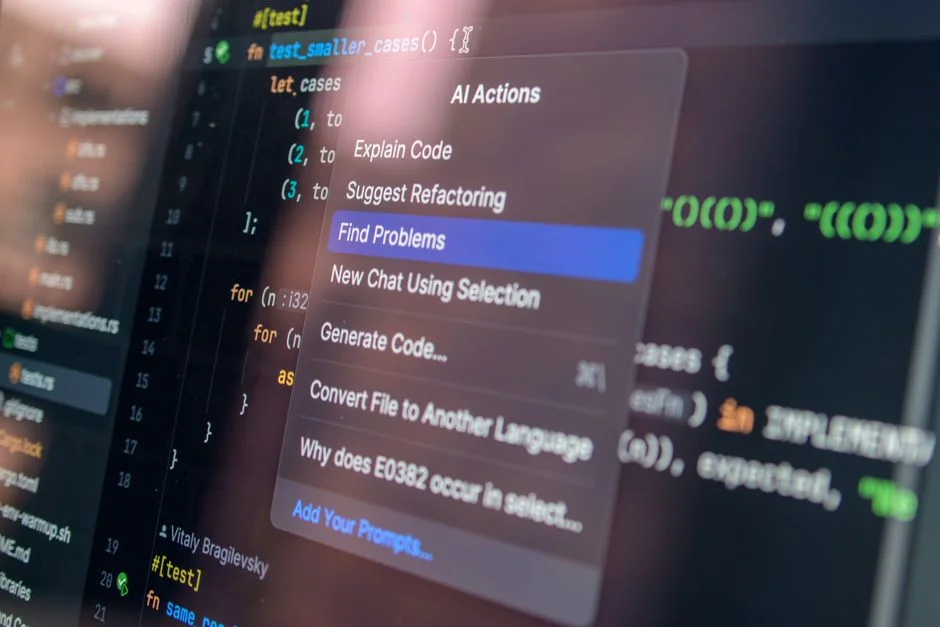
According to a 2023 report by GitHub, developers using AI-powered coding assistants reported a 55% increase in productivity, yet the underlying risk profile of enterprise applications has shifted dramatically. While velocity gains are measurable, the output of Large Language Models (LLMs) is non-deterministic, often introducing subtle security vulnerabilities or logic flaws that standard unit tests fail to catch.
For software houses, the challenge is no longer about generating code, but about governance. Integrating AI into a professional development lifecycle requires a multi-layered hardening strategy that transforms raw LLM output into production-grade software. This article outlines the rigorous engineering frameworks required to validate, secure, and maintain AI-assisted codebases.
The Business Problem: Non-Deterministic Code Generation
The primary risk when using models like GPT-4 or Claude 3.5 Sonnet for production tasks is the assumption of correctness. AI models operate on probabilistic patterns rather than semantic logic. This leads to several critical issues in enterprise software development:
- Dependency Vulnerabilities: AI may suggest outdated libraries or packages with known CVEs because they appear frequently in training data.
- Logic Flaws: The model may generate code that executes correctly in isolation but violates business rules or fails to handle edge cases in complex state machines.
- Hallucination of APIs: Models often invent methods or parameters that do not exist in the current version of a framework, leading to runtime failures.
Without a formal review process, these issues propagate into production, creating technical debt that is often harder to debug than manual code because it lacks the original developer’s context.
The Multi-Layered Validation Framework
To harden AI output, professional software houses implement a structured pipeline that treats AI-generated snippets as untrusted input. The process follows a strict hierarchy:
- Static Analysis (SAST): Every AI-generated commit is passed through tools like ESLint, SonarQube, or specialized security scanners to detect syntax errors and common security anti-patterns.
- Automated Testing Coverage: We mandate a 100% test coverage requirement for any AI-generated component. If the AI cannot generate the accompanying unit tests, the code is rejected.
- Semantic Peer Review: A senior engineer must verify the architectural intent. The reviewer does not look for syntax; they look for design pattern consistency and adherence to the project’s established modularity.
Financial Impact: The Cost of Improper Hardening
The financial impact of deploying unvetted AI code is significant. While initial development speed increases, the long-term maintenance cost can exceed the savings by a factor of three. When an AI-generated bug reaches production, the cost to identify, patch, and deploy a fix involves senior-level engineering time, which is significantly more expensive than the time saved during the initial generation phase.
Furthermore, security breaches resulting from hallucinated or insecure code can lead to compliance failures (e.g., SOC2, HIPAA), resulting in legal and reputational costs that far outweigh the benefits of rapid prototyping.
Vendor Selection and Tooling Strategy
Choosing the right AI infrastructure is as important as the review process itself. Organizations must balance the choice between proprietary APIs like the OpenAI API or Claude API against self-hosted, open-source models for sensitive data.
| Metric | Proprietary API | Self-Hosted Model |
|---|---|---|
| Security | High (Vendor SLAs) | Total Control (Data Privacy) |
| Cost | Variable/Usage-based | Fixed/Infrastructure-heavy |
| Flexibility | Limited | High (Fine-tuning) |
For most enterprises, a hybrid approach—using proprietary models for standard logic and internal RAG (Retrieval-Augmented Generation) systems for codebase-specific context—is the most effective way to ensure accuracy.
Strategic Implementation of Guardrails
Hardening code requires moving beyond human review. We implement programmatic guardrails that constrain the AI’s output. This includes:
- Prompt Engineering Constraints: Forcing the AI to output code in specific formats or using pre-defined internal style guides.
- RAG Pipelines: Feeding the AI the existing project documentation, API schemas, and style guides as context so the generated code aligns with current system architecture.
- CI/CD Integration: Automatically blocking merges if the AI-generated code fails to meet performance benchmarks or security thresholds.
Cost Factors and Budget Considerations
Budgeting for AI integration involves more than just API subscription fees. Professional software houses must account for the following factors:
- Infrastructure Overhead: Costs associated with maintaining vector databases, GPU compute for fine-tuning, and CI/CD pipeline expansions.
- Engineering Time: The cost of senior developers performing code reviews and creating the necessary test suites to validate AI output.
- Security Audits: Periodic penetration testing of codebases heavily influenced by AI to ensure no new attack vectors have been introduced.
The total cost is highly dependent on the complexity of the domain and the required level of compliance, but organizations should always allocate a significant portion of their budget to the ‘hardening’ phase rather than just the ‘generation’ phase.
Factors That Affect Development Cost
- Model API usage fees
- Infrastructure costs for vector databases
- Senior engineering time for code audits
- Security compliance and penetration testing
- CI/CD pipeline maintenance
Costs vary significantly based on the volume of AI-assisted code generation and the complexity of the security validation requirements.
Frequently Asked Questions
How to effectively review AI-generated code?
Effective review requires treating AI code as untrusted input, mandating 100% test coverage, and using static analysis tools to identify security vulnerabilities before human review.
What is the 30% rule in AI?
The 30% rule is a heuristic suggesting that AI can handle roughly 30% of standard coding tasks efficiently, but the remaining 70%—involving complex business logic and security—still requires human oversight.
How do programmers evaluate AI-generated code?
Programmers evaluate AI code through unit testing, security scanning, architectural consistency checks, and ensuring that the code adheres to existing project design patterns.
The integration of AI into the software development lifecycle is not a replacement for engineering rigor; it is an evolution of the development process. By treating AI as a junior developer that requires constant supervision, auditing, and hardening, software houses can maintain high velocity without compromising the integrity of their systems.
Success in this era is defined by the ability to build robust, automated pipelines that catch the limitations of LLMs before they reach the production environment. As the technology matures, the focus will remain on governance, security, and the preservation of long-term maintainability.
NR Studio builds custom web apps, mobile apps, SaaS platforms, and internal tools for growing businesses. If you’re working through a technical decision, feel free to reach out — no commitment required.