
Engineering a scalable API in 2026 requires moving beyond simple request-response loops. Modern distributed systems demand that developers treat interfaces as formal products, prioritizing consistency, observability, and long-term maintainability over rapid prototyping. When you ask how do you build an api that survives the transition from development to production, the answer lies in strict adherence to contract-first design patterns.
This guide dissects the technical rigor required to architect, implement, and operate APIs in complex environments. We will move past basic frameworks to explore protocol selection, idempotency, and AI-agent compatibility, ensuring your service architecture is robust enough for high-concurrency production workloads.
The API Lifecycle: From Contract First to Code
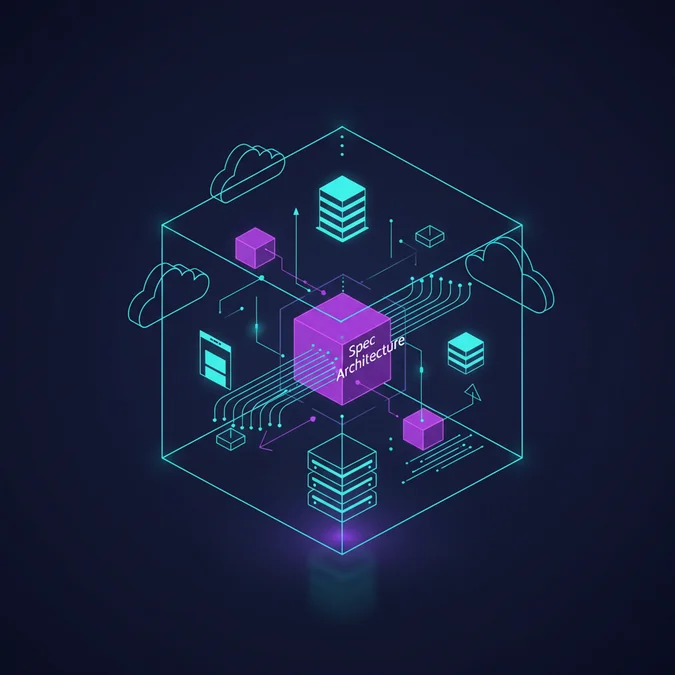
The most common failure in API development is treating code as the primary source of truth. By shifting to a contract-first methodology, you define the interface before a single line of business logic is written. This ensures that frontend and backend teams can work in parallel against a stable, validated specification.
Engineering Callout: Never commit code before the schema. If your contract is not valid, your implementation is effectively technical debt from day one.
When you start asking how do you build an api that scales, your workflow should look like this:
- Design: Draft the OpenAPI/AsyncAPI specification.
- Validate: Run linting and schema validation against your spec.
- Mock: Use the contract to generate mock servers for client teams.
- Generate: Use tools to scaffold boilerplate code from the validated spec.
Production Checklist:
- Is the OpenAPI schema strictly versioned?
- Do you have automated linting to enforce naming conventions?
- Is the documentation automatically generated from the contract?
Developing API Foundations: Architecture and Protocol Selection
Choosing the correct communication protocol is a critical decision during the initial phase of developing api systems. The choice between REST, GraphQL, and gRPC dictates your latency, payload overhead, and developer experience. Use the matrix below to align your protocol with your specific system requirements.
| Protocol | Primary Use Case | Latency | Payload Format |
|---|---|---|---|
| REST | Public-facing web services | Moderate | JSON |
| GraphQL | Complex client data aggregation | Variable | JSON |
| gRPC | Internal microservice communication | Extremely Low | Protobuf |
For external consumers, REST remains the standard due to its ubiquity and caching capabilities. However, for high-performance service-to-service communication, gRPC offers binary serialization and multiplexing which significantly reduces network overhead.
Writing API Logic: Implementation Patterns in 2026
When writing api endpoints, the difference between a toy project and a production system is the handling of edge cases and state. Idempotency is non-negotiable for mutation endpoints (POST/PUT). Without it, network retries lead to duplicate records and corrupted state.
// Example: Idempotent POST Handler (Pseudo-code)func CreateOrder(ctx context.Context, req OrderRequest) (Response, error) {idempotencyKey:= req.Header.Get("X-Idempotency-Key")if cached, err:= cache.Get(idempotencyKey); err == nil {return cached, nil}// Execute core business logicorder:= processOrder(req)cache.Set(idempotencyKey, order)return order, nil}
Always wrap your logic in structured error handling that returns consistent status codes. Ensure that your logs include correlation IDs to trace requests across distributed boundaries.
Advanced Techniques for How to Write APIs at Scale
Learning how to write apis that evolve without breaking requires a disciplined approach to versioning and deprecation. As your system grows, you must support legacy clients while pushing new features.
- Version Header/Path Strategy: Use semantic versioning (v1, v2) in the URI or custom headers to manage breaking changes.
- Deprecation Policy: Always include the
Sunsetheader to notify clients of upcoming endpoint removal. - AI-Agent Readiness: Provide detailed metadata and ‘tool definitions’ within your schema. This allows LLMs to understand the side effects and parameter requirements of your endpoints.
- Observability: Integrate OpenTelemetry to monitor request latency and error rates in real-time.
Frequently Asked Questions
What is the first step when you ask how do you build an api?
The first step is defining an API contract using OpenAPI or AsyncAPI specifications. By treating the schema as the single source of truth before writing code, you ensure consistency across distributed teams and simplify the downstream documentation process.
Is there a specific methodology for developing api systems?
Yes, successful developing api workflows follow a contract-first approach. This involves designing the interface, validating the schema, generating client SDKs, and implementing business logic in a decoupled manner to ensure the service remains maintainable and version-controlled over time.
What are the common mistakes when writing api code?
Common mistakes include ignoring idempotency keys, failing to implement rate limiting, and neglecting distributed tracing. When writing api code, ensure that every endpoint is deterministic, provides clear error codes, and supports observability to facilitate debugging in complex production environments.
How to write apis that are ready for AI agents?
To make APIs AI-agent ready, focus on strictly typed schemas and self-documenting endpoints. Use consistent naming conventions, provide comprehensive metadata, and ensure your responses are deterministic. This allows LLM-based agents to reliably interpret your schema and invoke functions without hallucination or integration errors.
Building a production-grade API is an exercise in stability and predictability. By anchoring your workflow in contract-first design, selecting protocols based on performance needs, and enforcing idempotency, you create a system that can withstand the demands of modern distributed environments.
Focus your engineering efforts on observability and schema-driven development to ensure your services remain resilient and easy to integrate as your architecture scales through 2026 and beyond.