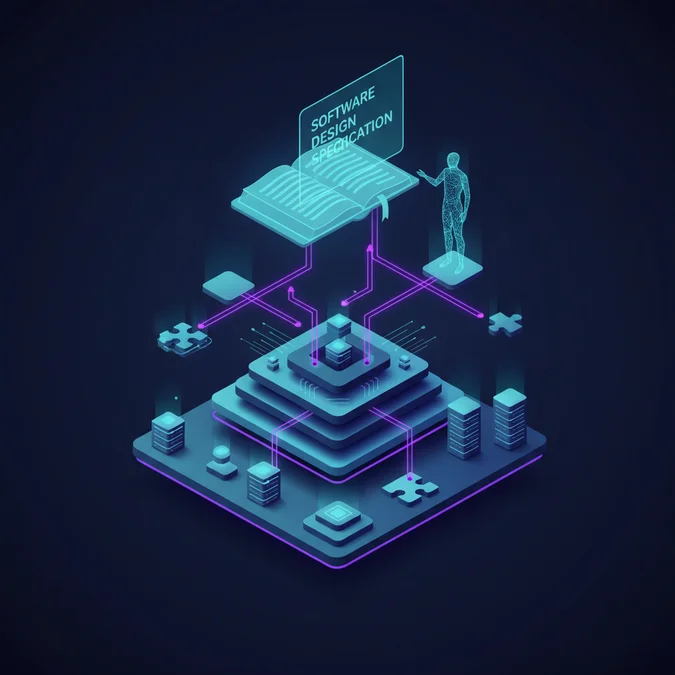

When a system grows beyond the mental capacity of a single engineer, the delta between intent and reality begins to widen. This gap is where projects stall, bugs proliferate, and technical debt compounds. The functional design document is not merely a bureaucratic checkbox, but the primary engineering instrument for synchronizing intent across distributed teams.
By treating documentation as code, we move away from static, decaying PDFs toward dynamic, version-controlled assets. This approach allows teams to maintain a high-fidelity map of their system architecture, ensuring that every functional requirement is traceable, testable, and aligned with business objectives in a 2026 production environment.
Defining the Functional Design Document in Modern Systems
A functional design document bridges the chasm between raw business requirements and the concrete implementation details required by engineering squads. It defines the ‘how’ of system behavior, detailing user interactions, state transitions, and error handling protocols without prescribing specific code-level syntax.
Engineering Note: In high-velocity environments, the functional design document functions as a contract. It provides the necessary constraints for frontend, backend, and QA teams to operate in parallel without constant synchronous communication overhead.
By formalizing expected system behaviors before a single line of production code is written, you create a buffer against scope creep and architectural misalignment. A robust document acts as the authoritative reference point for system integrity, ensuring that edge cases are identified during the design phase rather than during a critical production incident.
Comparative Analysis: Requirements vs Specifications
Confusion between documentation types often leads to bloated or underspecified project artifacts. Distinguishing between these layers is vital for maintaining clarity throughout the software development lifecycle.
| Document Type | Primary Audience | Focus | Change Frequency |
|---|---|---|---|
| Business Requirement | Stakeholders, PMs | What value is delivered | Low |
| Functional Design Document | Developers, QA | How the system behaves | Medium |
| Technical Specification | System Architects | Implementation details | High |
While the business requirement document defines the ‘why’ and the technical specification dives into the ‘how’ of infrastructure, the functional design document sits in the middle, detailing the logic and user-facing outcomes.
Deploying a Reusable Functional Specification Document Template
Standardization is the bedrock of scalability. By implementing a modular functional specification document template, you ensure that every feature request follows a predictable format, reducing the cognitive load on reviewers and implementers.
- Executive Summary: High-level business impact.
- User Flow Analysis: Step-by-step interaction maps.
- State Machine Logic: Definition of system states.
- Error Handling: Resilience and edge case protocols.
# Functional Specification Template Structure

## 1. Scope
- Feature Name: [Name]
- Priority: [Critical/High/Medium]

## 2. Behavioral Requirements
- Input: [Data Schema]
- Process: [Transformation Logic]
- Output: [Expected Result]

## 3. Constraints
- Latency Targets: [ms]
- Throughput: [req/sec]
Customizing Your Functional Design Document Template for Agile Teams
Agile teams require documentation that breathes. A static document is a dead document. Customizing your functional design document template to fit into sprint planning cycles ensures it stays relevant.
- Decompose the Monolith: Break the documentation into feature-specific Markdown files.
- Link to Issue Tracking: Embed ticket references directly into the document.
- Review Cycles: Sync documentation updates with pull request approvals.
// Example integration: Extracting requirements from code metadata
const generateDoc = (featureId) => {
 try {
 const requirements = fetchFromRepo(featureId);
 return renderMarkdown(requirements);
 } catch (err) {
 console.error('Failed to sync design docs:', err);
 }
};
The Living Documentation Framework for 2026
In 2026, documentation must be treated as code. By leveraging Git-based workflows, teams can ensure that their documentation is versioned, peer-reviewed, and deployed alongside the application.
Best Practice: Use CI/CD pipelines to validate documentation integrity. If a functional requirement is changed in the code, the pipeline should flag the corresponding section in the documentation for review.
# CI/CD Pipeline Integration
- Step 1: Commit code change.
- Step 2: Trigger Documentation Sync.
- Step 3: Run 'doc-lint' to check for missing requirements.
- Step 4: Auto-generate updated PDF/HTML assets.
Frequently Asked Questions
What is the primary purpose of a functional design document?
A functional design document serves as a blueprint that details how a software system functions to meet specific business needs. It translates abstract requirements into concrete user flows and functional behaviors, providing a single source of truth for developers, stakeholders, and quality assurance teams during the build process.
How does a functional specification document template improve development speed?
Using a standardized functional specification document template reduces ambiguity and cognitive load. By enforcing a consistent structure for every project, teams spend less time debating document format and more time clarifying complex logic, which accelerates the onboarding process for new developers and ensures better alignment across cross-functional squads.
When should you update your functional design document template?
You should update your functional design document template whenever your development workflow changes or when new system architectures are introduced. In modern 2026 environments, templates should be treated as living code repositories, updated iteratively alongside product releases to ensure they accurately reflect the current state of your production systems.
Modern software delivery requires a departure from legacy documentation practices. By adopting a modular, living framework, teams can reduce ambiguity, accelerate onboarding, and maintain architectural integrity as systems evolve.
Start by auditing your current process and migrating your most critical documentation into a version-controlled, template-driven repository today.