
In 2026, the primary bottleneck for scaling engineering teams is not compute capacity or cloud infrastructure, but the erosion of system context. When architectural intent is siloed in private chat threads or outdated wikis, velocity stalls and technical debt accelerates. Effective documentation must move beyond static text to become a living component of the deployment pipeline.
This article outlines the engineering standards for building resilient, RAG-ready, and automated documentation systems. By treating documentation as a first-class citizen of the codebase, teams can eliminate tribal knowledge dependency and ensure that both human engineers and AI agents have accurate, up-to-date context for every pull request.
Foundational Concepts for Detailed Documentation
Detailed documentation serves as the authoritative map for complex systems. Unlike general knowledge bases, it requires precision, scope definition, and structural integrity. At its core, technical process documentation must capture the ‘why’ behind architectural decisions, not just the ‘how’ of execution.
Engineering Note: The goal of detailed documentation is to reduce the cognitive load of onboarding and incident response. If an engineer cannot understand a module’s failure modes within five minutes of reading, the documentation has failed its primary utility.
Organizations that prioritize high-fidelity documentation see a measurable reduction in mean time to recovery (MTTR) during outages. By formalizing technical process documentation, teams create a verifiable audit trail that persists even when individual contributors rotate off a project.
The Anatomy of Documentation as Code
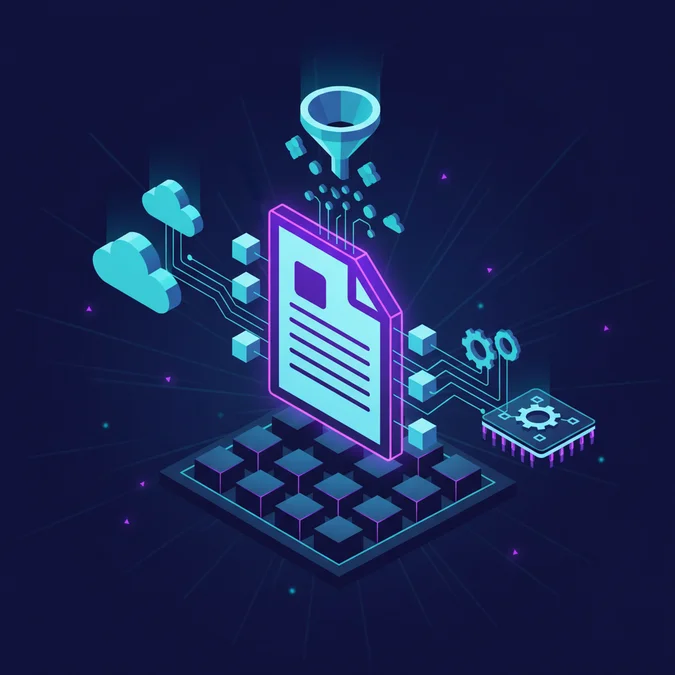
The shift toward Documentation as Code (DaC) treats markdown files with the same rigor as application source code. By placing documentation inside the repository, it becomes subject to linting, version control, and CI/CD validation.
A robust technical process documentation structure includes:
- Architecture Decision Records (ADRs): Capturing the context of trade-offs.
- API Schemas: OpenAPI/AsyncAPI specifications generated directly from code.
- Operational Runbooks: Markdown files that trigger automated health checks.
/docs
 /adr
 001-use-event-driven-architecture.md
 /api
 v1-service-spec.yaml
 /runbooks
 database-failover.md
 CONTRIBUTING.md
Checklist for DaC Implementation:
- Documentation resides in the same repo as the code.
- Changes require a Pull Request (PR) and peer review.
- Automated linting checks for broken links and stale metadata.
Structuring for Humans and AI Agents
Modern engineering environments rely on Retrieval-Augmented Generation (RAG) to query internal knowledge. If your detailed documentation is unstructured or poorly indexed, AI agents will hallucinate or return contextually irrelevant answers.
To optimize for RAG ingestion, use clear hierarchical headers and frontmatter metadata. This allows embedding models to chunk your text effectively.
---
title: Authentication Service
version: 2.1.0
status: stable
owner: security-team
---
# Authentication Service API
## Overview
This service handles OIDC flows..
Comparison of Documentation Accessibility:
| Feature | Static Wiki | RAG-Ready DaC |
|---|---|---|
| Version Tracking | Manual/None | Git-native |
| AI Retrieval | Low Fidelity | High Precision |
| Drift Detection | None | Automated CI |
Lifecycle Management and Drift Prevention
Documentation drift occurs when the code evolves but the technical process documentation remains static. To solve this, documentation must be integrated into the CI/CD lifecycle.
- Automated Validation: CI pipelines should run scripts to verify that code comments match exported documentation.
- Drift Detection: Use tools that flag outdated ADRs or missing configuration specs during PR builds.
- Lifecycle Hooks: Require a documentation update flag in the PR template for any breaking API change.
| Pipeline Stage | Action |
| Pre-commit | Linter runs for markdown syntax |
| Build | Schema generation from code |
| Deploy | Static site update to internal portal |
Frequently Asked Questions
What is the primary difference between standard and detailed documentation?
Standard documentation provides high-level overviews or user guides. Detailed documentation focuses on granular technical specifications, implementation logic, API schemas, and architectural constraints required for engineers to modify or maintain complex systems without relying on tribal knowledge.
Why is technical process documentation critical for CI/CD?
Technical process documentation acts as the source of truth for automated pipelines. By codifying deployment steps and configuration requirements, teams eliminate ambiguity during releases, reduce manual intervention, and ensure that every environment transition follows a validated, repeatable engineering path.
Maintaining accurate documentation is a continuous engineering discipline rather than a one-time project. By adopting a Documentation as Code workflow and optimizing for machine-readability, you transform your knowledge base from a passive archive into a functional engine for team velocity.
Begin by auditing your current repository structure and identifying the most critical technical process documentation gaps. Automate the low-hanging fruit, such as API spec generation, and watch your team’s reliance on tribal knowledge decrease significantly.