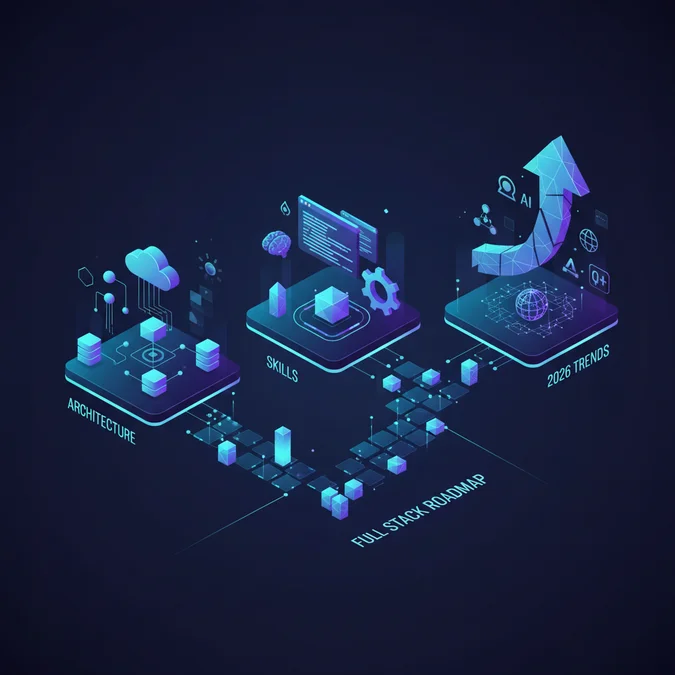

A full stack roadmap for 2026 outlines the essential journey for developers mastering both client-side and server-side technologies, encompassing frontend frameworks, backend services, database management, and deployment strategies. It provides a structured learning path for building robust, scalable web applications from conception to production, addressing the evolving demands of modern software development.
Becoming a proficient full stack developer in 2026 demands more than just technical proficiency in isolated domains; it requires a holistic understanding of how these layers interact. This article provides an authoritative guide to the current landscape, detailing the core skills, architectural considerations, and practical applications necessary to thrive in this dynamic role. We will explore the critical components of a successful full stack career, from foundational knowledge to advanced deployment strategies.
This comprehensive guide addresses common pitfalls and leverages insights into current industry standards, ensuring that your journey through the full stack roadmap is efficient and effective. We will provide actionable advice, real-world project ideas, and highlight the transformative impact of AI tools on the development lifecycle.
What is a Full Stack Developer in 2026?
In 2026, a full stack developer is an engineer capable of working across the entire application stack, from the user interface (frontend) to the database and server logic (backend), including deployment and operational aspects. This role has evolved beyond mere proficiency in disparate technologies; it now demands a deep understanding of system architecture, performance optimization, security, and continuous integration/continuous deployment (CI/CD) pipelines. The modern full stack developer is a versatile problem-solver, bridging gaps between specialized teams and often leading projects end-to-end.
The foundational importance of a clear full stack roadmap cannot be overstated. It serves as a structured guide for mastering the diverse skill sets required, ensuring a coherent progression through complex topics. Developers following this roadmap are expected to not only write code but also to understand user experience (UX) principles, manage data flows, ensure API reliability, and contribute to infrastructure decisions. Their responsibilities often include:
- Designing and implementing user interfaces with modern frontend frameworks.
- Developing robust and scalable backend APIs and services.
- Managing databases, optimizing queries, and ensuring data integrity.
- Implementing authentication, authorization, and security best practices.
- Configuring deployment pipelines and monitoring application performance.
- Collaborating effectively with design, product, and operations teams.
The role is dynamic, requiring continuous learning and adaptation to new tools and methodologies. A well-defined full stack roadmap helps aspiring and experienced developers navigate this complexity, ensuring they acquire relevant skills that meet current industry demands.
The 2026 Full Stack Roadmap: Core Pillars and Learning Paths
Navigating the multifaceted world of full stack development requires a structured approach. The 2026 full stack roadmap is segmented into core pillars: Frontend Development, Backend Development, Database Management, and DevOps/Cloud. Each pillar represents a critical domain, and mastering them progressively ensures a well-rounded skill set. This comprehensive fullstack roadmap provides a clear learning path for each.
Below is a table outlining the essential components and recommended learning paths within each pillar:
| Pillar | Core Concepts & Technologies | Learning Path & Focus Areas |
|---|---|---|
| Frontend Development | HTML5, CSS3 (Sass/Tailwind), JavaScript (ES2024+), React/Vue/Angular, State Management (Redux/Vuex/Zustand), Build Tools (Vite/Webpack), Responsive Design, Accessibility | Master modern JavaScript. Choose one major framework (React is dominant). Understand component-based architecture, state management, and API integration. Focus on performance and user experience. |
| Backend Development | Node.js (Express/NestJS)/Python (Django/Flask)/Go (Gin/Echo), RESTful APIs, GraphQL, Authentication (JWT/OAuth), Microservices, Serverless Functions, Testing (Jest/Mocha/Pytest) | Select a primary backend language and framework. Develop a strong grasp of API design principles, data validation, error handling, and security. Explore asynchronous programming and scalable service architecture. |
| Database Management | SQL (PostgreSQL/MySQL), NoSQL (MongoDB/Redis/Cassandra), ORMs (Prisma/TypeORM/SQLAlchemy), Database Design, Indexing, Query Optimization, Caching Strategies | Understand relational and non-relational database concepts. Practice schema design, efficient querying, and data migration. Learn about data consistency, transactions, and scaling strategies. |
| DevOps & Cloud | Git/GitHub, Docker, Kubernetes (basics), CI/CD (GitHub Actions/GitLab CI), Cloud Platforms (AWS/Azure/GCP), Linux Fundamentals, Monitoring (Prometheus/Grafana) | Familiarize yourself with version control and containerization. Understand the principles of automated testing and deployment. Gain practical experience with at least one major cloud provider for deploying and managing applications. |
This structured full stack roadmap emphasizes practical application and continuous skill refinement. As you progress, consider specializing in a particular stack, such as MERN (MongoDB, Express.js, React, Node.js) or LAMP (Linux, Apache, MySQL, PHP), but maintain a foundational understanding across all pillars.
Architectural Patterns and Engineering Trade-offs for Full Stack Development
Choosing the right architectural pattern is a cornerstone of any successful full stack roadmap. Developers in 2026 must understand the implications of their architectural decisions on scalability, maintainability, performance, and development velocity. The primary patterns often considered are Monolithic and Microservices architectures.
A monolithic architecture deploys all application components as a single, indivisible unit. It’s simpler to develop and deploy initially but can become challenging to scale and maintain as complexity grows. Microservices, conversely, break down an application into small, independent services, each running in its own process and communicating via APIs. This offers greater scalability, resilience, and technological flexibility, but introduces complexity in deployment, monitoring, and inter-service communication.
Beyond architecture, critical trade-offs arise in technology selection, directly impacting the full stack roadmap. Two prominent examples include the choice between SQL and NoSQL databases, and REST versus GraphQL for API design:
| Decision Point | SQL Databases (e.g., PostgreSQL) | NoSQL Databases (e.g., MongoDB) |
|---|---|---|
| Data Model | Relational, structured schema, strong consistency. | Non-relational, flexible schema, high availability/scalability. |
| Use Case | Complex queries, transactional applications, strong data integrity needs. | Large volumes of unstructured data, rapid development, flexible data models. |
| Scalability | Vertical scaling primarily, horizontal scaling with complexity. | Horizontal scaling, distributed data. |
| Consistency | ACID properties (Atomicity, Consistency, Isolation, Durability). | BASE properties (Basically Available, Soft state, Eventually consistent). |
| Decision Point | RESTful APIs | GraphQL APIs |
| Data Fetching | Multiple endpoints, fixed data structures, over-fetching/under-fetching. | Single endpoint, client-defined queries, precise data fetching. |
| Complexity | Simpler to implement initially, well-established. | Higher initial learning curve, powerful for complex data needs. |
| Versioning | Often requires explicit versioning (e.g., /v1/users). |
Schema-driven, backward compatibility often easier to manage. |
| Performance | Can suffer from multiple round trips for complex data. | Reduces network requests, efficient for complex data graphs. |
Understanding these engineering trade-offs is crucial for making informed decisions that align with project requirements and future growth, a fundamental skill emphasized throughout the full stack roadmap.
Building Your Full Stack Portfolio: Project Ideas and Code Examples
A strong project portfolio is indispensable for demonstrating practical skills acquired through your full stack roadmap. Employers seek tangible evidence of your ability to build, deploy, and maintain applications. Here are project ideas with suggested tech stacks and complexity levels, accompanied by actionable code snippets for common full stack tasks.
Project Ideas:
- E-commerce Platform (Medium-High Complexity):
Features: User authentication, product listings, shopping cart, payment integration (Stripe/PayPal), order management, admin dashboard.
Suggested Stack: Frontend: React/Next.js, Backend: Node.js (NestJS) with PostgreSQL, Payments: Stripe API. - Task Management Application (Medium Complexity):
Features: User accounts, task creation/editing/deletion, due dates, priority levels, real-time updates.
Suggested Stack: Frontend: Vue.js, Backend: Python (Django REST Framework) with MySQL, Real-time: WebSockets (Socket.IO). - Recipe Sharing Platform (Low-Medium Complexity):
Features: User registration, recipe submission (with images), search functionality, user ratings/comments.
Suggested Stack: Frontend: Svelte, Backend: Go (Gin) with MongoDB, Image Storage: AWS S3.
Code Examples:
1. Frontend: Fetching data from a REST API (React example)
import React, { useEffect, useState } from 'react';

function ProductList() {
  const [products, setProducts] = useState([]);
  const [loading, setLoading] = useState(true);

  useEffect(() => {
    fetch('/api/products')
      .then(response => response.json())
      .then(data => {
        setProducts(data);
        setLoading(false);
      })
      .catch(error => {
        console.error('Error fetching products:', error);
        setLoading(false);
      });
  }, []);

  if (loading) return <div>Loading products...</div>;

  return (
    <ul>
      {products.map(product => (
        <li key={product.id}>{product.name} - ${product.price}</li>
      ))}
    </ul>
  );
}

export default ProductList;
2. Backend: Simple Express.js API endpoint
const express = require('express');
const app = express();
const PORT = process.env.PORT || 3000;

app.use(express.json());

let items = [{ id: 1, name: 'Item A' }, { id: 2, name: 'Item B' }];

app.get('/api/items', (req, res) => {
  res.json(items);
});

app.post('/api/items', (req, res) => {
  const newItem = { id: items.length + 1, name: req.body.name };
  items.push(newItem);
  res.status(201).json(newItem);
});

app.listen(PORT, () => {
  console.log(`Server running on port ${PORT}`);
});
3. Database: Basic Prisma ORM query (Node.js)
import { PrismaClient } from '@prisma/client';

const prisma = new PrismaClient();

async function createUserAndProduct() {
  try {
    const newUser = await prisma.user.create({
      data: {
        email: 'john.doe@example.com',
        name: 'John Doe',
        products: {
          create: [{ name: 'Laptop', price: 1200.00 }, { name: 'Mouse', price: 25.00 }],
        },
      },
    });
    console.log('Created user and products:', newUser);

    const allProducts = await prisma.product.findMany({
      include: { owner: true },
    });
    console.log('All products with owners:', allProducts);
  } catch (e) {
    console.error('Error:', e);
  } finally {
    await prisma.$disconnect();
  }
}

createUserAndProduct();
Portfolio Checklist:
- ☑ At least 2-3 substantial projects.
- ☑ Clear README.md for each project with setup instructions.
- ☑ Live demos or deployed versions where possible.
- ☑ Clean, well-documented, and tested code.
- ☑ Diverse tech stacks to showcase adaptability.
- ☑ Contributions to open-source (optional but highly valuable).
These practical examples are crucial for any full stack roadmap, demonstrating not just theoretical knowledge but also real-world implementation capabilities.
Essential Tools, Methodologies, and AI Integration in the Full Stack Roadmap
A successful fullstack roadmap in 2026 extends beyond coding languages and frameworks; it encompasses mastery of development tools, adherence to effective methodologies, and strategic integration of artificial intelligence into workflows. These elements collectively enhance productivity, code quality, and project delivery.
Essential Tools:
- Integrated Development Environments (IDEs): VS Code, IntelliJ IDEA, WebStorm.
- Version Control: Git is non-negotiable, with platforms like GitHub, GitLab, and Bitbucket for collaboration.
- Containerization: Docker for consistent development and deployment environments.
- API Testing: Postman, Insomnia, or built-in IDE tools.
- Package Managers: npm, Yarn for JavaScript; pip for Python; Composer for PHP.
- Cloud Platforms: AWS, Azure, GCP for hosting, serverless functions, and managed services.
Development Methodologies:
Agile methodologies, particularly Scrum and Kanban, are standard in 2026. They promote iterative development, continuous feedback, and adaptability to changing requirements. Understanding concepts like sprints, daily stand-ups, backlog grooming, and retrospectives is vital for effective team collaboration and project management.
AI tools are rapidly transforming full stack development. Code generation tools (e.g., GitHub Copilot, Tabnine) assist with boilerplate code, function suggestions, and even entire file generation. AI-powered debuggers can pinpoint issues faster, while AI-driven testing tools can generate test cases and identify edge scenarios. For performance optimization, AI can analyze application logs and suggest improvements. Integrating these tools into your fullstack roadmap can significantly boost efficiency and reduce development cycles.
Other AI applications include intelligent code refactoring, security vulnerability scanning, and personalized learning recommendations. Embracing these technologies is no longer optional but a competitive advantage for any developer following a modern fullstack roadmap.
Future-Proofing Your Full Stack Career: Trends and Continuous Learning
The technology landscape is in constant flux, making continuous learning a non-negotiable aspect of any full stack roadmap. To future-proof your career in 2026 and beyond, developers must stay abreast of emerging trends and proactively acquire new skills. Ignoring this can quickly lead to skill obsolescence.
Key Trends to Monitor:
- WebAssembly (Wasm) Expansion: Moving beyond just browsers, Wasm is gaining traction for server-side, edge computing, and even embedded systems, enabling high-performance code execution in diverse environments.
- Edge Computing: Shifting computation and data storage closer to the data source, reducing latency and bandwidth usage, particularly relevant for IoT and real-time applications.
- Serverless 2.0: Advancements in serverless platforms offer more robust features, better cold start performance, and easier integration with existing infrastructure, pushing the boundaries of cost-effective, scalable solutions.
- AI-Native Development: Building applications with AI as a core component, not just an add-on. This includes integrating large language models (LLMs) for complex logic, natural language interfaces, and intelligent automation.
- Green Software Engineering: A growing emphasis on building energy-efficient applications and infrastructure to reduce environmental impact. Understanding carbon-aware development practices will become increasingly important.
- Enhanced Security Posture: With increasing cyber threats, expertise in zero-trust architectures, advanced threat detection, and secure coding practices across the stack is paramount.
Your full stack roadmap should not be a static document but a living plan that evolves with these trends. Dedicate regular time for learning new frameworks, understanding architectural shifts, and experimenting with cutting-edge tools. Engage with developer communities, attend virtual conferences, and contribute to open-source projects. This proactive approach to continuous learning ensures long-term relevance and career growth within the dynamic full stack domain.
Frequently Asked Questions
What is the average salary for a full stack developer in 2026?
In 2026, the average salary for a full stack developer varies significantly based on experience, location, and specific tech stack. Entry-level positions might start around $70,000-$90,000, while senior developers with specialized skills can command upwards of $150,000-$200,000 annually, especially in tech hubs.
How long does it take to become proficient following a fullstack roadmap?
Becoming proficient on a fullstack roadmap typically takes 6-12 months for intensive learners, or 1-3 years for a more moderate pace. This timeline depends on prior experience, dedication, and the complexity of the chosen tech stack. Continuous learning is crucial beyond initial proficiency.
What are the key differences between MERN and LAMP stacks for a full stack roadmap?
MERN (MongoDB, Express.js, React, Node.js) is JavaScript-centric, ideal for modern web applications and single-page applications. LAMP (Linux, Apache, MySQL, PHP/Python/Perl) is a traditional, robust stack often used for content management systems and server-side rendering. The choice depends on project requirements and developer familiarity.
Can AI tools assist with the fullstack roadmap learning process?
Yes, AI tools can significantly assist in the fullstack roadmap. They can help with code generation, debugging, testing, and even provide personalized learning paths. AI-powered assistants can explain complex concepts, suggest best practices, and automate repetitive tasks, accelerating the learning curve and improving efficiency.
The full stack roadmap for 2026 is a demanding yet incredibly rewarding journey, requiring a blend of technical depth, architectural understanding, and an unwavering commitment to continuous learning. By mastering frontend and backend technologies, understanding database management, embracing DevOps principles, and strategically integrating AI tools, developers can build robust, scalable, and secure applications.
The ability to navigate architectural trade-offs, build a compelling project portfolio, and adapt to emerging trends like WebAssembly and AI-native development will define the most successful full stack engineers. Embrace this comprehensive full stack roadmap as your guide to not just surviving, but thriving in the ever-evolving world of software development.
NR Studio builds custom web apps, mobile apps, SaaS platforms, and internal tools for growing businesses. If you’re working through a technical decision, feel free to reach out — no commitment required.