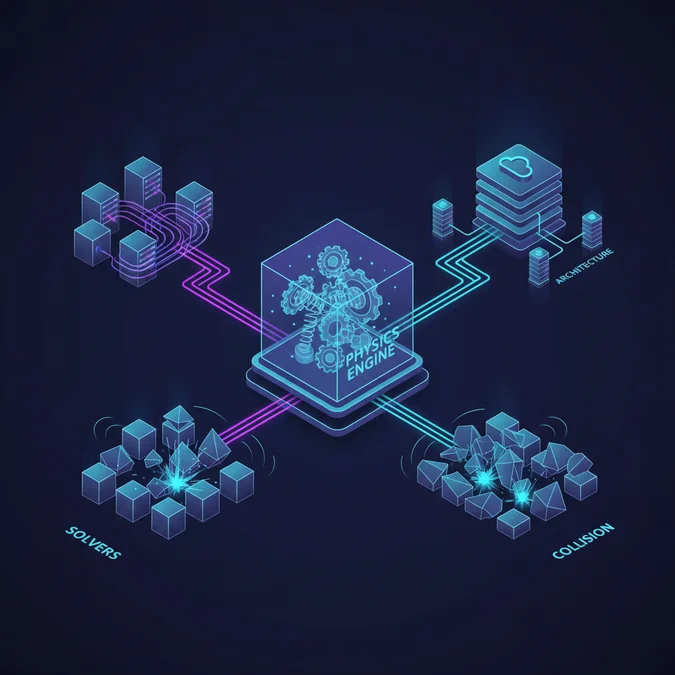

The term engine software frequently suffers from semantic overloading. In modern systems engineering, an engine is not merely a library or a service, but a specialized runtime architecture that dictates the lifecycle, resource management, and execution flow of an application. Whether you are building a real-time game simulation or a high-throughput data processing pipeline, understanding the structural constraints of your underlying engine is critical to production stability.
This article moves past the marketing noise to provide a rigorous taxonomy of engine software. We examine how these systems invert control, manage state, and scale across distributed environments. By establishing clear architectural boundaries, we enable engineering teams to move beyond trial-and-error selection and toward data-driven infrastructure design.
Foundational Concepts and Architectural Categorization
At the architectural level, engine software functions as a host environment that provides a predefined execution loop. Unlike a traditional library, which remains passive until invoked by the calling code, an engine provides the framework for the application to exist within. This inversion of control is the defining characteristic of all engine-class software.
Engineering Note: The primary differentiator between engine software and standard middleware is the ownership of the main execution loop. An engine dictates the frequency of updates, the management of memory pools, and the coordination of concurrent tasks.
We classify these systems into three primary domains:
- Runtime Simulation Engines: Designed for high-frequency state updates, typical in gaming or physics simulations.
- Data Processing Engines: Optimized for batch or stream throughput, focusing on latency-sensitive transformation of large datasets.
- Platform/Service Engines: Abstractions that manage infrastructure orchestration, often found in serverless or containerized environments.
Comparative Analysis of Engine Application Variants
Selecting the correct engine application requires mapping your specific throughput requirements against the engine’s internal memory management model. The following table contrasts common engine categories based on performance metrics observed in production environments.
| Engine Type | Primary Metric | Latency Profile | Throughput Capacity |
|---|---|---|---|
| Simulation | Frame-time Stability | Ultra-Low (sub-ms) | Moderate |
| Data Stream | Event-to-Action | Low | Very High |
| Platform | Request Concurrency | Moderate | High |
Each engine application type prioritizes different hardware resources. Simulation engines often bind to CPU cores to minimize context switching, whereas data stream engines leverage asynchronous I/O and non-blocking buffers to maximize network and disk throughput.
Core Mechanics and Environment Initialization
Initialization of engine software is a multi-stage process that typically involves allocating memory arenas, bootstrapping the scheduler, and registering event hooks. Below is a conceptual representation of how an engine environment is initialized in a C++ based system to ensure resource isolation.
// Simplified Engine Initialization Pattern
class EngineCore {
 public:
 bool Initialize() {
 try {
 this->AllocateMemoryArenas();
 this->LoadSystemModules();
 this->BootstrapScheduler();
 return true;
 } catch (const EngineException& e) {
 // Handle critical failures before startup
 return false;
 }
 }
};
In this pattern, the software ensures that the environment is fully provisioned before the main loop begins. Failure to properly isolate these stages often leads to race conditions during the hot-loading phase of the engine lifecycle.
Production Selection Criteria and Performance Trade-offs
When selecting an engine application for a production-grade system, engineers must evaluate the trade-offs between flexibility and performance. Use the following checklist to validate your choice against your infrastructure constraints.
- Memory Footprint: Does the engine support manual memory management or relies on garbage collection that introduces latency spikes?
- Concurrency Model: Can the engine scale horizontally across multiple nodes, or is it restricted to vertical scaling on a single machine?
- Extensibility: Does the engine provide a stable API surface, or will internal updates break your custom implementation?
- Observability: Does the engine output standard telemetry logs compatible with your existing monitoring stack?
By enforcing these criteria, teams can avoid the common trap of selecting an engine based on feature count rather than architectural fit.
Frequently Asked Questions
What is the primary difference between engine software and a standard library?
Engine software acts as a specialized framework providing an inverted control flow. While libraries are called by your code to perform specific tasks, an engine controls the execution environment, managing resources, lifecycle, and core logic, allowing developers to focus on higher-level implementation rather than low-level plumbing.
How do I identify the right engine application for my specific stack?
To choose the right engine application, evaluate your specific project requirements regarding concurrency, state management, and external integration. High-performance needs require engines with low-latency memory handling, while rapid development stacks may prioritize engines that offer robust SDKs and pre-built modular components for faster deployment.
Architecting for engine software requires a shift in perspective from writing code to managing the environment in which that code executes. By prioritizing predictable latency and clear resource boundaries, engineers can build systems that remain performant under heavy load.
As you evaluate your next infrastructure project, focus on the engine’s lifecycle management and its ability to handle your specific throughput requirements. The right choice simplifies complexity; the wrong one introduces hidden technical debt that only reveals itself during peak traffic.