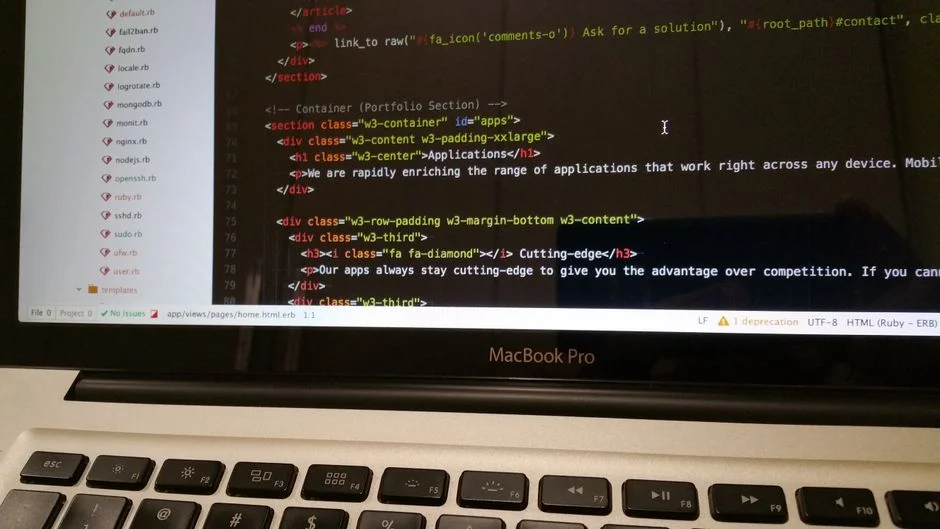

A well-architected developer section is not merely a collection of API endpoints; it is the cornerstone of a platform’s extensibility and a critical driver of ecosystem growth. Recent industry data indicates that companies with robust, well-documented APIs experience, on average, a 15% faster integration time for partners and external developers, directly impacting time-to-market for new features and services built on their platform. (Source: ProgrammableWeb, “State of the API Economy 2023 Report”). This statistic underscores a fundamental truth: the easier and more intuitive a platform is for external developers to interact with, the more value it generates.
For any software-as-a-service (SaaS) provider, enterprise platform, or digital business aiming to foster a vibrant partner ecosystem, the ‘developer section’—encompassing everything from API documentation and SDKs to sandboxes and support channels—is a strategic asset. It dictates the friction involved in adoption, the speed of innovation, and ultimately, the breadth of solutions that can be built atop your core offering. Ignoring its architectural nuances and operational considerations is a common pitfall that can severely limit a platform’s reach and long-term potential.
This article delves into the critical engineering and architectural considerations required to build a truly effective developer section. We will explore the underlying technical choices, strategic design patterns, and operational best practices that enable seamless external integration, ensuring your platform is not just functional, but genuinely extensible and developer-friendly.
Defining the Scope and Purpose of a Developer Section
Before diving into specific technologies or implementation details, it is crucial to establish a clear understanding of what a ‘developer section’ truly encompasses and its overarching purpose. Fundamentally, a developer section serves as the primary interface for external engineers, partners, and even internal development teams to understand, integrate with, and extend your core platform’s capabilities. It is more than just API documentation; it is a holistic environment designed to facilitate consumption of your services.
Its primary purpose is to reduce the cognitive load and technical friction associated with integration. This involves providing clear, concise, and accurate information about your APIs, detailing authentication mechanisms, outlining data models, and offering practical examples. A well-designed developer section anticipates developer needs, answers common questions proactively, and offers the necessary tools to accelerate development. From a strategic perspective, it transforms your product from a standalone application into a platform, enabling a wider array of use cases and fostering an ecosystem of complementary solutions. This extensibility is often a key differentiator in competitive markets.
Architecturally, this means designing the developer section as a first-class citizen, not an afterthought. It requires dedicated resources for content creation, technical writing, and maintenance, ensuring that the information remains current and accurate as your platform evolves. The scope typically includes:
- API Reference Documentation: Detailed descriptions of all available endpoints, request/response structures, parameters, and error codes.
- Guides and Tutorials: Step-by-step instructions for common integration patterns, use cases, and best practices.
- SDKs (Software Development Kits): Pre-built client libraries in various programming languages to simplify API interaction.
- Authentication & Authorization Details: Comprehensive explanations of security protocols (e.g., OAuth 2.0, API Keys) and how to obtain credentials.
- Webhook & Event Management: Documentation on how to subscribe to and process real-time events from your platform.
- Sandbox & Testing Environments: Isolated instances for developers to test their integrations without affecting production data.
- Support & Community Resources: FAQs, forums, contact channels, and community guidelines.
- Rate Limits & Usage Policies: Clear communication of operational constraints and acceptable use.
The architectural implications extend to how these components are generated, maintained, and served. A static site generator might be suitable for documentation, while API definitions could be managed with OpenAPI specifications. The critical aspect is to ensure consistency, discoverability, and usability across all these elements, providing a unified and intuitive experience for any developer seeking to build on your platform.
Architectural Patterns for API Design and Exposure
The foundation of any effective developer section is a well-designed and robust API. The architectural patterns chosen for your APIs directly influence their usability, scalability, and maintainability, which in turn dictate the quality and comprehensiveness of your developer-facing documentation and tooling. Modern API design typically revolves around several established paradigms, each with its own trade-offs and suitability for different use cases.
RESTful APIs (Representational State Transfer) remain the most prevalent standard. They leverage standard HTTP methods (GET, POST, PUT, DELETE) and status codes, operating on resources identified by URIs. The stateless nature of REST makes it highly scalable and easy to cache. For external developers, REST’s familiarity and widespread tool support often lead to lower integration barriers. However, REST can suffer from ‘over-fetching’ or ‘under-fetching’ data, where clients either receive more data than needed or require multiple requests to gather sufficient information, leading to chatty interfaces and increased latency. This necessitates careful resource design and potentially the use of techniques like sparse fieldsets or embedding related resources.
# Example RESTful API request
GET /api/v1/users/123 HTTP/1.1
Host: api.example.com
Authorization: Bearer
Accept: application/json
GraphQL addresses some of REST’s limitations by allowing clients to specify precisely the data they need in a single request. This significantly reduces network overhead and improves performance, especially for complex UIs or mobile applications that require varied data subsets. GraphQL APIs expose a single endpoint, and clients query against a strongly typed schema. This schema-first approach provides built-in validation and introspection capabilities, which are invaluable for generating accurate documentation and facilitating discovery. The learning curve for GraphQL can be steeper for developers unfamiliar with its query language and concepts, but the benefits in terms of data efficiency and flexibility are substantial for evolving APIs.
# Example GraphQL query
query GetUserProfile {
  user(id: "123") {
    id
    name
    email
    orders {
      id
      totalAmount
    }
  }
}
gRPC (Google Remote Procedure Call) offers high-performance, language-agnostic RPCs. It uses Protocol Buffers for defining service interfaces and message structures, enabling efficient serialization and deserialization of data. gRPC excels in microservices architectures and high-throughput, low-latency communication scenarios. Its binary protocol and use of HTTP/2 for transport make it highly efficient. While less common for public-facing developer sections due to browser compatibility challenges (though WebSockets and gRPC-Web bridge this gap), gRPC is an excellent choice for internal APIs or specific partner integrations where performance is paramount. Documenting gRPC services typically involves generating client stubs from Protocol Buffer definitions, which provides strong type safety and reduces integration errors.
Choosing the right API paradigm involves weighing factors such as the complexity of data access patterns, performance requirements, the target developer audience’s familiarity, and the existing technology stack. Often, a polyglot approach is adopted, where different API styles serve different purposes – REST for general-purpose access, GraphQL for flexible data retrieval, and gRPC for high-performance internal communication. The key is to ensure that whichever pattern is chosen, it is consistently applied, well-documented, and supported by appropriate tooling within the developer section.
Treating Documentation as Code (Docs-as-Code)
One of the most critical paradigms for maintaining a high-quality developer section is the ‘Docs-as-Code’ approach. This methodology advocates for treating documentation artifacts with the same rigor and tooling as source code. Instead of siloed efforts by technical writers using separate content management systems, Docs-as-Code integrates documentation creation and maintenance directly into the software development lifecycle (SDLC).
The core principle is to store documentation in version control systems (like Git) alongside the code it describes. This enables developers to create, review, and update documentation using familiar workflows and tools. When a developer implements a new API endpoint or modifies an existing one, they are also responsible for updating the corresponding documentation within the same pull request. This significantly reduces the likelihood of documentation becoming stale or inaccurate, a common pain point for external integrators.
Key benefits of this approach include:
- Version Control: Documentation changes are tracked, auditable, and can be rolled back, just like code. This ensures historical accuracy and simplifies collaboration.
- Automated Testing: Documentation can be subjected to automated checks, such as linting for style adherence, broken link detection, or even schema validation against API definitions.
- Continuous Integration/Continuous Deployment (CI/CD): Documentation can be automatically built and published as part of the software release pipeline, ensuring that the deployed documentation always reflects the current state of the API.
- Collaboration: Developers, technical writers, and product managers can collaborate on documentation using familiar tools, fostering a shared understanding and ownership.
- Consistency: By using templating engines and style guides enforced by automated tools, documentation maintains a consistent look, feel, and tone.
Implementation often involves using lightweight markup languages like Markdown or AsciiDoc, coupled with static site generators such as Jekyll, Hugo, Gatsby, or Next.js. For API reference documentation, tools like OpenAPI Generator can generate client SDKs and server stubs directly from a single OpenAPI specification, ensuring that the documentation, code examples, and API definitions remain synchronized. This automation is paramount for reducing manual effort and eliminating discrepancies.
Consider an example where an API endpoint’s response structure changes. With Docs-as-Code, the developer modifying the code would also update the OpenAPI specification file. This change would then trigger a CI/CD pipeline that automatically regenerates the API reference documentation, potentially updates client SDKs, and publishes the new documentation to the developer portal. This tightly coupled process ensures that external developers always have access to the most accurate and up-to-date information, minimizing integration errors and accelerating their development cycles.
Leveraging OpenAPI (Swagger) for Interactive API Exploration
The OpenAPI Specification (OAS), formerly known as Swagger Specification, has become the de facto standard for defining RESTful APIs. It provides a language-agnostic, human-readable, and machine-readable interface description language for REST APIs. For any developer section, leveraging OpenAPI is not merely a convenience; it is a fundamental pillar for providing a truly interactive and developer-friendly experience.
An OpenAPI document acts as a contract for your API, detailing every endpoint, operation, parameter, authentication method, and response structure. This single source of truth is invaluable for both internal development teams and external integrators. Its machine-readable nature allows for the automatic generation of various artifacts, significantly reducing manual effort and potential for error.
Key Benefits of OpenAPI in a Developer Section:
- Interactive Documentation: Tools like Swagger UI or Redoc can consume an OpenAPI document and render a beautiful, interactive API reference. Developers can explore endpoints, understand parameters, view example requests and responses, and even make live API calls directly from the browser against a sandbox environment. This hands-on experience is far more effective than static documentation.
- Code Generation: OpenAPI Generator can automatically generate client SDKs in dozens of programming languages (e.g., Python, Java, JavaScript, Go) and server stubs. This allows developers to immediately start writing code with strongly typed clients, eliminating the need to manually parse HTTP requests and responses.
- Validation: The OpenAPI specification can be used to validate API requests and responses at runtime, ensuring that both clients and servers adhere to the defined contract. This helps catch integration issues early in the development cycle.
- Design-First Approach: By writing the OpenAPI specification before or in parallel with API implementation, teams can adopt a design-first approach. This fosters better API design, encourages consistency, and facilitates early feedback from consumers.
- Testing: Tools can generate API tests directly from the OpenAPI specification, ensuring comprehensive test coverage and adherence to the API contract.
Integrating OpenAPI into your developer section typically involves hosting the OpenAPI JSON/YAML file and using a rendering tool. For instance, a common setup involves generating the OpenAPI document during the CI/CD process and then deploying it alongside a Swagger UI instance. This ensures that the interactive documentation always reflects the latest API version.
# Example OpenAPI (YAML) snippet for an endpoint
paths:
  /products/{productId}:
    get:
      summary: Get product by ID
      parameters:
        - in: path
          name: productId
          schema:
            type: string
          required: true
          description: Numeric ID of the product to retrieve
      responses:
        '200':
          description: A single product object
          content:
            application/json:
              schema:
                $ref: '#/components/schemas/Product'
        '404':
          description: Product not found
components:
  schemas:
    Product:
      type: object
      properties:
        id:
          type: string
        name:
          type: string
        price:
          type: number
          format: float
The value proposition of OpenAPI is clear: it centralizes API definition, automates documentation and tooling generation, and empowers developers with interactive exploration capabilities, significantly improving the integration experience and reducing support overhead.
Providing Comprehensive SDKs and Client Libraries
While raw API documentation and interactive exploration tools are essential, providing well-maintained Software Development Kits (SDKs) and client libraries is a powerful accelerator for external developers. SDKs abstract away the complexities of direct HTTP requests, JSON parsing, and authentication flows, allowing developers to interact with your API using familiar language constructs. This significantly reduces the time and effort required to integrate, lowering the barrier to entry for new users and accelerating time-to-market for solutions built on your platform.
An effective SDK should encapsulate the following:
- API Call Abstraction: Turn HTTP calls into simple function or method calls (e.g.,
client.getProducts(options)instead of constructing aGET /productsrequest). - Authentication Handling: Manage API key or OAuth token lifecycle, including refresh mechanisms, securely and transparently.
- Error Handling: Provide structured error responses that are easy to catch and interpret within the programming language’s native error handling mechanisms.
- Data Serialization/Deserialization: Automatically convert between native language objects and API request/response formats (e.g., JSON to Python dictionaries or Java objects).
- Retries and Exponential Backoff: Implement robust retry logic for transient network failures or rate limit responses.
- Pagination and Filtering: Offer intuitive methods for navigating large datasets and applying query parameters.
The decision of which languages to support for SDKs often depends on your target audience. Common choices include JavaScript (Node.js/browser), Python, Java, Ruby, PHP, Go, and C#. Prioritize languages that align with the dominant technology stacks of your potential integrators. Creating and maintaining SDKs can be resource-intensive, so strategically choosing languages and potentially automating much of the SDK generation process is key.
OpenAPI Generator, as mentioned previously, is an excellent tool for automating the creation of SDKs directly from your OpenAPI specification. This ensures that your SDKs remain synchronized with your API definition, minimizing the risk of discrepancies. However, automatically generated SDKs often require manual refinement to achieve idiomatic usage patterns, better error handling, and comprehensive examples. A balance between automation and human-curated quality is often the most effective strategy.
# Example Python SDK usage (conceptual)
from my_api_sdk import MyApiClient
from my_api_sdk.exceptions import ApiException

client = MyApiClient(api_key="YOUR_API_KEY")

try:
    # Fetch a product
    product = client.products.get_product(product_id="prod_123")
    print(f"Product Name: {product.name}, Price: {product.price}")

    # Create a new order
    new_order = client.orders.create_order(customer_id="cust_abc", items=[
        {"product_id": "prod_123", "quantity": 2},
        {"product_id": "prod_456", "quantity": 1}
    ])
    print(f"New order created with ID: {new_order.id}")

except ApiException as e:
    print(f"API Error: {e.status_code} - {e.message}")
except Exception as e:
    print(f"An unexpected error occurred: {e}")
Beyond the technical implementation, clear documentation for each SDK is paramount. This includes installation instructions, initialization, example usage for common operations, and guidance on error handling. Providing runnable code snippets and complete sample applications within your developer section further enhances the utility of your SDKs, guiding developers from installation to a working integration quickly.
Architecting a comprehensive developer section is a complex, multi-faceted undertaking that extends far beyond simply publishing API endpoints. It demands a strategic, developer-centric approach, treating documentation as a first-class product, and investing in tooling that automates consistency and enhances usability. From selecting the right API architectural pattern to implementing robust authentication, providing interactive sandboxes, and fostering a supportive community, each component plays a vital role in enabling external innovation and driving platform growth.
By prioritizing clear communication, consistent design, and reliable infrastructure within your developer section, you transform your platform from a standalone application into an ecosystem. This strategic investment not only accelerates partner integrations but also cultivates a loyal developer community, ultimately expanding the reach and value of your core offering. The effort to build such an environment is substantial, but the long-term returns in market penetration, feature velocity, and competitive advantage are undeniable.
Explore our complete Software Development directory for more guides.
NR Studio builds custom web apps, mobile apps, SaaS platforms, and internal tools for growing businesses. If you’re working through a technical decision, feel free to reach out — no commitment required.