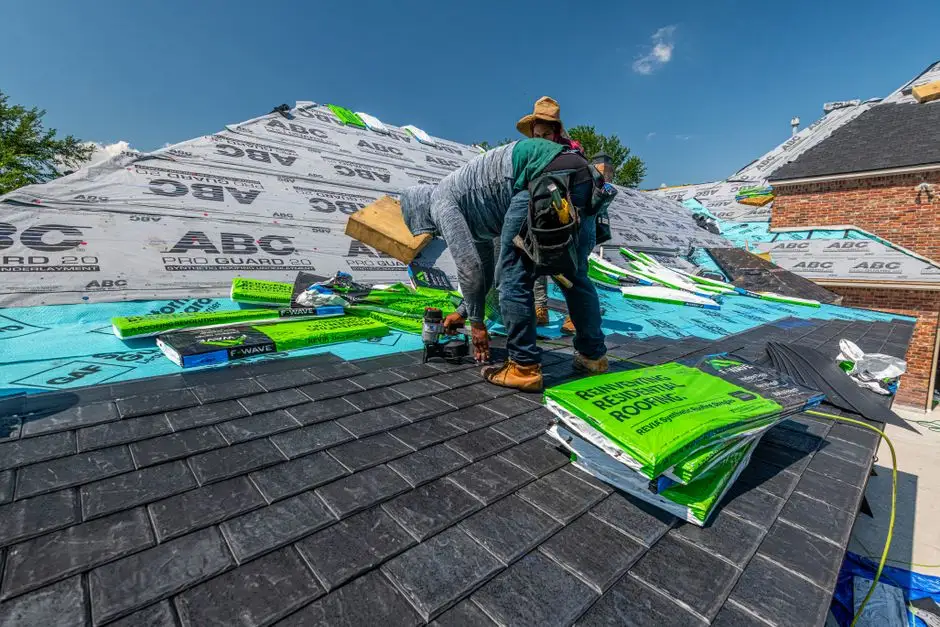

Most roofing contractors fail because they believe a generic CRM is the solution to their operational chaos. This is a fundamental misunderstanding of the industry’s unique requirements. Relying on off-the-shelf software to manage multi-stage job sites, material logistics, and complex residential insurance claims is not just a limitation; it is a strategic liability that guarantees technical debt from day one. You do not need a CRM that tracks generic sales; you need a system that understands the physics of a roof replacement and the volatility of field operations.
Building a custom CRM architecture for roofing contractors requires moving away from the standard ‘customer-centric’ model toward a ‘project-centric’ data schema. In this article, we will explore why standard platforms often fail to support the granular tracking of satellite imagery, crew scheduling, and supply chain dependencies. By shifting our architectural focus, we can create a system that acts as a true engine for growth rather than a static repository for contact information.
Designing a Project-Centric Data Schema
The core failure of most CRM platforms in the construction industry is their reliance on a monolithic ‘Account’ or ‘Contact’ object. For a roofing contractor, the ‘Project’ is the primary entity, not the client. A roofing project involves multiple temporal stages: lead generation, aerial measurement, material procurement, permit acquisition, crew dispatch, and final inspection. Each of these stages requires distinct data points that do not fit into standard CRM fields. A robust architecture must prioritize a relational structure where the project exists as the central node, linking to sub-entities such as insurance adjusters, material suppliers, and subcontractors.
When designing this schema, we must account for the high frequency of updates from the field. Consider the implementation of a polymorphic association for project tasks. Unlike a standard sales pipeline, a roofing job requires dynamic task generation based on specific conditions—for example, if a roof is steep-slope, the safety equipment requirements change, which should trigger a specific checklist in the task module. By using a relational database like PostgreSQL, you can enforce strict constraints on these dependencies, ensuring that a project cannot move to the ‘Installation’ phase unless the ‘Permit Approved’ status is verified. This level of rigor is exactly why many companies struggle when they move from manual processes to rigid systems, as discussed in our analysis of building a custom CRM for sales teams.
Furthermore, the data schema must support spatial data types. Roofing is inherently location-based. Integrating PostGIS into your database allows you to query projects by geographic proximity, which is essential for optimizing crew routes and managing material logistics. Instead of simple address fields, storing coordinates allows for spatial joins that can group projects by neighborhood, enabling more efficient material delivery scheduling. This is the difference between a system that records data and a system that provides actionable intelligence for operational velocity.
Handling Asynchronous Field Operations
Roofing contractors operate in environments with poor connectivity and high physical demand. A CRM architecture that assumes a continuous, low-latency connection will fail the moment a foreman tries to upload a site photo from a rural roof. Your architecture must be designed for ‘offline-first’ capability. This involves implementing a local-first data synchronization strategy where the mobile application maintains a local SQLite database that syncs with the central server whenever connectivity is restored. This architecture prevents data loss and ensures that field teams are never blocked by network instability.
To manage this synchronization effectively, we implement a conflict resolution strategy based on vector clocks or timestamp-based merging. When a foreman updates a project status while offline, and an office administrator simultaneously updates the same project, the system must deterministically merge these changes without manual intervention. This requires a sophisticated API layer that handles partial state updates. By utilizing RESTful principles, you can ensure that the mobile client only pushes the differential changes rather than the entire project record, which significantly reduces bandwidth consumption and increases reliability.
The backend architecture should leverage message queues, such as Redis or RabbitMQ, to process field uploads in the background. When a crew uploads 50 high-resolution photos of a completed job, the application should return a 202 Accepted status immediately, while the images are processed, resized, and associated with the project record asynchronously. This prevents the API from timing out during heavy I/O operations and ensures that the mobile interface remains responsive. This architectural pattern is vital when you are comparing the flexibility of a custom build against rigid third-party platforms that often struggle with custom file handling and background processing.
Integrating Aerial Measurement and Satellite Data
Modern roofing relies heavily on high-fidelity imagery and automated measurements. Integrating these services into your CRM is not merely about pulling a PDF; it is about ingesting geospatial data directly into your project records. Your architecture should provide a middleware layer that interacts with third-party aerial measurement APIs, parsing the returned JSON data to pre-populate material lists and cost estimates. By automating this, you remove the human error inherent in manual measurement entry, which is a leading cause of project margin erosion.
The integration should be handled through an event-driven architecture. When an aerial report is generated, the provider sends a webhook to your system, which triggers an automated workflow. This workflow parses the roof square footage, pitch, and waste factor, and then updates the project estimate record. If the project estimate exceeds a certain threshold, the system can automatically flag it for a senior estimator’s review. This automation is a key differentiator in scaling a roofing business, as it allows your sales team to generate accurate quotes in minutes rather than hours.
We must also consider the security implications of handling this data. These aerial reports often contain sensitive client information and site-specific vulnerabilities. When integrating these third-party services, you must adhere to strict data segregation policies. Ensure that your API keys are managed through a secure vault service and that all incoming data is sanitized and validated against your schema before being persisted. This proactive approach to security is similar to the rigor required when managing sensitive transaction data in custom e-commerce platforms, where the integrity of the data pipeline is paramount.
Scalable Infrastructure and Containerization
As a roofing business grows, the load on your CRM will shift from sporadic manual entries to high-concurrency requests during peak storm season. A monolithic application will inevitably become a bottleneck. We recommend a containerized architecture using Docker, orchestrated by Kubernetes or a managed service like AWS ECS. This allows you to scale the API and worker containers independently. During a storm, when your team is creating hundreds of new projects and processing thousands of images, the system should automatically spin up more background workers to handle the image processing queue without affecting the responsiveness of the sales dashboard.
Database performance is the next critical pillar. As your project count reaches the tens of thousands, standard sequential scans will degrade system performance. Implement database partitioning based on time (e.g., by fiscal year or quarter) to keep index sizes manageable. Additionally, implement a read-replica strategy for your reporting and analytics dashboards. By offloading complex queries—such as year-to-date revenue by region or material usage trends—to a read-only replica, you ensure that the primary write-intensive database remains performant for the field teams.
Infrastructure as Code (IaC) is non-negotiable in this setup. Using tools like Terraform or Pulumi, you can define your entire infrastructure in version-controlled scripts. This ensures that your production, staging, and development environments are identical, which eliminates the ‘it works on my machine’ syndrome. This consistency is critical for maintaining high velocity and reducing the risk of downtime, which is essential for businesses that cannot afford to have their CRM go offline during the busiest months of the year. This approach aligns with the principles of building robust technical frameworks for high-growth SaaS environments.
Security and Data Access Control
Roofing contractors often have complex organizational structures, with sales reps, project managers, field foremen, and subcontractors requiring different levels of access. A flat permission structure is a security nightmare. Your architecture must implement Role-Based Access Control (RBAC) combined with Attribute-Based Access Control (ABAC). This allows you to define policies such as: ‘Foremen can only see project documents for projects assigned to their active crew’ or ‘Subcontractors can only view the scope of work and site photos, not client contact information or contract pricing.’
Audit logging is the second half of this security equation. Every interaction with the database, especially those involving sensitive financial data or client PII (Personally Identifiable Information), must be recorded in an immutable audit trail. This log should capture the actor, the action, the timestamp, and the previous/new state of the data. This is not just for security; it is a critical tool for resolving disputes with clients or subcontractors. If a dispute arises over a change order, the audit log provides an objective history of who authorized the change and when.
Encryption at rest and in transit is the baseline. However, for a roofing CRM, you should also consider field-level encryption for highly sensitive fields like social security numbers (if you are collecting them for financing) or bank account details. By encrypting this data at the application layer before it hits the database, you ensure that even in the event of a database compromise, the most critical data remains unusable to an attacker. These measures represent the industry standard for protecting client data in custom software development.
Reporting and Real-Time Analytics
A CRM that does not provide real-time visibility into job profitability is just a digital filing cabinet. The architecture must include an analytics layer that aggregates data from the project, material, and labor modules. We recommend building a dedicated data warehouse or a star-schema model within your existing database to facilitate fast analytical queries. This allows you to track metrics like ‘average cycle time per project,’ ‘material waste percentage by crew,’ and ‘profit margin by roof type’ in real-time.
To make this data useful, implement a dashboarding engine that allows for custom views. A sales manager needs to see the pipeline, while the operations director needs to see the current status of all open permits. By utilizing a GraphQL API layer, your front-end dashboards can request only the specific data they need, reducing the payload and improving load times. This is particularly important when visualizing complex datasets, such as mapping all active jobs across a city to optimize fuel usage for site visits.
Finally, consider the predictive capabilities of your analytics. By analyzing historical project data, your CRM can begin to flag projects that are at risk of going over budget or behind schedule based on similar past projects. This level of insight transforms your CRM from a passive tool into a proactive management system. By identifying potential issues before they manifest as delays, you can significantly improve your operational efficiency and customer satisfaction, which are the primary drivers of growth in the roofing industry.
Managing Technical Debt and System Evolution
The biggest risk to a custom CRM is not the initial build, but the accumulation of technical debt over time. As your business evolves, your requirements will change. A system that is too rigid will become a burden. To mitigate this, prioritize modularity in your architecture. Use a microservices or modular monolith approach where each domain—such as the ‘Estimate Module’ or the ‘Scheduling Module’—is encapsulated. This allows you to update or replace specific components without requiring a complete system overhaul.
Documentation is the primary defense against technical debt. Every architectural decision, from the choice of database indexing strategy to the implementation of a specific third-party integration, must be documented in a central knowledge base. This includes ‘Architectural Decision Records’ (ADRs) that explain not just what was built, but why it was built that way and what alternatives were considered. This practice ensures that as your team grows or changes, the context behind critical technical decisions is not lost.
Regular code reviews and automated testing are essential. Your testing suite should cover not just unit tests, but integration tests that simulate the entire lifecycle of a roofing project. When you have a robust test suite, you can refactor your code with confidence, knowing that you will catch regressions before they reach production. This discipline is what separates a long-lived, high-value asset from a legacy system that eventually requires a total, costly rewrite. By maintaining a clean architecture, you ensure that your CRM remains an engine for growth for years to come.
Mastering Your CRM Infrastructure
The architecture of your CRM is the foundation upon which your entire operational strategy rests. By choosing a project-centric schema, prioritizing offline-first capabilities, and ensuring your infrastructure is both scalable and secure, you create a system that can adapt to the rigorous demands of the roofing industry. This is not about choosing the easiest path, but about building a sustainable competitive advantage through technology that works exactly the way your business does.
Remember that the goal of a custom CRM is to remove friction. Every manual data entry, every sync error, and every slow report is a tax on your team’s productivity. By investing in a well-architected solution, you are paying down that tax and clearing the way for your company to scale. As you move forward, keep these architectural principles in mind to ensure your system remains a robust asset rather than a source of technical debt.
[Explore our complete CRM — Custom CRM directory for more guides.](/topics/topics-crm-custom-crm/)
Factors That Affect Development Cost
- Complexity of custom integrations with aerial measurement services
- Requirement for offline-first mobile synchronization
- Data migration volume from legacy systems
- Scalability requirements for peak storm season concurrency
- Infrastructure automation and CI/CD setup complexity
The effort required for a custom CRM build varies significantly based on the number of automated workflows and the depth of field-to-office synchronization required.
Building a custom CRM is a significant commitment, but for roofing contractors operating at scale, it is the only way to ensure your software keeps pace with your field operations. By focusing on a project-centric architecture, robust data synchronization, and scalable infrastructure, you can build a system that drives efficiency, improves margins, and provides a clear view of your business performance.
If you are ready to move beyond the limitations of generic software and build a custom solution tailored to the unique operational realities of your roofing business, we are here to help. Contact NR Tech Studio to build your next project and ensure your team has the tools they need to succeed.
NR Tech Studio builds custom web apps, mobile apps, SaaS platforms, and internal tools for growing businesses. If you’re working through a technical decision, feel free to reach out — no commitment required.