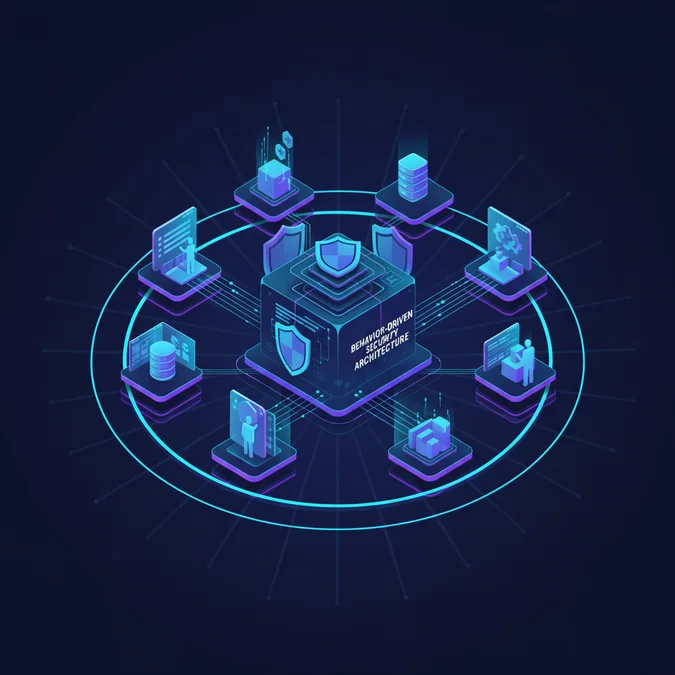

BBD software development, commonly referring to Behavior-Driven Development (BDD), is a collaborative software design process where engineering teams define application behaviors in executable, plain-language specifications before writing application logic. When applied to Laravel web services, behavior-driven patterns formalize acceptance criteria, automated functional tests, and security guardrails through verifiable ubiquitous language.
According to recent industry engineering surveys, over 68% of enterprise software regressions stem from misaligned domain requirements and ambiguous acceptance criteria rather than technical execution errors. Traditional software workflows frequently treat functional verification and defensive threat modeling as disjointed phases, allowing business logic bypasses and authentication oversights to slip directly into production environments.
For security engineers and systems architects, behavior-driven practices offer a rigorous mechanism to convert abstract security baselines into automated, continuous regression tests. By shifting defensive specifications directly into the development cycle, engineering teams eliminate specification drift, prevent OWASP Top 10 business logic exploits, and enforce verifiable data protection policies across the continuous delivery pipeline.
What Is BDD in Modern Backend Architecture?
Behavior-Driven Development formalizes domain communication by expressing business expectations through concrete user journeys. Rather than focusing solely on isolated units of code, behavior-driven architectures evaluate how discrete components interact when processing user input, managing session state, and dispatching side effects.
The Triad Collaboration Dynamic
The foundation of this methodology relies on the Three Amigos model: continuous alignment between product stakeholders, quality assurance analysts, and systems engineers. Within security-focused organizations, this triad expands to include application security practitioners. This cross-functional unit reviews proposed behaviors prior to development, ensuring that access boundaries, authorization rules, and data handling requirements are incorporated into user stories before writing code.
- Domain Ubiquitous Language: Developers, business analysts, and security auditors share a single, non-technical vocabulary to define application states.
- Executable Acceptance Specifications: Requirements double as integration test suites executed on every pull request.
- Living Defensive Documentation: System specifications evolve concurrently with codebase modifications, preventing out-of-date security documentation.
When structuring modern microservices or modular monoliths, behavior-driven boundaries prevent architectural erosion. By forcing technical teams to specify system state transitions explicitly, developers mitigate unhandled boundary conditions that malicious actors frequently target.
Threat Modeling and the Gherkin Syntax for Application Security
Standard Gherkin syntax structures user interactions through Given-When-Then semantics. While traditionally utilized for user-facing features, security engineering applies this structure to enforce boundary validation, authentication integrity, and compliance requirements.
Mapping Attack Surfaces to Executable Scenarios
Application threats frequently emerge within gaps left by undefined behavior. By writing negative test cases alongside standard paths, teams explicitly define how the application must respond when confronted with malformed input, expired tokens, or unverified privileges. This methodology aligns directly with defensive engineering practices described in our analysis of threat-driven agile workflows.
The following table outlines how standard threat vectors translate into executable behavioral specifications:
| Threat Vector | Security Objective | Behavioral Acceptance Criteria |
|---|---|---|
| Broken Object Level Authorization | Prevent horizontal privilege escalation | User A cannot view, mutate, or delete resource IDs assigned to User B |
| Mass Assignment | Prevent internal state override | Payload fields matching protected attributes return HTTP 422 Unprocessable Entity |
| Credential Stuffing | Throttle automated abuse | Consecutive failed attempts trigger progressive delays and account lockout |
| Data Leakage | Enforce compliance and masking | PII and credentials never appear within log sinks or outbound API payloads |
Transforming security policies into Gherkin scenarios eliminates ambiguity during sprint planning. Developers are provided explicit definitions of negative test conditions, ensuring defensive controls are implemented before pull requests reach peer review.
Behavior-Driven Implementation in Laravel Services
Laravel provides an expressive testing layer that accommodates behavior-driven architectures through Pest PHP, PHPUnit, and Behat. When constructing services, such as a secure invoice download pipeline, specifications must confirm not only functional delivery but strict access containment.
Writing the Acceptance Specification
Consider a scenario requiring multi-tenant document isolation. In multi-tenant environments, Broken Object Level Authorization (BOLA) remains a critical threat. The behavioral requirement specifies that authenticated users must only access documents belonging directly to their tenant organization.
<php

use App\Models\User;
use App\Models\Tenant;
use App\Models\Document;
use Illuminate\Foundation\Testing\RefreshDatabase;

uses(RefreshDatabase:class);

it(\'denies access when a user attempts to download another tenants document\', function () {
 // Given: Two distinct tenant environments with registered users
 $tenantAlpha = Tenant:factory()->create();
 $tenantBeta = Tenant:factory()->create();

 $attacker = User:factory()->for($tenantAlpha)->create();
 $victim = User:factory()->for($tenantBeta)->create();

 $sensitiveDocument = Document:factory()->for($tenantBeta)->create([
 \'filepath\' => \'documents/export_financials.pdf\',
 \'is_confidential\' => true,
 ]);

 // When: The attacker requests the resource identifier belonging to tenant beta
 $response = $this->actingAs($attacker)
 ->getJson("/api/v1/documents/{$sensitiveDocument->id}/download");

 // Then: The platform must forbid execution and conceal resource existence
 $response->assertStatus(404);
});
This specification mirrors the operational patterns utilized in bespoke enterprise software architectures. By asserting a 404 Not Found rather than a 403 Forbidden, the service prevents resource enumeration attacks, treating security boundaries as fundamental functional requirements.
Mitigating the OWASP Top 10 with Behavior-Driven Test Suites
A common vulnerability in web platforms is the failure to continuously validate business logic rules. While static analysis tools identify outdated dependencies or raw SQL concatenations, they cannot infer whether an authenticated tenant should have access to an internal ledger update.
Defending Against Injection and Mass Assignment
Within Laravel, model attribute casting and Form Request validation represent the primary line of defense. Behavior-driven specifications must systematically verify that unexpected attributes are discarded before reaching the persistence layer.
- Attribute Protection: Ensure tests submit payloads containing internal flags such as
is_adminorrole_idto assert that controller filters drop unauthorized keys. - Strict Type Verification: Validate that non-primitive values, such as JSON-encoded configuration arrays, do not allow arbitrary deserialization or type-juggling vulnerabilities.
- Boundary Assertion: Execute requests with payload boundaries exceeding standard thresholds to verify memory limits and timeout policies.
By shifting focus toward system behaviors, defensive test suites validate input hygiene directly against the HTTP router. This approach prevents developers from inadvertently exposing unprotected internal properties during refactoring phases.
Enforcing Data Compliance and Cryptographic Boundaries
Statutory requirements such as GDPR, HIPAA, and PCI-DSS require that sensitive personal data and financial records are protected both at rest and in transit. Behavioral scenarios can validate cryptographic controls automatically throughout development pipelines.
Automated Cryptographic State Verification
When handling sensitive payment details or customer billing records, engineering teams must ensure plaintext strings are never written to disk or database tables. These practices are critical when engineering complex workflows, such as those covered in our guide on subscription billing system architecture.
<php

use App\Models\BillingProfile;
use Illuminate\Support\Facades\DB;

it(\'ensures tax identification numbers are encrypted at rest in the database\', function () {
 // Given: A raw identification string containing sensitive citizen data
 $rawTaxId = \'123-45-6789\';

 // When: A billing profile is generated through the service domain
 $profile = BillingProfile:factory()->create([
 \'tax_id\' => $rawTaxId,
 ]);

 // Then: Model properties must resolve plaintext while raw database records are encrypted
 expect($profile->tax_id)->toBe($rawTaxId);

 $rawRecord = DB:table(\'billing_profiles\')->where(\'id\', $profile->id)->first();
 expect($rawRecord->tax_id)->not->toBe($rawTaxId);
 expect($rawRecord->tax_id)->toContain(\'eyJ\'); // Standard Laravel encrypted payload prefix
});
Automating cryptographic checks via behavioral assertions guarantees that encryption routines remain active across migrations, framework upgrades, and schema alterations. If an engineer accidentally removes an encrypted model cast, the behavioral test suite immediately fails prior to staging deployment.
CI/CD Pipeline Security Audits and Living Documentation
Behavior-driven development transforms automated specifications into verifiable documentation that serves both technical teams and external compliance auditors. When incorporated into continuous integration pipelines, every build acts as an automated audit trail.
Integrating Behavioral Audits into GitHub Actions
A secure deployment pipeline halts artifact generation if any behavioral boundary or compliance constraint is violated. The execution flow must isolate third-party services using mock drivers, preventing live secrets from exposure within CI runner environments.
- Static Analysis and Linting: Execute PHPStan at maximum strictness to verify type safety and catch insecure function calls.
- Automated Secret Scanning: Parse Gherkin feature files and test fixtures to ensure mock datasets do not contain live API credentials.
- Behavioral Suite Execution: Run functional specifications using ephemeral database containers isolated from internal corporate networks.
- Audit Artifact Generation: Export HTML test execution summaries to provide cryptographic evidence of compliance validation during SOC2 or ISO 27001 assessments.
Treating executable specifications as compliance artifacts bridges the communication gap between software engineers, internal security teams, and regulatory investigators.
Hidden Pitfalls of Behavior-Driven Development
While behavior-driven methodologies provide structured defensive coverage, improper adoption introduces friction, testing overhead, and false senses of security. Teams must recognize architectural failure modes before expanding adoption.
Common Anti-Patterns in Behavioral Testing
A frequent error is coupling scenario descriptions directly to user interface implementations. When tests specify distinct CSS selectors, button colors, or exact form input orders, minor interface updates invalidate the test suite without exposing actual regressions.
- Flaky Test Suites: Non-deterministic test runs caused by reliance on network endpoints, untamed race conditions, or unseeded test databases erode developer confidence.
- Neglecting Negative Edge Cases: Authoring scenarios exclusively for happy paths while omitting authorization failures, validation thresholds, and rate limits leaves critical attack surfaces untested.
- High Maintenance Overhead: Duplicating step definitions across hundreds of feature files without abstraction layers increases technical debt and slows development velocity.
These architectural realities must be balanced carefully when evaluating platforms for long-term scalability, particularly within enterprise-grade ERP architectures where data isolation rules are exceptionally intricate.
Migration Path: Transitioning Legacy Monoliths to BDD
Migrating an existing legacy code repository toward behavior-driven testing requires an incremental approach. Attempting to retrofit hundreds of existing controllers simultaneously risks developer burnout and stalled feature roadmaps.
A Phased Extraction Strategy
Begin migration at the highest-risk boundaries of the application: authentication controllers, role assignment middleware, and financial transaction endpoints. Establishing behavioral boundaries around these components protects critical business operations before addressing lower-risk internal tools.
- Phase 1 (Perimeter Encapsulation): Write black-box behavioral scenarios covering external API boundaries and session authentication flows without altering underlying domain code.
- Phase 2 (Critical Logic Characterization): Identify brittle domain logic, writing negative assertion tests that capture current edge cases and document bugs explicitly.
- Phase 3 (Continuous Specification Refactoring): Require that all future bug fixes begin with an executable failing scenario, gradually expanding behavioral coverage across active functional domains.
By prioritizing defensive boundaries over total code coverage metrics, systems architects systematically stabilize vulnerable legacy codebases while preserving engineering velocity.
Explore the Laravel Architecture Directory
Modern software development requires balancing operational security, architectural performance, and robust domain design. Mastering testing strategies, application state management, and defensive engineering practices is an ongoing process that benefits from comprehensive reference architectures.
Explore our complete Laravel, Basics directory for more guides.
Frequently Asked Questions
What does BBD stand for in software development?
BBD is a common search variation for BDD, which stands for Behavior-Driven Development. It is an agile software development methodology that encourages collaboration among developers, quality assurance teams, and non-technical business stakeholders using ubiquitous, natural language specifications.
How does BDD differ from standard Test-Driven Development (TDD)?
While Test-Driven Development focuses on verifying isolated units of code, functions, and internal class methods, Behavior-Driven Development evaluates application behavior from an end-to-end perspective. BDD utilizes human-readable syntax such as Given-When-Then to describe complete user journeys and architectural boundaries.
Can behavioral tests prevent web application vulnerabilities?
Yes. By writing negative test scenarios that simulate unauthorized data access, privilege escalation, and malformed inputs, teams can mathematically verify that security guardrails reject unauthorized actions before changes deploy to production.
Which testing tools support BDD workflows in the Laravel ecosystem?
Teams building Laravel applications typically use Pest PHP or PHPUnit for expressive, behavior-style assertions. For teams requiring strict Gherkin feature-file integration, Behat and Laravel-Behat bridge extensions allow direct execution of plain-text scenarios.
Adopting behavior-driven development transforms abstract security requirements into reliable, continuous automated tests. By expressing application logic through structured Gherkin specifications and expressive PHP frameworks, engineering teams eliminate architectural ambiguities, insulate systems against OWASP Top 10 vulnerabilities, and enforce reliable data compliance standards directly within continuous delivery workflows.
When deciding whether to introduce behavioral testing into your development lifecycle, evaluate the operational trade-offs: accept higher upfront specification investment in exchange for verifiable multi-tenant boundaries, resilient living documentation, and eliminated specification drift across long-term system deployments.