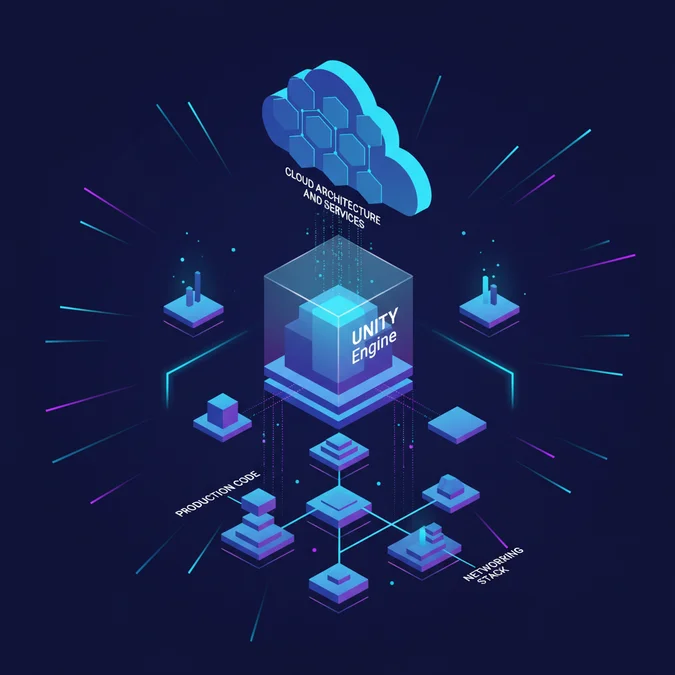

The 2023 runtime fee announcement marked a definitive inflection point for game development architecture. For many lead developers and technical directors, the event transformed the engine from a black-box utility into a critical supply chain risk. This analysis moves past the headlines to examine the long-term technical implications of engine dependency and the shift toward more resilient, agnostic development patterns in 2026.
By evaluating the structural vulnerabilities exposed during this period, engineering teams can better navigate the trade-offs between rapid iteration and the hazards of proprietary lock-in. We examine the current landscape, the realities of engine migration, and the frameworks required to build robust, decoupled game logic that survives shifts in vendor policy.
Anatomy of the Unity Engine Controversy
The unity engine controversy was fundamentally a failure of communication and predictability. When the proposed runtime fee was introduced, it retroactively altered the commercial contract for existing projects, forcing studios to treat their engine vendor as an unpredictable variable in their financial forecasting.
- Lack of Transparency: The sudden introduction of install-based metrics created an immediate conflict with existing analytics and telemetry pipelines.
- Retroactive Policy Shifts: The attempt to apply new licensing terms to older, released titles broke the industry standard of stable long-term support.
- Trust Erosion: The resulting loss of developer confidence forced many teams to perform a formal audit of their dependency on proprietary middleware.
For engineering managers, this period highlighted the necessity of a Migration Risk Assessment checklist:
- Audit Dependency Surface: Identify all proprietary APIs or engine-specific data structures currently embedded in core game logic.
- Review Licensing Stability: Ensure that current service-level agreements (SLAs) contain clauses protecting against retroactive fee structures.
- Evaluate Exit Velocity: Estimate the man-hours required to port core systems to a secondary engine if the primary vendor becomes untenable.
Architectural Consequences of Engine Lock-in
The unity game engine controversy revealed that deep coupling with engine-specific features is a technical debt multiplier. When game logic is tightly bound to proprietary event systems or component models, the cost of migration becomes prohibitive. Consider a typical implementation where game state is directly tied to the engine’s serialization format.
// Risky: Deep coupling to Engine-Specific Serialization
public class PlayerState: MonoBehaviour {
 public void SaveData() {
 string json = JsonUtility.ToJson(this);
 File.WriteAllText(path, json);
 }
}
Architectural Callout: The example above creates a hard dependency on the engine’s serialization implementation. If the engine vendor changes how this data is handled or introduces restrictive licensing on its output, the game becomes trapped. Decoupling this requires an abstraction layer that treats the engine as a plugin rather than a foundational requirement.
Comparative Analysis: Unity vs Godot vs Unreal
In 2026, the decision to commit to a specific engine is governed by a balance of feature set, cost predictability, and licensing stability. The following table highlights the current landscape for professional studios.
| Metric | Unity | Godot | Unreal Engine |
|---|---|---|---|
| Commercial Model | Seat-based/Enterprise | Open Source (MIT) | Royalty-based (5%) |
| Source Access | Limited/Enterprise | Full Access | Full Access |
| Lock-in Risk | Moderate/High | Low | Moderate |
| Tooling Ecosystem | Mature | Evolving | Industry Standard |
Strategies for Engine Agnostic Development
Building engine-agnostic game logic is the most effective hedge against vendor instability. By adopting a Service-Oriented Architecture (SOA) or utilizing a clean Data-Oriented Technology Stack (DOTS), engineers can isolate core game systems from the engine’s rendering and physics layers.
- Define Interface Abstractions: Use interfaces to define core game services (e.g. IInputService, IPhysicsEngine).
- Externalize Data: Keep game state in plain C# or C++ structures that do not inherit from engine-specific base classes.
- Modularize Logic: Build game systems as independent modules that communicate through message buses rather than direct references.
// Robust: Engine-Agnostic Service Interface
public interface IPlayerMovement {
 void Move(Vector3 direction);
}

// Implementation remains outside the Engine's lifecycle
public class PlayerController: IPlayerMovement {
 public void Move(Vector3 direction) { /* Logic here */ }
}
Frequently Asked Questions
What triggered the unity engine controversy?
The controversy originated from proposed changes to Unity’s runtime fee structure in late 2023. Developers expressed concern over retroactive licensing changes, transparency, and the potential impact on project profitability, leading to widespread industry distrust and a reevaluation of engine vendor lock-in risks by major game studios.
Did the unity game engine controversy permanently damage the platform?
While the controversy caused significant reputational damage and prompted many studios to explore alternatives like Godot or Unreal, Unity has since revised its pricing model and leadership structure. By 2026, the focus has shifted toward restoring developer trust through improved communication and predictable, transparent commercial policies.
The unity engine controversy serves as a seminal lesson in the fragility of proprietary vendor relationships. As we move through 2026, the focus for lead engineers is on building systems that are modular, testable, and, above all, portable. By prioritizing architectural decoupling over convenience, studios can ensure that their technical roadmap remains under their own control, regardless of shifts in the broader engine market.
Ultimately, the most resilient architecture is one that treats the engine as a replaceable component. By auditing existing dependencies and adopting service-oriented design patterns, teams can mitigate the risks of lock-in and maintain the longevity of their projects.