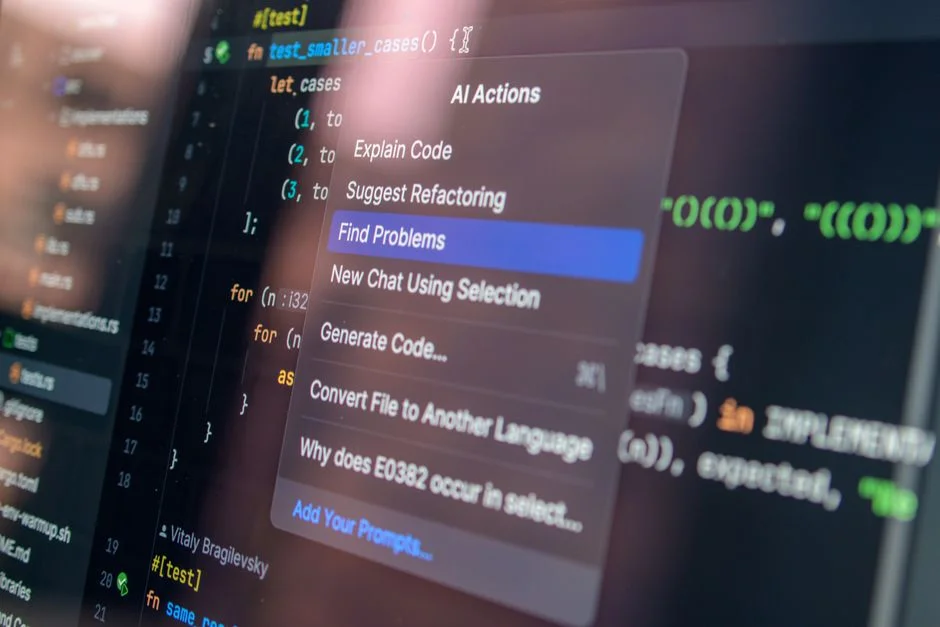

Imagine you are a master stonemason tasked with building a fortress. A stranger arrives offering a magical automated chisel that claims to carve stone blocks ten times faster than any human. While the speed is enticing, you have no way to verify if the chisel is carving with structural integrity or creating microscopic fractures that will cause the entire wall to collapse under the weight of a siege. In 2026, AI-powered code generation tools serve as this magical chisel. For a security engineer, the allure of rapid feature delivery is consistently overshadowed by the existential risk of introducing untraceable vulnerabilities into a production codebase.
This evaluation focuses not on the speed of delivery, but on the security posture of the generated artifacts. We will dissect the technical landscape of 2026, where Large Language Models (LLMs) are deeply integrated into the development lifecycle. The primary challenge remains the same: how do we maintain a hardened security perimeter when the very source code we deploy is authored by non-deterministic agents that do not understand the nuance of threat modeling or data privacy?
The Anatomy of AI-Driven Vulnerabilities
The core danger of AI code generation in 2026 lies in the phenomenon of probabilistic code synthesis. Unlike human developers who follow established design patterns, LLMs generate code based on statistical likelihoods derived from vast training datasets. If those datasets contain legacy code patterns—which most do—the model will faithfully replicate insecure practices from a decade ago. We are not just dealing with syntax errors; we are dealing with the automated propagation of OWASP Top 10 vulnerabilities.
Consider the risk of SQL injection or insecure direct object references (IDOR). An AI agent might generate a database query that is syntactically perfect but structurally vulnerable because it fails to parameterize inputs in the specific context of a custom ORM or a complex legacy schema. As we discuss in our guide on optimizing your database schema, the architecture must be inherently secure; if an AI tool ignores these constraints, it essentially creates a backdoor for attackers. The model does not ‘know’ that the input is coming from an untrusted web form; it only knows that the pattern ‘looks’ like common code it has seen before. This is a fundamental failure of context awareness.
Data Privacy and Localized LLM Deployment
In 2026, the industry has shifted away from sending proprietary source code to public cloud APIs for generation tasks. The risk of data leakage—where sensitive algorithms or customer-specific business logic are consumed into the training set of a third-party model—is now recognized as a critical compliance breach. Organizations are increasingly adopting self-hosted, fine-tuned models that run within a private virtual private cloud (VPC). This creates a boundary where the code never leaves the secure perimeter.
When evaluating tools for your internal stack, the ability to perform Retrieval Augmented Generation (RAG) on your own codebase is mandatory. By grounding the AI in your specific security documentation and existing codebase, you reduce hallucinations. However, even with local deployment, the model may still suggest deprecated libraries that carry known CVEs. You must implement automated scanning tools that run immediately after generation, treating the AI output as untrusted user input that must be sanitized before reaching the CI/CD pipeline.
The Illusion of Productivity and Security Debt
There is a dangerous metric prevalent in management circles: lines of code (LOC) generated per day. For a security engineer, this is a vanity metric that hides the accumulation of ‘security debt.’ When developers rely on AI to generate complex authentication flows or encryption modules, they often fail to perform the necessary peer reviews. This is akin to the risks discussed in our analysis of how small businesses are targeted by automated social engineering, where speed leads to a lack of critical scrutiny. If an AI generates a function for password hashing, and it uses a weak algorithm, the human developer might accept it without verifying the entropy requirements.
The solution is not to ban these tools, but to integrate them into a ‘human-in-the-loop’ architecture. Every snippet generated by an AI must be treated as a draft that requires a formal security audit. If the velocity increase comes at the cost of bypassing your standard security gates, the project is already in a state of failure. We must prioritize security-first coding standards where the AI is merely an assistant, not the architect.
Integrating AI into the Secure Development Lifecycle
To successfully integrate AI into a secure development lifecycle, we must treat AI agents as untrusted contributors. This means every commit authored by an AI must be subjected to the same rigors as a junior developer—or perhaps even more, given the AI’s tendency to be overly confident in insecure patterns. We suggest implementing automated static analysis tools (SAST) as a mandatory gate in your Git hooks. If the AI generates code that violates your security policy, the commit should be automatically rejected.
Furthermore, we must look at how we document these processes. As noted in our research on creating technical documentation that AI can actually index, the way you structure your internal knowledge base directly impacts the quality of the suggestions the AI provides. If your internal security guidelines are poorly structured, the AI will provide poor advice. By maintaining a clean, machine-readable repository of your security standards, you enable the AI to act within the guardrails you have established.
The Role of AI Agents in Threat Modeling
Beyond just writing code, AI agents are increasingly used to perform automated threat modeling. While this sounds revolutionary, it is fraught with danger. An AI agent might identify obvious threats but miss the subtle ‘logic bombs’ or complex state-based vulnerabilities that require a human’s understanding of business context. We have observed that when organizations rely solely on AI for security assessments, they often ignore the long-term value of human-centric AI business strategies, which prioritize real-world outcomes over automated checklists.
A security engineer’s role in 2026 is to act as the ‘Red Team’ supervisor for these AI agents. You should use AI to generate potential attack vectors against your own code, but never trust it to be the sole arbiter of what constitutes a ‘secure’ implementation. The AI should be used to broaden your perspective on potential vulnerabilities, not to narrow your focus to what it considers ‘common’ threats.
Establishing a Secure Tooling Perimeter
In 2026, the most secure organizations are those that treat AI integration as a supply chain risk. Every AI tool, whether it is an IDE plugin or an API-based assistant, introduces a new dependency. If the vendor of your AI tool suffers a breach, or if their model is poisoned, your codebase could be compromised. We recommend a policy of ‘least privilege’ for AI tools. Never grant your AI assistant write access to your production secrets or environmental variables. Keep the AI environment isolated from the production environment at all costs.
This isolation is crucial. Even if the AI is ‘safe’ today, it might be updated tomorrow with a model that is trained on different, potentially malicious data. You must have a process for auditing the outputs of your AI tools regularly. Think of this as a continuous audit process where you sample the code generated by the AI and compare it against your internal security benchmarks. If you see a trend of insecure patterns emerging, you must be prepared to disable the tool immediately.
The Challenge of Non-Deterministic Security
The biggest hurdle for security engineers in 2026 is the non-deterministic nature of modern LLMs. If you ask an AI to write a function today, it might return a secure implementation. If you ask it again tomorrow, it might return something entirely different—and potentially insecure. This creates a nightmare for reproducibility and auditability. We cannot rely on the ‘trust’ of a model; we must rely on the ‘verification’ of the output.
To manage this, we suggest a policy where all AI-generated code is stored in a ‘quarantine’ branch. It only merges into the main development branch after passing a series of automated security tests and a manual peer review. This ‘quarantine’ approach ensures that we are never blindly trusting the output of an AI agent, regardless of how ‘smart’ the model claims to be. It is the only way to maintain a consistent security posture in an era of rapid, automated code synthesis.
Future-Proofing Your Security Architecture
As we move toward 2027 and beyond, the integration of AI into the software development lifecycle will only deepen. We must prepare for a future where AI agents are not just writing code, but also managing infrastructure, configuring networks, and deploying services. The security risks will scale accordingly. We must move away from perimeter-based security toward a ‘Zero Trust’ architecture, where every piece of code—whether written by a human or an AI—is treated as potentially malicious until proven otherwise.
This requires a cultural shift in your engineering organization. Developers must be trained not just to write code, but to evaluate the code that AI suggests. They need to understand the underlying security principles that the AI is attempting to automate. By fostering a culture of ‘skeptical engineering,’ we can leverage the speed of AI while maintaining the rigor that our users expect from our software.
Bridging the Gap: Human-AI Collaboration
The ultimate goal is to reach a state of productive, secure collaboration. This means the AI handles the mundane, repetitive tasks—boilerplate code, unit test scaffolding, and basic refactoring—while the human engineer focuses on high-level architecture, security threat modeling, and business logic. This division of labor is the most effective way to minimize the risks of AI-generated code. When the AI is limited to low-risk tasks, the blast radius of a potential error is significantly reduced.
We must also invest in tooling that helps us monitor the ‘health’ of our AI assistants. Just as we monitor the health of our servers, we should monitor the quality and security of the code being suggested by our AI tools. If we see a decline in quality, we need the capability to roll back to a previous version of the model or to adjust the system prompts to force the AI back into a more secure behavior pattern.
Strategic Alignment with AI Integration Standards
To ensure long-term sustainability, your AI integration strategy must align with your overall security governance. This means documenting every AI tool in your security registry, conducting periodic risk assessments of these tools, and ensuring that they comply with your internal data privacy policies. Do not treat AI tools as ‘shadow IT.’ Bring them into the light, audit them, and manage them with the same level of care that you apply to any other third-party software dependency.
By treating AI tools as first-class citizens in your security program, you turn a potential liability into a manageable asset. Remember that the goal is not to stop innovation, but to innovate securely. As you continue to build your AI-integrated stack, keep these principles of vigilance, isolation, and verification at the forefront of your strategy.
Explore our complete AI Integration — AI APIs & Tools directory for more guides.
Factors That Affect Development Cost
- Complexity of local model hosting
- Integration depth with CI/CD pipelines
- Manual security audit overhead
- Tooling required for RAG and context management
Costs vary significantly based on whether you utilize off-the-shelf APIs or require custom-built, self-hosted infrastructure for security compliance.
The adoption of AI-powered code generation is not a matter of ‘if’ but ‘how.’ As security engineers, our role is to act as the guardrails in this high-speed environment. By insisting on rigorous verification, maintaining strict data boundaries, and fostering a culture of skeptical review, we can harness the efficiency of AI without compromising the integrity of our systems.
If you are looking to integrate AI into your development workflow securely, we encourage you to stay updated with our latest findings. Join our newsletter to receive expert insights on managing the risks of modern software development.
Not Sure Which Direction to Take?
Book a 30-minute call with one of our engineers — we’ll help you decide without the sales pitch.