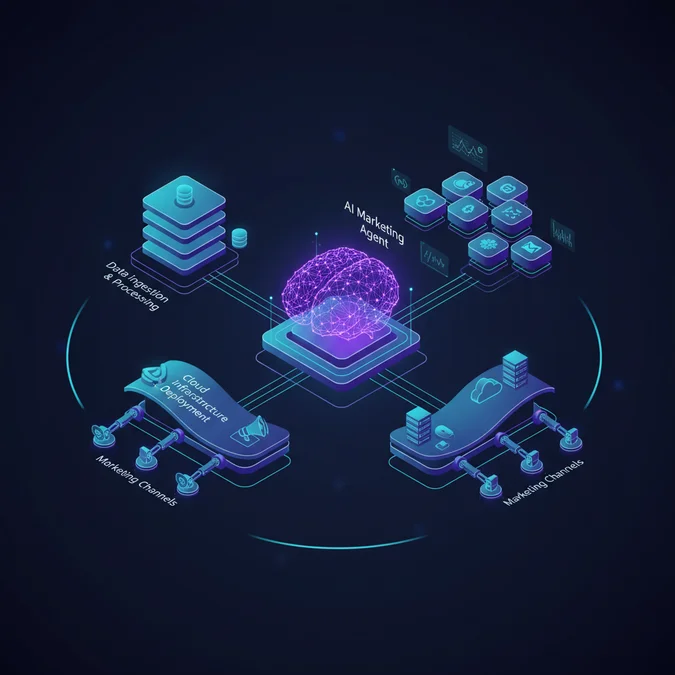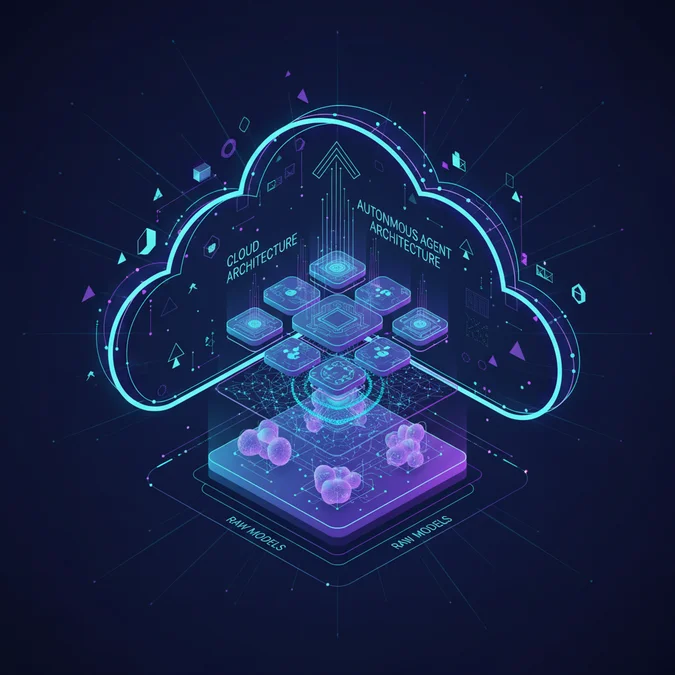

Legacy automation often hits a wall where deterministic logic fails to handle edge cases in unstructured data. As enterprises look to scale, the intersection of AI agents RPA represents a massive shift from rigid script execution to adaptive, goal-oriented workflows that can interpret intent before acting.
This article provides an engineering-first perspective on moving beyond static automation. We examine the architectural patterns required to bridge modern LLM reasoning with the reliable, albeit brittle, execution capabilities of traditional robotic process automation.
Foundational Shifts: From Deterministic RPA to Probabilistic Agents
Traditional automation relies on the assumption that the environment remains static. When the UI changes or a data format shifts, the script breaks. The integration of ai agents rpa changes this paradigm by introducing an inference layer that sits between the input trigger and the execution engine.
Engineering Note: The fundamental shift is not just in the capability to process text, but in the transition from hard-coded state machines to probabilistic decision trees that can navigate exceptions without manual intervention.
Comparative Taxonomy: RPA Agents vs Modern AI Agents
Distinguishing between rpa agents and modern AI-driven counterparts is essential for resource allocation. The following table highlights the operational trade-offs.
| Feature | Traditional RPA Agents | Modern AI Agents |
|---|---|---|
| Decision Logic | Hard-coded rules | LLM-based reasoning |
| Data Handling | Structured only | Unstructured/Semi-structured |
| Error Handling | Retry/Exception blocks | Self-correction/Chain-of-Thought |
| Environment | Stable/Predictable | Dynamic/Ambiguous |
Hybrid Architecture: Integrating LLM Reasoning with RPA Execution
To build a robust system, you must treat your LLM as the orchestrator and your legacy bots as the execution interface. By using function calling, the agent translates high-level goals into specific RPA triggers.
[User Intent] -> [LLM Agent] -> [Function Call] -> [RPA API/CLI] -> [Legacy App]Below is a simplified implementation of a function-calling proxy that triggers an RPA process based on agent reasoning:
// Example of an Agent orchestrating an RPA task

async function executeWorkflow(taskDescription) {

 const plan = await llm.reason(taskDescription);

 if (plan.requiresLegacySystem) {

 return await rpaClient.triggerTask(plan.botId, plan.parameters);

 }

 return await standardExecution(plan);

}
Production Deployment: Challenges and Governance
Deploying rpa agents at scale requires a focus on guardrails and observability. You are no longer debugging static code, but managing the output of a non-deterministic system.
- Implement semantic cache to reduce LLM latency for recurring tasks.
- Define strict output schemas for function calls to prevent hallucination.
- Monitor cost-per-task to ensure LLM usage does not exceed the value of the automated process.
- Maintain a human-in-the-loop override for high-stakes financial or legal approvals.
Frequently Asked Questions
How do AI agents differ from traditional RPA agents?
Traditional RPA agents execute rigid, predefined rules to interact with legacy software interfaces. AI agents use large language models to reason through complex, unstructured data and adapt their actions based on dynamic goals, moving beyond simple task automation to autonomous problem solving within business workflows.
Can I integrate AI agents with existing RPA infrastructure?
Yes, you can integrate AI agents with RPA by using the agent as an orchestration layer. The LLM processes instructions and triggers RPA bots via API endpoints or CLI tools, effectively using the RPA bots as ‘hands’ to perform legacy system interactions while the agent provides the ‘brain’.
Building a successful hybrid automation system requires balancing the reliability of deterministic bots with the cognitive flexibility of LLMs. By treating RPA as the execution layer and AI as the reasoning layer, you can create resilient workflows that adapt to change.
Focus your engineering efforts on robust function schema definitions and clear observability metrics to ensure your automated pipelines remain production-ready.