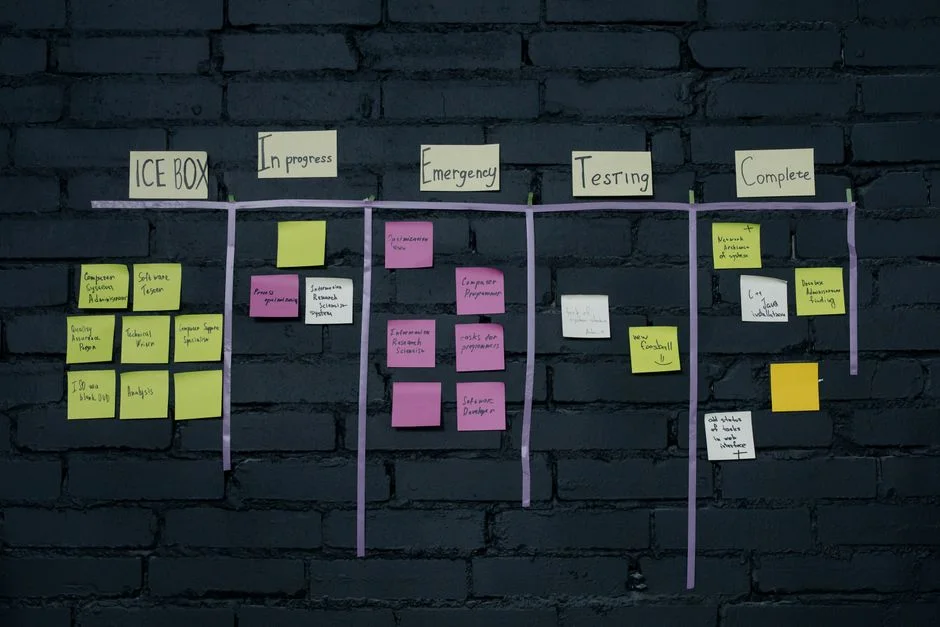

Most CTOs and technical founders are wrong about project methodology. The industry obsession with Agile as the default, superior choice for all software development is a dangerous fallacy that leads to budget overruns, scope creep, and technical debt. In reality, the choice between Agile and Waterfall is not a choice between ‘modern’ and ‘outdated’—it is a strategic decision regarding risk management, requirement stability, and stakeholder alignment.
Waterfall is often unfairly maligned as rigid, yet its structured approach provides the necessary clarity for complex system integrations where the cost of rework is prohibitive. Conversely, Agile is frequently misused as an excuse for poor planning and lack of architectural foresight. This article examines the fundamental technical and operational realities that dictate when to embrace a sequential lifecycle and when to adopt an iterative one.
Deconstructing the Waterfall Fallacy in Enterprise Systems
The Waterfall model is often dismissed as a legacy relic, but in the context of high-stakes enterprise software development, its sequential nature is a feature, not a bug. When building complex, mission-critical systems like ERP modules or regulatory compliance engines, the requirements are often dictated by external forces—such as legal mandates or rigid data schemas—that do not change mid-sprint. In these scenarios, the Waterfall methodology provides a framework for exhaustive documentation and architectural validation before a single line of code is committed to production.
From a technical standpoint, the Waterfall model enforces a ‘measure twice, cut once’ philosophy. By mandating that the design, requirements, and system architecture are fully finalized before implementation begins, teams can identify potential bottlenecks, security vulnerabilities, and integration conflicts during the design phase. This is particularly crucial when dealing with legacy database migrations or hardware-interfaced software where testing environments are expensive to replicate. The predictability of the Waterfall model allows for clear milestones, which are essential for aligning cross-departmental stakeholders who may not be technically literate but are deeply invested in the project’s output.
However, the rigidity of Waterfall is also its primary failure point when applied incorrectly. If the project scope is poorly defined, the ‘Big Design Up Front’ (BDUF) approach can lead to a system that meets the specification but fails to satisfy the actual business need. For instance, if a business attempts to build a custom CRM using Waterfall without a deep understanding of the end-user workflow, they risk delivering a system that is technically perfect but operationally unusable. The key to successful Waterfall implementation in modern software projects lies in the rigor of the initial discovery phase, which must be treated as a distinct, high-value technical project in its own right.
The Architectural Risks of Misapplied Agile
Agile is frequently treated as a synonym for ‘fast’ or ‘flexible,’ leading to a dangerous reduction in architectural discipline. In many startup environments, the pressure to ship features every two weeks results in the rapid accumulation of technical debt. When a team adopts Scrum or Kanban without a clear architectural roadmap, they often find themselves in a state of ‘feature factory’ production, where the codebase becomes a tangled web of disconnected micro-services or monolithic hacks, each designed to satisfy a short-term user story rather than the long-term integrity of the system.
Consider the impact on data integrity. In an Agile environment, if the schema changes every sprint to accommodate new features without a holistic view of the data model, the database eventually becomes fragmented and difficult to query. This is a common failure mode in AI integration projects, where the underlying data pipelines must be robust and consistent. If the data architecture is not planned in advance, the AI models trained on that data will likely suffer from poor performance or biased output due to inconsistent feature engineering across iterations. Agile, while excellent for UI/UX experimentation, is inherently weak at enforcing the global constraints that enterprise software requires.
To mitigate these risks, teams must implement a ‘Technical Architecture Runway.’ This involves dedicating specific sprints to infrastructure and architectural planning, effectively creating a ‘Waterfall-within-Agile’ approach. Without this, the team is essentially performing architectural design by accident—a process that rarely results in a scalable, maintainable system. The technical lead must ensure that every user story is evaluated against the existing system architecture to prevent the slow degradation of code quality that occurs when developers prioritize speed over structure.
Scenario-Based Decision Matrix: When Stability Outweighs Velocity
Choosing the right framework requires an honest assessment of the project’s constraints and the team’s maturity. Waterfall is the superior choice when the project involves high-compliance environments, fixed-price contracts with strict deliverable requirements, or systems where the cost of failure is extreme. In industries such as healthcare or finance, where software must adhere to strict regulatory standards (e.g., HIPAA or PCI-DSS), the auditability provided by the Waterfall lifecycle is invaluable. The documentation generated at each stage serves as evidence of compliance, which is often a legal requirement.
Conversely, Agile is the clear winner when the market fit is uncertain or the product’s primary goal is user engagement. If you are building a new SaaS platform where the features are driven by user feedback and market trends, the iterative nature of Agile allows you to pivot quickly. The ability to deploy, gather data, and iterate based on real user behavior is the core advantage of Agile. It turns the development process into a learning loop, where the software is constantly refined based on empirical evidence rather than theoretical assumptions.
To visualize the decision process, consider the following technical criteria:
- Requirement Volatility: If requirements are likely to change by more than 30% during development, choose Agile. If they are fixed by law or business logic, choose Waterfall.
- Integration Complexity: If the project involves integrating with multiple legacy systems that have limited documentation, Waterfall’s emphasis on upfront analysis is safer.
- Team Experience: Agile requires a high level of self-organization and maturity. If the team is junior or lacks a strong technical lead, the structure of Waterfall provides necessary guardrails.
The Hybrid Model: Integrating Waterfall Planning with Agile Execution
For most business software projects, the binary choice between Agile and Waterfall is a false dichotomy. Many successful engineering teams utilize a hybrid approach, often referred to as ‘Water-Scrum-Fall.’ This model employs Waterfall for the high-level planning, architectural design, and procurement phases, while utilizing Agile for the actual development and implementation. This allows the business to maintain the predictability and budget control of Waterfall during the early stages, while capturing the velocity and responsiveness of Agile during the build phase.
The hybrid approach typically begins with an extensive discovery and design phase (Waterfall), resulting in a detailed technical specification, a finalized database schema, and a clear API contract. Once the foundation is set, the development team shifts to an Agile methodology to execute the build. This ensures that the team has a clear ‘north star’—the architectural plan—but remains flexible enough to optimize the implementation of individual modules. If a specific feature is found to be technically infeasible during a sprint, the team can address it without compromising the entire system design.
Crucially, the hybrid model requires clear boundaries between the planning phase and the execution phase. The developers must be involved in the planning phase to ensure the architecture is realistic, and the project managers must respect the architectural constraints during the execution phase. If the team treats the Waterfall design document as a static, immutable object, they lose the benefits of Agile. If they ignore the design entirely, they revert to the chaos of unmanaged Agile. Maintaining this balance is the hallmark of a senior engineering organization.
Technical Debt Management Across Methodologies
Technical debt is an inevitable byproduct of software development, regardless of the methodology chosen. However, the way it manifests and how it must be managed differs significantly between Waterfall and Agile. In a Waterfall project, technical debt is often the result of outdated assumptions made during the initial design phase. Because the design is ‘locked,’ developers may find themselves working around architectural limitations that were identified too late in the process. Managing this debt requires a formal change management process, which can be slow and bureaucratic.
In contrast, Agile technical debt is usually the result of ‘quick and dirty’ implementations designed to meet sprint deadlines. This is often referred to as ‘refactoring debt.’ If not managed through a dedicated ‘refactoring sprint’ or a strict ‘Definition of Done’ that includes automated testing and code reviews, this debt can compound exponentially. Over time, the codebase becomes so fragile that any change triggers a cascade of bugs, effectively halting development velocity.
To manage this effectively, engineering leads should implement a ‘Technical Debt Ratio’ metric. This tracks the percentage of time spent on new feature development versus the time spent on refactoring and addressing technical debt. A healthy project should generally dedicate 15% to 20% of its development capacity to maintenance and refactoring. Whether you are using Waterfall or Agile, this allocation must be non-negotiable. Without it, the software will eventually reach a state of stagnation where no new features can be added without breaking existing functionality.
Data Migration and System Integration Challenges
When projects involve migrating data from a legacy system to a new platform, the methodology choice becomes a matter of risk mitigation. Migration projects are notoriously prone to failure, largely due to unforeseen data anomalies in the legacy source. In this context, the Waterfall approach is often superior because it allows for a comprehensive ‘Data Mapping and Cleaning’ phase. You cannot iterate on a data migration; you either succeed in moving the data correctly, or you corrupt the entire database.
Waterfall allows for a structured approach to ETL (Extract, Transform, Load) processes. The team can perform a full audit of the legacy data, build validation scripts, and run trial migrations in a staging environment. This is a linear process that benefits from the predictability of Waterfall. Trying to force a data migration into an Agile sprint-based format often leads to ‘partial’ migrations that leave the data in an inconsistent state, causing issues that may not surface until weeks after the project is considered ‘done.’
For complex system integrations—such as connecting an ERP to a new AI-driven analytics dashboard—the API contracts and data formats must be strictly defined. If the integration is handled as a series of Agile experiments, the team risks building disjointed endpoints that do not communicate effectively. Instead, the integration layer should be designed as a stable, versioned contract. Once the contract is established, the individual services can be developed using Agile, provided they adhere strictly to the agreed-upon interface. This combination of rigid integration design and flexible implementation is the key to enterprise-grade software stability.
The Role of Documentation in Long-Term Maintenance
One of the most significant differences between Agile and Waterfall is the approach to documentation. Agile manifestos famously prioritize ‘working software over comprehensive documentation,’ which is often misinterpreted as ‘no documentation is needed.’ This is a catastrophic error for enterprise software. While excessive documentation can lead to paralysis, the complete absence of documentation ensures that the project will be impossible to maintain once the original developers move on. The long-term cost of ‘tribal knowledge’—where only one person knows how a specific module works—is far higher than the time spent writing documentation.
In a Waterfall project, documentation is a primary deliverable. Design documents, schema diagrams, and API specifications are created, reviewed, and stored. This creates a lasting record of the system’s architecture, which is essential for onboarding new developers and performing security audits. Even in an Agile environment, there must be a ‘Documentation Definition of Done.’ This means that no feature is considered complete until its documentation is updated in the system’s Wiki or repository.
Software maintenance is the longest phase of the software lifecycle. By the time a system reaches its third or fourth year, the cost of maintenance will far outweigh the initial development cost. If the project lacks documentation, the cost of fixing a simple bug can be massive because developers must spend days reverse-engineering the code. Whether you choose Agile or Waterfall, invest in documentation as if the future of the company depends on it, because, in many cases, it does.
Stakeholder Alignment and Communication Strategies
The effectiveness of any project methodology is ultimately limited by the quality of communication between the engineering team and the business stakeholders. Waterfall projects thrive when stakeholders are involved early and then allow the team to execute without constant interference. The formal sign-off process at each stage provides a sense of security for business owners. However, this can also lead to a ‘black box’ effect, where stakeholders have no visibility into the project’s progress until the end, potentially leading to a ‘big reveal’ that fails to meet expectations.
Agile projects, conversely, require constant engagement from stakeholders. They are expected to participate in sprint reviews, provide feedback on prototypes, and prioritize the product backlog. This is ideal for startups where the product vision is evolving, but it can be exhausting for enterprise stakeholders who have other responsibilities. If the stakeholders are not prepared for this level of involvement, the Agile process will break down, and the team will be left guessing what the business actually needs.
The most effective communication strategy involves establishing a ‘Product Council.’ This group, comprising key stakeholders and the product owner, should meet at regular intervals to review progress and realign on priorities. In a Waterfall project, these meetings are focused on milestone sign-offs. In an Agile project, they are focused on backlog refinement and sprint planning. Regardless of the methodology, the goal is the same: ensuring that the engineering team’s output remains perfectly aligned with the business’s strategic objectives.
When to Pivot: Recognizing Methodology Mismatch
Even the most carefully chosen methodology can become a liability if the project’s nature changes. A project that starts with clear requirements may eventually enter a discovery phase where the original plan is no longer valid. Conversely, a project that starts with high uncertainty may eventually stabilize, making the overhead of Agile sprints unnecessary. Recognizing when to pivot your project management approach is a critical skill for any technical lead.
If you find that your Agile team is constantly missing deadlines because they are ‘discovering’ new architectural requirements in every sprint, it is a clear signal that the project needs a pause for a Waterfall-style redesign. The team is essentially trying to build the foundation while the house is already standing. Stopping to create a formal design document will actually increase velocity in the long run by eliminating the constant rework.
Similarly, if your Waterfall project is stuck in a cycle of endless ‘change requests’ and the original design document is being rewritten every month, it is time to switch to an Agile approach. The project has clearly moved into a discovery phase where the requirements are no longer fixed. Forcing a rigid Waterfall process on an uncertain project only leads to frustration and missed deadlines. Being methodology-agnostic and willing to adapt to the project’s current reality is the ultimate sign of technical maturity.
Infrastructure and DevOps Readiness
The choice of methodology is deeply intertwined with your infrastructure and DevOps capabilities. Agile, by definition, requires a high degree of automation. If your team does not have a mature CI/CD (Continuous Integration/Continuous Deployment) pipeline, the goal of ‘frequent releases’ is physically impossible. In such cases, adopting Agile can actually be a hindrance, as the team spends more time manually testing and deploying than they do writing code. Waterfall is far more forgiving of manual processes, as the release frequency is lower.
Before committing to an Agile methodology, assess your infrastructure maturity. Do you have automated testing? Can you spin up staging environments on demand? Is your deployment process one-click, or does it require a manual handoff? If your infrastructure is not automated, your first ‘project’ should be the creation of this pipeline, not the development of features. This is a classic example of where the ‘build vs buy’ debate enters the conversation; if you lack the expertise to build a robust DevOps pipeline, it is often better to use a managed platform or hire external expertise to set it up.
Once the infrastructure is in place, Agile becomes a powerful tool for scaling. It allows for the rapid testing of new features in production, which is the cornerstone of modern SaaS development. However, without the foundation of robust infrastructure, Agile is just a chaotic process of manual labor. Never prioritize the ‘Agile’ label over the technical reality of your deployment capacity.
The Future of Methodology: Beyond Agile and Waterfall
As software development continues to evolve, the distinction between Agile and Waterfall is becoming less important than the focus on ‘Outcome-Driven Development.’ This approach prioritizes the business outcome over the process itself. Whether you use a Gantt chart or a Kanban board is secondary to whether the software delivers value to the end-user and aligns with the business goals. The future lies in ‘Adaptive Methodologies’—frameworks that automatically adjust their rigor based on the risk, complexity, and stability of the task at hand.
For instance, a module that handles core financial transactions should be developed with Waterfall-like rigor, featuring extensive testing and formal sign-offs. A module that handles the user’s profile picture or a social feed can be developed using a fast, Agile approach with minimal overhead. This ‘Multi-Speed IT’ or ‘Bimodal IT’ strategy allows organizations to manage different parts of their software portfolio with the appropriate level of control and speed.
Ultimately, the best methodology is the one that minimizes the risk of failure while maximizing the speed of delivery for that specific project. It requires a deep understanding of your team’s capabilities, the project’s technical requirements, and the business’s tolerance for risk. By focusing on these fundamentals rather than adhering to rigid industry trends, you can build a development culture that is both resilient and highly productive.
The debate between Agile and Waterfall is often framed as a battle between ideologies, but it is fundamentally a technical and operational challenge. There is no ‘one size fits all’ solution. The most successful engineering teams are those that view methodologies as tools in their arsenal, applying the rigor of Waterfall where stability and auditability are paramount, and the flexibility of Agile where experimentation and market feedback drive success.
By honestly assessing your project’s architectural complexity, integration needs, and team maturity, you can select the right framework to deliver high-quality software. We encourage you to explore our other articles on migrating to custom platforms and scaling beyond no-code to further refine your technical strategy. Join our newsletter to receive more deep-dives into enterprise software engineering.
Not Sure Which Direction to Take?
Book a 30-minute call with one of our engineers — we’ll help you decide without the sales pitch.