
An agent development kit provides the underlying runtime engine, state isolation, and deterministic tool-calling abstractions needed to run autonomous reasoning loops reliably in enterprise infrastructure. Instead of chaining fragile language model calls with arbitrary strings, modern teams use dedicated SDKs to bind model inference to structured schemas, persistent memory backends, and distributed execution environments.
Building reliable AI systems breaks down when production traffic hits naive loop constructs. Autonomous agents suffer from non-deterministic tool failures, cyclic delegation deadlocks between coordinators and sub-agents, memory bloat across multi-turn context windows, and uncapped token consumption. Without a hardened architectural boundary, an innocent sub-agent loop can execute recursive API requests that exhaust budgets and corrupt operational state.
This architectural breakdown dissects the internal mechanics of modern agent development kits with an emphasis on the Google Cloud ADK ecosystem. We evaluate runtime lifecycles, walk through concrete multi-agent implementations, compare architectural trade-offs against frameworks like LangGraph and CrewAI, and examine the production engineering required to deploy resilient agent systems in 2026.
Core Architecture of the Modern Agent Development Kit
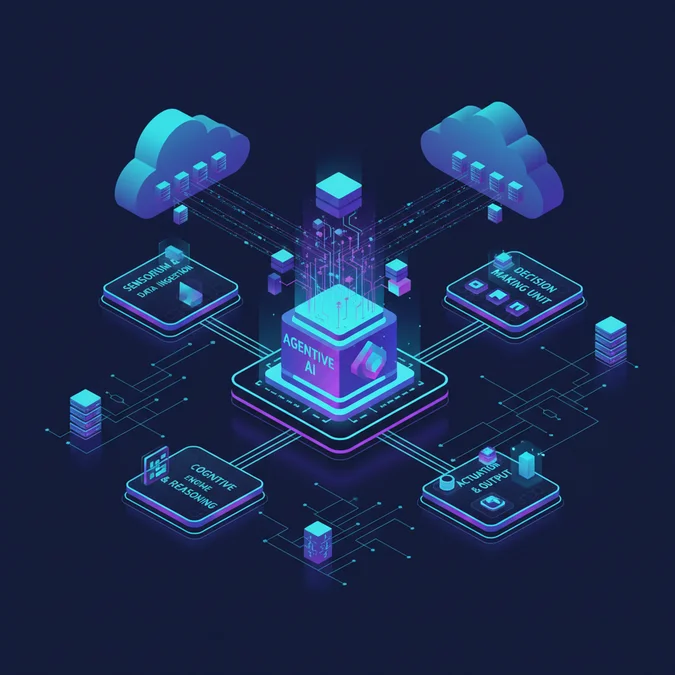
A production-ready agent development kit abstracts low-level model interactions away from application logic. At its core, the kit serves as an operating system kernel for large language models, managing context schedules, tool dispatch queues, and checkpointed state stores. Rather than relying on simple prompt completion, modern implementations employ an event-driven loop that tracks deterministic state transitions.
Within the broader google agent framework, the architectural boundary is decoupled into four foundational primitives: the Runtime Engine (Runner), the Context Manager, the Tool Execution Dispatcher, and the Persistence Driver. Understanding how these layers communicate is essential for diagnosing distributed failure modes under heavy concurrency.
+-----------------------------------------------------------------------+
| HOST RUNTIME (Runner) |
| +---------------------+ +---------------------+ |
| | Inbound Event Queue | | Execution Budget | |
| | (HTTP / PubSub) | | (Tokens / Walltime) | |
| +----------+----------+ +----------+----------+ |
+-------------|-------------------------|-------------------------------+
 v v
+-----------------------------------------------------------------------+
| AGENT EVENT LOOP LIFECYCLE |
| |
| [State Ingestion] --> [Prompt Assembly] --> [Model Inference] |
| ^ | |
| | v |
| [Commit Mutation] <-- [Sanitize Result] <-- [Tool Invocation] |
+-----------------------------------------------------------------------+
 | |
 v v
+------------------------+ +-------------------------------------+
| PERSISTENCE DRIVER | | DISPATCH SERVICE |
| - Redis Snapshotting | | - Schema Validation (Pydantic/Zod) |
| - Cloud SQL Spanner | | - Sandboxed Tool Execution (gRPC) |
| - Ephemeral Memory Map | | - IAM Authentication Tokens |
+------------------------+ +-------------------------------------+
The Execution Lifecycle
Every execution pass within an enterprise agent development kit begins with hydration. The runner queries the persistence driver for the current thread checkpoint, reconciles dynamic state mutations, and packs context tokens according to priority weights. The execution proceeds through five non-negotiable phases:
- Context Synthesis: Thread histories are summarized or windowed, attaching registered tool definitions and external session variables to the prompt payload.
- Model Inference: The orchestrator passes structured payloads to the foundation model through strict API boundaries, streaming response tokens or parsing function execution calls.
- Schema Validation: The dispatcher intercepts function calling parameters, strictly validating them against machine-readable schemas before dispatching network calls.
- Tool Execution: Safe, sandboxed subprocesses or RPC calls execute the requested operations under explicit timeout constraints and zero-trust IAM boundaries.
- State Checkpointing: Execution outputs append to the event log, updating thread variables and commiting atomic snapshots to persistent backing stores.
Production Failure Warning: Never allow tools to mutate thread memory directly. Tool outputs must return pure data payloads to the runner, allowing the central context engine to validate mutations and prevent cyclic memory pollution.
To evaluate if an enterprise framework meets modern production standards, use the core architecture checklist below.
- Isolated Memory State: Session threads exist as isolated state partitions to guarantee zero leakage between parallel customer invocations.
- Typed Tool Schemas: Tools define strict parameter constraints via JSON Schema, Pydantic, or Zod, rejecting malformed LLM outputs prior to network transit.
- Deterministic Termination: The runner supports strict maximum step caps, absolute execution timeouts, and token limits to eliminate runaway infinite loops.
- Telemetry Decoupling: OpenTelemetry spans are injected automatically across agent iterations, tool dispatches, and context updates.
Google Cloud ADK Ecosystem vs Alternative Agent Frameworks
Selecting an agent orchestration strategy requires evaluating trade-offs between dynamic autonomous behavior, deterministic control flow, and cloud infrastructure integration. The google cloud adk is purpose-built to marry Vertex AI foundation models with enterprise Google Cloud Platform (GCP) primitives like Cloud Run, Cloud Spanner, and IAM identity federation. However, alternative frameworks occupy critical niches across the software engineering landscape.
When assessing a google agent framework alongside alternatives like LangGraph, Microsoft Semantic Kernel, and AutoGen, engineering architects must balance determinism with autonomy. LangGraph emphasizes directed cyclical graphs where transitions are governed by rigid developer-defined routing logic. Semantic Kernel centers on strict enterprise copilot plugins within the Azure ecosystem. AutoGen champions open-ended multi-agent conversation, which offers high emergent problem-solving capability at the cost of execution predictability.
| Framework | Memory Architecture | Execution Flow Style | Determinism Profile | Cloud Infrastructure Footprint | Enterprise Production Fit |
|---|---|---|---|---|---|
| Google Cloud ADK | Context Services with Spanner, Firestore, and MemoryStore bindings | Dynamic Plan-and-Execute with managed coordinator hooks | High: Enforces strict function typing and IAM role validation | Native Google Cloud, Cloud Run, Vertex AI, BigQuery integrations | Tier-1 Enterprise: Zero-trust environments and mission-critical automation |
| LangGraph | Redux-style state channels with external checkpoint adapters | Cyclic Directed Graphs with explicit edge conditional branches | Very High: Transitions follow deterministic state machine code | Cloud-agnostic: Requires external infrastructure management | High: Complex procedural workflows requiring explicit code control |
| Semantic Kernel | Volatile context variables with native vector store connectors | Sequential Pipeline Planner with semantic step evaluation | Medium: Planners can yield dynamic non-deterministic step plans | Native Azure, OpenTelemetry integration, Container Apps | High: Microsoft enterprise stacks and Copilot extensions |
| AutoGen | Conversational chat history passed across agent message buses | Emergent Conversational Routing with actor-model interactions | Low: Prone to conversational drift and message cycling | Cloud-agnostic: Requires custom broker and runtime orchestration | Experimental: Exploratory analysis, red-teaming, and research prototypes |
The primary advantage of building on the Google ecosystem lies in administrative boundary enforcement. In a native Google Cloud agent setup, security controls are not managed via custom application logic. Instead, agent execution runners inherit Google Cloud service account identities, interacting with Vertex AI endpoints and customer data silos through cryptographically verified tokens that expire automatically.
Hands-on Implementation with Runnable ADK Samples
To understand the mechanics of the google agent sdk, consider an enterprise incident response workflow. In this design, a primary Coordinator agent ingests anomalous metrics, delegates investigation tasks to an infrastructure specialist sub-agent, verifies the output, and updates an external incident ticket.
The following production-grade implementation demonstrates the coordinator-worker pattern, schema-validated tool execution, and defensive error handling using typical patterns found in modern adk samples.
import os
import json
from typing import Dict, Any, List, Optional
from pydantic import BaseModel, Field

# Simulated production imports representing modern Agent Development Kit abstractions
# from google.cloud.aiplatform.agents import Agent, Runner, Tool, StateContext

class QueryMetricsSchema(BaseModel):
 service_name: str = Field(description="Target service name, e.g. auth-api")
 metric_type: str = Field(description="Metric name: cpu_percent | memory_usage | error_rate")
 window_minutes: int = Field(default=15, description="Lookback window in minutes")

class IncidentState(BaseModel):
 incident_id: str
 triaged: bool = False
 findings: List[str] = Field(default_factory=list)
 remediation_plan: Optional[str] = None

def mock_metrics_collector(service_name: str, metric_type: str, window_minutes: int) -> Dict[str, Any]:
 """Simulates querying Cloud Monitoring API with verified output schemas."""
 # In production, this would use google-cloud-monitoring client libraries
 if service_name == "auth-api" and metric_type == "error_rate":
 return {"service": service_name, "status": "anomaly_detected", "value": 14.8, "threshold": 1.0}
 return {"service": service_name, "status": "nominal", "value": 0.05}

class ProductionIncidentAgent:
 def __init__(self, agent_id: str):
 self.agent_id = agent_id
 self.max_loops = 5

 def execute_tool(self, tool_name: str, raw_arguments: Dict[str, Any]) -> Dict[str, Any]:
 """Executes a tool call inside a deterministic boundary with parameter validation."""
 try:
 if tool_name == "query_metrics":
 validated = QueryMetricsSchema(**raw_arguments)
 return mock_metrics_collector(
 service_name=validated.service_name,
 metric_type=validated.metric_type,
 window_minutes=validated.window_minutes
 )
 raise ValueError(f"Unknown tool identifier: {tool_name}")
 except Exception as tool_err:
 return {"error": "TOOL_EXECUTION_FAILURE", "details": str(tool_err)}

 def run_coordinator_step(self, user_prompt: str, state: IncidentState) -> IncidentState:
 """Executes single reasoning loops with step guards and fallback logic."""
 loop_counter = 0
 print(f"[Runner] Initializing execution context for Incident: {state.incident_id}")

 while loop_counter < self.max_loops:
 loop_counter += 1
 print(f"[Iteration {loop_counter}] Evaluating model intent..")

 # Simulated Model Inference Step with Tool Calling Response
 if loop_counter == 1:
 simulated_decision = {
 "action": "tool_call",
 "name": "query_metrics",
 "args": {"service_name": "auth-api", "metric_type": "error_rate", "window_minutes": 15}
 }
 else:
 simulated_decision = {
 "action": "final_answer",
 "output": "High error rate (14.8%) detected in auth-api. Recommended scale-up."
 }

 # Dispatch decision
 if simulated_decision.get("action") == "tool_call":
 tool_result = self.execute_tool(
 simulated_decision["name"],
 simulated_decision["args"]
 )
 state.findings.append(json.dumps(tool_result))
 print(f"[Tool Result Captured] {tool_result}")

 elif simulated_decision.get("action") == "final_answer":
 state.remediation_plan = simulated_decision["output"]
 state.triaged = True
 print("[Runner] Workflow reached deterministic resolution.")
 break

 if not state.triaged:
 print("[Runner Escalation] Max loops reached without deterministic answer. Triggering human-in-the-loop.")

 return state

# Execution invocation
if __name__ == "__main__":
 initial_state = IncidentState(incident_id="INC-2026-9041")
 agent = ProductionIncidentAgent(agent_id="infra-ops-v1")
 final_state = agent.run_coordinator_step(
 user_prompt="Investigate auth service latency spike reported in us-central1",
 state=initial_state
 )
 print("Final State Snapshot:", final_state.model_dump_json(indent=2))
Orchestration Deployment Process
Taking this orchestration pattern to a shared enterprise cluster requires following a defined rollout procedure:
- Declare Schemas and Interfaces: Define all sub-agent contracts using Pydantic or protobuf schemas to establish explicit communication boundaries.
- Configure Secret Resolution: Bind agent identities to cloud KMS keys, preventing plaintext API keys from leaking into execution prompts or logs.
- Implement Sandboxed Execution: Ensure all high-privilege tools operate within gRPC sandboxes or ephemeral Cloud Run micro-containers with limited egress.
- Attach State Hydration Adapters: Connect the runner context engine to an operational database (such as Google Cloud Spanner or Redis) to maintain multi-turn transaction records.
- Inject Trace Propagators: Pass OpenTelemetry W3C trace context headers across all agent-to-agent network invocations to preserve complete distributed call trees.
Hardening the Google AI Development Kit for Enterprise Production
Running autonomous agents in development environments hides the catastrophic failure modes that manifest under real enterprise traffic. When scaling systems powered by the google ai development kit or broader google cloud adk implementations, resilience engineering must focus on four vectors: loop termination guarantees, token cost throttling, trace telemetry, and container runtime isolation.
Preventing Cyclic Deadlocks
Multi-agent delegation architectures often experience cyclic loops. For example, Agent Alpha delegates a database analysis task to Agent Beta, which encounters a permission error, queries Agent Alpha for clarification, and triggers an infinite recursion that consumes runtime budgets. Production systems must implement directed acyclic execution rules.
Engineers must enforce state machine guards directly in the runtime runner. Track the execution call depth inside an immutable metadata header. When any delegation path exceeds a fixed depth (typically 3 to 5 nested hops), the runner must abort the cycle immediately, return a CYCLIC_DELEGATION_INTERRUPT status, and route execution to a fallback supervisor handler.
Production Hardening Principle: Never rely on the LLM to realize it is trapped in a reasoning loop. Termination conditions must be enforced by deterministic external supervisor code that measures wall-clock time, step counts, and token exhaustion.
Enterprise Cloud Run Production Checklist
When packaging agent runtimes into serverless containers on Google Cloud Run, follow this strict architectural readiness checklist:
- Stateless Compute Containers: Run agent containers in fully stateless modes, offloading execution state snapshots to Cloud Spanner or memorystore between turns.
- Token Budget Throttling: Set explicit context token budget limits per invocation. Abort workflows when prompt growth indicates context window degradation.
- Distributed OpenTelemetry Instrumentation: Instrument every model pass, reasoning step, and tool dispatch with OpenTelemetry spans exporting directly to Cloud Trace.
- Non-root Minimal Base Images: Build agent runner images on distroless or minimal Alpine bases, running as a non-privileged user to limit the impact of prompt injection exploits.
- Deterministic Read-Only File Systems: Run Cloud Run containers with read-only root filesystems, confining tool side effects to mounted in-memory
/tmpvolumes.
Selection Matrix: Choosing the Right Agent SDK for Production Workloads
Adopting an enterprise agent development kit binds critical parts of your data infrastructure to an orchestration philosophy. Engineering leaders must evaluate whether their core use cases call for deterministic graph control, dynamic plan-and-execute autonomy, or managed enterprise cloud security.
Choosing the wrong abstraction level introduces serious friction. Adopting a flexible dynamic framework for a predictable compliance workflow forces developers to write defensive guardrails against model hallucinations. Conversely, forcing an open-ended data science research workflow into a rigid state machine leads to brittle transition logic that breaks on edge cases.
| Operational Requirement | Google Cloud ADK / Agent SDK | LangGraph Engine | CrewAI Orchestrator | Custom In-House Engine |
|---|---|---|---|---|
| Regulatory Compliance & Audit Logs | Optimal: Out-of-the-box GCP Cloud Audit Logs, BigQuery export, and VPC Service Controls | Good: Requires configuring custom audit persistence hooks and database sinks | Moderate: Audit logging is primarily application-level and lacks enterprise governance | Variable: Relies entirely on internal software engineering discipline |
| Multi-Agent Coordination | Supervisor-to-worker architecture with strictly typed tool boundaries | State graphs with conditional routing and cyclic execution support | Role-based agent hierarchies with dynamic chat communication | Custom actor patterns using Redis, RabbitMQ, or Kafka |
| Execution Determinism | High: Enforces structured schema outputs and strict timeout policies | Maximum: Developer explicitly controls node transition conditions | Low: Models autonomously decide conversation transfers | Variable: Depends on architectural design |
| Maintenance Overhead | Low: Managed runtime services, official patches, and managed cloud deployments | Medium: Requires hosting custom runners, state stores, and telemetry stacks | Medium: Frequent updates require defensive testing against breaking schema changes | Very High: Full team responsibility for SDK updates and LLM API shifts |
| Target Workloads | Enterprise back-office automation, ERP systems, regulated data processing | Complex document approval workflows, structured coding agents, pipelines | Creative content workflows, multi-perspective synthetic debates, prototypes | Ultra-high scale, latency-critical, single-purpose micro-agents |
When selecting the google agent sdk, teams gain immediate integration with Google Cloud IAM, native Cloud Run deployment pipelines, and built-in audit compliance. If your architecture is already committed to Google Cloud, adopting the native kit reduces operational friction while delivering enterprise-grade governance out of the box.
Frequently Asked Questions
What is an Agent Development Kit (ADK)?
An Agent Development Kit (ADK) is an enterprise software library that provides primitives for building autonomous AI workflows. It manages the agent event loop, state persistence, deterministic tool execution, and multi-agent coordination across production environments.
How does the Google Agent SDK differ from LangGraph and CrewAI?
The Google Agent SDK prioritizes native Google Cloud security, managed telemetry, and deterministic Vertex AI integration. LangGraph centers on graph-based cyclical state machines, while CrewAI focuses on role-based collaborative workflows, often requiring custom production hardening.
Where can developers access verified ADK samples for enterprise orchestration?
Production-grade ADK samples are distributed via official Google Cloud repositories and cloud architecture centers. These samples provide boilerplate code for supervisor delegation, tool schema validation, external API connectors, and automated unit testing.
What capabilities define the Google Cloud ADK for enterprise systems?
The Google Cloud ADK provides built-in IAM identity mapping, zero-trust secrets management, distributed OpenTelemetry tracing, and turnkey deployment pipelines on Cloud Run, ensuring AI agents comply with strict organizational governance.
How does the Google AI Development Kit handle agent loop failures?
The Google AI Development Kit implements exponential backoff retries, cyclic deadlock detectors, and deterministic state rollbacks. When tool execution exceeds token or latency budgets, the runner executes fallback handlers to maintain workflow stability.
The evolution of the modern agent development kit marks a transition away from brittle script-based AI chaining toward structured, resilient software engineering. By treating context as an actively managed resource, isolating tool dispatch inside secure sandboxes, and enforcing strict schema contracts, teams can run multi-agent workflows that reliably automate complex operations.
As you architect agentic systems for enterprise workloads in 2026, prioritize deterministic state management over open-ended prompt autonomy. Establish hard guardrails around execution loops, instrument end-to-end tracing across distributed spans, and pick an SDK that aligns with your security, infrastructure, and compliance requirements.