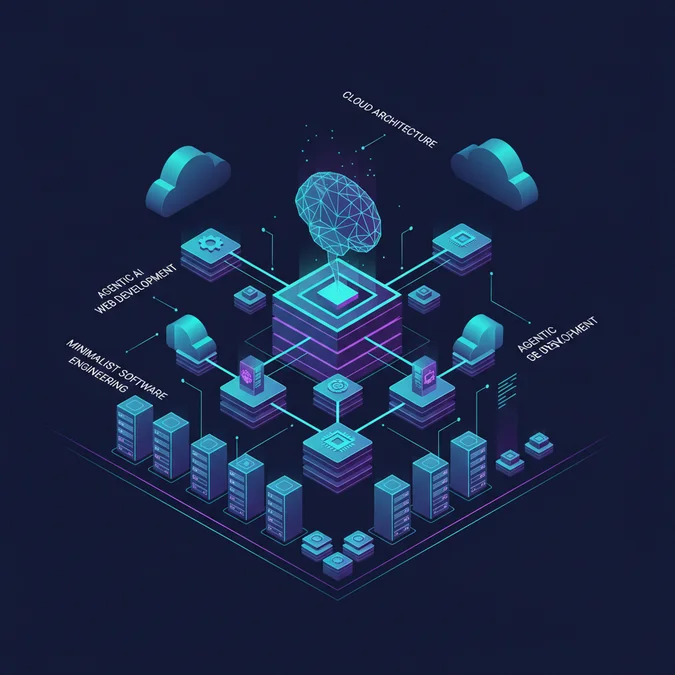

In 2026, the shift toward decentralized intelligence has moved beyond singular monolithic models into complex ecosystems of autonomous units. The bottleneck for these systems is no longer raw compute, but the orchestration layer. An agency protocol provides the necessary semantic and structural framework to ensure that heterogeneous agents can negotiate, execute, and reconcile tasks without tight coupling.
Building production-grade multi-agent systems requires moving past simple REST or gRPC polling. Engineers must instead implement robust message envelopes, handle asynchronous state transitions, and manage the inevitable failure modes inherent in distributed AI workflows. This guide provides the technical blueprint for architecting communication layers that prioritize throughput, security, and eventual consistency.
Core Mechanics of Agency Protocol and Agent Communication
At the center of any modern autonomous system is the agency protocol, which serves as the language for agent-to-agent negotiation. Unlike traditional microservices that follow a rigid request-response cycle, these protocols must support peer-to-peer discovery, capability advertisement, and multi-turn negotiation contexts.
Technical Insight: The efficacy of an agency protocol is measured by its ability to maintain context across non-linear execution paths. By standardizing the message envelope, developers decouple the reasoning engine from the transport layer.
When integrating ai agent protocols, developers should distinguish between the control plane (negotiation and handshake) and the data plane (payload and state updates). This separation allows for protocol agility, enabling the system to switch transport mechanisms without requiring a total rewrite of the agent’s core decision logic.
System Constraints and Distributed State Management
Managing state in a decentralized environment is the primary engineering challenge for 2026. Because agents operate asynchronously, maintaining a global source of truth often introduces unacceptable latency. Instead, systems must rely on distributed state synchronization patterns.
- Eventual Consistency: Accept that state updates will propagate with a delay; use vector clocks to resolve conflicts.
- Idempotency Keys: Every agent request must carry a unique transaction ID to prevent redundant task execution during network retries.
- State Versioning: Implement schema evolution for agent messages to avoid breaking backward compatibility as models update.
- Persistence Layer: Use distributed key-value stores with high-availability guarantees to cache agent context.
Protocol Performance Benchmarks and Latency Trade-offs
Choosing the right transport layer depends on the specific requirements for agent-to-agent throughput and the criticality of message delivery. The following table highlights the performance profiles of common communication standards currently used in production environments.
| Protocol | Latency (ms) | Throughput (req/s) | Overhead | Reliability |
|---|---|---|---|---|
| gRPC (Unary) | 2-5 | 50,000+ | Low | High |
| WebSockets | 10-20 | 10,000 | Medium | Moderate |
| NATS/JetStream | 15-30 | 100,000+ | Medium | Very High |
| HTTP/3 | 50-100 | 5,000 | High | Moderate |
Implementing Resilient Agent Interaction Patterns
Resilience in multi-agent systems is achieved through circuit breaking and graceful degradation. The following pattern demonstrates a robust communication loop utilizing a standardized message envelope.
class AgentNode: def send_task(self, target_id, payload): try: # Implement circuit breaker for network isolation response = self.transport.send(target_id, payload, timeout=2.0) return response except NetworkError: # Log failure and trigger fallback mechanism self.logger.error(f'Failed to reach {target_id}') return self.trigger_fallback(payload) except TimeoutError: self.handle_retry(target_id, payload)Observability and Failure Recovery in Multi-Agent Environments
In an environment where agents act autonomously, debugging becomes a challenge of tracing causality across distributed nodes. Observability must be baked into the protocol from day one.
- Distributed Tracing: Inject trace IDs into every agent-to-agent message header to visualize the full request lifecycle.
- Heartbeat Monitoring: Implement constant health checks to detect silent agent failure before it cascades.
- Automated Circuit Breaking: Automatically throttle communication to nodes showing high error rates.
- Audit Logging: Maintain a cryptographically signed log of all agent decisions for forensic analysis.
Frequently Asked Questions
What is the primary function of an agency protocol in AI systems?
An agency protocol acts as the standardized communication layer that enables interoperability between autonomous AI agents. It governs how agents exchange state information, negotiate tasks, and handle error propagation, ensuring that decentralized systems remain synchronized and reliable during complex multi-step execution workflows across distributed infrastructure.
How do modern AI agent protocols handle cross-service authentication?
Modern protocols utilize cryptographic identity verification and token-based handshake mechanisms. By embedding secure headers within the agent message envelope, these protocols verify the origin and intent of each request, effectively preventing unauthorized agent interaction and ensuring trust within heterogeneous multi-agent environments.
Architecting an agency protocol is an exercise in managing complexity and latency. By choosing the right transport, enforcing strict state management, and implementing robust observability, engineering teams can build resilient systems that scale with their autonomous agent fleet.
The move toward standardized communication is inevitable. As these systems mature in 2026, teams that prioritize architectural flexibility and protocol-agnostic design will be best positioned to adapt to emerging industry standards.