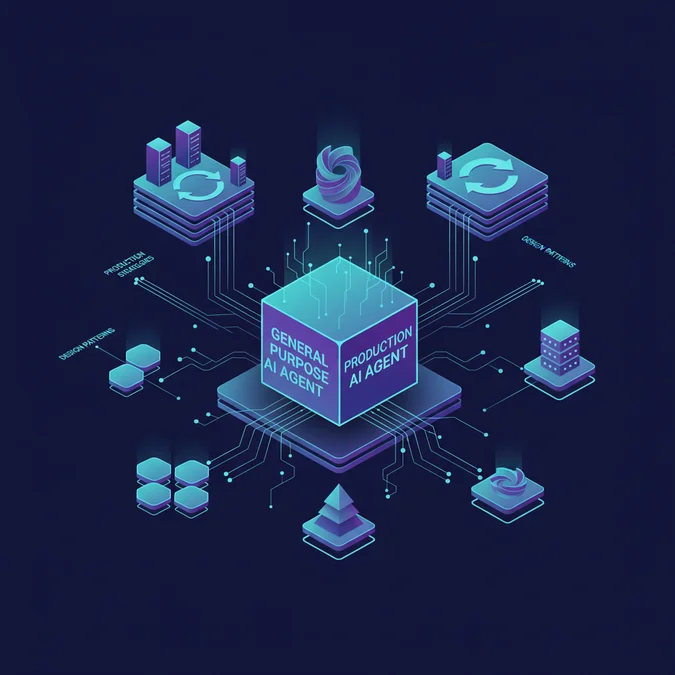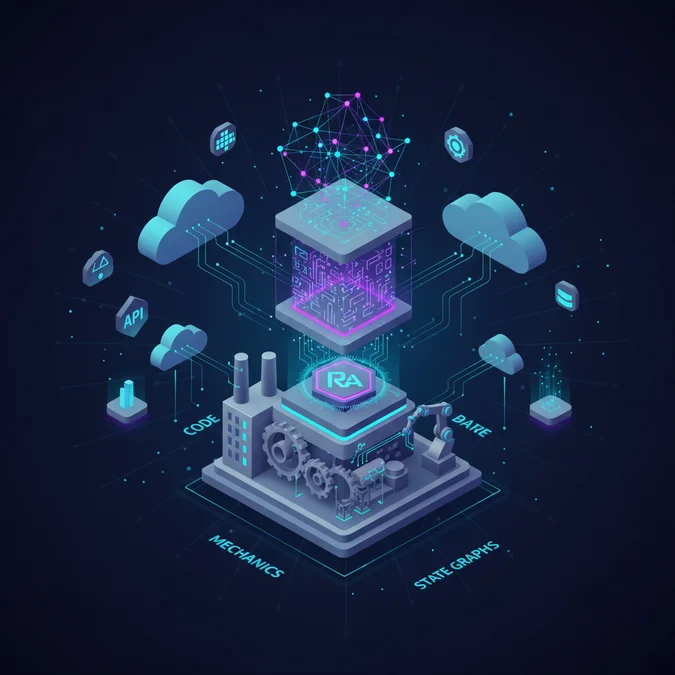

Modern production systems are moving beyond basic chat interfaces toward autonomous agentic workflows that require a fundamental shift in how we structure software. The transition from monolithic prompt-response cycles to distributed agentic systems necessitates a robust gen ai application architecture that prioritizes state management, observability, and deterministic control over probabilistic model outputs.
As we enter 2026, the primary challenge is no longer just invoking an API. It is managing the lifecycle of complex reasoning chains while maintaining sub-second latency and cost efficiency. This article details the structural blueprints required to build systems that scale, remain maintainable, and survive the volatility of foundation model performance.
Foundational Patterns for Gen AI Application Architecture
A production-ready gen ai application architecture must decouple the orchestration layer from the inference engine. By abstracting the model provider, you ensure the system remains resilient to model deprecations and performance regressions. Every genai architect must prioritize these foundational pillars to ensure long-term system stability.
Architectural Checklist
- Model Abstraction Layer: Use standardized interfaces to swap models without changing business logic.
- Asynchronous State Management: Implement Redis or similar high-speed stores to maintain agent context across multi-turn interactions.
- Semantic Caching: Reduce latency and cost by caching vector similarity searches before hitting the LLM.
- Circuit Breakers: Integrate logic to handle downstream API outages or rate limits gracefully.
Implementing a Generative AI Reference Architecture
To achieve high throughput, a generative ai reference architecture must utilize a modular pipeline approach. A effective gen ai solution architecture treats the LLM as a stateless worker, while the orchestration layer handles memory retrieval, tool execution, and guardrails.
| Component | Latency Impact | Scalability Strategy |
|---|---|---|
| Vector Retrieval | Low | Partitioned Indexing |
| LLM Inference | High | Streaming & Batching |
| Tool Execution | Medium | Serverless Functions |
| Guardrails | Low | Sidecar Pattern |
[Client] -> [Load Balancer] -> [Orchestrator] -----------------------+ | | [Vector DB] [Observability/Tracing] | | +-----> [LLM Provider Proxy] -> [Foundation Model]Strategic Considerations for the Modern Gen AI Architect
The gen ai architect must balance the trade-off between reasoning depth and system latency. When designing for complex tasks, selecting the right orchestration pattern is critical. Below is a implementation pattern for managing tool-use with structured output validation.
async function executeAgentTool(prompt, tools) { try { const response = await llm.generate({ prompt, tools, schema: ToolSchema }); if (!response.isValid) return retry(prompt); return response.data; } catch (e) { log.error('Tool execution failed', e); throw new AgentExecutionError(e); } }Strategic decisions often revolve around the context window management and the cost of token consumption versus the accuracy gains of larger models.
Workflow Optimization for the Generative AI Architect
For the generative ai architect, building multi-agent systems requires strict adherence to ReAct (Reasoning and Acting) patterns. By isolating agents into specific roles, you can optimize individual prompt chains, reducing hallucination rates and improving overall system reliability.
// Basic ReAct loop structure for agentic stability

while (agent.isActive) {

 const observation = await agent.think(context);

 const action = await agent.decide(observation);

 if (action.isFinal) break;

 const result = await toolRunner.execute(action);

 agent.updateContext(result);

}
Workflow Checklist for Production:
- Implement human-in-the-loop (HITL) checkpoints for high-stakes decisions.
- Use structured logging for every reasoning step to enable prompt debugging.
- Monitor token usage per agent iteration to identify cost leaks.
Frequently Asked Questions
What defines a robust gen ai application architecture?
A robust gen ai application architecture separates the orchestration layer from model execution, utilizes asynchronous data pipelines for RAG, implements strict observability for prompt tracing, and ensures modularity to allow for swapping underlying foundation models based on latency and cost requirements without refactoring the core business logic.
How does a gen ai solution architecture differ from traditional software?
Unlike traditional software which relies on deterministic code execution, gen ai solution architecture manages probabilistic outputs. This requires non-deterministic flow control, vector-based information retrieval, and heavy emphasis on LLMOps for monitoring hallucination rates, token usage costs, and model performance drifts in real time.
What is the primary role of a genai architect in 2026?
The genai architect leads the design of systems that integrate foundation models into production workflows. Their role involves balancing inference latency with model accuracy, selecting appropriate RAG strategies, and enforcing data governance policies to protect sensitive information during high-volume API interactions with external model providers.
Building resilient systems in 2026 requires moving beyond simple implementation to focus on rigorous engineering standards. By adopting a vendor-agnostic gen ai application architecture, you insulate your business from the rapid pace of model evolution while maintaining the flexibility to optimize for cost and performance.
As you move to production, prioritize observability and modularity. The systems that survive are those that treat AI components as unreliable services, wrapping them in robust error handling, caching strategies, and strict validation loops.