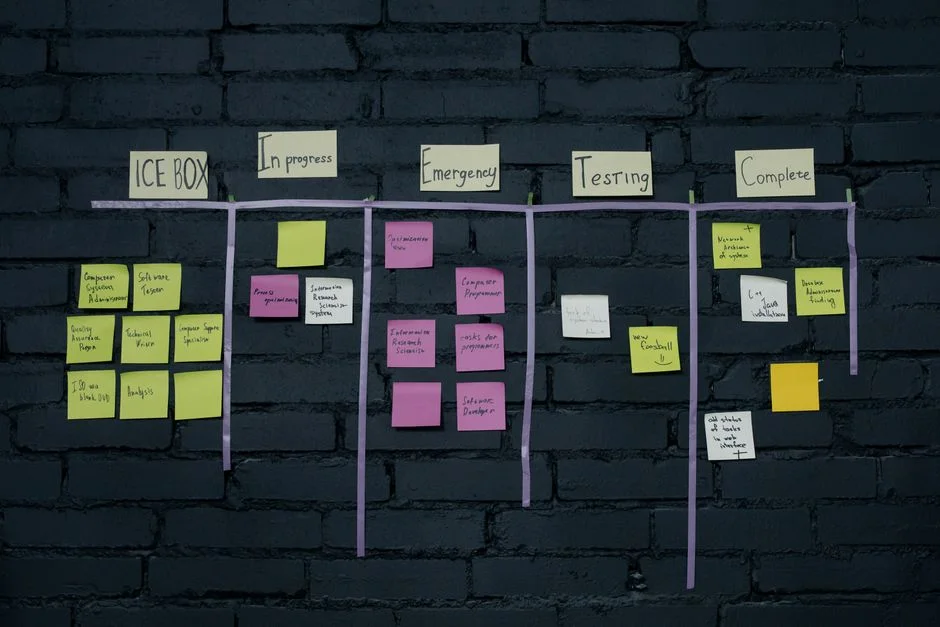
For startup founders and CTOs, the choice between Scrum and Kanban often feels like a debate over organizational culture. However, from an engineering and management perspective, this is a strategic decision about throughput, flow, and predictability. Both methodologies fall under the Agile umbrella, yet they enforce vastly different constraints on how your engineering team operates, ships, and manages technical debt.
Scrum is a prescriptive framework built on time-boxed iterations, designed to provide high levels of predictability for product roadmaps. Kanban, by contrast, is a flow-based methodology focused on continuous delivery and the removal of bottlenecks. Choosing the wrong one can lead to either rigid bureaucracy that stifles velocity or a lack of structure that causes scope creep. This guide provides the technical analysis necessary to determine which model aligns with your team’s delivery goals.
The Mechanics of Scrum: Time-Boxed Predictability
Scrum is built around the concept of the Sprint—a fixed-length iteration, typically two weeks. The objective is to create a ‘potentially shippable’ product increment at the end of every cycle. This structure is heavily reliant on the 3-5-3 rule: three roles (Product Owner, Scrum Master, Developers), five events (Sprint Planning, Daily Scrum, Sprint Review, Sprint Retrospective, and the Sprint itself), and three artifacts (Product Backlog, Sprint Backlog, and Increment).
The engineering value of Scrum lies in its ability to force prioritization. Because the Sprint is time-boxed, the team must commit to a specific scope, which naturally discourages mid-sprint changes. For a startup founder, this provides a clear window into when specific features will be ready. However, the trade-off is overhead. The ceremonies—Daily Scrums, planning sessions, and retrospectives—consume a non-trivial amount of engineering time. If your team spends more time in meetings than writing code, your Scrum implementation has likely become ‘process-heavy’ rather than ‘Agile-focused’.
The Mechanics of Kanban: Continuous Flow and Throughput
Kanban is not a process framework in the same way as Scrum; it is a visual system for managing work as it moves through a process. There are no mandatory ceremonies or time-boxed iterations. Instead, Kanban focuses on Work-in-Progress (WIP) limits. By restricting the number of tasks in any given state (e.g., ‘In Progress’, ‘Code Review’, ‘QA’), the team identifies bottlenecks immediately.
For a high-performing engineering team working on maintenance, production support, or SaaS platforms where priority shifts daily, Kanban is superior. It treats development as a stream rather than a series of batches. The primary metric is Cycle Time—how long it takes for a single ticket to move from ‘In Progress’ to ‘Done’. If your infrastructure team is dealing with constant, unpredictable alerts, shifting to Kanban prevents the ‘sprint-interruption’ cycle that typically destroys Scrum velocity.
Comparison Table: Scrum vs Kanban
| Feature | Scrum | Kanban |
|---|---|---|
| Cadence | Fixed-length Sprints (1-4 weeks) | Continuous flow |
| Change Management | No changes during Sprint | Changes allowed anytime |
| Key Metric | Velocity (Story points/Sprint) | Cycle Time/Lead Time |
| Roles | Defined (Scrum Master, PO) | None required |
| Best For | New product development | Maintenance, Support, DevOps |
Technical Trade-offs and Cost Factors
Choosing between these methodologies carries real financial and operational costs. Scrum requires a significant time investment in planning and review, which increases the ‘cost per feature’ if the team is small. If you have five developers, you are effectively paying for 10-15% of their time just to manage the Scrum ceremonies. In a startup, this is an expensive overhead that must be justified by the need for roadmap predictability.
Kanban appears cheaper because it lacks the ‘ceremony tax’, but it requires higher discipline. Without the forced deadline of a Sprint, teams can easily fall into the trap of ‘perpetual development’ where tickets languish in review for weeks. The cost of Kanban is shifted toward the need for robust automated testing and CI/CD pipelines. If you do not have a mature DevOps culture, Kanban can lead to a ‘bottleneck-heavy’ environment where work piles up at the review stage, waiting for human intervention.
Decision Framework: When to Choose Which
Use Scrum when you are building a new product or a significant feature set where the scope is relatively well-defined but requires alignment across stakeholders. It is ideal for teams that need to demonstrate progress to investors or clients at fixed intervals.
Use Kanban when your work is reactive or continuous. This is the standard for post-launch SaaS platforms, infrastructure teams, or when you are transitioning from active development to a maintenance/support phase. If your team is small and highly senior, the overhead of Scrum often becomes an impediment, and moving to a Kanban-style flow allows for faster iteration.
Many teams adopt ‘Scrumban’—a hybrid where they use the ceremonies of Scrum for planning and retrospective but utilize Kanban boards and WIP limits to manage the day-to-day work. This is often the most pragmatic approach for growing teams that need structure without the rigidity of pure Scrum.
Factors That Affect Development Cost
- Ceremony overhead and meeting time
- Team size and seniority level
- Maturity of CI/CD infrastructure
- Frequency of requirement changes
- Need for external roadmap predictability
Costs vary based on the level of process overhead; Scrum typically requires more administrative time, while Kanban requires greater investment in automated tooling to maintain flow.
Frequently Asked Questions
Do Kanban teams need a Scrum Master?
No, Kanban teams do not require a Scrum Master. However, they often benefit from an Agile Coach or a Lead Engineer who focuses on flow optimization, removing blockers, and managing WIP limits to ensure the team remains productive.
What is the 3 5 3 rule in Scrum?
The 3-5-3 rule refers to the three roles (Product Owner, Scrum Master, Developers), five events (Sprint Planning, Daily Scrum, Sprint Review, Retrospective, and the Sprint), and three artifacts (Product Backlog, Sprint Backlog, and Increment) that define the framework.
Is Kanban used when Scrum does not work for teams?
Yes, many teams switch to Kanban when Scrum becomes too rigid or when the team’s workload becomes too unpredictable for two-week sprints. Kanban is often seen as a natural evolution for teams that need to focus on flow rather than batch delivery.
Can I use Kanban and Scrum together?
Yes, this hybrid approach is often called Scrumban. It keeps the planning and retrospective ceremonies of Scrum to maintain alignment while using Kanban boards and WIP limits to manage daily execution.
The debate between Scrum and Kanban is secondary to the goal of delivering value to your users. Scrum provides the guardrails necessary for focused, long-term feature development, while Kanban offers the flexibility required for stable, production-grade systems. At NR Studio, we frequently help technical founders audit their development processes, ensuring that the chosen methodology actually accelerates delivery rather than creating administrative bloat.
If you are struggling to maintain velocity or are unsure how to scale your development team’s throughput, our team can help you implement the right processes and technical workflows. Contact us today to discuss your project requirements and how we can assist in building a scalable, efficient development culture.
Not Sure Which Direction to Take?
Book a 30-minute call with one of our engineers — we’ll help you decide without the sales pitch.