Choosing between Agile and Waterfall is not merely a project management decision; it is an architectural commitment that dictates how your engineering team interacts with requirements, risk, and delivery schedules. For CTOs and startup founders, the choice often hinges on the predictability of the product requirements versus the need for rapid market iteration.
Waterfall, rooted in traditional engineering disciplines, relies on sequential progression where each phase—requirements, design, implementation, verification, and maintenance—must be completed before the next begins. Agile, conversely, prioritizes iterative cycles, cross-functional collaboration, and the ability to pivot based on real-time feedback. Understanding the structural differences between these two is essential for aligning your development methodology with your business objectives.
The Architectural DNA of Waterfall Development
Waterfall is a linear, phase-gate model. The primary assumption is that requirements are fixed, immutable, and fully understood before a single line of code is written. This model treats software development like construction: you build the foundation, then the frame, then the walls.
- Requirements Gathering: Extensive documentation is produced upfront, often resulting in heavy specification documents that attempt to predict every edge case.
- Design Phase: System architecture is finalized before implementation. Changes here are costly and difficult to implement.
- Verification: Testing occurs only after the implementation phase is complete, creating a significant delay between writing code and discovering bugs.
From a technical standpoint, this approach minimizes ambiguity but maximizes the cost of change. If you realize your database schema is inefficient during the testing phase, the cost to refactor is exponentially higher than it would be in an iterative environment.
The Agile Methodology: Iterative Delivery and Feedback
Agile shifts the focus from documentation-heavy processes to working software. It relies on short development cycles, known as Sprints, which typically last two to four weeks. Each sprint results in a shippable increment of the product, allowing stakeholders to review progress constantly.
Agile is not an excuse for lack of planning; it is a strategy for managing uncertainty.
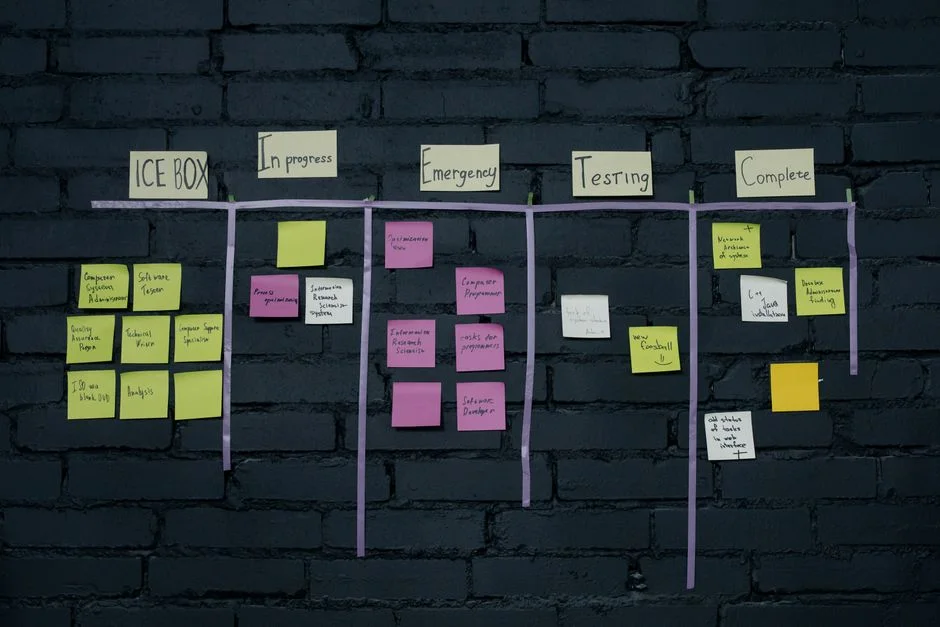
In an Agile environment, the backlog is dynamic. Developers work closely with product owners to prioritize features based on user feedback and technical necessity. This allows for frequent deployment, meaning that your CI/CD pipeline must be mature enough to handle regular integration and testing. If your infrastructure is not automated, Agile will quickly become a source of technical debt rather than a source of speed.
Performance and Risk: Technical Tradeoffs
The core tradeoff between these methodologies lies in the management of risk. Waterfall risks ‘big bang’ failure—where the product is delivered late and fails to meet market needs because the requirements were outdated by the time of release. Agile risks ‘scope creep’—where the lack of a rigid endpoint leads to perpetual development without a clear finish line.
| Factor | Waterfall | Agile |
|---|---|---|
| Change Management | Low (Rigid) | High (Adaptive) |
| Documentation | Extensive/Upfront | Just-in-time |
| Risk Profile | Late discovery of issues | Early discovery of issues |
| Deployment | Final release | Continuous delivery |
Security is another critical factor. In Waterfall, security audits are often treated as a final gate. In Agile, security is a continuous requirement, often integrated into the definition of done for every sprint, which is generally more effective for modern web applications.
Decision Framework: When to Choose Which
Choosing the right methodology depends on the nature of your project and the stability of your requirements. Use the following framework to decide:
- Choose Waterfall if: You are working on a project with rigid regulatory requirements, fixed budgets with zero flexibility, or hardware-software integration where changes are physically impossible to make after production.
- Choose Agile if: You are building a SaaS product, a startup MVP, or any application where user feedback is the primary driver of success.
If you are in the early stages of building a SaaS product, Waterfall is almost certainly the wrong choice. The cost of being wrong about your market fit is too high to wait six months for a discovery phase that could have been validated in two weeks.
Budget and Resource Considerations
Budgeting for Waterfall is typically easier to forecast because the scope is fixed. However, this is a dangerous illusion; the fixed price often leads to hidden costs when requirements inevitably shift. Agile budgeting is often based on team capacity—funding a team of engineers for a set period—which allows for better control over quality and technical debt.
When hiring an external partner, Waterfall contracts are often ‘Fixed Price/Fixed Scope,’ while Agile contracts are ‘Time and Materials.’ Time and Materials models provide the flexibility to adjust the product roadmap as you learn, but they require a high level of trust and transparency between the agency and the client to ensure efficiency.
Operational Realities for Modern Engineering Teams
In practice, most high-performing teams use a hybrid approach. They may use a ‘Waterfall-lite’ discovery phase to define the initial system architecture and database design, followed by an Agile implementation phase. This ‘architect-then-iterate’ pattern is common in complex ERP or healthcare systems where the underlying data model must be robust before the user-facing features are built.
Regardless of the methodology, the most important technical requirement is consistent communication. Whether you are holding daily standups (Agile) or milestone reviews (Waterfall), the goal is to prevent the ‘silo effect’ where developers, designers, and business owners operate with different understandings of the product goals.
Factors That Affect Development Cost
- Requirement stability
- Project complexity and scale
- Need for regulatory compliance
- Team seniority and expertise
- Frequency of deployment requirements
Waterfall costs are often tied to fixed-price delivery, while Agile costs are typically based on monthly team capacity and velocity.
Frequently Asked Questions
Should startups use Agile or Waterfall?
Startups should almost always use Agile. The ability to iterate based on user feedback and pivot quickly is the primary competitive advantage for a startup, and Waterfall’s rigid structure will likely slow down your ability to find product-market fit.
Can you use both Agile and Waterfall in the same project?
Yes, this is often called a hybrid approach. You might use a structured Waterfall approach for the initial architecture and database design, then switch to Agile sprints for the development of user-facing features.
Which methodology is better for complex, large-scale projects?
Complex projects often benefit from a hybrid model. While Agile is excellent for feature development, the architectural integrity of a large system often requires the rigorous, upfront planning associated with Waterfall to ensure scalability and security.
The choice between Agile and Waterfall is ultimately a choice about how you want to manage your technical and business risks. Agile provides the agility to respond to market changes, while Waterfall provides the structure necessary for highly predictable, low-variance environments. For most software-driven businesses, the iterative nature of Agile is a superior fit, provided that the team is disciplined about technical debt and documentation.
At NR Studio, we specialize in building scalable software for growing businesses. Whether you need help defining your development roadmap or executing a complex build, our team understands the nuances of both methodologies and how to apply them to deliver high-quality, maintainable code. Contact us to discuss your next project.
Not Sure Which Direction to Take?
Book a 30-minute call with one of our engineers — we’ll help you decide without the sales pitch.