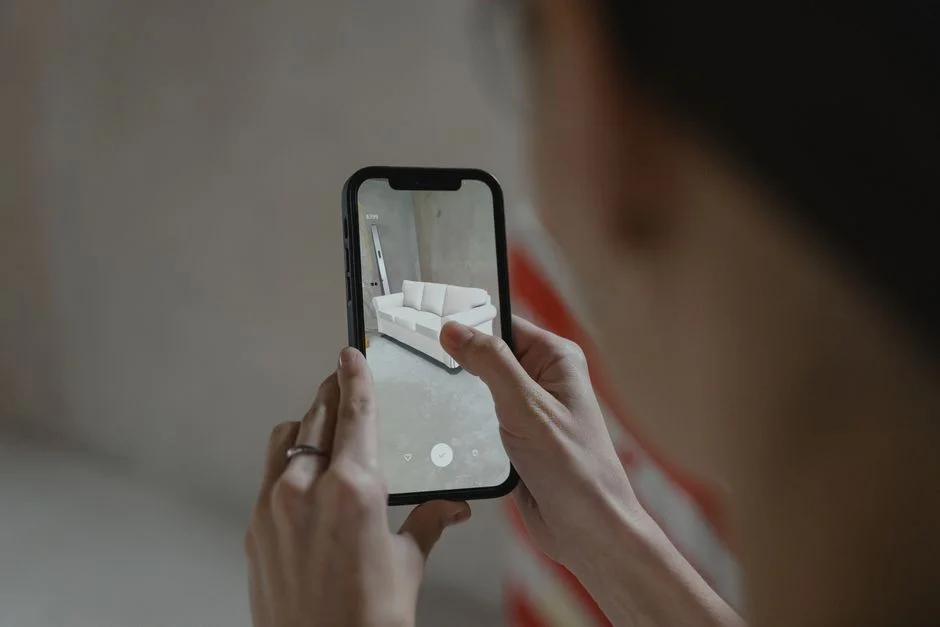

According to Statista, the global augmented reality (AR) market is projected to reach a valuation exceeding $50 billion by 2028, with interior design applications serving as one of the most prominent consumer-facing use cases. For startup founders and business owners, the financial commitment required to enter this space is significant, yet often misunderstood. Building a high-fidelity AR interior design platform is not merely a software development task; it is an exercise in resource allocation, performance optimization, and long-term infrastructure planning.
As a CTO, I have evaluated the total cost of ownership (TCO) for numerous spatial computing projects. The investment required ranges from modest prototypes to enterprise-grade platforms capable of real-time 3D rendering and complex material physics. In this guide, we decompose the specific cost drivers—from 3D asset pipeline management to server-side AI integration—to ensure your budget accounts for the actual technical requirements of modern AR development.
Deconstructing the Technical Cost Drivers
When budgeting for an AR interior design application, the most common pitfall is underestimating the complexity of the 3D asset pipeline. Unlike standard mobile development, AR requires high-quality, lightweight 3D models that must maintain visual fidelity while remaining performant on diverse hardware. You are not just paying for code; you are paying for the orchestration of assets, physics engines, and spatial tracking algorithms.
The primary technical cost drivers include:
- Spatial Mapping & Tracking: Implementing ARKit (iOS) or ARCore (Android) requires deep technical expertise to handle occlusion, light estimation, and plane detection.
- Rendering Engine Integration: Choosing between Unity, Unreal Engine, or native AR frameworks like RealityKit significantly impacts development hours. Unity, for instance, allows for faster cross-platform deployment but may require more complex bridge code for native UI integration.
- Cloud-Based Asset Management: Storing high-resolution 3D textures and meshes requires a specialized backend architecture. You will need to invest in CDN delivery and efficient compression algorithms to ensure the app remains responsive.
- AI-Driven Design Assistance: Integrating generative AI for room layout suggestions or automatic style matching adds a layer of complexity that requires specialized machine learning engineers.
From an architectural standpoint, the choice of your backend is paramount. While some might consider a monolithic approach, we often see better long-term performance by building robust REST API architectures that decouple your frontend AR logic from your inventory and user management systems. This separation is vital if you intend to offer features like a customized scheduling or consultation module for interior designers, as it allows your core AR engine to scale independently from your transactional services.
Strategic Financial Breakdown and Project Scope
The cost of development is highly sensitive to the feature set and the complexity of the spatial interactions. A basic MVP (Minimum Viable Product) might focus on placing pre-rendered furniture in a room, while an advanced application might include real-time wall measurement, lighting simulation, and automated e-commerce purchasing flows. The following table outlines typical investment ranges based on our experience at NR Tech Studio, assuming a dedicated team of engineers and designers.
| Development Phase | Scope Complexity | Estimated Time (Hours) | Cost Profile |
|---|---|---|---|
| MVP Development | Basic AR placement, simple catalog | 400-600 | Lean/Entry |
| Mid-Tier Platform | Advanced physics, AI suggestions | 1,000-1,500 | Growth/Scale |
| Enterprise Suite | Real-time collaboration, ERP integration | 2,000+ | Strategic/Complex |
It is important to note that these figures exclude ongoing maintenance and cloud infrastructure costs. When planning your budget, you must factor in the ‘hidden’ costs of high-concurrency environments. If your application gains traction, you will need to apply sophisticated architectural strategies for high-concurrency scaling, especially when users are simultaneously querying large 3D asset libraries. Failing to account for these backend requirements early in the cycle will lead to significant technical debt that is far costlier to refactor later.
The Role of Infrastructure and Cloud Architecture
Building an AR interior design app is inherently a data-heavy endeavor. The infrastructure must handle the transmission of large 3D assets to the user’s device, often in real-time. If your infrastructure is poorly configured, you will experience high latency, which in the context of AR, translates to ‘jitter’—the visual misalignment of virtual objects with the physical space. This is a critical user experience failure that can lead to high churn rates.
To mitigate this, we recommend a cloud-native approach. You need to leverage edge computing to serve assets closer to the user. Furthermore, the database layer must be optimized for fast retrieval. Whether you are using PostgreSQL or a NoSQL variant, the schema design must account for the metadata associated with thousands of furniture items, including dimensions, material properties, and SKU information. This is where professional, high-performance database design becomes a non-negotiable expense.
Furthermore, consider the security implications. If your app includes a payment gateway or stores sensitive design projects, your infrastructure must be compliant with industry standards. This adds a layer of testing and security auditing that must be included in your initial budget. You are not just building an app; you are building a secure, scalable ecosystem.
Managing Technical Debt and Long-term Scalability
Technical debt in AR development is particularly insidious. Because AR frameworks are frequently updated (e.g., new versions of ARKit or ARCore), your codebase requires constant maintenance to remain compatible with the latest mobile OS releases. If you build your app using shortcuts today, you will be forced to pay for a complete refactor tomorrow to maintain hardware compatibility.
We advise clients to prioritize modularity. By building your application with a clean separation of concerns, you ensure that your AR engine can be updated independently of your business logic. This modularity also allows for easier integration of third-party APIs. For instance, if you decide to integrate a new real-time rendering service, you should be able to swap it out without needing to rebuild your entire user interface or backend database.
Scalability also applies to your team. A well-documented codebase allows you to scale your development team as the project grows. Conversely, an undocumented, ‘spaghetti’ code architecture will create a bottleneck that slows down development velocity and increases the cost of onboarding new engineers. Always invest in code quality and automated testing early in the development lifecycle.
Real-World Considerations: The Hidden Costs of Maintenance
Many startup founders overlook the ‘post-launch’ phase. An AR app is never ‘finished.’ It requires continuous monitoring, bug fixes, and feature updates. When calculating TCO, you should allocate at least 20-30% of your initial development budget annually for maintenance and optimization. This includes monitoring for crashes, optimizing for new hardware releases, and updating asset compression algorithms to keep the app performant.
In the AR space, user feedback loops are critical. You will likely discover that users struggle with specific lighting conditions or spatial tracking scenarios. Your development team must be prepared to iterate rapidly based on this data. This requires a robust CI/CD pipeline that allows for rapid deployment of updates without disrupting the end-user experience. Setting up this pipeline is an upfront cost, but it pays dividends in reduced downtime and faster feature delivery.
Finally, consider the costs associated with third-party software licenses. Whether you are using premium 3D rendering engines, specialized physics libraries, or cloud storage providers, these recurring costs can add up quickly. A thorough TCO analysis will aggregate these costs over a 3-5 year period, providing a realistic picture of your annual operational expenditure.
The Importance of Architectural Rigor
At NR Tech Studio, we emphasize that the cost of an application is directly proportional to the rigor of its architecture. When you invest in a robust, scalable foundation, you reduce the long-term cost of change. In the context of AR interior design, this means designing a system that can handle the high-concurrency demands of a growing user base while maintaining the low-latency performance required for a seamless augmented reality experience.
This involves more than just selecting the right tech stack. It involves rigorous planning of data flows, state management, and asset delivery. By investing in these areas during the initial phase, you avoid the common pitfalls that lead to failed projects and excessive cost overruns. We have seen too many projects start with a ‘get it done fast’ mentality, only to encounter catastrophic performance issues once they hit a certain scale.
Ultimately, your goal should be to build a sustainable, high-performance platform. This requires a strategic partnership with a development team that understands both the creative potential of AR and the hard engineering realities of building scalable software. Whether you are building an MVP or a complex enterprise solution, the principles of modularity, scalability, and performance remain the same.
Our Development Philosophy
Our approach at NR Tech Studio is rooted in transparency and technical excellence. We believe that the client should be fully informed about the trade-offs involved in every architectural decision. When we develop an AR interior design application, we focus on creating a balance between visual fidelity and performance, ensuring that your users have a responsive, high-quality experience regardless of their device.
We specialize in building custom software that aligns with your specific business goals. Whether you need a simple tool to showcase furniture or a complex platform with AI-driven design capabilities, our team is equipped to deliver. We prioritize clean code, robust testing, and scalable infrastructure, ensuring that your investment provides long-term value.
If you are planning an AR interior design application, we invite you to discuss your project with our technical team. We can help you navigate the complexities of development, define a realistic budget, and build a roadmap for success. A 30-minute discovery call can provide the clarity you need to move forward with confidence.
Next Steps for Your AR Project
Navigating the costs of AR development requires a pragmatic approach that balances ambition with technical reality. By focusing on your core requirements, investing in a solid foundation, and planning for long-term maintenance, you can build a successful and sustainable product. We are here to help you navigate these challenges and deliver a solution that meets your business needs.
Explore our complete WordPress — Development directory for more guides. Explore our complete WordPress — Development directory for more guides.
Factors That Affect Development Cost
- Project scope and feature complexity
- 3D asset creation and pipeline management
- Cloud infrastructure and CDN requirements
- AI/ML model integration
- Ongoing maintenance and OS compatibility updates
Development costs vary widely based on the complexity of physics engines, the scale of the 3D asset catalog, and the required backend performance.
Building an AR interior design application is a significant investment that requires careful planning and a clear understanding of the technical and financial requirements. By prioritizing architectural rigor, scalability, and long-term maintenance, you can build a platform that serves your business goals for years to come. We encourage you to reach out to our team to discuss your specific requirements and see how we can help you bring your vision to life.
Ready to build your AR platform? Contact us today to schedule a free 30-minute discovery call with our tech lead to discuss your project scope and budget.
Get a Project Estimate
Every project has a different scope. Share your requirements and we’ll give you a realistic breakdown within 48 hours.