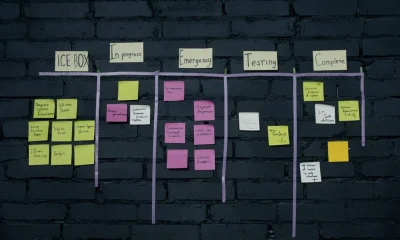

Software estimation is a systematic process of forecasting the effort, time, and resources required to deliver a functional software product. Rather than a simple guess, professional software houses utilize structured methodologies to translate abstract business requirements into concrete technical tasks. This process serves as the backbone of project planning, enabling stakeholders to align expectations with the reality of engineering constraints and architectural complexity.
At its core, estimation is about risk management. By decomposing complex features into granular work units, software engineers can identify potential bottlenecks, architectural dependencies, and integration challenges before a single line of code is written. This article examines the internal mechanisms used by engineering teams to decompose, quantify, and analyze the effort required for high-stakes enterprise software development.
The Anatomy of Functional Decomposition
Functional decomposition is the primary technique for breaking down high-level business goals into manageable technical units. A software house starts by translating user requirements into a Work Breakdown Structure (WBS). This process involves identifying the primary system actors, the data entities involved, and the state transitions required to fulfill a specific business process. By isolating these components, engineers can evaluate each piece of logic independently.
When decomposing a system, we look at the interaction between components. For instance, a login module is rarely just an authentication check. It involves session management, security token handling, password hashing strategies, and potential integration with third-party identity providers. By listing every sub-task, we shift from guessing to calculating. This granular approach ensures that no hidden complexity, such as database schema migrations or API rate limiting, is overlooked during the initial phase of development.
Furthermore, we must account for the cross-cutting concerns that apply to every feature. These include logging, error handling, performance monitoring, and internationalization. If these are not estimated as separate tasks, the project will inevitably suffer from scope creep as the team realizes these requirements must be retrofitted into the existing codebase. A rigorous WBS ensures that every layer of the stack—from the UI components to the database indexing strategy—is accounted for in the overall effort forecast.
Applying Planning Poker and Relative Sizing
Relative sizing, often executed through the Planning Poker technique, is a method designed to mitigate the inherent optimism bias in human estimation. Instead of assigning hours—which are notoriously difficult to predict—engineers assign complexity points to tasks. These points represent the combination of effort, uncertainty, and risk. By comparing a new task to a previously completed ‘anchor’ task, the team can reach a consensus on the relative difficulty of the work.
This method is highly effective because it forces discussions about the unknown. If one engineer assigns a task a ‘3’ and another assigns it an ‘8’, the discrepancy highlights a misunderstanding of the technical requirements or an overlooked architectural constraint. This conversation is far more valuable than the final number itself. By facilitating these debates, the team uncovers hidden risks, such as legacy code dependencies or the need for specific security audits, that would have otherwise remained buried until the implementation phase.
The use of Fibonacci-based scales (1, 2, 3, 5, 8, 13) reflects the reality of software development: as complexity increases, the uncertainty grows exponentially. Small tasks are usually predictable, but large tasks often hide significant architectural challenges. By using these buckets, software houses avoid the false precision of estimating a task at 14.5 hours, acknowledging instead that large tasks carry higher risk and require more robust planning.
Incorporating Technical Debt and Refactoring
Technical debt is an unavoidable component of software engineering, and a professional estimation process must account for it. When we estimate a new feature, we must consider whether the existing codebase is prepared to support it. If the current architecture is rigid or brittle, the effort required to implement a new feature will be significantly higher than if the system were designed with modularity in mind. Estimations must therefore include the time needed to refactor existing code to ensure it remains clean and maintainable.
Ignoring technical debt is the fastest route to project failure. We use metrics like cyclomatic complexity and code coverage to assess the health of the codebase. If these metrics indicate a high degree of entropy, we factor in additional time for unit testing and integration testing. This approach is rooted in the SOLID principles, which guide us toward creating maintainable, scalable software. If a feature requires violating these principles to reach a deadline, the resulting debt will compound interest, making future changes increasingly difficult.
Furthermore, documentation and automated testing are not optional. A robust estimate includes time for writing comprehensive documentation for API endpoints, maintaining CI/CD pipelines, and ensuring that the test suite remains green. By treating these tasks as first-class citizens in the estimation process, we ensure that the software remains stable and extensible over the long term. This strategy prevents the ‘feature factory’ trap, where velocity is maintained at the expense of system integrity.
The Role of Velocity and Historical Data
Velocity is a metric that measures the amount of work a team can complete during a single iteration. It is the most reliable tool for forecasting future progress. By analyzing the team’s historical performance, we can establish a baseline capacity. If a team has consistently delivered 30 story points per sprint, we can use this data to estimate the time required for future projects with a high degree of confidence. This is not about pushing the team to work harder, but about understanding the team’s sustainable pace.
However, velocity is highly sensitive to changes in team composition and project context. If we are moving from a monolithic architecture to a microservices-based approach, the team’s velocity will likely fluctuate as they adapt to new operational requirements. We must adjust our expectations accordingly. Using historical data requires a nuanced understanding of these variables; it is not a blind extrapolation of past performance. We evaluate the ‘done’ criteria of previous tasks to ensure that the quality bar remains consistent.
Data-driven estimation also allows us to identify when a project is deviating from its plan. If the actual progress consistently lags behind the estimated velocity, we can initiate a retrospective to understand the underlying causes. Is it a lack of clear requirements? Are there bottlenecks in the deployment process? By tracking velocity, we gain visibility into the project’s health, allowing us to pivot or reallocate resources before a major deadline is missed.
Managing Architectural Complexity and Scalability
Architectural decisions made during the initial phases of a project have a profound impact on the total effort required. Scaling a system from a few hundred users to millions requires a fundamentally different approach than building an MVP. When estimating, we must consider the non-functional requirements: latency, throughput, availability, and security. A system designed for high availability requires redundant infrastructure, load balancing, and complex failover strategies, all of which must be estimated as part of the total project scope.
For instance, choosing between a relational database like PostgreSQL and a NoSQL solution like MongoDB changes the entire data access layer implementation. If the project requires complex transactions and strict data integrity, the effort to implement and manage a relational database is higher due to the need for migrations and schema design. We must also account for infrastructure as code (IaC) using tools like Terraform or Kubernetes manifests. These are not merely ‘setup’ tasks; they are critical components that ensure the environment is reproducible and scalable.
Additionally, we evaluate the choice of cloud providers—AWS, Azure, or Google Cloud—as each has specific managed services that can accelerate development or increase complexity. If we rely on serverless functions or managed message queues, the code must be architected to handle cold starts and distributed state management. Each of these architectural choices adds a layer of complexity to the estimation. By being explicit about these decisions early on, we ensure that the technical team and the stakeholders share the same understanding of what ‘finished’ actually looks like.
Risk Assessment and Contingency Planning
Every software project carries inherent risks, from integration issues with third-party APIs to unexpected changes in regulatory requirements. A professional estimation process does not just provide a single number; it provides a range based on a risk assessment. We identify potential failure points and assign a probability and impact score to each. This allows us to build a contingency buffer into the project schedule, ensuring that the team has the necessary time to address unforeseen challenges.
One common risk is ‘integration hell,’ where a third-party service does not behave as documented. We mitigate this by building small proofs-of-concept (POCs) during the estimation phase. If a critical dependency is undocumented or unstable, we factor in extra time to build a wrapper or an abstraction layer that protects our system from these external changes. This is a standard practice in robust software architecture, ensuring that our core logic remains decoupled from volatile external services.
Contingency planning is not about padding the schedule; it is about acknowledging reality. By explicitly listing our assumptions—such as the availability of specific APIs or the stability of a third-party SDK—we provide transparency. If an assumption is proven wrong, we have a clear path to re-evaluate the estimate. This honest approach to risk management builds trust and ensures that the project remains focused on delivering value, even when the path forward is not entirely clear.
Communication and Stakeholder Alignment
The final step in the estimation process is the translation of technical findings into actionable information for stakeholders. This involves presenting the estimate not as a static deadline, but as a roadmap of work. We emphasize the trade-offs between scope, quality, and time. If a stakeholder wants to reduce the timeline, we show them exactly which features would need to be descoped or which non-functional requirements would be deferred, allowing for an informed, collaborative decision-making process.
We use visual aids, such as burn-up charts and milestone roadmaps, to track progress against the initial estimate. These tools are essential for maintaining alignment throughout the project lifecycle. If the scope changes—which is inevitable in most projects—we immediately re-estimate the impact on the timeline. This keeps the conversation focused on the business value rather than on missed deadlines, fostering a healthy, professional relationship between the engineering team and the business leaders.
Effective communication also means being transparent about the limitations of our estimates. We clearly define what is included and, more importantly, what is excluded. By creating a ‘out of scope’ document, we prevent scope creep from derailing the project. This clarity is the hallmark of a professional software house, ensuring that everyone involved understands the constraints and expectations, leading to more successful project outcomes.
Continuous Improvement of the Estimation Process
Estimation is a skill that improves with practice and reflection. After each project or major milestone, we conduct a post-mortem to compare our initial estimates with the actual time spent. This analysis is critical for identifying systemic biases in our planning. Did we consistently underestimate the time required for UI/UX polish? Was our initial assessment of the data migration complexity inaccurate? By answering these questions, we refine our future estimates.
We also look at the performance of our tools and processes. If our CI/CD pipelines were slow or our testing framework was brittle, we factor these into our ‘process debt.’ We invest in improving our development environment, which in turn improves our future velocity. This cycle of continuous improvement ensures that our estimations become more accurate over time, benefiting both the development team and the stakeholders.
Finally, we encourage a culture of psychological safety where engineers feel comfortable admitting when they are uncertain. An estimate that reflects genuine uncertainty is far more valuable than an optimistic one that is destined to fail. By fostering an environment where accuracy is valued over speed, we create a sustainable development culture that consistently delivers high-quality software.
Factors That Affect Development Cost
- Technical complexity
- System architecture requirements
- Integration needs
- Technical debt
- Team velocity
Estimation accuracy depends heavily on the granularity of requirements and the maturity of the development process.
Estimating software projects is a complex engineering discipline that requires a balance of analytical rigor, historical data, and clear communication. By moving beyond simple guesses and adopting structured methodologies like functional decomposition, relative sizing, and velocity tracking, software houses can provide realistic forecasts that manage risk and align with business objectives.
The goal of this process is not just to predict the future, but to create a shared understanding of the technical challenges and architectural requirements. Through continuous reflection and improvement, engineering teams can refine their estimation accuracy, ensuring that they consistently deliver robust, scalable software that meets the needs of their users and stakeholders.
NR Tech Studio builds custom web apps, mobile apps, SaaS platforms, and internal tools for growing businesses. If you’re working through a technical decision, feel free to reach out — no commitment required.