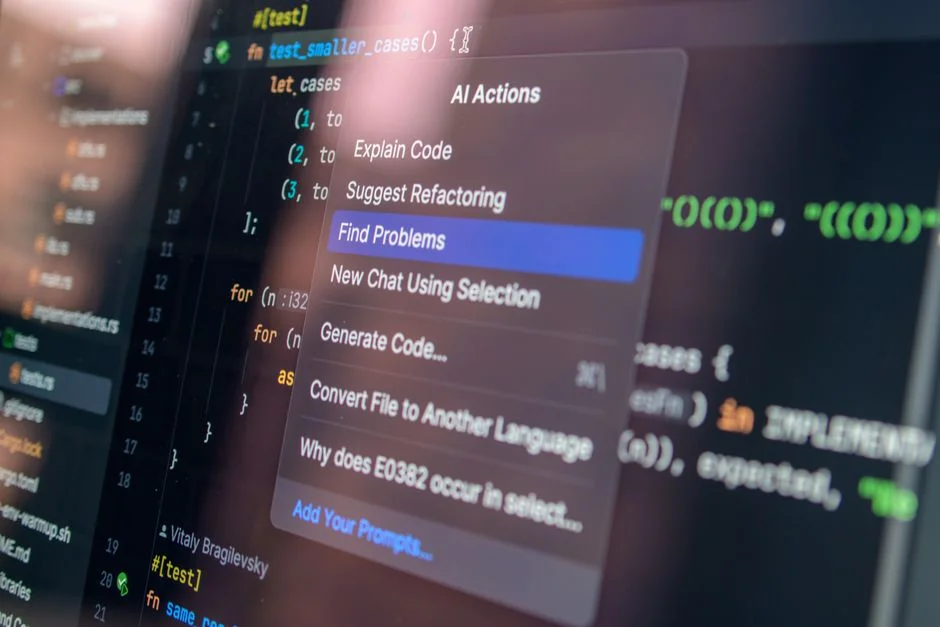

The integration of Large Language Models (LLMs) into the software development lifecycle has transitioned from experimental curiosity to a foundational pillar of modern engineering. Today, developers across global enterprises utilize AI-assisted tooling to accelerate boilerplate generation, API integration, and unit test coverage. However, this rapid acceleration of code velocity brings a subtle, systemic challenge: the accumulation of technical debt at a scale previously unseen in manual development workflows.
Technical debt in the context of AI-generated code is not merely about poorly formatted functions or missing comments; it is about architectural drift, latent security vulnerabilities, and the erosion of codebase maintainability. As a cloud architect, I evaluate this debt through the lens of long-term system stability and operational overhead. This article examines the structural, cognitive, and infrastructural debt introduced by AI-assisted development and provides a framework for managing the hidden costs of automated code synthesis.
The Taxonomy of AI-Induced Technical Debt
When we discuss technical debt in software engineering, we typically refer to the trade-offs made for speed over long-term maintainability. AI-generated code introduces a unique, accelerated form of this debt. Unlike human developers who bring a consistent mental model and architectural context to a codebase, AI models operate on stochastic probability, often producing code that is syntactically correct but contextually disjointed. This results in ‘Architectural Discontinuity,’ where snippets from different sources are stitched together without a unified design pattern.
Furthermore, we must consider the ‘Cognitive Mismatch’ debt. When a developer accepts an AI-generated suggestion without fully internalizing the implementation logic, they forfeit the deep understanding required for future debugging. This creates a black-box effect within the codebase. If an engineer is tasked with refactoring a module they did not write and do not fully comprehend, the time-to-repair (TTR) for that component increases exponentially. This is not just a productivity loss; it is a long-term liability that compounds as the system scales across cloud environments.
Another dimension is ‘Dependency Bloat.’ AI models, when prompted to solve a specific problem, frequently suggest the inclusion of heavy third-party libraries or legacy patterns that may not be optimal for the project’s specific infrastructure requirements. Over time, these unnecessary dependencies increase the surface area for security vulnerabilities and complicate the CI/CD pipeline, leading to bloated container images and slower deployment cycles in high-availability systems.
Architectural Drift and Systemic Fragility
In distributed systems, architectural consistency is paramount. AI tools, while excellent at generating localized logic, lack the ‘big picture’ awareness of a system’s overarching architecture. When developers use AI to generate microservices or cloud-native functions, the resulting code often ignores established patterns for error handling, observability, and state management. This leads to architectural drift, where the codebase slowly deviates from the intended design constraints.
Consider a scenario where an AI assistant generates a series of REST API endpoints. Without explicit instructions regarding a unified middleware architecture, the AI might produce inconsistent authentication patterns, varying error response formats, or disparate logging structures. For a cloud architect managing a complex microservices mesh, this lack of uniformity is a nightmare. It creates ‘Observability Debt,’ where monitoring tools struggle to parse logs or traces because the underlying implementation lacks a consistent telemetry schema.
To mitigate this, we must enforce strict linting and static analysis rules that are agnostic of the source of the code. If the AI generates code that violates the project’s established design patterns, the CI/CD pipeline must reject it before it reaches the integration phase. This requires a shift in how we view code reviews: we are no longer just reviewing logic; we are enforcing architectural compliance against an automated source that does not understand the constraints of our infrastructure.
The Illusion of Correctness: Security and Logic Debt
One of the most dangerous aspects of AI-generated code is its tendency to produce ‘plausible but incorrect’ solutions. This is particularly problematic in security-sensitive areas such as input sanitization, authentication, and encryption. An LLM might suggest an implementation of a cryptographic function that is syntactically sound but logically flawed or outdated. Because the code appears clean and well-structured, it often bypasses rigorous scrutiny during the initial development phase.
This creates ‘Security Debt’ that remains dormant until it is triggered by an external threat. In a production environment, this is catastrophic. Relying on AI to generate security-sensitive code without a robust, automated security scanning suite (like SAST or DAST integrated into the build pipeline) is a reckless engineering practice. We must treat all AI-generated code as ‘untrusted input’ that requires the same level of auditing as third-party packages or open-source dependencies.
Furthermore, AI models often hallucinate parameters or utilize deprecated library methods that were present in their training data. This ‘Legacy Debt’ forces the engineering team to constantly patch code that should have been modern from the start. We have seen instances where AI-generated code included references to internal AWS SDK methods that had been deprecated for years, leading to runtime errors during infrastructure upgrades. This forces teams to spend cycles fixing ‘new’ code rather than building new features.
Managing Cognitive Load and Knowledge Erosion
As we rely more on AI to write code, the fundamental skill set of the engineering team risks erosion. When a developer uses an AI agent to build a complex data transformation pipeline, they are effectively outsourcing the cognitive work. If that pipeline fails, the developer may find themselves unable to diagnose the issue because they lack the foundational knowledge that would have been acquired by writing the code manually.
This is a long-term risk to the resilience of the organization. If the team does not understand the ‘how’ and ‘why’ behind the code, they cannot effectively optimize for performance or scale. In a high-availability environment where every millisecond of latency counts, this lack of deep understanding is a critical failure point. We must prioritize ‘Human-in-the-Loop’ development, where the AI serves as an assistant for boilerplate, but the core business logic remains firmly under the control and understanding of the senior engineering staff.
We recommend implementing ‘Knowledge Retention Sprints’ where developers are required to explain, refactor, and optimize AI-generated modules. This ensures that the team remains the primary maintainer of the system, preventing the codebase from becoming a collection of opaque, machine-generated blocks that no human can confidently modify or improve.
Infrastructure and Deployment Implications
AI-generated code often lacks the necessary metadata and configuration files required for seamless deployment in cloud-native environments. For instance, an AI might generate a robust service but fail to include the corresponding Kubernetes manifest, Terraform module, or IAM policy required for that service to function securely. This creates ‘Deployment Debt,’ where the code is ready, but the infrastructure to support it is missing or incorrectly configured.
This friction extends to the CI/CD pipeline. If the generated code includes hard-coded environment variables or local paths, it will fail in a containerized environment like AWS ECS or EKS. To solve this, we must adopt an ‘Infrastructure-as-Code’ (IaC) approach that is tightly coupled with our development process. AI should be trained on our specific IaC patterns to ensure that the code it generates is ‘deployment-ready’ from the moment it is committed.
Furthermore, the lack of performance optimization in AI-generated code can lead to increased infrastructure costs. If an AI generates a loop that performs inefficient database queries, the resulting system will consume more CPU and memory than a manually optimized version. Over millions of requests, this inefficiency aggregates into significant operational overhead. We must integrate automated performance testing into our pipelines to catch these inefficiencies before they reach production.
The Role of Static Analysis and Automated Testing
In the era of AI-assisted development, static analysis is no longer an optional component; it is a mandatory safeguard. We must implement a multi-layered testing strategy that includes linting, static code analysis, and unit testing to validate every line of code generated by an AI. This is the only way to ensure that the code meets our quality and security standards.
Consider the following example of a CI/CD configuration that enforces these checks:
# Example of a strict CI pipeline enforcing code quality
name: CI Pipeline
on: [push]
jobs:
  check-code:
    runs-on: ubuntu-latest
    steps:
      - uses: actions/checkout@v3
      - name: Run Linter
        run: npm run lint
      - name: Run SAST
        run: semgrep --config auto
      - name: Run Unit Tests
        run: npm test
By automating these checks, we create a gatekeeper that prevents the accumulation of technical debt. If the code fails the linter, it does not get merged. If it fails the security scan, it is rejected. This rigorous approach shifts the burden of quality from the human reviewer to the automated infrastructure, allowing us to leverage the speed of AI while maintaining the stability of our systems.
Maintaining System Observability
Observability is the bedrock of reliable software. When AI generates code that bypasses our standard logging and monitoring patterns, it creates a blind spot in our infrastructure. We must enforce a ‘Telemetry-First’ approach, where all generated code must include the necessary hooks for distributed tracing, metrics collection, and structured logging.
This can be enforced through the use of templates. Instead of allowing the AI to generate code from scratch, we provide it with a scaffold that includes all the required telemetry hooks. This ensures that every new feature is observable from day one. In a distributed system, being able to trace a request through the entire stack is essential for debugging. If a segment of that stack is opaque because it was generated without proper instrumentation, the entire system’s reliability is compromised.
We suggest using tools like OpenTelemetry to define the standard for how code should report its state. By mandating that all AI-generated code adheres to these standards, we can maintain visibility even in systems where a significant portion of the codebase is automated.
The 80/20 Rule for AI Development
The 80/20 rule in this context suggests that AI can effectively handle 80% of the repetitive, boilerplate, or standard logic, while the remaining 20%—the core business logic, security-critical paths, and architectural decisions—must be handled by human engineers. This division of labor is essential for maintaining a high-quality codebase.
If we try to push AI to do more than 80%, we start to see an exponential increase in technical debt. The AI will begin to make assumptions about the business requirements that may not align with the product’s actual goals. This ‘Requirement Drift’ is a silent killer of software projects. By restricting AI to the 80% of tasks where it excels, we can keep the 20% where human intuition and context are required.
This requires a disciplined approach to prompt engineering and task delegation. We must clearly define what the AI is responsible for and what it is not. A well-defined boundary between human and AI responsibilities is the best defense against the uncontrolled accumulation of technical debt.
Refactoring and Maintenance Cycles
Technical debt is not a problem if it is managed. The issue arises when it is ignored. We must build ‘Refactoring Cycles’ into our development process. Just as we have regular maintenance for our cloud infrastructure, we must have regular maintenance for our code. This includes periodically reviewing and refactoring AI-generated code to ensure it still aligns with our architectural standards.
This is not just about cleaning up the code; it is about keeping the codebase modern and efficient. As our system evolves, the code that was generated by an AI six months ago may no longer be the best way to solve the problem. Regular refactoring ensures that our codebase does not become a patchwork of outdated and inefficient solutions. We should treat AI-generated code as ‘transient’—it is useful for the moment, but it must be continuously integrated into the long-term design of the system.
By treating AI-generated code as a living, evolving part of the system, we can turn a potential liability into a manageable asset. This requires a shift in mindset from ‘write and forget’ to ‘write, review, and maintain.’
The Future of AI-Assisted Engineering
The future of AI-assisted engineering lies in the integration of AI agents that are ‘infrastructure-aware.’ These agents will not just generate code; they will understand the context of the entire system, including the cloud services, the deployment pipeline, and the security requirements. This will allow them to generate code that is not just syntactically correct, but also architecturally sound and deployment-ready.
We are already seeing the emergence of tools that can analyze a codebase and provide suggestions that are tailored to the existing patterns and standards. This is a significant step forward. As these tools become more sophisticated, the amount of technical debt they introduce will decrease. However, the human role will remain critical. The ability to evaluate, validate, and integrate AI-generated code is the defining skill of the modern software engineer.
We are moving towards a model of ‘Co-Engineering,’ where the AI and the human work together to build complex systems. This is not about replacing the engineer; it is about augmenting their capabilities. By embracing this model and being mindful of the risks, we can build better software faster than ever before.
Building a Culture of Technical Rigor
Ultimately, the management of technical debt is a cultural issue. If the team is focused only on speed, they will accumulate debt regardless of whether they use AI or not. If the team is focused on quality, they will manage that debt effectively. The introduction of AI just makes it more important to have a strong culture of technical rigor.
This culture is built on the foundation of shared standards, rigorous code reviews, and a commitment to continuous improvement. We must foster an environment where developers are encouraged to question, test, and refactor AI-generated code. We must celebrate not just the speed at which a feature was built, but the quality of the implementation and its long-term maintainability.
By creating a culture that values engineering excellence over raw velocity, we can harness the power of AI to build amazing things while keeping our systems stable, secure, and maintainable for years to come.
Conclusion and Next Steps
AI-generated code is a powerful tool, but it is not a magic bullet. It brings with it a unique set of challenges that can lead to significant technical debt if not managed correctly. By understanding the risks—architectural drift, security vulnerabilities, and cognitive load—we can take proactive steps to mitigate them. This includes implementing rigorous CI/CD pipelines, enforcing architectural standards, and maintaining a culture of technical rigor.
If you are looking to integrate AI into your development process without sacrificing the long-term health of your codebase, we are here to help. Our team of experienced cloud architects can guide you through the process of building a robust, AI-assisted development lifecycle that is tailored to your specific needs and infrastructure. Contact us today for a free 30-minute discovery call to discuss how you can safely and effectively leverage AI in your software development.
Factors That Affect Development Cost
- Complexity of the existing system architecture
- Level of automated testing coverage
- Maturity of the CI/CD pipeline
- Team proficiency in code review and refactoring
- Consistency of coding standards and linting rules
The effort required to mitigate technical debt varies significantly based on the existing codebase quality and the rigor of the development lifecycle.
Frequently Asked Questions
Is AI creating technical debt?
Yes, AI creates technical debt by producing code that may lack architectural consistency, contain latent security flaws, or introduce unnecessary dependencies if not properly audited and integrated by human engineers.
How much percentage of code is written by AI?
While estimates vary, many modern development teams report using AI for 30% to 50% of routine coding tasks, though the final production-ready code still requires significant human oversight and refinement.
What is the 80 20 rule for tech debt?
The 80/20 rule suggests that AI should be used for 80% of repetitive or boilerplate tasks, while the remaining 20%—specifically critical business logic and architectural decisions—must be handled by human engineers to ensure system integrity.
How much AI debt is there?
There is no single quantifiable measure of AI debt, as it is a qualitative and systemic risk that grows over time depending on how much oversight and automated testing a team applies to their AI-generated outputs.
Technical debt in the age of AI is a manageable challenge, provided that teams remain disciplined and infrastructure-focused. The key is to treat AI-generated code as a component that requires the same level of architectural validation, security testing, and maintenance as any other part of the system. By shifting our focus from simple code velocity to long-term system resilience, we can successfully navigate the complexities of AI integration.
Whether you are building a new SaaS platform or scaling an existing enterprise application, ensuring the integrity of your code is non-negotiable. If you need expert guidance on implementing these practices, we invite you to book a 30-minute discovery call with our technical lead to discuss your specific infrastructure and development challenges.
NR Tech Studio builds custom web apps, mobile apps, SaaS platforms, and internal tools for growing businesses. If you’re working through a technical decision, feel free to reach out — no commitment required.