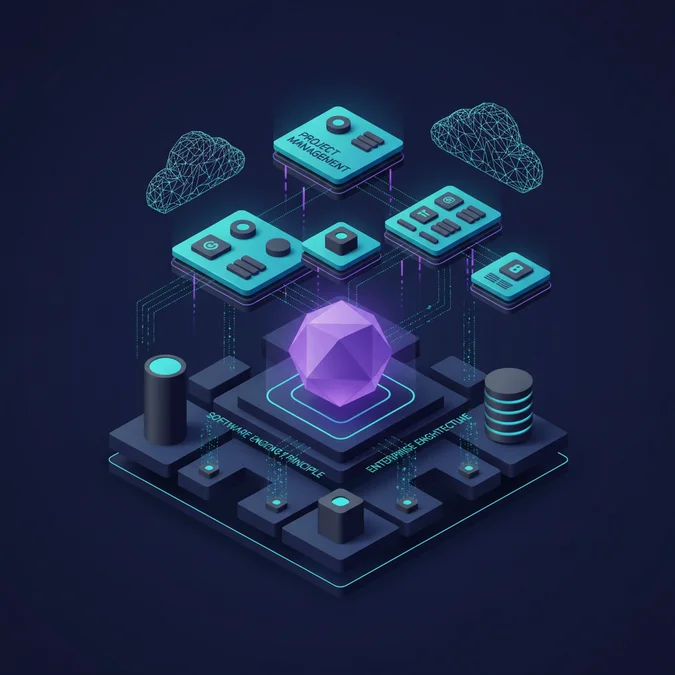

Web dev project management orchestrates the entire software development lifecycle for digital products, ensuring successful delivery within scope, budget, and timeline. It integrates strategic planning, resource allocation, risk mitigation, and stakeholder communication to transform complex technical requirements into functional, scalable web solutions.
Modern web development demands more than just technical prowess; it requires a robust project management framework capable of navigating intricate dependencies, diverse team skill sets, and rapidly evolving technologies. From initial concept to post-launch optimization, effective management is the linchpin that ensures project objectives align with business goals, delivering tangible value and a superior digital experience.
This article provides a practitioner’s guide to mastering web development project management, offering a comprehensive framework for enterprise-level success. We will explore methodologies, advanced strategies, team collaboration tactics, and the transformative role of AI and automation in optimizing project workflows.
Defining Web Dev Project Management: Core Principles and Strategic Imperatives
At its core, web dev project management is the discipline of planning, executing, monitoring, controlling, and closing web development projects. It extends beyond simple task tracking to encompass strategic alignment, resource optimization, and proactive risk mitigation. For enterprise-scale initiatives, this means ensuring that every line of code, every design decision, and every deployment strategy directly contributes to overarching business objectives and user satisfaction.
The critical importance of robust web dev project management lies in its ability to bring order to inherent complexity. Without it, projects risk spiraling into budget overruns, missed deadlines, and technical debt. Effective management ensures predictable outcomes, fosters innovation, and maintains high-quality standards across diverse teams and technologies.
Core Principles of Enterprise Web Dev Project Management:
- Business Value Orientation: Every feature, every sprint, every decision must trace back to delivering measurable business value.
- Adaptability and Flexibility: Embrace change as an inherent part of web development, fostering an environment where requirements can evolve without derailing the project.
- Transparency and Communication: Maintain open channels with all stakeholders, providing clear, consistent updates on progress, challenges, and decisions.
- Risk-First Mindset: Proactively identify, assess, and plan for potential risks, rather than reactively addressing issues as they arise.
- Continuous Improvement: Foster a culture of learning and refinement, regularly reviewing processes and outcomes to enhance future project delivery.
Strategic Imperatives for Success:
For complex web projects, strategic imperatives guide the management process, ensuring long-term success:
- Scalability: Projects must be managed with future growth in mind, designing architectures and processes that can scale with increased user load and feature expansion.
- Security by Design: Integrate security considerations from the earliest stages, ensuring robust protection against vulnerabilities throughout the development lifecycle.
- Performance Optimization: Prioritize speed, responsiveness, and efficiency to deliver an optimal user experience, crucial for engagement and conversion.
- Maintainability: Ensure the codebase is clean, well-documented, and easy to maintain, reducing future operational costs and technical debt.
- Stakeholder Alignment: Consistently align technical efforts with the expectations and goals of all stakeholders, from end-users to executive leadership.
NR Studio Insight: Effective web dev project management isn’t about rigid control, but about creating an intelligent framework that empowers teams, manages expectations, and consistently delivers high-impact digital solutions. It’s the strategic bridge between vision and execution.
Mastering the Web Development Lifecycle: Phases, Methodologies, and Trade-offs
Successfully delivering complex web solutions requires a deep understanding of the web development lifecycle and the various methodologies available to manage web development. Each phase builds upon the last, and the chosen methodology dictates how work progresses, how teams collaborate, and how changes are managed. The right approach for project management for website development ensures efficiency and alignment.
The Web Development Lifecycle Phases:
- Discovery and Initiation: Define project goals, scope, target audience, and key functionalities. Conduct feasibility studies and gather initial requirements.
- Planning: Detail technical specifications, create project schedules, allocate resources, define budgets, and establish communication plans. This phase often includes architectural design.
- Design (UX/UI): Develop wireframes, mockups, prototypes, and user flows. Focus on user experience (UX) and user interface (UI) to ensure intuitive and aesthetically pleasing interactions.
- Development: Coding of frontend and backend components, database creation, API integration, and infrastructure setup. This is typically the longest phase.
- Testing and Quality Assurance: Rigorous testing for functionality, performance, security, compatibility, and usability. Identify and rectify bugs and ensure all requirements are met.
- Deployment: Launching the web application to production servers, configuring environments, and ensuring a smooth transition to live operation.
- Maintenance and Optimization: Ongoing monitoring, bug fixes, security updates, performance tuning, and feature enhancements based on user feedback and analytics.
Project Management Methodologies and Architectural Trade-offs:
The choice of methodology significantly impacts how a project progresses. Here’s a comparison of common approaches:
| Methodology | Description | Best Suited For | Architectural Trade-offs |
|---|---|---|---|
| Waterfall | Linear, sequential approach with distinct phases. Each phase must be completed before the next begins. | Projects with well-defined, stable requirements and minimal expected changes. Government, fixed-price. | Favors upfront, rigid architectural decisions. Less flexible for iterative changes, potentially leading to costly refactoring if requirements shift late. |
| Agile (Scrum) | Iterative and incremental, breaking projects into short ‘sprints’. Emphasizes flexibility, collaboration, and continuous feedback. | Projects with evolving requirements, high uncertainty, and a need for rapid delivery of value. Most web dev. | Supports emergent architecture. Allows for incremental design, but requires continuous attention to technical debt and architectural cohesion across sprints. |
| Agile (Kanban) | Focuses on visualizing workflow, limiting work in progress, and maximizing flow. Continuous delivery, less structured than Scrum. | Maintenance projects, support teams, or initiatives where work arrives continuously and priorities can shift. | Highly adaptable architecture, often favoring microservices or modular designs that allow independent deployment of features. Requires strong architectural governance. |
| Hybrid | Combines elements of both Waterfall and Agile. For example, a Waterfall-like planning phase followed by Agile development sprints. | Large, complex projects requiring some upfront planning but also flexibility during execution. | Balances upfront architectural planning with iterative development. Can lead to friction if not managed carefully, requiring clear demarcation of phases and decision points. |
Checklist: Selecting Your Web Dev Project Management Methodology
- Project Scope Clarity: How well-defined are the requirements at the outset? (High Clarity = Waterfall/Hybrid, Low Clarity = Agile)
- Client Involvement: How much continuous client feedback is expected or desired? (High Involvement = Agile, Low Involvement = Waterfall)
- Team Size & Location: How large and distributed is the development team? (Smaller, co-located = Scrum, Larger, distributed = Kanban/Hybrid)
- Risk Tolerance: How critical is it to mitigate risks early vs. adapting to emergent challenges? (Early mitigation = Waterfall, Adaptation = Agile)
- Delivery Cadence: How often is working software expected? (Infrequent = Waterfall, Frequent = Agile)
- Technical Landscape: Is the technology stack stable or rapidly evolving? (Stable = Waterfall/Hybrid, Evolving = Agile)
Optimizing Team Collaboration and Stakeholder Engagement in Web Projects
Successful web development is a symphony of diverse talents, making optimized team collaboration and effective stakeholder engagement paramount. A project manager’s role extends beyond task allocation to fostering a cohesive environment where information flows freely, and everyone is aligned with the project’s vision.
Key Roles in a Web Development Team:
- Project Manager: Oversees the entire project, manages scope, budget, timeline, resources, and communication.
- Business Analyst (BA): Bridges the gap between business needs and technical solutions, gathering and documenting requirements.
- UI/UX Designer: Focuses on user experience and user interface, creating wireframes, prototypes, and visual designs.
- Frontend Developer: Builds the client-side of the application, responsible for user-facing elements and interactivity.
- Backend Developer: Builds the server-side logic, databases, and APIs that power the application.
- Full-Stack Developer: Proficient in both frontend and backend development.
- Quality Assurance (QA) Engineer: Tests the application for bugs, functionality, performance, and security.
- DevOps Engineer: Manages continuous integration/continuous deployment (CI/CD) pipelines, infrastructure, and automation.
Strategies for Cross-Functional Collaboration:
Effective collaboration ensures that these specialized roles work harmoniously. Strategies include:
- Shared Vision and Goals: Ensure every team member understands the ‘why’ behind the project and their specific contributions.
- Regular Stand-ups/Check-ins: Short, daily meetings (e.g., Scrum stand-ups) to synchronize efforts, discuss progress, and identify blockers.
- Collaborative Tools: Utilize platforms like Slack, Microsoft Teams, or dedicated project management software for real-time communication and documentation.
- Code Reviews and Pair Programming: Foster knowledge sharing, improve code quality, and reduce individual bottlenecks.
- Cross-Training Initiatives: Encourage team members to learn about other roles, building empathy and understanding of dependencies.
- Retrospectives: Regular meetings to reflect on what went well, what could be improved, and actionable steps for the next iteration.
Checklist: Best Practices for Stakeholder Engagement & Communication
- Identify All Stakeholders: List everyone impacted by or influencing the project (e.g., clients, end-users, executives, marketing, legal).
- Develop a Communication Plan: Define who needs what information, when, and through which channels (e.g., weekly reports, monthly steering committee meetings, ad-hoc emails).
- Set Clear Expectations: Document project scope, deliverables, timelines, and responsibilities explicitly. Obtain formal sign-offs where necessary.
- Establish Feedback Loops: Create structured mechanisms for stakeholders to provide input and review progress, such as prototype reviews, user acceptance testing (UAT), and regular demos.
- Tailor Communication: Adjust the level of technical detail based on the audience. Executives need high-level summaries and impact analysis; developers need technical specifications.
- Manage Expectations Proactively: Communicate potential risks, changes, or delays transparently and early. Offer solutions and mitigation strategies.
- Document Decisions: Keep a clear record of all major decisions, approvals, and changes, including the rationale behind them.
- Celebrate Milestones: Acknowledge and communicate successes to maintain morale and stakeholder confidence.
Advanced Strategies for Web Project Success: Risk, Scope, and Technical Debt Management
Complex web development projects are inherently susceptible to challenges like scope creep, budget overruns, and accumulating technical debt. Proactive, advanced management strategies are essential to navigate these pitfalls and ensure project success.
Proactive Risk Management:
Risk management is not about avoiding risks entirely, but about identifying, assessing, and mitigating their potential impact. For web projects, this includes technical, operational, security, and market risks.
- Risk Identification: Brainstorm potential issues throughout the project lifecycle. Examples include third-party API instability, security vulnerabilities, team member attrition, technology obsolescence, or unexpected performance bottlenecks.
- Risk Analysis: Evaluate the probability of each risk occurring and its potential impact on the project (e.g., cost, schedule, quality). Prioritize risks based on this assessment.
- Risk Response Planning: Develop strategies to address high-priority risks. This could involve:
- Mitigation: Actions to reduce the probability or impact (e.g., implementing robust security protocols, creating fallback systems).
- Avoidance: Changing the project plan to eliminate the risk (e.g., choosing a more stable technology).
- Transfer: Shifting the risk to a third party (e.g., insurance, outsourcing certain components).
- Acceptance: Acknowledging the risk and planning for contingencies if it occurs.
- Risk Monitoring and Control: Continuously track identified risks, identify new ones, and evaluate the effectiveness of mitigation strategies.
Managing Scope Creep:
Scope creep, the uncontrolled expansion of project scope without adjustments to time, cost, or resources, is a common project killer. Preventing it requires vigilance and a structured approach.
- Detailed Scope Definition: Begin with a clear, unambiguous project scope document, including what is specifically *out of scope*. This document should be signed off by all key stakeholders.
- Formal Change Control Process: Establish a strict process for managing any requested changes. This typically involves:
- A formal change request submission.
- Impact analysis (on budget, timeline, resources, quality).
- Stakeholder review and approval.
- Updating project documentation.
- Regular Scope Reviews: Periodically revisit the scope with stakeholders to ensure alignment and address any misunderstandings early.
- Prioritization: Work with stakeholders to prioritize features. Use techniques like MoSCoW (Must-have, Should-have, Could-have, Won’t-have) to manage expectations.
Technical Debt Management:
Technical debt refers to the implied cost of additional rework caused by choosing an easy, limited solution now instead of using a better approach that would take longer. It can severely impact long-term maintainability and velocity.
NR Studio Insight: Ignoring technical debt is like building a house on a crumbling foundation. Initially, it saves time, but eventually, the structure becomes unstable, expensive to repair, and impossible to expand. Proactive management is non-negotiable for enterprise longevity.
Strategies for effective technical debt management:
- Visibility and Quantification: Identify and document technical debt. Use tools to measure code complexity, test coverage gaps, and outdated dependencies.
- Allocate Dedicated Sprints: Regularly schedule ‘refactoring sprints’ or allocate a percentage of each sprint (e.g., 10-20%) specifically for addressing technical debt.
- Architectural Reviews: Conduct periodic architectural reviews to identify areas of decay and ensure the system remains robust and scalable.
- Continuous Integration/Continuous Delivery (CI/CD): Implement strong CI/CD practices to maintain code quality and prevent new debt from accumulating.
- Team Education: Ensure developers understand the implications of technical debt and are empowered to advocate for its management.
- Business Buy-in: Educate stakeholders on the long-term costs of technical debt (e.g., slower feature delivery, increased bugs, security risks) to secure resources for its resolution.
Leveraging AI and Automation: The Future of Web Development Project Management Tools
The landscape of web dev project management is rapidly evolving, with artificial intelligence (AI) and automation emerging as game-changers. These technologies are not merely augmenting existing tools; they are transforming workflows, enhancing predictive capabilities, and significantly improving efficiency across the entire project lifecycle. Understanding the ‘why’ behind their integration reveals a path to smarter, more resilient project delivery.
Evolution of Project Management Tools:
Traditional tools like Jira, Asana, Trello, and Azure DevOps have long been staples, providing features for task tracking, resource allocation, and reporting. However, the next generation of tools, or enhancements to existing ones, leverage AI to move beyond reactive management to proactive, predictive insights.
How AI and Automation Transform Web Dev Project Management:
- Predictive Analytics for Timelines and Budgets: AI algorithms can analyze historical project data, team velocity, and task dependencies to provide more accurate estimates for project completion dates and potential budget overruns. This allows project managers to intervene early.
- Automated Reporting and Insights: AI can automatically generate comprehensive status reports, highlight key metrics, and identify trends or anomalies that require attention, freeing up PMs for strategic tasks.
- Intelligent Resource Allocation: AI can suggest optimal team assignments based on skill sets, workload, and project priorities, minimizing bottlenecks and maximizing team efficiency.
- Code Quality and Security Analysis Integration: AI-powered tools can integrate directly into CI/CD pipelines to automatically identify potential bugs, security vulnerabilities, and code smells, providing immediate feedback to developers and PMs.
- Automated Testing Orchestration: AI can optimize test case generation, prioritize tests based on code changes, and even perform autonomous UI testing, significantly reducing manual QA effort and accelerating delivery.
- AI-Driven Documentation and Knowledge Management: AI can help organize, summarize, and even generate project documentation, making it easier for teams to access critical information and onboard new members.
- Sentiment Analysis for Team Health: By analyzing communication patterns in collaboration tools, AI can provide insights into team morale, potential burnout, or communication breakdowns, allowing PMs to address issues proactively.
Table: AI-Powered Features in Web Dev PM Tools
| Feature Category | AI/Automation Capability | Impact on Web Dev Project Management |
|---|---|---|
| Planning & Estimation | Predictive scheduling, resource optimization, risk forecasting | More accurate timelines, reduced budget overruns, proactive risk mitigation |
| Execution & Monitoring | Automated status updates, anomaly detection, task prioritization | Increased transparency, early identification of blockers, improved team focus |
| Quality & Testing | Intelligent test case generation, automated UI/API testing, bug prediction | Higher code quality, faster release cycles, reduced manual QA effort |
| Communication & Collaboration | Meeting summarization, sentiment analysis, intelligent notification routing | Enhanced team cohesion, improved communication efficiency, early detection of issues |
| Documentation & Knowledge | Automated documentation generation, intelligent search, knowledge base curation | Reduced administrative burden, faster onboarding, improved information access |
The ‘why’ behind adopting these technologies is clear: to move from reactive problem-solving to proactive, data-driven decision-making. By offloading repetitive tasks and providing deeper insights, AI and automation empower web dev project managers to focus on strategic leadership, innovation, and fostering a high-performing team, ultimately delivering superior web solutions more efficiently.
Measuring Impact: KPIs, Metrics, and Continuous Improvement for Web Projects
Effective web dev project management necessitates more than just delivering code; it requires proving tangible value. Measuring impact through Key Performance Indicators (KPIs) and metrics is crucial for evaluating success, identifying areas for improvement, and demonstrating ROI to stakeholders. Establishing benchmarks and implementing continuous improvement processes are vital for ongoing project optimization.
Key Performance Indicators (KPIs) and Metrics for Web Projects:
A balanced set of KPIs should cover project delivery, product quality, team performance, and business impact.
| Category | KPI/Metric | Description | Why it Matters |
|---|---|---|---|
| Project Delivery | On-Time Delivery Rate | Percentage of milestones or projects completed within the scheduled timeline. | Indicates planning accuracy and execution efficiency. |
| Project Delivery | Budget Adherence | Actual cost vs. planned budget. Often expressed as a variance or percentage. | Ensures financial discipline and resource stewardship. |
| Project Delivery | Scope Variance | Difference between initial project scope and final delivered scope. | Measures effectiveness of scope management and change control. |
| Product Quality | Defect Density | Number of defects per thousand lines of code (KLOC) or per functional point. | Reflects code quality and testing effectiveness. Lower is better. |
| Product Quality | Mean Time To Resolution (MTTR) | Average time taken to resolve a defect or incident. | Measures responsiveness to issues and impact on user experience. |
| Product Quality | Uptime/Availability | Percentage of time the web application is operational and accessible. | Directly impacts user trust and business continuity. |
| Team Performance | Team Velocity (Agile) | Amount of work a Scrum team can complete in a single sprint. | Predicts future capacity and helps with sprint planning. |
| Team Performance | Lead Time / Cycle Time | Time from idea inception to deployment / time from work start to completion. | Measures efficiency of the development pipeline. Shorter is better. |
| Business Impact | Conversion Rate | Percentage of users completing a desired action (e.g., purchase, sign-up). | Directly measures the business effectiveness of the web solution. |
| Business Impact | User Engagement (e.g., Bounce Rate, Time on Page) | Metrics indicating how users interact with the site. | Reflects user experience and content relevance. |
| Business Impact | Customer Satisfaction (CSAT/NPS) | Surveys or scores indicating user satisfaction with the product. | Captures qualitative feedback on overall experience. |
Establishing Benchmarks:
Benchmarks provide context for your metrics. They can be derived from:
- Historical Project Data: Analyze past projects to understand typical performance.
- Industry Standards: Compare against average performance in similar web development sectors.
- Competitor Analysis: Understand how your solutions perform relative to competitors.
- Organizational Goals: Align benchmarks with specific business objectives (e.g., reduce defect density by 15% this quarter).
Without benchmarks, metrics are just numbers; with them, they become actionable insights.
Implementing Continuous Improvement Processes:
Continuous improvement is an iterative process of enhancing project management and development practices. It’s built on feedback, analysis, and adaptation.
- Regular Retrospectives: After each sprint or major milestone, conduct team retrospectives to discuss ‘what went well,’ ‘what could be improved,’ and ‘what actions will we take.’
- Post-Mortem Analysis: After project completion, conduct a comprehensive review to document lessons learned, identify successes, and pinpoint areas for future enhancement.
- Feedback Loops: Establish formal channels for feedback from all stakeholders, including users, clients, and internal teams.
- Process Audits: Periodically review project management processes against best practices and internal standards.
- Knowledge Sharing: Create repositories of best practices, templates, and lessons learned to ensure organizational learning.
- Pilot Programs: Test new tools, methodologies, or processes on smaller initiatives before broader adoption.
By consistently measuring, benchmarking, and improving, web development project managers can ensure that each project not only meets its immediate objectives but also contributes to the organization’s long-term capability to deliver exceptional digital experiences.
Frequently Asked Questions
What should you consider regarding web design project management?
When assessing web design project management, prioritize measurable technical outcomes, transparent communication, and experienced engineering guidance to ensure maximum ROI.
Mastering web dev project management is no longer a luxury but a strategic imperative for any organization aiming for enterprise-scale success in the digital realm. From defining core principles and navigating the development lifecycle to optimizing collaboration, mitigating risks, and embracing AI-driven tools, a holistic approach ensures robust, scalable, and high-performing web solutions.
By adopting a disciplined yet flexible framework, project managers can transform complex technical challenges into predictable outcomes, foster innovation, and consistently deliver projects that align with business objectives and exceed user expectations. The continuous pursuit of improvement, backed by data-driven insights, will be the hallmark of leading web development teams in the years to come.
NR Studio builds custom web apps, mobile apps, SaaS platforms, and internal tools for growing businesses. If you’re working through a technical decision, feel free to reach out — no commitment required.