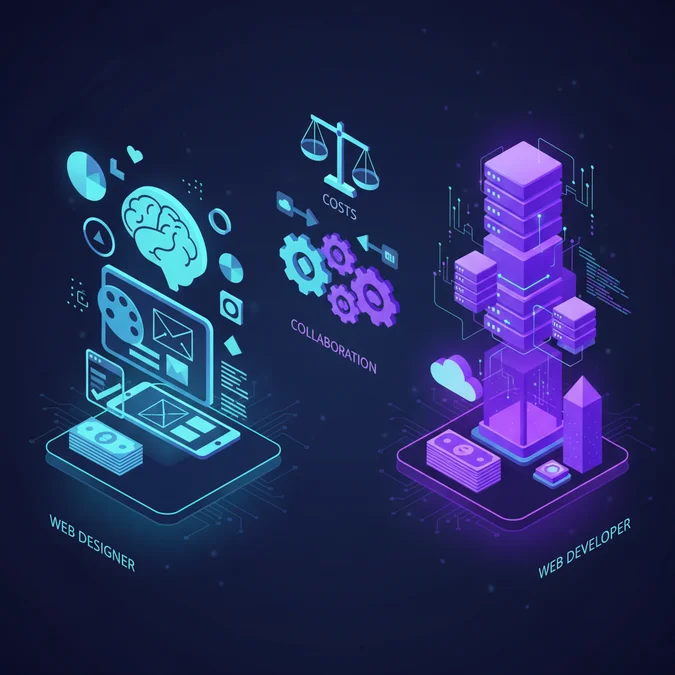

Understanding the distinction between a web designer vs web developer is crucial for successful digital projects and career planning. A web designer focuses on the visual aesthetics, user experience, and overall look and feel of a website, ensuring intuitive and engaging interactions. Conversely, a web developer builds the functional infrastructure, writes the code, and integrates systems that make the website operational and responsive. Both are indispensable for comprehensive web design and web development.
This article clarifies the specific responsibilities, required skills, and collaborative dynamics that define these two critical roles within the broader field of website design and web development. We will explore their individual contributions, how they seamlessly integrate their efforts, and provide insights into project costs and vetting agencies to help you make informed decisions, whether you are hiring talent or pursuing a career in this dynamic industry.
Introduction: Decoding Web Designer vs. Web Developer
The digital landscape is shaped by two primary forces: creativity and engineering. At the intersection of these forces lie the distinct yet complementary roles of a web designer and a web developer. While both are integral to creating any online presence, their core responsibilities, skill sets, and project contributions diverge significantly. This foundational understanding is key to effectively managing or participating in web design and web development projects.
Key Insight: At its core, the debate of web designer vs web developer boils down to form versus function. Designers craft the user’s journey and visual appeal, while developers engineer the underlying systems that bring that vision to life and ensure its performance.
This article provides a definitive breakdown of these professions, highlighting their individual specializations within the ecosystem of website design and web development. By examining their tools, workflows, and collaborative synergies, we aim to equip you with the knowledge to navigate the complexities of modern web creation.
The Web Designer’s Canvas: Crafting User Experience and Aesthetics
A web designer is the architect of the user’s visual journey, focusing on everything a user sees and interacts with. Their primary goal is to create an intuitive, aesthetically pleasing, and effective user experience (UX) and user interface (UI). This involves understanding user psychology, brand guidelines, and current design trends to produce layouts, visual hierarchies, and interactive elements that guide users seamlessly through a site.
Designer’s Focus: A web designer ensures that every pixel serves a purpose, balancing visual appeal with usability to enhance engagement and achieve business objectives within the broader scope of web design and web development.
Key responsibilities include:
- Wireframing and Prototyping: Creating low-fidelity (wireframes) and high-fidelity (prototypes) representations of website layouts and user flows.
- User Interface (UI) Design: Designing the visual elements, such as buttons, icons, typography, and color schemes, to ensure brand consistency and visual appeal.
- User Experience (UX) Design: Researching user behavior, conducting usability testing, and optimizing site navigation to ensure a smooth and logical user journey.
- Graphic Design: Creating or sourcing visual assets like images, illustrations, and animations.
- Responsive Design: Ensuring the website’s layout adapts gracefully to various screen sizes and devices.
Common tools in a web designer’s arsenal include Figma, Sketch, Adobe XD, Photoshop, and Illustrator. Their output often includes design mockups, style guides, and interactive prototypes, which serve as the blueprint for subsequent web page design and development efforts.
The Web Developer’s Engine Room: Building Functionality and Performance
If the web designer creates the blueprint and visual identity, the web developer constructs the building. Web developers translate design concepts into functional, interactive websites. This involves writing code, configuring servers, managing databases, and integrating various services to ensure the site operates efficiently and reliably. Their work is fundamentally about making the design work, ensuring responsiveness, security, and performance.
Developer’s Focus: A web developer is responsible for the technical implementation, database management, and server-side logic, transforming static designs into dynamic, performant, and secure applications, which is the engineering core of web design and web development.
Web developers typically specialize:
- Front-End Development: Implements the client-side of the website, focusing on the user-facing elements created by designers. This involves HTML, CSS, and JavaScript to build interactive interfaces. Example code snippet for a simple button:
<button id="myButton" class="btn btn-primary">Click Me</button> - Back-End Development: Builds and maintains the server-side logic, databases, and APIs that power the website. This includes handling data storage, user authentication, and application logic using languages like Python, Ruby, PHP, Java, or Node.js.
- Full-Stack Development: Possesses skills in both front-end and back-end development, capable of handling the entire web application stack.
Tools and technologies vary widely, encompassing programming languages (JavaScript, Python, Ruby, PHP, Java, Go), frameworks (React, Angular, Vue.js, Django, Ruby on Rails, Laravel), databases (MySQL, PostgreSQL, MongoDB), and version control systems (Git). Their deliverables include functional code, database schemas, APIs, and deployed web applications, making the web page design and development a reality.
Web Design vs. Development: A Side-by-Side Comparison of Focus and Workflow
While both roles are indispensable for creating a successful website, their core objectives, skill sets, and daily tasks differ significantly. Understanding these distinctions is paramount for effective project management and team collaboration. Here is a direct comparison illustrating the primary differences between web design vs development, highlighting the unique contributions of a web designer vs web developer.
Clear Distinction: Designers are concerned with ‘how it looks and feels,’ while developers are focused on ‘how it works’ within the overall landscape of web design and web development. This fundamental difference drives their workflows and tool choices.
| Aspect | Web Designer | Web Developer |
|---|---|---|
| Primary Focus | User Experience (UX), User Interface (UI), Visual Aesthetics, Branding, Usability. | Functionality, Performance, Security, Scalability, Database Management, Server Logic. |
| Core Questions | “Is it intuitive? Is it beautiful? Does it reflect the brand?” | “Does it work? Is it fast? Is it secure? Can it handle traffic?” |
| Key Skills | Graphic design, typography, color theory, user research, wireframing, prototyping, empathy. | Programming languages, algorithms, data structures, debugging, server management, database queries, API integration. |
| Common Tools | Figma, Sketch, Adobe XD, Photoshop, Illustrator, Maze, Hotjar. | VS Code, Git, JavaScript, Python, PHP, React, Angular, Node.js, MySQL, Docker, Kubernetes. |
| Typical Deliverables | Wireframes, mockups, prototypes, style guides, user flows, design systems. | Clean, functional code, APIs, database schemas, deployed applications, technical documentation. |
| Project Phase Emphasis | Discovery, conceptualization, iteration, user testing, visual refinement. | Architecture, coding, testing, deployment, maintenance, optimization. |
This table underscores that while their outputs are distinct, they are deeply intertwined, making robust collaboration essential for any successful website design and web development project.
Seamless Integration: The Synergy of Web Design and Web Development Teams
The true power of modern web creation emerges when web designers and web developers collaborate seamlessly. A well-executed handoff and continuous communication bridge the gap between aesthetic vision and functional reality. This synergy is not merely about passing files; it involves a shared understanding of project goals and mutual respect for each other’s expertise. Effective collaboration ensures the final product is both visually compelling and technically robust.
Collaborative Advantage: Successful web design and web development projects leverage iterative feedback loops and clear communication channels, ensuring design intent is preserved through development and technical constraints are addressed early in the design process.
A typical design-to-development handoff process often follows these steps:
| Step | Designer Action | Developer Action | Outcome |
|---|---|---|---|
| 1. Design Finalization | Delivers high-fidelity mockups, prototypes, and a comprehensive style guide. | Reviews design, identifies potential technical challenges, asks clarifying questions. | Approved visual blueprint and shared understanding of design intent. |
| 2. Asset Handoff | Provides all necessary graphic assets (icons, images), typography specifications, and spacing rules. | Integrates assets into the code base, implements CSS for styling and layout. | Visually accurate front-end structure. |
| 3. Interaction Specification | Documents animations, hover states, form validations, and dynamic content behaviors. | Develops JavaScript/TypeScript for interactive elements and front-end logic. | Responsive and interactive user interface. |
| 4. API & Data Flow | Defines data display requirements, user input fields, and content structure. | Designs and implements back-end APIs, database models, and data fetching logic. | Functional data integration and server communication. |
| 5. Testing & Feedback | Participates in UI/UX testing, provides visual feedback and bug reports on implemented features. | Conducts unit, integration, and end-to-end testing, fixes bugs, optimizes performance. | Polished, functional, and user-friendly website. |
Mini-case Study: A financial tech startup needed a new dashboard. The designer created an intuitive UI for complex data. During development, the developer identified a performance bottleneck in rendering large datasets. Through direct collaboration, they iterated on a new data visualization component that maintained the design aesthetic while significantly improving load times. This iterative process is crucial for effective website design and web development.
Strategic Decisions: Career Paths, Project Costs, and Vetting Your Agency
Navigating the world of web design and development involves making strategic decisions, whether you are choosing a career, budgeting for a project, or selecting a partner. Understanding the nuances of web designer vs web developer roles is critical for all these aspects.
Career Paths:
Both web design and web development offer robust and evolving career opportunities. Designers can specialize in UX research, UI design, product design, or motion graphics. Developers can become experts in front-end, back-end, full-stack, mobile, or DevOps engineering. The choice between web design vs development often depends on an individual’s aptitude for visual creativity versus logical problem-solving. Both fields require continuous learning due to rapid technological advancements, including the impact of AI and no-code tools which are reshaping workflows and increasing efficiency in both domains.
Project Costs and Deliverables:
The cost of web design and web development services varies significantly based on complexity, features, and the expertise of the team. Simple brochure websites might cost less, while complex e-commerce platforms or custom web applications require substantial investment. Deliverables typically include:
| Service | Typical Deliverables | Cost Impact |
|---|---|---|
| Discovery & Strategy | Requirements document, user stories, competitive analysis. | High, foundational work. |
| Web Design (UX/UI) | Wireframes, prototypes, mockups, design systems, style guides. | Moderate to High, based on complexity and iteration. |
| Front-End Development | HTML, CSS, JavaScript code, responsive layouts, interactive elements. | Moderate to High, based on interactivity and animations. |
| Back-End Development | Database architecture, API endpoints, server logic, admin panels. | High, core functionality and system reliability. |
| Content Management System (CMS) Integration | WordPress, Shopify, custom CMS setup and configuration. | Moderate, depending on platform and customization. |
| Testing & QA | Test plans, bug reports, performance reports, cross-browser compatibility. | Moderate, essential for quality assurance. |
| Deployment & Hosting | Server setup, domain configuration, CDN integration. | Low to Moderate, ongoing operational costs. |
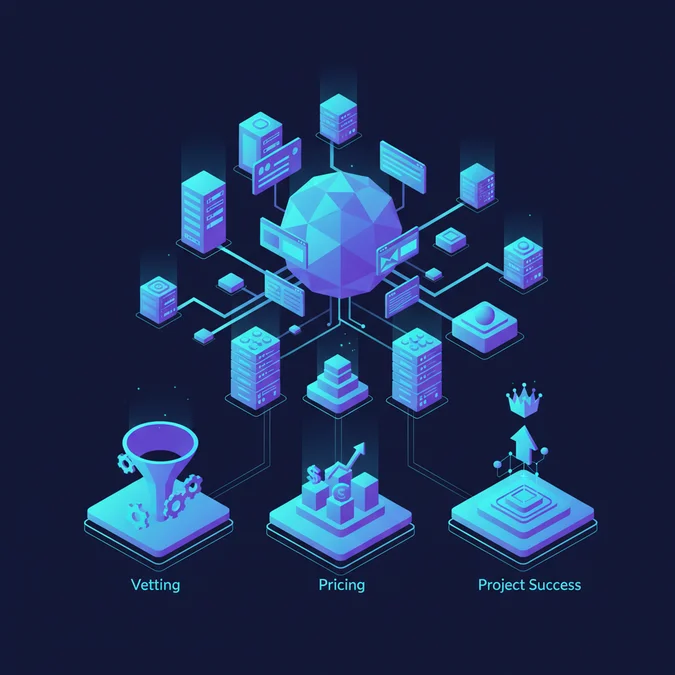
Vetting Your Agency for Website Design and Web Development:
When seeking partners for website design and web development, thorough vetting is crucial. Consider the following checklist:
- Portfolio Review: Examine past projects for aesthetic quality, technical complexity, and relevance to your needs.
- Team Expertise: Inquire about the specific roles (designers, front-end developers, back-end developers) and their individual experience.
- Communication Process: Understand their project management methodology and how they facilitate communication between design and development teams.
- Technical Proficiency: Ask about their preferred tech stack, adherence to coding standards, and experience with modern frameworks.
- Client References: Request and contact previous clients to gauge satisfaction with deliverables, timelines, and collaboration.
- Maintenance & Support: Clarify post-launch support, maintenance plans, and scalability options.
- Transparent Pricing: Ensure a clear breakdown of costs, timelines, and deliverables.
Factors That Affect Development Cost
- Project complexity and feature set
- Number of unique page designs and user flows
- Integration with third-party APIs or systems
- Custom back-end development requirements
- Level of UX research and testing required
- Ongoing maintenance and support agreements
- Geographic location and experience level of talent
Project costs for web design and development vary widely based on scope, team expertise, and required technologies.
Frequently Asked Questions
What is the fundamental difference between web design and web development?
Web design focuses on the visual aesthetics and user experience (UI/UX) of a website, determining its look and feel. Web development, conversely, builds the functional backend and interactive elements, making the website operational and responsive, often involving coding and database management. Both are essential for a complete web project.
Can a single professional handle both website design and web development for a project?
While some individuals, known as full-stack developers, possess skills in both website design and web development, projects often benefit from specialized roles. Designers ensure optimal user experience and aesthetics, while developers focus on robust functionality and performance, leading to higher quality outcomes. Complex projects typically require dedicated specialists.
What are the typical deliverables expected from web page design and development services?
Deliverables for web page design and development include wireframes, mockups, and prototypes from designers, alongside functional code, database integration, and content management system setup from developers. The final output is a fully operational, visually appealing, and user-friendly website tailored to client needs, complete with documentation and testing.
Which career path, web designer vs web developer, offers better long-term career prospects and salary potential?
Both web designer vs web developer roles offer strong career prospects, but salary potential can vary. Developers often command higher salaries due to the technical complexity and demand for specialized coding skills. However, experienced designers with strong UX/UI expertise are also highly valued and well-compensated, particularly in product-focused roles. Growth is strong in both.
The intricate relationship between a web designer and a web developer is the bedrock of every successful digital product. While the web designer meticulously crafts the user’s visual journey and interaction, the web developer engineers the robust, functional infrastructure that brings that vision to life. Understanding their distinct yet interdependent roles is not just academic; it is a commercial imperative for businesses seeking to build effective online presences and for individuals charting their careers.
By appreciating the specific skills, workflows, and collaborative dynamics of web design and web development, stakeholders can foster more efficient project execution, clearer communication, and ultimately, deliver superior digital experiences. Whether you are commissioning a website or aspiring to join the ranks of web professionals, recognizing the unique contributions of each role is the first step towards achieving your goals in this ever-evolving digital landscape.
NR Studio builds custom web apps, mobile apps, SaaS platforms, and internal tools for growing businesses. If you’re working through a technical decision, feel free to reach out — no commitment required.