
The dream of a high-fidelity arena shooter revival on modern consoles remains a frequent topic of debate among systems engineers and legacy players. Despite the immense power of current console hardware, the absence of an official unreal tournament ps5 release is not a failure of imagination but a consequence of rigid architectural evolution and shifting studio priorities.
Understanding this gap requires looking past the marketing veneer and examining the technical reality of modern engine pipelines. This article dissects why legacy codebases fail to bridge the gap to current generation hardware and provides an engineering roadmap for those looking to replicate the arena shooter experience within the Unreal Engine 5 ecosystem.
Architectural Bottlenecks in Modern Console Porting
The primary barrier to porting legacy titles to modern hardware is the fundamental shift in hardware abstraction layers. Older iterations of the Unreal Engine relied on specific graphics APIs and memory management models that are incompatible with the PS5 architecture. Simply recompiling source code is not a viable strategy when the underlying rendering pipeline, sound engine, and input polling systems have seen three generations of radical refactoring.
Technical Note: Modern consoles utilize unified memory architectures and advanced asynchronous compute pipelines that require native C++ implementation. Legacy code often contains hard-coded assumptions regarding CPU cycles and latency that trigger catastrophic performance degradation when executed on modern Zen 2 or similar architectures.
Furthermore, the transition from older networking models to the high-throughput, low-latency requirements of 2026 gaming necessitates a complete rewrite of the replication graph. Without a massive investment in refactoring the netcode for the current PS5 networking stack, a port would suffer from jitter, desync, and unacceptable input lag.
Comparative Analysis: The Unreal Tournament Ecosystem
When contrasting the potential for a modern release against historical benchmarks, we must account for the disparity in engine capabilities. The following table highlights the architectural friction between legacy console attempts and the current generation.
| Feature | Unreal Tournament PS4 (Legacy Attempt) | Unreal Tournament PS5 (Hypothetical) |
|---|---|---|
| Rendering API | DX11/GNM | Vulkan/Custom RHI |
| Memory Model | Fixed Heap Allocation | Unified Virtualized Memory |
| Physics Engine | PhysX (Legacy) | Chaos Physics |
| Networking | Authoritative Server (Basic) | Dedicated Server/Replication Graph |
While an unreal tournament ps4 build could theoretically run via backward compatibility, it lacks the hardware-accelerated ray tracing and Nanite geometry support that define the current unreal tournament ps5 performance tier. Attempting to force an older codebase into this environment results in a suboptimal experience that fails to capitalize on the PS5 SSD throughput or the DualSense haptic potential.
Reconstructing Arena Mechanics with Unreal Engine 5
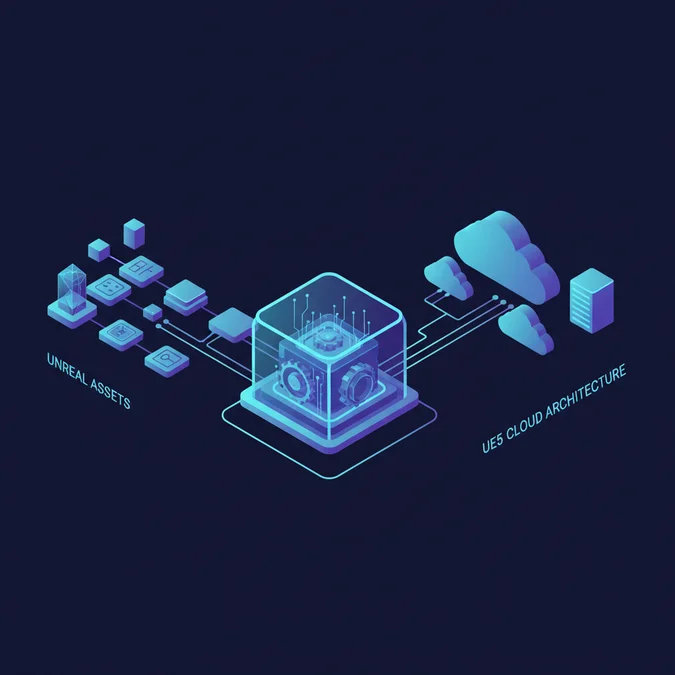
For developers aiming to recapture the essence of the franchise, Unreal Engine 5 provides a robust toolset for building high-speed arena shooters from the ground up. The focus should be on modularity and high-performance actor replication.
// Example: High-speed projectile initialization in UE5
void AProjectileBase:BeginPlay() {
 Super:BeginPlay();
 if (ProjectileMovement) {
 ProjectileMovement->InitialSpeed = 3000.f;
 ProjectileMovement->bRotationFollowsVelocity = true;
 ProjectileMovement->UpdatedComponent = CollisionComp;
 }
}
To successfully launch a modern arena shooter, follow this production checklist:
- Implement Chaos Physics: Leverage the high-performance destruction and rigid body dynamics of the Chaos system.
- Optimize for Nanite: Use virtualized geometry to maintain 120Hz frame rates in complex arena environments.
- Custom Replication Graph: Build a scalable networking solution that prioritizes movement packets for fast-paced player interaction.
- Input Latency Reduction: Use the enhanced input system to ensure sub-millisecond polling rates.
Production Trade-offs for High-Speed Multiplayer
Designing for arena-style gameplay involves complex trade-offs between visual fidelity and synchronization accuracy. In a high-speed environment, every millisecond of latency disrupts the competitive balance.
- Network Simulation: Developers must choose between server-side authoritative movement and client-side prediction, with the latter requiring complex reconciliation logic.
- Asset Streaming: While Nanite handles geometric complexity, developers must manually manage shader complexity to avoid frame drops during high-intensity combat.
- Physics Complexity: Reducing physics sub-stepping is often necessary to free up CPU cycles for netcode processing.
- Audio Spatialization: Implementing advanced HRTF profiles to ensure accurate positional audio, which is critical for competitive arena shooters.
Frequently Asked Questions
Is there an official Unreal Tournament PS5 version available?
As of 2026, there is no official Unreal Tournament title released for the PlayStation 5. The franchise remains inactive in terms of new console development, as Epic Games has pivoted its primary focus toward Fortnite and the broader Unreal Engine 5 ecosystem for external developers.
Could an Unreal Tournament PS4 port be upgraded to PS5?
Directly porting an Unreal Tournament PS4 build to PS5 is technically impossible due to fundamental differences in engine architecture, hardware abstraction layers, and networking protocols. A modern experience would require a complete rebuild using current Unreal Engine 5 toolsets rather than a simple software patch.
The absence of a dedicated unreal tournament ps5 title is indicative of a broader industry shift toward platform-agnostic development and the prioritization of live-service longevity. While the franchise remains a cornerstone of gaming history, its future on modern consoles lies in the hands of the community and independent developers leveraging the power of Unreal Engine 5.
By mastering the modern rendering and networking pipelines, developers can build the next generation of arena shooters, ensuring the spirit of the genre thrives on contemporary hardware.