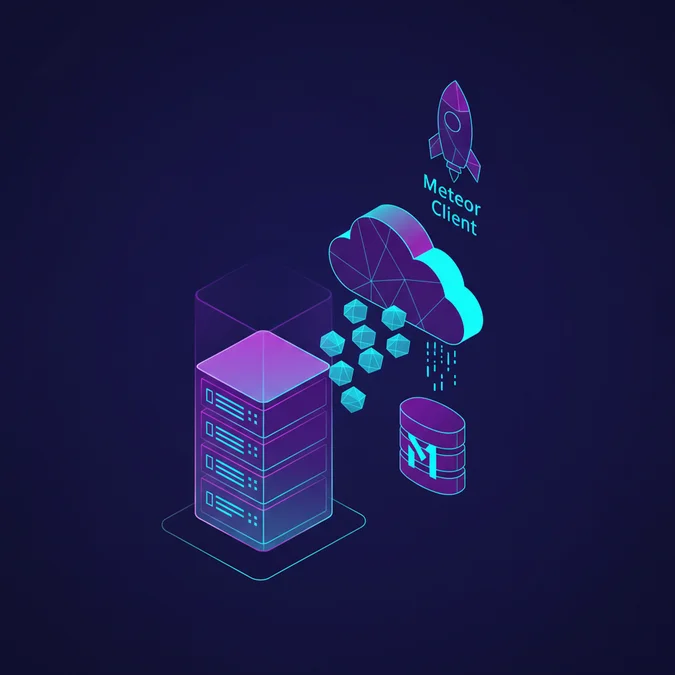

Meteor client forge refers to building a decoupled Meteor frontend client bundle using tools like meteor-client-bundler and deploying or orchestrating it alongside a Laravel backend on infrastructure managed by Laravel Forge. This architecture allows developers to combine real-time reactive DDP interfaces with PHP application runtimes on high-availability cloud servers.
The official roadmaps across both the Meteor and Laravel ecosystems point toward increased runtime decoupling and headless service architecture. As Meteor modernizes its runtime with native Node engines and fibers-free asynchronous paradigms, Laravel has solidified its role as a premier API, queue, and background processing engine. Modern operations teams increasingly deploy these frameworks together, running stateless Node micro-frontends on edge networks while maintaining operational servers through unified automation platforms.
Operating this hybrid architecture at scale presents non-trivial infrastructure challenges. Real-time Distributed Data Protocol (DDP) communication requires persistent, stateful WebSocket connections that must coexist with Laravel\’s traditionally stateless, short-lived HTTP worker lifecycles. Orchestrating these components on single-tenant or horizontally scaled cloud instances provisioned through Laravel Forge requires precise Nginx reverse proxy configurations, isolated process supervision, and systematic CI/CD pipelines.
Architectural Overview of Decoupled Meteor and Forge Environments
Running a decoupled client-server model across distinct frameworks requires an explicit separation of boundaries. When building a Meteor frontend that speaks to a Laravel backend, the Meteor client bundle behaves as a single-page application (SPA) that can either consume standard REST/GraphQL endpoints from Laravel or maintain an active WebSocket link to an auxiliary Meteor core server for reactive state distribution.
Laravel Forge simplifies cloud infrastructure management by abstracting host provisioning across Amazon Web Services (AWS), Google Cloud Platform (GCP), DigitalOcean, and custom cloud providers. However, Forge defaults to configuring environments optimized for PHP-FPM and stateless HTTP processing. Integrating client-side bundles generated from Meteor requires operators to treat Forge as a high-performance web asset host and reverse proxy manager rather than a simple PHP runtime wrapper.
Establishing proper source control structures is foundational when managing multi-runtime systems. Teams running this pattern typically configure a monorepo or tightly synchronized repositories to ensure version alignment across client interfaces and backend endpoints. For an in-depth operational review on structuring such environments, see our technical analysis of repository workflows and monorepo release branching.
To contextualize how requests travel through this infrastructure, consider the following high-level networking flow:
- Client Ingress: Web browsers hit an Nginx instance provisioned by Forge via port 443 with TLS termination.
- Static Asset Delivery: Bundled HTML, CSS, and client-side JavaScript generated by Meteor client packagers are served directly out of high-speed Nginx cache directories on NVMe storage.
- REST/GraphQL API Traffic: Requests to endpoints such as
/api/*pass internally to local PHP 8.x-FPM Unix sockets. - Reactive DDP WebSockets: Requests directed to
/sockjs/*or/websocketare upgraded and passed via reverse proxy to Node.js instances managed by PM2 on alternate system ports.
Generating the Meteor Client Bundle for Static Hosting
Meteor applications bundle client assets along with server-side Node code during default builds. When deploying to a Forge-provisioned server where the primary server logic lives within a Laravel application, you must extract and isolate the client bundle. The standard utility for this operation is meteor-client-bundler (MCB), which compiles the reactive DDP client, Minimongo, and Tracker libraries into a standalone distribution artifact.
The generation process inspects your Meteor application dependencies and packages them into clean ES modules or Universal Module Definition (UMD) scripts that load cleanly into SPAs, Vue interfaces, or React frameworks within Laravel Blade layouts. Below is a production-ready build configuration demonstrating how to execute this packaging step:
{
 "meteor": {
 "dir": "./meteor-realtime-core",
 "url": "https://ddp.example.com"
 },
 "packageJson": "./package.json",
 "output": "./resources/js/meteor-client.bundle.js",
 "exclude": [
 "mongo",
 "accounts-password"
 ]
}
Executing the bundler requires running the CLI tool during your deployment pipeline. The command below parses the core Meteor configuration, resolves all internal Atmosphere packages, and outputs the minified client payload directly into the Laravel resource directory:
# Install the bundler locally within build tooling
npm install -g meteor-client-bundler

# Compile the standalone client bundle pointing to the production DDP server
meteor-client-bundler --config meteor-client.config.json --bundle-only
This workflow guarantees that your front-end scripts remain completely decoupled from the heavyweight Node.js server engine. It produces a lightweight client script that mounts into Laravel view templates while maintaining DDP connectivity to whatever real-time services your application requires.
Nginx Ingress and WebSocket Reverse Proxy Configuration
Laravel Forge automatically provisions high-performance Nginx configurations designed for standard PHP applications. However, handling real-time WebSockets alongside PHP-FPM requires custom upstream directives. Nginx must inspect incoming connection headers and dynamically upgrade standard HTTP requests to duplex TCP streams when clients initialize DDP handshakes.
By default, Forge places site configuration files within /etc/nginx/sites-available/your-domain.com. To support this dual workload, you must inject custom proxy directives inside the main server block. The configuration below provides production-tested connection handling, proper timeouts, and upstream load balancing:
# Define upstream Node.js real-time service cluster
upstream meteor_ddp_backend {
 server 127.0.0.1:3000 max_fails=3 fail_timeout=30s;
 keepalive 64;
}

server {
 listen 443 ssl http2;
 server_name your-domain.com;
 root /home/forge/your-domain.com/public;

 index index.html index.php;
 charset utf-8;

 # Static client bundle asset caching
 location ~* \.(js|css|png|jpg|jpeg|gif|ico|svg|woff|woff2|ttf|eot)$ {
 expires 1y;
 add_header Cache-Control "public, no-transform, immutable";
 access_log off;
 try_files $uri =404;
 }

 # DDP WebSocket proxying for Meteor real-time transport
 location /sockjs/ {
 proxy_pass http://meteor_ddp_backend;
 proxy_http_version 1.1;
 proxy_set_header Upgrade $http_upgrade;
 proxy_set_header Connection "upgrade";
 proxy_set_header Host $host;
 proxy_set_header X-Real-IP $remote_addr;
 proxy_set_header X-Forwarded-For $proxy_add_x_forwarded_for;
 proxy_set_header X-Forwarded-Proto $scheme;

 # Extended timeouts to prevent dropped long-polling connections
 proxy_read_timeout 86400s;
 proxy_send_timeout 86400s;
 }

 # Laravel API and web routing fallback
 location / {
 try_files $uri $uri/ /index.php?$query_string;
 }

 location ~ \.php$ {
 fastcgi_pass unix:/var/run/php/php8.2-fpm.sock;
 fastcgi_index index.php;
 fastcgi_param SCRIPT_FILENAME $realpath_root$fastcgi_script_name;
 include fastcgi_params;
 }
}
Configuring these proxy headers correctly ensures that clients maintain unbroken real-time synchronizations while regular web and REST requests continue executing over fast, ephemeral PHP-FPM worker pools.
Process Supervision and Node.js Daemon Management via PM2
Laravel Forge includes native support for managing PHP queue workers through Supervisor, but running real-time Meteor backends alongside client assets demands specialized Node.js process management. While you can configure Supervisor to monitor Node processes, PM2 is the standard daemon manager for Node ecosystems due to its built-in cluster mode, zero-downtime reloads, and deep memory tracking.
To deploy this on a Forge server, PM2 must be initialized globally under the forge system user. This prevents permission conflicts and ensures that all spawned processes inherit the standard environment variables defined inside your Forge application dashboard.
Create an ecosystem.config.js file within the root of your Node server deployment directory:
module.exports = {
 apps: [
 {
 name: 'meteor-ddp-worker',
 script: './main.js',
 cwd: '/home/forge/realtime.your-domain.com/bundle',
 instances: 'max',
 exec_mode: 'cluster',
 env: {
 NODE_ENV: 'production',
 PORT: 3000,
 ROOT_URL: 'https://realtime.your-domain.com',
 MONGO_URL: 'mongodb://127.0.0.1:27017/meteor_db',
 METEOR_SETTINGS: JSON.stringify({ public: { env: 'production' } })
 },
 max_memory_restart: '1G',
 listen_timeout: 8000,
 kill_timeout: 3000
 }
 ]
};
Organizations frequently debate whether to maintain specialized internal development teams or collaborate with external agencies to build and supervise multi-runtime platforms. For architectural considerations on evaluating specialized technical partners, review our guide on vetting framework-specific software engineering companies.
Once configured, you register the PM2 instance to start automatically upon server reboot using systemd:
# Launch application via ecosystem configuration
pm2 start ecosystem.config.js

# Freeze process list to guarantee persistence across reboots
pm2 save

# Configure systemd startup script under the forge user context
sudo env PATH=$PATH:/usr/bin pm2 startup systemd -u forge --hp /home/forge
With this setup, the real-time engine runs fully supervised, auto-recovering from uncaught exceptions and redistributing traffic across all available CPU cores without operator intervention.
Automating Deployments via Laravel Forge Deployment Scripts
Laravel Forge provides a powerful deployment script interface that triggers sequentially upon git pushes to designated release branches. Because our environment integrates both PHP application files and Node client compilation routines, the deployment script must orchestrate Composer dependencies, asset builds, database migrations, and process reloads in an atomic sequence.
If any step fails, the deployment script must exit immediately to prevent corrupt assets from polluting production paths. The following deployment script template demonstrates an end-to-end integration flow tailored for this setup:
cd /home/forge/your-domain.com
git pull origin master

# Install PHP dependencies
composer install --no-interaction --prefer-dist --optimize-autoloader --no-dev

# Update Node client dependencies
npm ci --production=false

# Compile the standalone Meteor client bundle
npx meteor-client-bundler --config meteor-client.config.json --bundle-only

# Build frontend production assets with Vite
npm run build

# Clear and regenerate Laravel caches
php artisan down || true
php artisan migrate --force
php artisan config:cache
php artisan route:cache
php artisan view:cache
php artisan event:cache

# Gracefully restart real-time Node workers
pm2 reload meteor-ddp-worker --update-env

# Bring Laravel back online
php artisan up

# Reload PHP-FPM and Nginx
( flock -w 10 9 || exit 1
 echo 'Restarting FPM..'; sudo -S service php8.2-fpm reload ) 9>/tmp/fpmlock
This script ensures zero downtime for ongoing HTTP API operations while refreshing client-side JavaScript packages and synchronizing background workers to match updated schemas.
State Synchronization: Bridging Laravel and Meteor State Engines
A decoupled architecture introduces the problem of split application state: Laravel controls the transactional SQL database (typically PostgreSQL or MySQL), while Meteor requires MongoDB to power its Oplog tailing and reactive pub/sub mechanics. Synchronizing operational state across these boundaries without incurring heavy database locks requires event-driven message architectures.
Instead of exposing MongoDB directly to writes from the public internet, all transactional mutations must flow directly into Laravel endpoints. Once validated and committed to MySQL/PostgreSQL, Laravel emits background events onto a message broker (Redis or RabbitMQ) that a lightweight daemon consumes to update MongoDB collections, triggering real-time DDP pushes to connected Meteor clients.
Building resilient, secure, and performant backends across mixed stacks requires strict compliance with modern systems engineering practices. To understand the underlying engineering governance, refer to our detailed analysis of enterprise system architecture and security standards.
The table below highlights the architectural trade-offs between various state synchronization strategies in this hybrid setup:
| Synchronization Strategy | Latency Overhead | Infrastructure Complexity | Data Consistency Model |
|---|---|---|---|
| Direct Redis Pub/Sub | Sub-10 milliseconds | Moderate (Requires shared Redis broker) | Eventual (Transient messages) |
| Transactional Outbox Pattern | 50 to 200 milliseconds | High (Requires event persistence table) | Strictly Guaranteed Eventual |
| Direct Dual-Writing (ORM + Mongo) | Varies (Blocking) | Low to Moderate | Risk of Split-Brain on Partial Failure |
| Periodic Database Polling | 1 to 5 seconds | Low | Loose Eventual Consistency |
For high-throughput systems, the Transactional Outbox pattern implemented alongside a Redis-backed queue offers the safest resilience profile, preventing dropped real-time client notifications while preserving absolute database isolation.
Horizontal Scaling and High Availability Considerations
Scaling a hybrid Meteor client and Laravel architecture horizontally requires separating stateful WebSocket nodes from stateless HTTP endpoints across distinct cloud instances. Laravel Forge enables the provisioning of horizontal load balancers (running HAProxy or Nginx), web application nodes, and worker nodes across AWS, GCP, or private clouds.
When scaling real-time client traffic horizontally across multiple Forge-managed instances, sticky sessions (session affinity) must be enforced at the load balancer layer. Without sticky sessions, client WebSocket upgrade handshakes frequently hit alternate nodes, causing immediate connection resets.
Below are the core cloud infrastructure scaling patterns to implement when handling thousands of concurrent real-time connections:
- Stateless Web Tier: Multiple Laravel nodes placed behind an AWS Application Load Balancer (ALB) or Forge load balancer running round-robin distribution for all standard HTTP/REST requests.
- Stateful WebSocket Cluster: Dedicated cloud compute instances running Node.js and PM2, mapped to sticky routing sessions using client IP hashing or specific tracking cookies.
- Distributed Redis Transport: Multiple Node instances synchronizing internal DDP broadcast packets using the
redis-oplogpackage, which bypasses native MongoDB oplog tailing constraints to slash database CPU utilization. - Managed Database Topologies: AWS Aurora PostgreSQL for transactional business logic and MongoDB Atlas for client pub/sub state, keeping primary database IOPS completely decoupled from web layer compute spikes.
Adhering to these horizontal topologies prevents single-point-of-failure scenarios and permits discrete auto-scaling policies based on HTTP requests-per-second versus concurrent active socket counts.
Security Hardening and Performance Monitoring
Operating dual application runtimes expands the potential attack surface of your host. Hardening the underlying Ubuntu instances managed by Laravel Forge involves tuning both network firewalls (UFW), enforcing strict TLS cipher suites, and mitigating cross-origin attack vectors across client interfaces.
Because the Meteor client bundle connects directly to real-time endpoints over WebSockets, Cross-Origin Resource Sharing (CORS) and Content Security Policy (CSP) headers must be configured precisely to block unauthorized script injection or cross-site socket hijacking.
Implement the following security controls across all host instances:
- Firewall Segmentation: Restrict all internal ports (such as Node\’s internal port 3000, Redis port 6379, and Mongo port 27017) using UFW so that only localhost or explicit VPC private IP ranges can initiate handshakes.
- Strict CSP Directives: Configure Nginx to broadcast a restrictive Content-Security-Policy that limits WebSocket connections solely to verified project domains:
default-src 'self'; connect-src 'self' wss://realtime.your-domain.com https://your-domain.com; - APM and Tracing Integration: Deploy Datadog or Prometheus node exporters alongside Laravel OpenTelemetry collectors. This enables correlated tracing across HTTP boundary crossings into asynchronous Node socket broadcasts.
- Kernel Socket Tuning: Adjust Linux kernel networking limits inside
/etc/sysctl.confto scale concurrent file descriptors and TCP connection limits to accommodate elevated WebSocket connections:
# Kernel network parameter optimizations for massive concurrent sockets
fs.file-max = 2097152
net.core.somaxconn = 65535
net.ipv4.tcp_max_syn_backlog = 65535
net.ipv4.tcp_fin_timeout = 15
net.ipv4.tcp_tw_reuse = 1
These system optimizations protect the underlying operating system from denial-of-service vulnerabilities driven by high connection churn and guarantee high-availability service stability under peak production traffic loads.
Explore the Laravel Architecture Knowledge Base
Building resilient, distributed architectures requires continuous alignment with framework developments and underlying hosting paradigms. Explore our comprehensive foundational technical blueprints to refine your operational strategy across web development, queuing frameworks, and multi-server automation.
Explore our complete Laravel, Basics directory for more guides.
Coupling Meteor client assets with cloud servers provisioned through Laravel Forge enables engineering teams to deploy real-time user experiences backed by robust, scalable PHP backends. By isolating the Meteor client using compilation tooling, orchestrating Nginx reverse proxies for WebSockets, and managing underlying Node services via PM2, operators retain the high developer ergonomics of both ecosystems.
Maintaining system stability at scale requires disciplined infrastructure isolation. Treating the real-time layer and the core relational API as distinct execution contexts allows horizontal scaling, prevents resource starvation, and ensures long-term operational resilience across cloud-hosted environments.