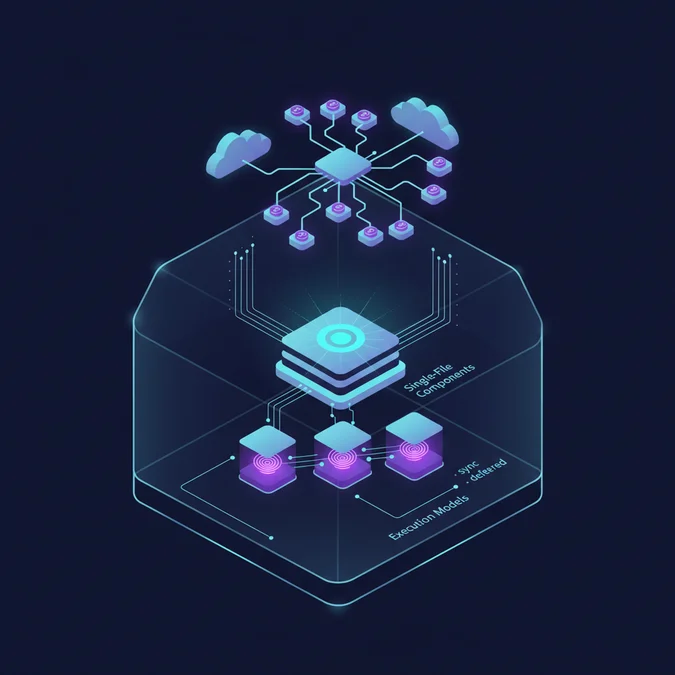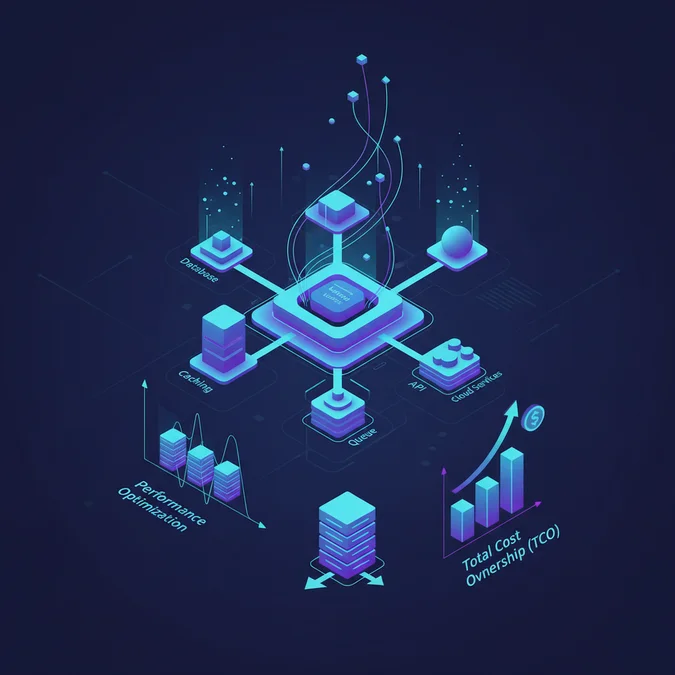

A mechanize software engineer is a specialized developer who builds, secures, and maintains programmatic web automation, headless clients, and data ingestion pipelines across enterprise systems. Rather than operating simple browser testing scripts, these engineers design high-throughput headless interaction layers that interact with untrusted third-party services, process structured workflows, and enforce defensive runtime controls.
Web automation across enterprise stacks introduces severe structural liabilities. Development teams often deploy programmatic agents that bypass human-facing controls, creating gaping attack surfaces: unvalidated outbound HTTP requests causing Server-Side Request Forgery (SSRF), unauthenticated session reuse, leaked access tokens, and catastrophic memory bloat in production runtime environments. When automation scripts execute with high privileges, an uncontained vulnerability inside a headless parser can compromise entire internal networks.
Addressing these risks requires treating web automation through a hardened application security framework. From deploying headless stateful clients using modern tools like Mechanize, Puppeteer, or Laravel Panther to isolating processes inside strict network namespaces, engineers must architect resilient and compliant programmatic pipelines.
Defining the Mechanize Software Engineer Role
A mechanize software engineer specializes in the architecture, deployment, and protection of programmatic web agents and automated data extraction systems. In contemporary infrastructure, this role spans far beyond writing basic scraping routines; it demands a deep understanding of HTTP protocol semantics, DOM traversal algorithms, distributed state persistence, and offensive web security vectors.
Historically rooted in Perl and Ruby environments using the classic Mechanize library to manage stateful browsing, modern automation has expanded into ecosystems like PHP, Python, and Node.js. Engineers today leverage headless engines, client emulation frameworks, and strict isolation runtimes to complete transactions on sites that lack public APIs.
Core Responsibilities of the Position
- State Machine Management: Persisting authentication states, parsing ephemeral CSRF tokens, and handling complex multi-step transaction flows reliably.
- Transport Layer Optimization: Architecting proxy rotation pools, managing HTTP keep-alive pools, and tuning TLS cipher handshakes to prevent traffic disruption.
- Evasion and Resilience Engineering: Bypassing false-positive security filters, handling dynamic DOM mutation, and mitigating rate-limiting hurdles.
- Defensive Execution: Auditing parsed inputs for malicious payloads, neutralizing DOM injection vectors, and preventing automation logic from accessing internal system endpoints.
The Evolution from Classic Scripting to Enterprise Automation
Programmatic navigation began with basic headless HTTP client scripts that executed stateless requests via cURL or simple socket connections. These early implementations failed quickly when web platforms introduced complex cookies, dynamic session tokens, and client-side JavaScript execution pipelines. The introduction of libraries like Mechanize provided stateful automated agents capable of retaining cookies, resolving relative links, and submitting structured web forms automatically.
As single-page applications (SPAs) and reactive frameworks became ubiquitous, stateful HTTP agents expanded into headless browser automation engines. The following table highlights the architectural trade-offs between traditional stateful HTTP automation engines and modern browser-driven execution engines:
| Metric / Capability | Stateful HTTP Agents (e.g. Mechanize) | Headless Browsers (e.g. Playwright, Panther) |
|---|---|---|
| Memory Footprint per Thread | 15 MB to 45 MB | 150 MB to 400 MB |
| Execution Speed per Request | 30 ms to 120 ms | 450 ms to 2200 ms |
| JavaScript Execution Support | None (or basic polyfills) | Full native engine execution |
| Attack Surface Risk | Low (Parsers, SSRF) | High (DOM sandbox escapes, V8 zero-days) |
| Operational Cost at Scale | Low compute footprint | High infrastructure compute demands |
Selecting the right technical model requires evaluating the precise architectural requirements of the target interface. Choosing a heavyweight browser driver when a stateful client suffices creates unnecessary compute overhead and multiplies security hazards across server clusters.
Core Security Vulnerabilities in Programmatic Navigation
Automated software agents are privileged internal actors. If an engineer allows an automation agent to process untrusted URLs supplied by end users, the application becomes immediately exposed to Server-Side Request Forgery. Attackers exploit programmatic browsers to pivot across internal IP boundaries, requesting instance metadata endpoints such as http://169.254.169.254 or targeting internal microservices that lack authentication.
Furthermore, headless agents handling dynamic DOM content can trigger automated Cross-Site Scripting (XSS) leading to server-side exploitation. If an agent executes JavaScript inside a headless browser context that possesses mounted filesystem privileges, an attacker who controls the target webpage can exfiltrate local files, read environment credentials, or execute arbitrary local commands inside the worker container.
High-Risk Exploit Categories
- SSRF via Unvalidated Redirection: The automation agent follows 302 HTTP redirects originating from external domains straight into private RFC 1918 subnets.
- Credential Hijacking via Insecure Session Storage: Cookies and authentication headers stored unencrypted in shared distributed memory like Redis or shared file volumes.
- Denial of Service via Infinite Recursion: Malicious link loops designed to exhaust server thread pools, consume socket allocations, and trigger out-of-memory kernel panics.
- Data Poisoning: Unsanitized input from target pages injected directly into relational backends without validation, resulting in SQL injection or object injection.
Architectural Design Patterns for Isolated Automation
Constructing enterprise-grade automation pipelines requires strict isolation of execution workers. Automation engines should never execute on nodes hosting transactional web servers or databases. Instead, engineers must deploy asynchronous worker clusters operating inside disposable container sandboxes.
Following an established software model in software engineering helps development teams establish explicit trust boundaries between extraction services, message brokers, and persistent storage layers.
[ API Gateway / Client ]
 |
 v
[ Job Dispatch Queue (Redis/RabbitMQ) ]
 |
 +-----------------------+
 | (Strict Egress Proxy) |
 v v
[ Ephemeral Sandbox 1 ] [ Ephemeral Sandbox 2 ]
 (Worker: Read-only) (Worker: Read-only)
 | |
 +-----------+-----------+
 |
 (Sanitized Output Only)
 v
 [ Ingestion Pipeline Validator ]
 |
 v
 [ Secure Encrypted DB ]
In this architecture, every worker is treated as completely untrusted. Sandboxed containers spin up with read-only root filesystems, execute their assigned navigation jobs, transfer raw structured data over an isolated messaging layer, and terminate immediately to flush memory state.
State Management and Authentication Pipeline Defense
Session handling requires balancing deterministic automation with defensive data sanitation. Automated agents frequently store active session cookies, bearer tokens, and OAuth refresh tokens. If workers store these credentials in unencrypted cache instances, a breach of the cache compromises every authenticated account the bot interacts with.
Engineers must secure these pipelines using authenticated envelope encryption. When a session is saved, workers encrypt the payload with a unique key sourced from an external KMS before persisting to storage. Furthermore, automated agents must validate session state prior to execution to avoid handling poisoned states or invalid tokens.
<php

declare(strict_types=1);

namespace App\Automation\Security;

use Illuminate\Support\Facades\Crypt;
use Illuminate\Contracts\Encryption\DecryptException;
use RuntimeException;

final class SecureSessionVault
{
 /**
 * Encrypts automation session payload for safe Redis storage.
 */
 public function sealSession(array $sessionCookies): string
 {
 $payload = json_encode([
 'cookies' => $sessionCookies,
 'timestamp' => time(),
 'fingerprint' => hash('sha256', (string) config('app.key')),
 ], JSON_THROW_ON_ERROR);

 return Crypt:encryptString($payload);
 }

 /**
 * Decrypts and validates session state integrity.
 */
 public function unsealSession(string $encryptedPayload): array
 {
 try {
 $decrypted = Crypt:decryptString($encryptedPayload);
 $data = json_decode($decrypted, true, 512, JSON_THROW_ON_ERROR);

 // Enforce TTL: Reject sessions older than 4 hours
 if ((time() - $data['timestamp']) > 14400) {
 throw new RuntimeException('Automation session has expired.');
 }

 return $data['cookies'];
 } catch (DecryptException $e) {
 throw new RuntimeException('Session tamper detected. Aborting agent.', 0, $e);
 }
 }
}
Implementing cryptographic validation ensures that if storage buckets are breached, session hijacking vectors remain mitigated.
Hardening HTTP Clients Against SSRF and Header Injection
When automating HTTP interactions, default client libraries follow redirects indiscriminately and resolve DNS queries through system nameservers without filtering. This behavior allows attackers to guide automated scrapers into cloud metadata services or loopback interfaces.
Mitigating SSRF requires evaluating the destination IP after DNS resolution occurs, rejecting internal IP blocks defined by RFC 1918, RFC 3927, and RFC 4193 before initiating the socket connection. The following implementation shows a secure client setup in a Laravel environment using an explicit Guzzle middleware layer:
<php

declare(strict_types=1);

namespace App\Automation\Http;

use GuzzleHttp\Client;
use GuzzleHttp\HandlerStack;
use Psr\Http\Message\RequestInterface;
use InvalidArgumentException;

final class HardenedAutomationClient
{
 public static function create(): Client
 {
 $stack = HandlerStack:create();

 // Inspect request destination before dispatching
 $stack->push(function (callable $handler) {
 return function (RequestInterface $request, array $options) use ($handler) {
 $uri = $request->getUri();
 $host = $uri->getHost();

 $ip = gethostbyname($host);

 if (!filter_var($ip, FILTER_VALIDATE_IP, FILTER_FLAG_NO_PRIV_RANGE | FILTER_FLAG_NO_RES_RANGE)) {
 throw new InvalidArgumentException("Target host resolves to a private or reserved network IP: {$ip}");
 }

 // Prevent header injection by sanitizing headers
 $sanitizedRequest = $request->withoutHeader('X-Forwarded-For');

 return $handler($sanitizedRequest, $options);
 };
 });

 return new Client([
 'handler' => $stack,
 'timeout' => 10.0,
 'connect_timeout' => 3.0,
 'allow_redirects' => [
 'max' => 3,
 'strict' => true,
 'protocols' => ['https'], // Enforce strict TLS redirection
 ],
 ]);
 }
}
This implementation forces all automated interactions to occur over encrypted transport while explicitly aborting execution if redirects attempt to route traffic into private cloud network boundaries.
Rate Limiting, WAF Evasion Risks, and Legal Compliance
Mechanize software engineers operate in an environment fraught with legal and regulatory hurdles. Programmatic navigation systems can easily trigger denial-of-service alerts on external servers, violating service terms or triggering legal liability under computer fraud statutes. Furthermore, relying on unvetted evasion libraries that mimic legitimate browser fingerprints risks introducing malicious third-party dependencies into internal build pipelines.
To maintain compliance with privacy frameworks such as GDPR and CCPA, automated collection routines must scrub personally identifiable information (PII) at ingest time. Engineers must enforce client-side token bucket rate limiters to prevent over-saturating target endpoints.
Key Compliance Controls
- Respecting Machine Instructions: Read and enforce directives defined within target
robots.txtfiles automatically. - Dynamic Concurrency Throttling: Scale worker pools down when server response times degrade (detecting HTTP 429 and 503 status codes).
- Immediate PII Redaction: Pipe raw extracted content through regex sanitation filters to scrub email addresses, phone numbers, and physical addresses prior to disk storage.
- Audit Logging: Maintain immutable access logs documenting target domains, timestamps, execution durations, and proxy IP routing paths.
Monitoring, Anomaly Detection, and Observability
When headless automation pipelines scale to process millions of requests, human oversight of individual execution threads becomes impossible. Engineering teams require continuous real-time observability to detect broken DOM selectors, network-level blocks, and data corruption attacks.
Metrics collection should track request success rates, DOM parsing errors, page load latencies, and proxy circuit-breaker states. If an external service alters its DOM structure, poorly designed automation workers might fall into parsing loops or store truncated null records.
| Metric Category | Monitoring Signal | Threshold / Alert Condition | Mitigation Strategy |
|---|---|---|---|
| Network Health | Proxy Connection Dropouts | > 5% failures over 5 mins | Cycle proxy subnet pool automatically |
| Egress Flow | Target Server HTTP 403/429 | > 2% within 60-second window | Engage exponential backoff delay |
| Integrity Validation | Empty Field Extraction Rate | > 1% deviation from average | Halt worker queue; trigger manual review |
| Runtime Performance | Worker Memory Consumption | > 80% container memory cap | Gracefully terminate and recycle worker |
Observability platforms must integrate directly into alerting queues to ensure broken scraping agents are automatically disabled before they poison downstream analytics or transactional databases.
Implementing Architectural Decision Records for Automation Pipelines
Deciding between headless browser frameworks, raw HTTP clients, state serialization strategies, and network isolation models involves permanent trade-offs affecting operational costs and attack surfaces. To avoid technical debt, engineering teams should document these systemic commitments formally.
Using an ADR in software development ensures that trade-offs regarding proxy routing topologies, scraping rate thresholds, and runtime sandbox constraints are systematically captured, justified, and reviewed by security specialists before deployment.
Essential Elements of an Automation Architecture Record
- Context: The operational objective (e.g. retrieving partner pricing catalogs that lack public API integrations).
- Security Boundary Definition: Documenting the untrusted nature of the target service and specifying ingress/egress filtering rules.
- Component Selection: Justifying why a lightweight stateful agent (such as Mechanize or Guzzle) was selected over a heavyweight browser runtime (such as Chromium).
- Consequences: Outlining compute costs, runtime maintenance overhead, and fail-safe boundaries.
Pricing Models and Engineering Cost Economics
Staffing and running enterprise web automation operations introduces complex financial dynamics. Expenses encompass human engineering talent, proxy infrastructure networks, compute resources for headless workers, and specialized monitoring platforms. Balancing these costs requires understanding the financial structures of different engagement models.
The table below provides a detailed breakdown of costs across common delivery structures for mechanize software engineering capabilities:
| Engagement Model | Typical Cost Range | Included Deliverables | Primary Trade-offs |
|---|---|---|---|
| Hourly Contract Specialist | $95 – $220 / hour | Custom script architecture, bypass resolution, proxy setup | High flexibility; costs scale rapidly with recurring maintenance |
| Monthly Retainer (Security & Ops) | $6,500 – $18,000 / month | Ongoing pipeline maintenance, proxy fleet tuning, SSRF audits | Predictable spend; requires consistent workload to justify expense |
| Fixed-Scope Enterprise Delivery | $25,000 – $85,000 / project | Turnkey sandbox pipelines, CI/CD integration, complete ADR set | High upfront cost; scope changes incur financial penalties |
Beyond human engineering costs, teams must budget for infrastructure. Residential proxy bandwidth ranges from $3.00 to $15.00 per gigabyte, while running dedicated headless browser clusters (such as Chromium fleets) costs approximately $180 to $650 per worker node monthly in cloud compute resources.
Development Methodologies for Resilient Automation Systems
Building software automation requires different workflows than standard product development. Because automated agents rely on external web environments outside internal engineering control, software pipelines face continuous external failure risks. Adapting established software development methodologies to automation projects allows teams to build resilience against unpredictable upstream changes.
Rather than relying purely on manual tests, mechanize software engineers use synthetic mock endpoints and record-replay testing suites to validate agent behavior against varying HTTP responses, network dropouts, and malformed HTML schemas.
Resilience-Focused Testing Practices
- Schema Contract Testing: Validating that ingested DOM structures continue to provide mandatory attributes before triggering downstream logic.
- Fuzz Testing Parsers: Injecting malformed HTML and oversized payloads into local workers to ensure safe failures without crashes.
- Chaos Network Testing: Emulating proxy latency, packet loss, and abrupt connection resets to ensure agent retry routines avoid thread exhaustion.
- Zero-Trust Egress Auditing: Continuously running automated test suites in CI/CD environments that attempt SSRF attacks to confirm egress firewalls remain locked down.
Troubleshooting Common Automation Failures
When automated agents fail in production environments, diagnosing the underlying root cause requires an organized isolation methodology. Automation failures typically fall into one of three layers: network routing, anti-automation detection, or DOM mutation.
Engineers should apply a deterministic troubleshooting runbook to locate and resolve execution failures quickly without compromising system security.
- Isolate Network Routing: Execute the request from within the sandboxed worker using standard
curl -Ivthrough the assigned proxy node. Check for TLS handshake failures, certificate errors, or proxy authentication drops. - Inspect Response Headers: Examine HTTP response headers. Look for status code 403 or 429 paired with response headers like
cf-ray,server: cloudflare, orx-amz-cf-idindicating rate-limiting or automated challenge pages. - Capture Response Payloads to Ephemeral Storage: Dump the raw response payload to an isolated debug bucket. Confirm whether the target page returned a JavaScript challenge, an error screen, or an altered markup schema.
- Verify DOM Selector Resilience: Update fragile exact-match XPath expressions to use semantic, resilient attribute lookups (e.g. matching stable
data-testidor ARIA roles rather than dynamically generated utility CSS classes).
Architecture Deep Dive: Zero-Trust Headless Ingestion Pipeline
To demonstrate a secure programmatic navigation system in action, consider an architectural deep dive of a zero-trust ingestion worker implemented in a modern enterprise backend. This architecture guarantees that no untrusted content can pivot into internal systems or exhaust local compute memory.
The system decouples the untrusted extraction phase from the internal data persistence phase using a hardened intermediary validation gateway.
System Components and Egress Guardrails
- Worker Isolation: Each headless task runs inside an unprivileged Docker container with seccomp profiles blocking high-risk syscalls (e.g.
ptrace,mount). - Network Namespacing: Egress traffic is routed through an explicit forward proxy (Squid or Envoy) that validates target host whitelists and blocks access to internal subnets.
- Memory Enforcement: Workers enforce strict memory thresholds (e.g.
memory_limit = 128M) and absolute execution time limits (e.g. 30 seconds) via system-level process supervisors. - Structured Data Transport: The worker passes only strictly typed, schema-validated JSON out of its sandbox via standard output, preventing direct write access to primary operational databases.
By enforcing zero-trust principles at every stage of the programmatic pipeline, organizations maintain rapid automation workflows without exposing internal networks to external threats.
Curated Engineering Resources and Master Hub
Building resilient, secure, and performant programmatic navigation systems requires mastering fundamental web primitives, defensive architectural patterns, and runtime mechanics. To broaden your expertise across core framework capabilities and backend engineering essentials:
[Explore our complete Laravel, Basics directory for more guides.](/topics/topics-laravel-basics/)
Factors That Affect Development Cost
- Proxy network bandwidth and IP rotation scale
- Compute infrastructure for headless browser vs lightweight stateful workers
- Complexity of upstream anti-automation protections
- Security compliance and PII sanitization pipelines
- Ongoing maintenance to adapt to upstream DOM mutations
Costs range from lightweight custom scripts at $95 per hour to dedicated enterprise ingestion clusters exceeding $85,000 in implementation costs.
Frequently Asked Questions
What does a mechanize software engineer do?
A mechanize software engineer designs, secures, and maintains automated web navigation workflows, headless clients, and data ingestion pipelines. They manage HTTP state handling, solve anti-bot challenges, and protect backend systems from automation vulnerabilities like SSRF.
How does Mechanize differ from tools like Playwright or Selenium?
Mechanize is a lightweight, stateful HTTP client that handles cookies, sessions, and forms without rendering a graphical browser or executing JavaScript. Playwright and Selenium are full headless browser automation engines that execute dynamic client-side scripts, which requires significantly more memory and compute.
What are the biggest security risks in automated web scraping?
The most critical risks include Server-Side Request Forgery (SSRF) when navigating to unvalidated destinations, command injection through unescaped DOM payloads, session hijacking via insecure cache storage, and system memory exhaustion caused by rogue automation workers.
Is programmatic web scraping and automation legal?
Extracting publicly available data generally complies with legal standards in many jurisdictions, provided it does not bypass authenticated paywalls, violate federal computer access laws, or disrupt service availability. Engineers must review site terms, honor robots.txt limits, and ensure privacy compliance.
Programmatic web automation bridges the gap between disconnected systems, but deploying headless agents without defensive architecture introduces critical security vulnerabilities. By treating every automated interaction as an untrusted operational event, software engineers protect internal infrastructure from SSRF exploits, data contamination, and resource starvation.
Success in modern automation engineering demands sandboxed worker clusters, cryptographic session management, resilient parsing logic, and strict compliance oversight. Implement these defensive controls across your programmatic pipelines to maintain secure, stable, and high-performance automated systems.