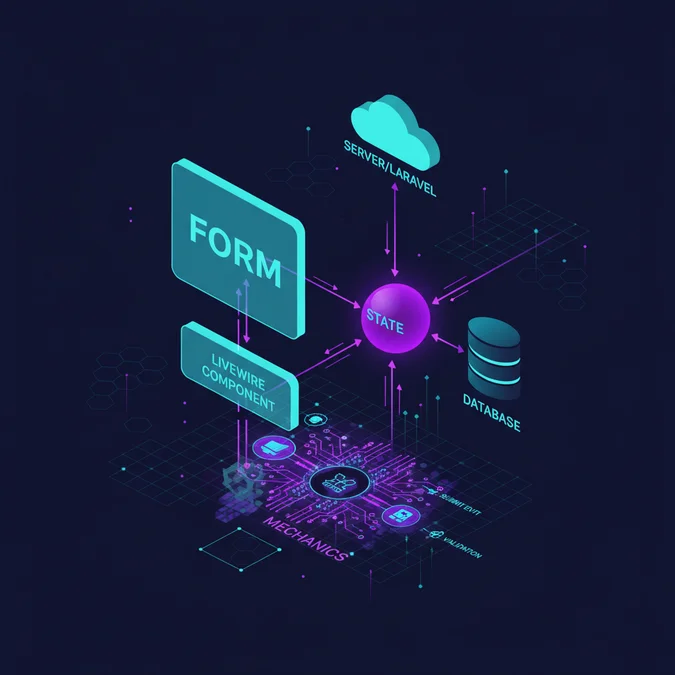

Laravel Livewire passes route parameters directly into the component mount lifecycle hook, resolving typed arguments via implicit Eloquent route model binding or explicit type-hinted primitives declared in your web routes file. Mapping standard URL parameters to component state allows full-page components to initialize critical context securely without relying on hidden DOM values or client-driven payloads.
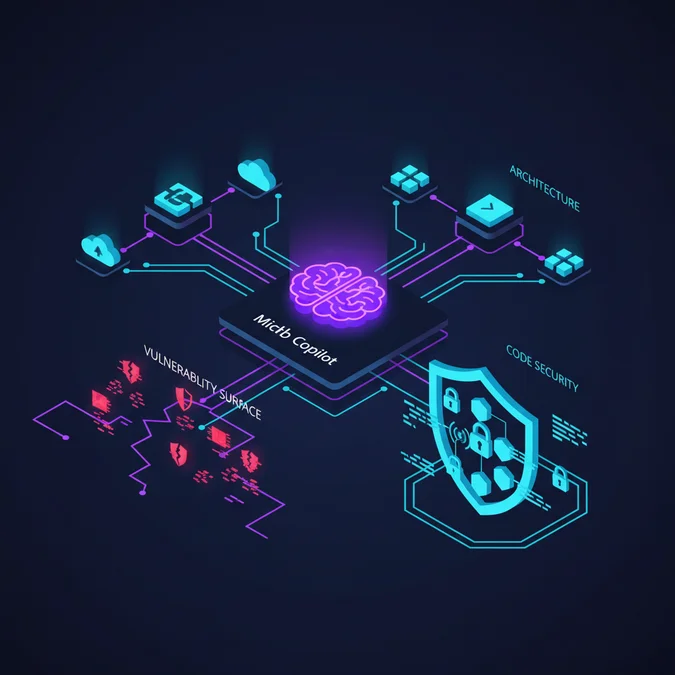
When an application scales to millions of concurrent requests, routing state mechanics become an architectural vulnerability. High-throughput applications frequently experience connection pool exhaustion and memory bloat because developers treat Livewire components like stateless views, failing to account for how hydrated route parameters interact with state preservation, query re-execution, and session locks. If an unvalidated parameter triggers continuous, unindexed database lookups on every single round-trip XHR request, backend workers saturate rapidly.
From a defensive architecture perspective, route parameters act as untrusted entry points capable of causing Broken Object Level Authorization (BOLA) and state desynchronization across round-trip network transitions. Hardening parameter handling requires strict enforcement of model binding constraints, explicit authorization gates during lifecycle transitions, and strict verification of subsequent checksum-backed payload states.
Anatomy of Full-Page Component Routing in Livewire
Livewire allows components to act as complete HTTP request endpoints through standard Laravel routing definitions. Instead of assigning a controller action to a route, you register the component class directly inside routes/web.php. Under the hood, Laravel resolves the request through its standard HTTP kernel pipeline, executing global and route-specific middleware groups before Livewire begins its component lifecycle.
use App\Livewire\CustomerPortal;
use Illuminate\Support\Facades\Route;

// Route parameter registered with regular expression constraints
Route:get('/customers/{customerId}', CustomerPortal:class)
 ->middleware(['auth', 'verified'])
 ->whereUuid('customerId')
 ->name('customers.portal');
When a client initiates an HTTP GET request to this endpoint, Livewire invokes the initial rendering pipeline. The routing engine intercepts the URI, extracts the parameters defined in the path segment, and prepares to hand these raw values into the component. At this stage, standard Laravel routing behaviors apply, including route parameter regex constraints and middleware termination.
Behind the scenes, Livewire uses its own synthetic controller to handle the initial page load. The component renders an HTML wrapper view, automatically injecting tracking attributes and snapshot state metadata into the root DOM element. This initial envelope ensures that subsequent client-side network calls have the foundational cryptographic signatures required to maintain parameter context during component updates.
The Mount Hook: Parameter Injection and Lifecycle Mechanics
The mount() method functions as the initial constructor equivalent for a Livewire component lifecycle, running exactly once when the component is initially created over HTTP GET. Route parameters match the method signature of mount() by variable name, using standard reflection to inject arguments.
<php

namespace App\Livewire;

use Livewire\Component;
use App\Models\Customer;
use Illuminate\Auth\Access\AuthorizationException;

class CustomerPortal extends Component
{
 public string $customerId = '';
 public string $accountStatus = 'active';

 /**
 * Executes only on the initial HTTP GET request.
 * Subsequent Livewire updates (POST/message) do not re-run mount().
 */
 public function mount(string $customerId): void
 {
 // Sanitize and bind the primitive argument
 $this->customerId = $customerId;

 // Additional initialization logic
 $this->verifyAccountStatus();
 }

 protected function verifyAccountStatus(): void
 {
 // State verification logic
 $this->accountStatus = 'verified';
 }

 public function render()
 {
 return view('livewire.customer-portal');
 }
}
A critical architectural detail is that the mount method does not execute during subsequent hydration cycles. When a user interacts with the UI and dispatches an action via wire:click, Livewire bypasses mount() completely. Instead, it rehydrates public component properties directly from the encrypted snapshot payload returned by the client. Engineers must never place ongoing security controls, real-time access evaluation, or authorization routines exclusively inside the mount() method, as subsequent actions will bypass those initial validations entirely.
Implicit and Explicit Route Model Binding Resolution
Livewire integrates directly with Laravel route model binding. By type-hinting an Eloquent model within the mount() method signature matching the route parameter token, Livewire delegates lookup resolution to Laravel before property assignment occurs.
// Route definition
Route:get('/tenants/{tenant}/invoices/{invoice}', InvoiceViewer:class)
 ->middleware(['auth']);

// Component implementation
namespace App\Livewire;

use Livewire\Component;
use App\Models\Tenant;
use App\Models\Invoice;
use Illuminate\Foundation\Auth\Access\AuthorizesRequests;

class InvoiceViewer extends Component
{
 use AuthorizesRequests;

 // Public model properties are automatically serialized into the snapshot
 public Tenant $tenant;
 public Invoice $invoice;

 public function mount(Tenant $tenant, Invoice $invoice): void
 {
 // Scoped binding assertion: verify relationship containment
 if ($invoice->tenant_id!== $tenant->id) {
 abort(404, 'Resource mismatch under target scope.');
 }

 $this->authorize('view', $invoice);

 $this->tenant = $tenant;
 $this->invoice = $invoice;
 }
}
Laravel automatically attempts to resolve the model using the primary key or custom route key specified on the model. If a matching record is not found in the database, the framework throws an ItemNotFoundException, triggering an immediate HTTP 404 response. When working with scoped route model binding across parent-child resources, you can enforce scoping rules directly in the route declaration using Laravel scopeBindings() method, preventing unauthorized cross-tenant object access at the routing layer.
Security Implications: OWASP Top 10 and Broken Object Level Authorization
Using route parameters inside dynamic Single Page Interface architectures exposes components to Broken Object Level Authorization (BOLA / IDOR), categorized as OWASP API1:2023. Attackers routinely manipulate URI tokens, incrementing integer primary keys or substituting UUIDs to access records belonging to other tenants. Relying solely on route model binding without contextual ownership checks introduces severe security exposures.
When implementing these components, adopting proven patterns from established architecture frameworks ensures consistent authorization verification across all layers. Defensive engineering mandates that every single component must enforce policy checks on the bound model instances, both during initialization and before executing subsequent actions.
namespace App\Livewire;

use Livewire\Component;
use App\Models\Document;
use Illuminate\Foundation\Auth\Access\AuthorizesRequests;

class DocumentEditor extends Component
{
 use AuthorizesRequests;

 public Document $document;

 public function mount(Document $document): void
 {
 // OWASP API1: Prevent BOLA on initial HTTP GET
 $this->authorize('view', $document);
 $this->document = $document;
 }

 public function updateDocumentContent(string $newBody): void
 {
 // Mandatory: Authorize state changes during subsequent hydration cycles
 // The attacker could manipulate the snapshot id to target an arbitrary record
 $this->authorize('update', $this->document);

 $this->document->update([
 'body' => clean($newBody),
 ]);
 }
}
Never trust that a user authorized during mount() maintains the same role, context, or resource scope during a lifecycle call triggered minutes later. Policies must be evaluated continuously whenever incoming mutations occur.
State Persistence, Dehydration, and Cryptographic Tampering
When a Livewire component completes execution on the server, it runs a dehydration routine. Public properties, including bound models and primitive route parameters, convert into a serialized JSON payload called the component snapshot. This snapshot ships to the client browser and returns to the server on every subsequent network request.
To prevent malicious clients from tampering with these dehydrated values, Livewire generates a cryptographic HMAC signature (checksum) for the state payload using Laravel application secret key (APP_KEY). When an action triggers, Livewire inspects the incoming snapshot and recalculates the HMAC. If an attacker modifies a serialized parameter, such as changing customerId: 104 to customerId: 1 in the client JSON tree, the signature validation fails, and Livewire throws a CorruptPayloadException.
| Mechanism | Dehydration Role | Hydration / Validation Role | Failure Outcome |
|---|---|---|---|
| HMAC Checksum | Signs serialized JSON payload with application APP_KEY | Recalculates signature before unpacking incoming properties | CorruptPayloadException (HTTP 400/500) |
| Eloquent Model Casting | Extracts model ID, class path, and dirty attributes | Queries database via primary key to reconstruct instance | ModelNotFoundException (HTTP 404) |
| Locked Properties | Appends explicit property path hashes to locked memo pool | Rejects mutated property values arriving from the browser | CannotMutateLockedPropertyException |
While the cryptographic checksum guarantees data integrity against external client manipulation, it does not guarantee authorization. If an attacker can legitimately obtain a valid signed state for a resource, signature checks succeed. Authorization checks must always exist independently of structural integrity verification.
Query String Synchronization via the #[Url] Attribute
Route parameters capture fixed path segments, but interactive state frequently relies on query string parameters for filtering, sorting, and pagination. Livewire provides the #[Url] attribute to link public component properties directly to URI query strings, synchronizing browser history without executing full page reloads.
<php

namespace App\Livewire;

use Livewire\Component;
use Livewire\Attributes\Url;

class AuditLogViewer extends Component
{
 // Synchronizes with?search=term in browser address bar
 #[Url(as: 'q', history: true, keep: false)]
 public string $search = '';

 // Synchronizes with?page=2
 #[Url]
 public int $page = 1;

 public function updatedSearch(): void
 {
 // Reset pagination state when filters mutate
 $this->reset('page');
 }

 public function render()
 {
 return view('livewire.audit-log-viewer', [
 'logs' => $this->loadLogs(),
 ]);
 }

 protected function loadLogs()
 {
 return \App\Models\AuditLog:query()
 ->when($this->search, fn($q) => $q->where('action', 'like', "%{$this->search}%"))
 ->paginate(25);
 }
}
Configuring history: true uses the browser History API (pushState) to create distinct browser navigation entries, allowing forward and backward navigation to function as expected. The keep: false modifier ensures that empty or default values are stripped from the URL, keeping query strings clean and minimizing log pollution across proxy caches.
Strict Parameter Validation and Sanitization Rules
Route parameters must be treated with the same zero-trust principles applied to POST request payloads. Incoming values can contain null bytes, control characters, or malicious payloads designed to exploit downstream subsystems. Engineers should enforce type constraints within Laravel routing files and validate resolved parameters inside the component.
// Enforcing strict parameter constraints at the router level
Route:get('/workspaces/{workspaceSlug}/nodes/{nodeId}', SystemNodeManager:class)
 ->where('workspaceSlug', '^[a-z0-9]+(?-[a-z0-9]+)*$')
 ->whereNumber('nodeId')
 ->middleware(['auth']);
Within the component, execute strict runtime validation before handling business logic. Coupling route-level regular expressions with Livewire built-in validation provides defense-in-depth:
public function mount(string $workspaceSlug, int $nodeId): void
{
 $validated = validator(
 ['workspaceSlug' => $workspaceSlug, 'nodeId' => $nodeId],
 [
 'workspaceSlug' => ['required', 'string', 'max:64', 'alpha_dash'],
 'nodeId' => ['required', 'integer', 'min:1'],
 ]
 )->validate();

 $this->workspaceSlug = $validated['workspaceSlug'];
 $this->nodeId = $validated['nodeId'];
}
This dual-layer boundary prevents parameter pollution, mitigates SQL injection attempts within dynamic query builders, and stops execution before untrusted input reaches critical application boundaries.
Performance Bottlenecks: N+1 Queries and Hydration Overhead
Binding Eloquent models directly to component parameters introduces severe performance bottlenecks if not managed carefully. When Livewire rehydrates a model property across subsequent requests, it queries the database again by primary key to reconstruct the instance. If your component references related models within its Blade view, this reconstruction causes hidden N+1 query storms on every user interaction.
// ANTI-PATTERN: Results in repeated queries on every wire:click interaction
class TeamDashboard extends Component
{
 public Team $team; // Re-queried on hydration, losing eager loads

 public function mount(Team $team): void
 {
 $this->team = $team->load('members.roles', 'departments');
 }
}
Because Livewire does not serialize complex nested Eloquent relationship collections during dehydration, previously eager-loaded relationships are discarded to keep the network snapshot compact. On subsequent component calls, accessing $team->members in your Blade template triggers lazy-loading queries repeatedly.
To maintain high throughput, store primitive IDs rather than complete Eloquent models, and rely on explicit service-layer retrieval or computed properties that leverage application caching layers:
class TeamDashboard extends Component
{
 public int $teamId;

 public function mount(int $teamId): void
 {
 $this->teamId = $teamId;
 }

 // Computed property evaluates on-demand with eager loads intact
 #[\Livewire\Attributes\Computed]
 public function team(): Team
 {
 return Team:with(['members.roles', 'departments'])
 ->findOrFail($this->teamId);
 }
}
Handling Optional Parameters, Defaults, and Wildcards
Standard web architectures frequently require flexible routing patterns where certain URI path tokens are optional. Livewire supports optional route parameters provided that the method signatures and route definitions align precisely.
// Laravel route definition with optional parameter
Route:get('/reports/{year?}/{month?}', FinancialReporter:class)
 ->middleware(['auth']);
In the corresponding component, parameters declared as optional in the route definition must declare default values matching standard PHP syntax inside the mount() method. Failure to assign default values triggers an ArgumentCountError when clients access the base URI.
namespace App\Livewire;

use Livewire\Component;
use Carbon\CarbonImmutable;

class FinancialReporter extends Component
{
 public int $year;
 public int $month;

 public function mount(?int $year = null,int $month = null): void
 {
 $now = CarbonImmutable:now();

 // Assign defaults defensively
 $this->year = $year? $now->year;
 $this->month = ($month!== null && $month >= 1 && $month <= 12)? $month: $now->month;
 }
}
For complex applications utilizing catch-all or wildcard parameters (such as documentation trees or virtual file systems), define trailing parameters with regular expression captures like ->where('path', '.*'). Process the incoming raw string within mount() by splitting path segments and sanitizing directory traversals using PHP basename() and directory boundary checks.
Architectural Testing: Integration Tests for Routed Components
Verifying routed Livewire components requires testing the full HTTP lifecycle alongside isolated Livewire interaction cycles. Testing must verify that route parameters resolve, that authorization gates reject unprivileged callers, and that invalid parameters return expected HTTP status codes.
When establishing reproducible testing environments, applying principles from structured database seeding strategies guarantees deterministic state verification across complex permission matrices.
<php

namespace Tests\Feature;

use Tests\TestCase;
use App\Models\User;
use App\Models\Project;
use Livewire\Livewire;
use App\Livewire\ProjectViewer;
use Illuminate\Foundation\Testing\RefreshDatabase;

class ProjectRoutingTest extends TestCase
{
 use RefreshDatabase;

 public function test_unauthorized_user_cannot_view_project_via_route(): void
 {
 $owner = User:factory()->create();
 $attacker = User:factory()->create();
 $project = Project:factory()->for($owner)->create();

 // Direct HTTP GET verification
 $this->actingAs($attacker)
 ->get(route('projects.show', ['project' => $project->id]))
 ->assertStatus(403);
 }

 public function test_livewire_component_resolves_route_parameter(): void
 {
 $user = User:factory()->create();
 $project = Project:factory()->for($user)->create();

 // Test Livewire interaction using explicit route parameters
 Livewire:actingAs($user)
 ->test(ProjectViewer:class, ['project' => $project])
 ->assertSet('project.id', $project->id)
 ->assertSee($project->name);
 }
}
In continuous delivery environments, automated testing suites depend on stable third-party infrastructure. When running automated pipelines across distributed runners, tracking upstream metrics such as webhook delivery and API availability helps teams diagnose test run anomalies that stem from external status degradations rather than component routing regressions.
Troubleshooting Parameter Binding and Hydration Failures
When integrating Livewire with Laravel routing subsystem, specific structural bugs and environmental misconfigurations can cause parameter handling to fail. The following diagnostic matrix outlines the most frequent runtime issues and their underlying solutions:
| Observed Symptom | Underlying Root Cause | Remediation Strategy |
|---|---|---|
| ArgumentCountError in mount() | Parameter name in route definition does not match the parameter name in the mount method signature. | Align variable names identically: {workspace} requires mount($workspace). |
| CorruptPayloadException | Client-side JavaScript mutated a serialized route parameter that was signed by the HMAC engine. | Ensure state modifications happen solely via wire:model or designated server-side component actions. |
| Missing Model Attributes on Hydration | Livewire strips relationships and unlisted model attributes during dehydration cycle. | Use computed properties for relationships or explicitly store primitive IDs and query on demand. |
| 403 Forbidden on Nested Routes | Route model binding parent-child relationship validation failed. | Verify database parent keys match child foreign keys, or configure explicit custom resolvers. |
To diagnose payload corruption issues during development, inspect the network tab for outgoing POST requests to /livewire/update. Inspect the serverMemo and updates payload sections to verify that the cryptographic token matches what the server dispatched during the initial GET render.
Implementation Strategy: Production Hardened Architecture
Deploying route-parameterized Livewire components into production environments requires a structured execution pattern that ensures security, performance, and maintainability. Follow this phased implementation strategy:
- Define Route Boundaries: Always declare strict regex patterns directly on your route parameter definitions in
routes/web.php. Restrict parameters to explicit character sets (e.g. UUIDs, integers, or hyphenated slugs). - Enforce Scoped Route Model Binding: When handling nested resources, append
->scopeBindings()to your route declarations to guarantee parent-child relationship integrity before the request ever reaches the Livewire component. - Shift to Primitive Property Storage: Instead of binding complete, deeply hydrated Eloquent models as public properties, store primitive identifiers (integer IDs or UUID strings) on the component. Use computed properties (
#[Computed]) to perform database queries with necessary eager loads on demand. - Implement Authorizations Outside Mount: Write authorization checks using Laravel Policies inside action methods and computed property getters. Never assume that a component authenticated during
mount()remains safe during subsequent hydration lifecycles. - Lock Critical Properties: Decorate immutable route parameters with the
#[Locked]attribute to instruct Livewire to actively reject incoming network payloads that attempt to modify those specific property keys.
Executing these practices protects your backend services from unnecessary query storms and stops privilege escalation attempts across your stateful Livewire interfaces.
Explore the Fundamentals
Deepening your understanding of core framework mechanics is essential for building resilient web applications. [Explore our complete Laravel, Basics directory for more guides.](/topics/topics-laravel-basics/)
Managing route parameters within Laravel Livewire requires balancing developer convenience against application security and runtime efficiency. By treating route parameters as untrusted inputs, leveraging implicit model binding with strict relationship scoping, and relying on computed properties instead of persisted complex models, you eliminate the primary vectors for authorization bypasses and database query degradation.
As you build full-page Livewire components, ensure that parameter validation occurs at the routing layer, during initial mount execution, and throughout every subsequent action request. Enforcing these safeguards creates robust architectures capable of scaling reliably under demanding enterprise workloads.